Artwork
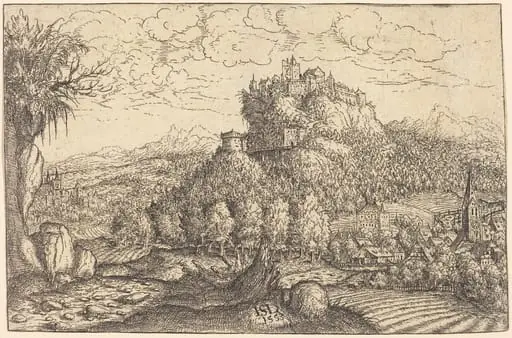
Panoramic View of Nuremberg: Left Portion
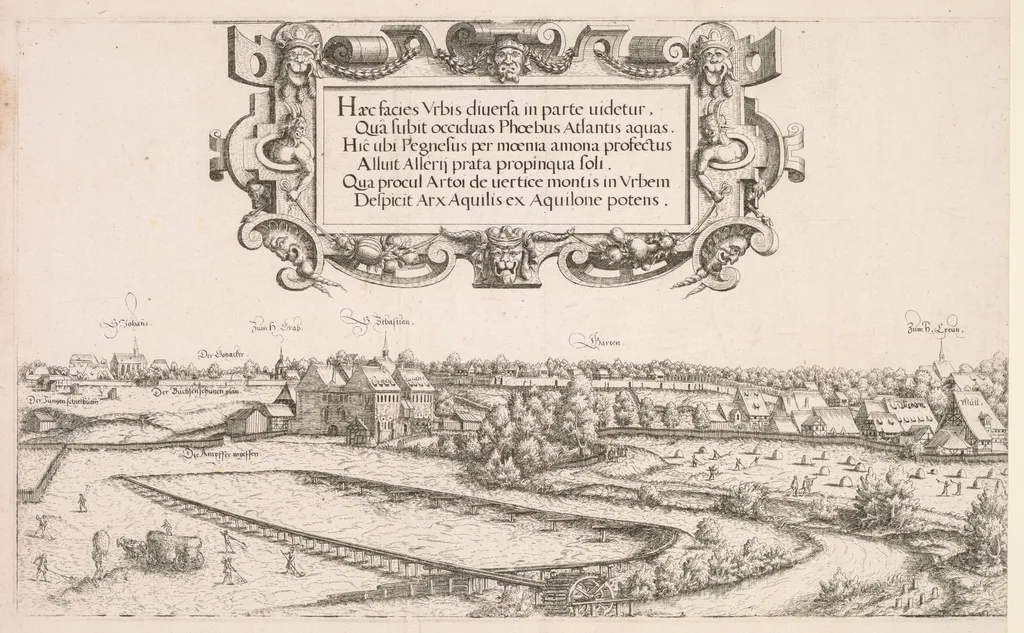
Panoramic View of Nuremberg: Left Portion is a print by the Renaissance artist Hanns Lautensack. It dates from 1552 and is held in the collection of the Cleveland Museum of Art.
About this work
Overview
Lautensack, who lived and worked in Nuremberg before moving to Vienna, specialized in urban views and signed his works with a distinctive monogram.
Hanns Lautensack, a German printmaker born in Bamberg in 1524, produced the left section of a panoramic etching of Nuremberg in 1552. This fragment forms part of a larger topographical record of the city, rendered in fine linear detail. Lautensack, who lived and worked in Nuremberg before moving to Vienna, specialized in urban views and signed his works with a distinctive monogram. The print reflects his skill in capturing architectural and spatial relationships with precision.
Subject & Meaning
The etching depicts a section of Nuremberg’s urban fabric along the Pegnitz River, featuring residential buildings, churches, open fields, and a bridge teeming with pedestrians. Boats navigate the waterway, suggesting commercial activity. Labeled landmarks such as 'Der Sonnenaufer' and 'Der Tuchschneider plan' indicate an intent to document specific locations, likely serving as both a civic record and a guide to the city’s layout, blending utility with observational accuracy.
Technique & Style
Executed in etching, the work employs fine, controlled lines to render architecture, topography, and human activity. The composition is densely detailed yet orderly, with buildings receding into the distance to suggest depth. Decorative cartouches with ornamental scrollwork frame the top, a common feature in Renaissance cartography. Lautensack’s technique emphasizes clarity and legibility, prioritizing topographical fidelity over dramatic effect.
History & Provenance
Created in 1552, the print emerged during Lautensack’s time in Nuremberg, before his later move to Vienna, where he may have served under Emperor Ferdinand I. His career spanned key centers of German printmaking, and his works were circulated among patrons interested in urban documentation. The survival of this fragment suggests it was once part of a larger, possibly multi-panel series, though complete versions are rare.
Context
In mid-16th century Germany, detailed city views gained traction as tools of civic pride and administrative record. Nuremberg, a wealthy imperial city, was frequently depicted in prints. Lautensack’s work aligns with this trend, reflecting the era’s growing interest in mapping urban space. His etchings contribute to a broader tradition of German topographical art, distinct from purely decorative or idealized landscapes.
Legacy
Lautensack’s etchings, including this fragment, remain valuable for their precise rendering of Nuremberg’s pre-modern topography. Though not widely known today, his work is referenced in studies of Renaissance cartography and urban history. His monogrammed prints help identify a body of work that bridges artistic skill and documentary purpose, offering insight into how cities were perceived and recorded in the 16th century.
Artist & collection
Artist
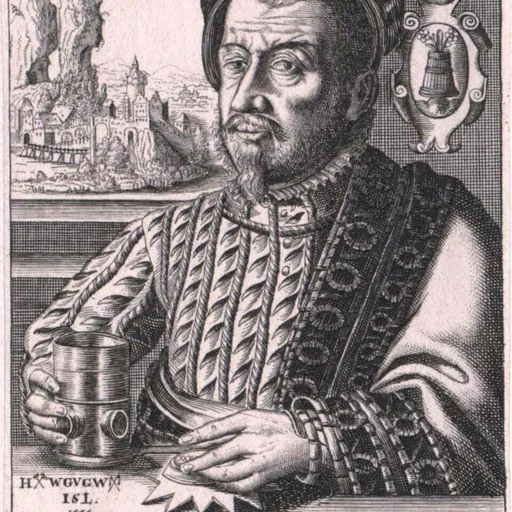
Hanns Lautensack (sometimes erroneously referred to as Hans Sebald Lautensack) (1524 – c.

![View of Nuremberg from the West [center section], by Hanns Lautensack](https://artifactworldgallery.com/img/hanns-lautensack--view-of-nuremberg-from-the-west-center-section--12422dca269411c0-w320.webp)
![View of Nuremberg from the West [left section], by Hanns Lautensack](https://artifactworldgallery.com/img/hanns-lautensack--view-of-nuremberg-from-the-west-left-section--8ac5006101a371ac-w320.webp) View of Nuremberg from the West [left section]
View of Nuremberg from the West [left section]![View of Nuremberg from the East [left section], by Hanns Lautensack](https://artifactworldgallery.com/img/hanns-lautensack--view-of-nuremberg-from-the-east-left-section--53a897f84943df87-w320.webp) View of Nuremberg from the East [left section]
View of Nuremberg from the East [left section]![View of Nuremberg from the West [right section], by Hanns Lautensack](https://artifactworldgallery.com/img/hanns-lautensack--view-of-nuremberg-from-the-west-right-section--8f7bb033ee717b8e-w320.webp) View of Nuremberg from the West [right section]
View of Nuremberg from the West [right section]![View of Nuremberg from the East [right section], by Hanns Lautensack](https://artifactworldgallery.com/img/hanns-lautensack--view-of-nuremberg-from-the-east-right-section--cd9d20af411c0891-w320.webp) View of Nuremberg from the East [right section]
View of Nuremberg from the East [right section]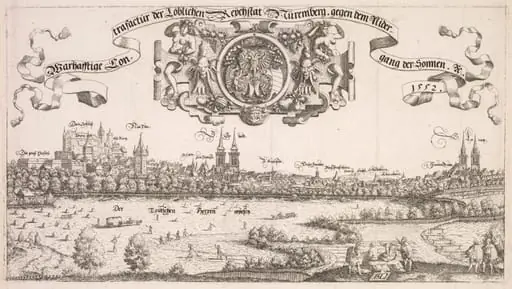 Panoramic View of Nuremberg: Center Portion
![View of Nuremberg from the East [center section], by Hanns Lautensack](https://artifactworldgallery.com/img/hanns-lautensack--view-of-nuremberg-from-the-east-center-section--7aaed3dd23c167ee-w320.webp) View of Nuremberg from the East [center section]
View of Nuremberg from the East [center section]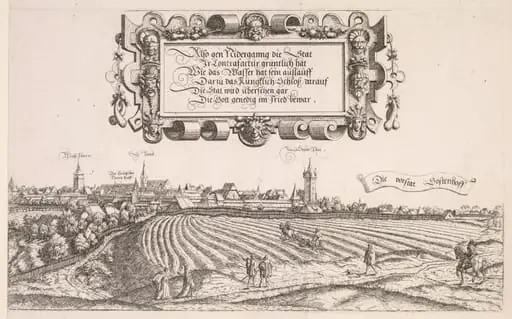 Panoramic View of Nuremberg: Right Portion