Artwork
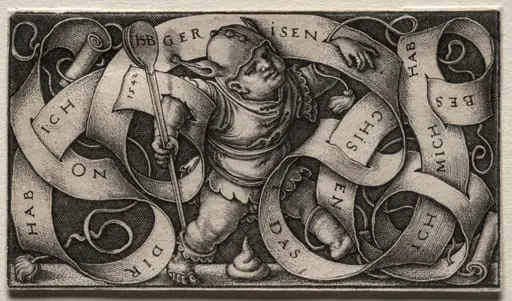
The Triumph of Women

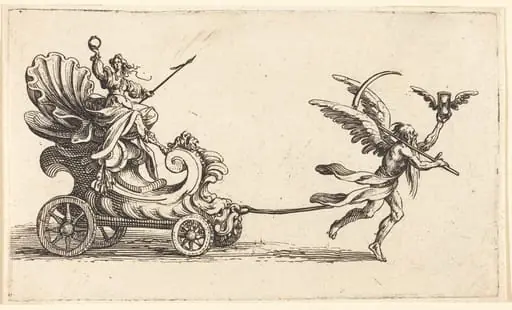
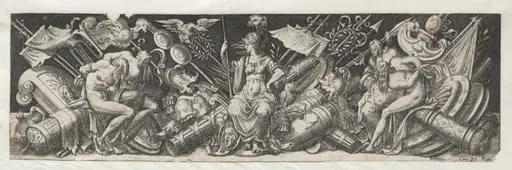
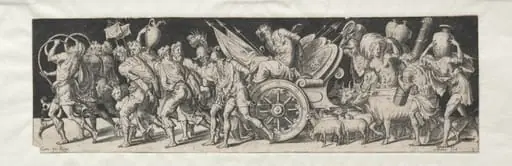
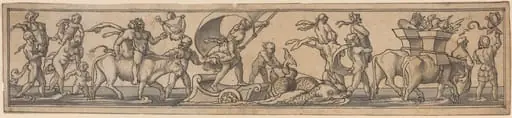
The Triumph of Women is a print by the Renaissance artist Sebald Beham. It dates from 1549 and is held in the collection of the Cleveland Museum of Art.
About this work
Overview
Beham, a prolific German artist, specialized in small-scale works with intricate detail.
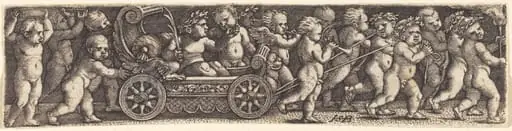
Created in 1549 by Hans Sebald Beham, *The Triumph of Women* is an engraved print that exemplifies the precision and density characteristic of the Little Masters. Beham, a prolific German artist, specialized in small-scale works with intricate detail. This piece presents a procession of armed women, rendered with fine lines and meticulous texture, reflecting his mastery of the engraving medium and his interest in allegorical themes drawn from classical antiquity.
Subject & Meaning
The print depicts a procession of women armed with spears, shields, and other tools, mounted on horses or riding in wagons, evoking a symbolic triumph rather than a historical event. The imagery alludes to classical myths of warrior women, such as the Amazons, and may reflect Renaissance humanist fascination with gender roles and power. The scene is not literal but allegorical, suggesting a reversal or reimagining of societal norms through mythic symbolism.
Technique & Style
Beham employed fine-line engraving to achieve extraordinary detail, characteristic of his miniature style. Each figure, animal, and architectural element is rendered with precision, creating a dense, almost tapestry-like composition. The background includes stylized trees and a distant castle, framed to guide the eye along the procession. His technique emphasizes clarity and control, allowing complex narratives to unfold in a small format without overwhelming the viewer.
History & Provenance
Produced during Beham’s mature period in Nuremberg, the print was part of a broader trend in Northern Renaissance printmaking that blended classical themes with moral or satirical commentary. While its early ownership is undocumented, it circulated among collectors and scholars familiar with humanist ideals. Its survival in multiple museum collections suggests it was valued for its craftsmanship and intellectual depth rather than its novelty.
Context
In the mid-16th century, German artists frequently turned to classical mythology to explore contemporary social questions. Beham’s depiction of armed women aligns with other Renaissance works that used myth to question gender hierarchies, often ambiguously—celebrating female strength while still framing it as exceptional. The print reflects the era’s intellectual ferment, where ancient texts were reinterpreted through new humanist lenses.
Legacy
Though not widely known outside specialist circles, *The Triumph of Women* remains a significant example of Northern Renaissance printmaking’s capacity for layered symbolism. Beham’s influence endured among later engravers who adopted his fine-line techniques. The work continues to be studied for its nuanced engagement with gender, power, and classical revival, offering insight into how visual art mediated complex ideas in early modern Europe.
Artist & collection
Artist
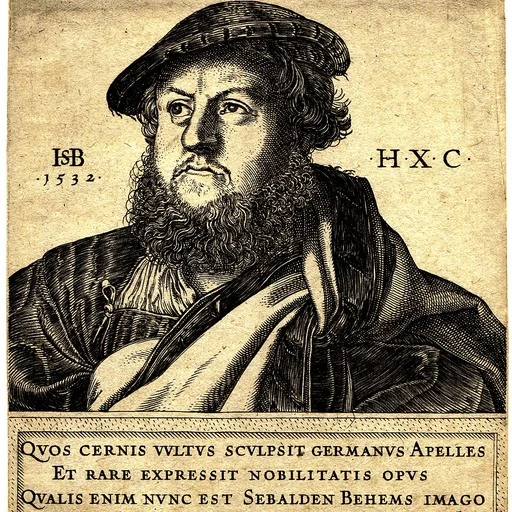
Sebald Beham (1500–1550) was a German painter and printmaker, mainly known for his very small engravings.