Artwork
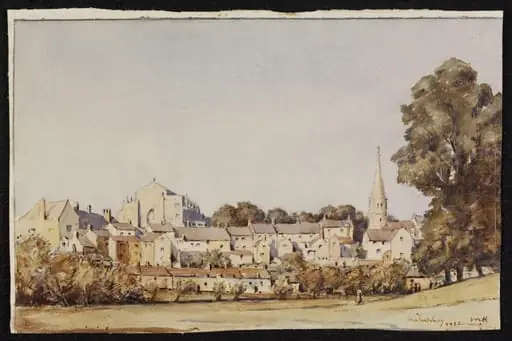
Wiverton Church, from Clay
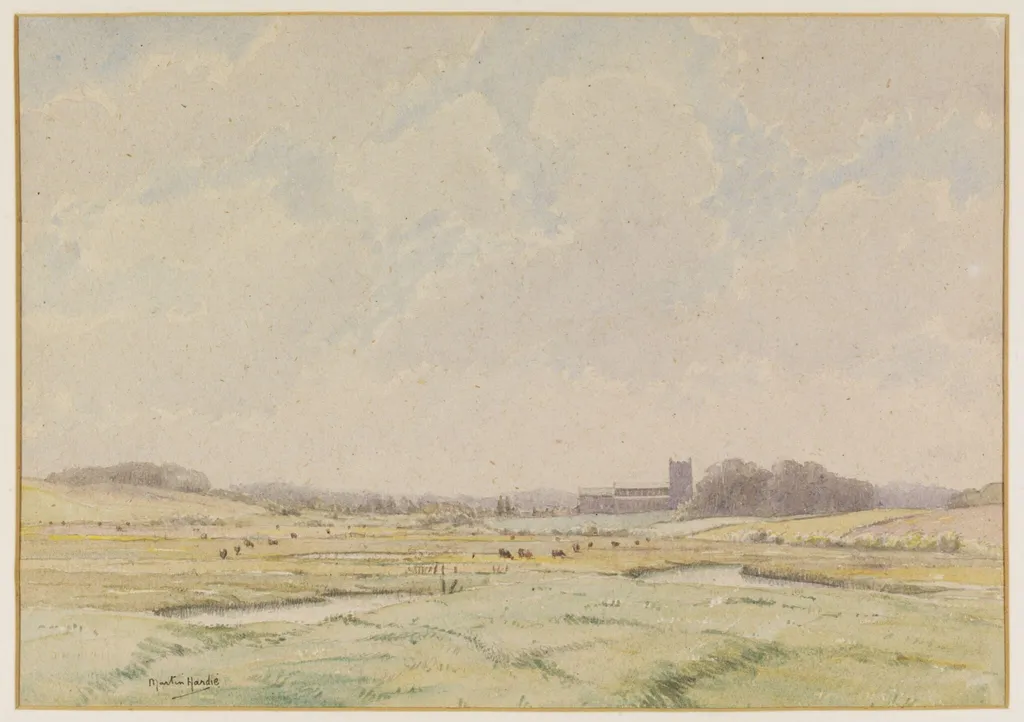
Wiverton Church, from Clay is a watercolor work on paper by Martin Hardie. It dates from 1936 and is held in the collection of the Victoria and Albert Museum.
About this work
That style was part of a bigger British project called Recording Britain during World War II.
Martin Hardie painted Wiverton Church, from Clay in 1936. It’s a quiet watercolour view of the church across a meadow. He worked in watercolour and spent years at the Victoria and Albert Museum.
The painting shows his respect for Constable’s skies. That style was part of a bigger British project called Recording Britain during World War II.
Next time you’re at the Victoria and Albert Museum, look for their watercolours.
Overview
Wiverton Church, from Clay is a watercolour painting created by Martin Hardie in 1936. It depicts a serene view of Wiverton Church across a water meadow.
Subject & Meaning
The painting features Wiverton Church, a Perpendicular-style building dating from 1437. The church's size and architectural beauty reflect the village's historical prosperity as a significant port in the 15th and 16th centuries.
Technique & Style
Hardie's work shows the influence of John Constable, particularly in the depiction of dynamic clouds. The painting's style is characteristic of the watercolour medium, with which Hardie was closely associated throughout his career.
History & Provenance
The painting was produced as part of the Recording Britain scheme during World War II. Hardie was a contributor to this project and worked at the Victoria and Albert Museum, where his work is held.
Artist & collection

Artist
Martin Hardie (1875–1952) was a painter in watercolour, printmaker, art historian and museum curator.

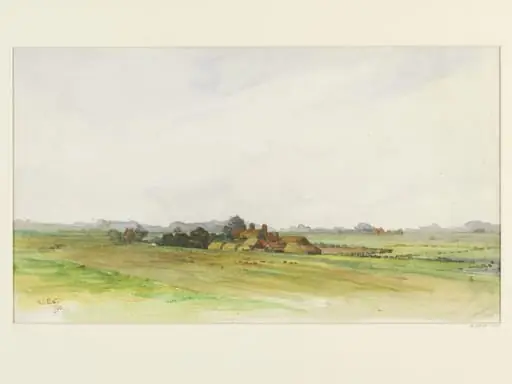 Landscape with Farm and Fields in Flat Country
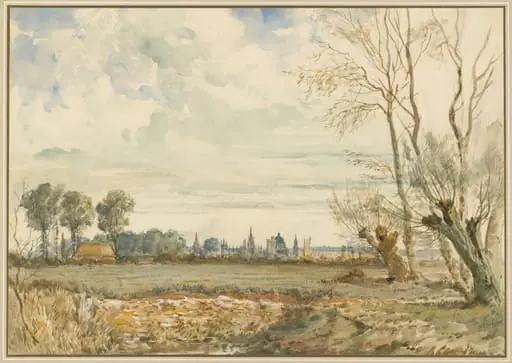 Meadows with a Distant View of Oxford
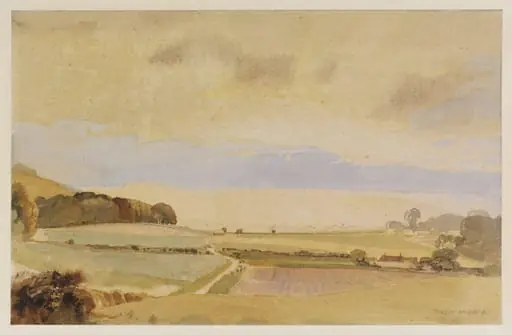 The Southdown, Underhill Road; Wolstonbury, showing Danny Farm
 Landscape
 Fields near Norwich
 Landscape with road in flat country
 Heath Scene
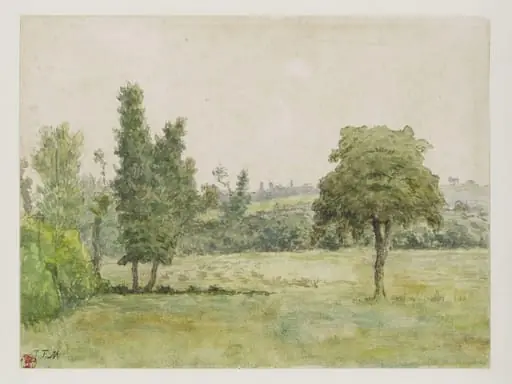 Meadow with trees
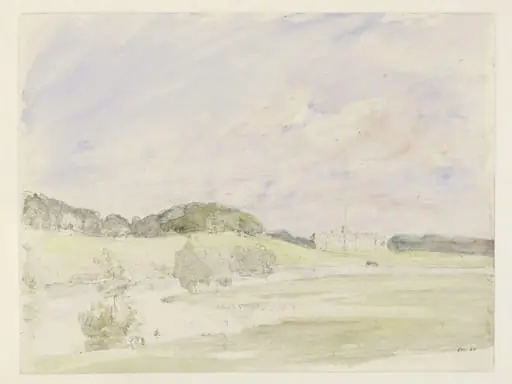 Petworth House from the Park
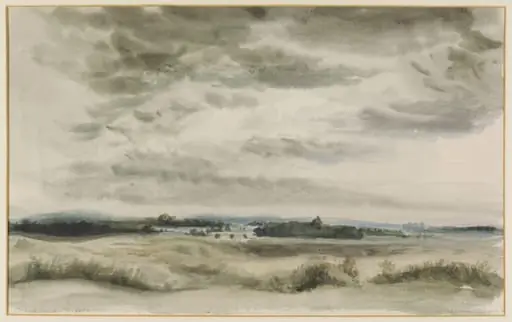 Breckland
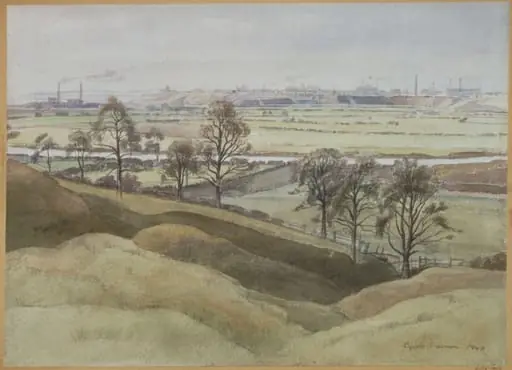 View of Preston from Higher Walton, Lancashire