Artwork
Blue Grosbeak
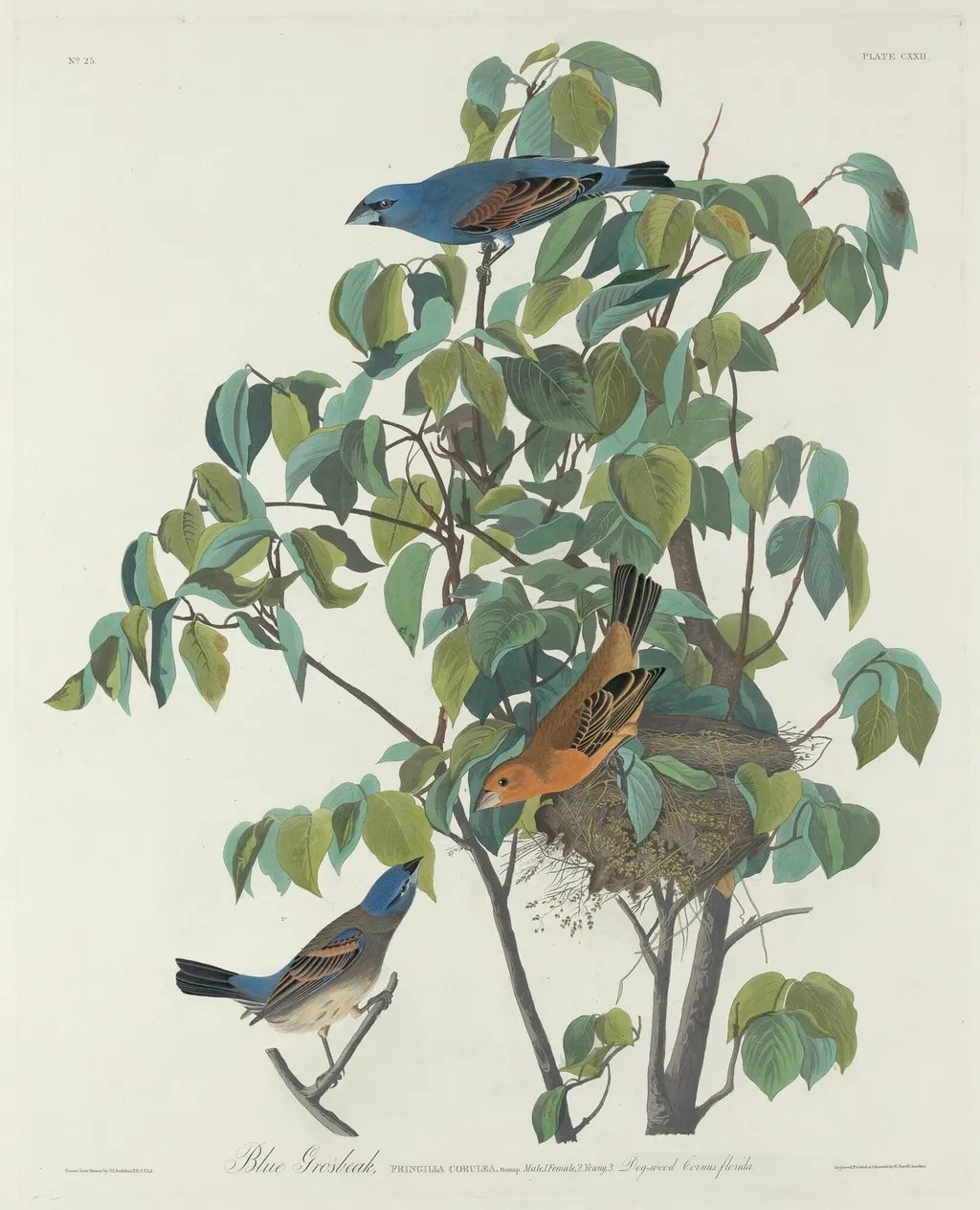
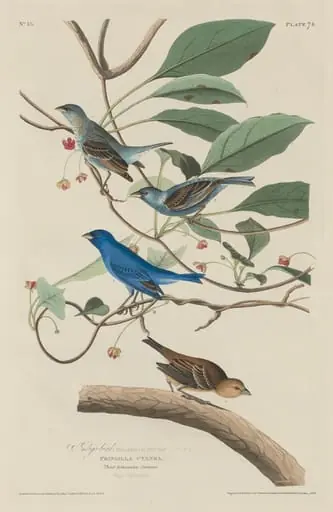
Blue Grosbeak is an ink print by the Romanticist artist Robert Havell Jr.. It dates from 1831 and is held in the collection of the National Gallery of Art.
About this work
Overview
It belongs to a series of ornithological illustrations produced during the early 19th century, reflecting the Havell family’s technical mastery in printmaking.
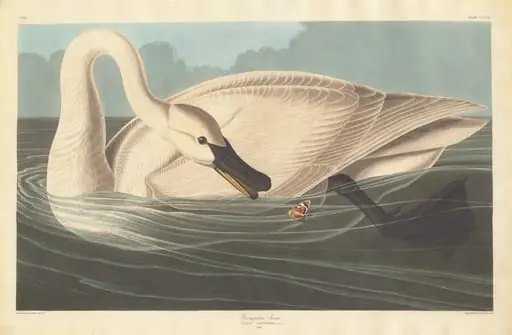
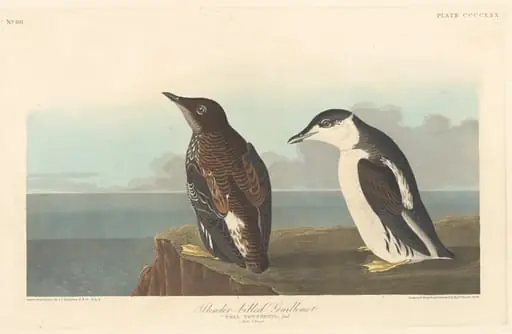
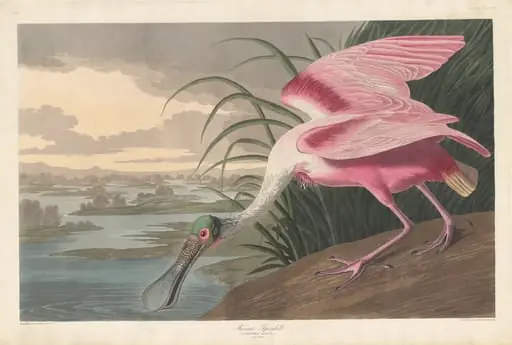
Created in 1831, this print by Robert Havell Jr. is a hand-colored engraving and aquatint on Whatman wove paper. It belongs to a series of ornithological illustrations produced during the early 19th century, reflecting the Havell family’s technical mastery in printmaking. The work combines precise line work with delicate, manual color application, demonstrating the precision and patience required in natural history illustration of the period.
Subject & Meaning
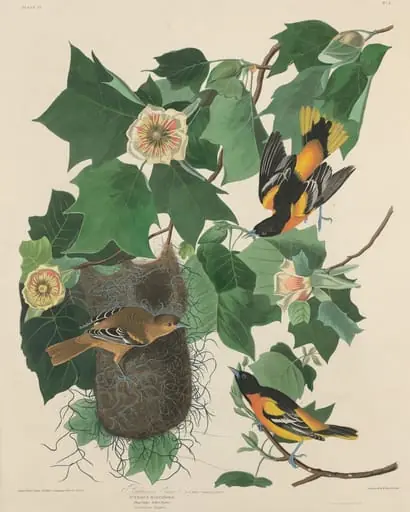
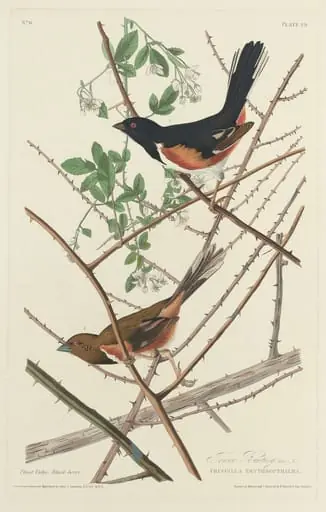
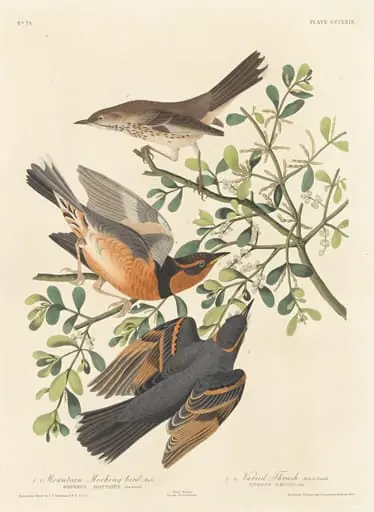
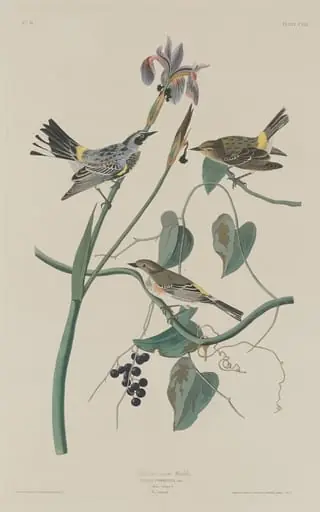
The image portrays three Blue Grosbeaks perched on a branch, capturing males with vivid blue plumage and a female in muted brown and orange tones. The composition emphasizes biological accuracy, highlighting distinctions in age and sex. Rather than idealizing the birds, the illustration serves as a scientific record, aligning with contemporary efforts to document North American avian species through visual means.
Technique & Style
Havell employed engraving for fine detail and aquatint for tonal gradations, particularly in the feathers and foliage. Each element was hand-colored after printing, allowing subtle variations in hue and shading. The use of Whatman paper, known for its smooth texture, enhanced the clarity of the lines and the evenness of the washes. The result is a layered image that balances mechanical precision with artisanal touch.
History & Provenance
Robert Havell Jr. was part of a multi-generational family of English printmakers based in Reading, Berkshire, who specialized in natural history illustrations. This print was likely produced for a larger ornithological publication, possibly linked to John James Audubon’s projects. The Havells were sought after for their ability to translate watercolor studies into reproducible prints, bridging scientific observation and commercial demand.
Context
In the early 1800s, illustrated natural history books gained popularity among scientists and collectors. The demand for accurate depictions of American wildlife spurred collaborations between artists in Europe and naturalists in North America. Havell’s work reflects this transatlantic exchange, where British printmaking techniques were applied to New World subjects, contributing to the growing field of ornithological documentation.
Legacy
Havell’s prints remain valued for their fidelity to natural forms and technical refinement. While later photographic methods replaced hand-colored engravings, his work represents a high point in pre-photographic biological illustration. The precision and care evident in this piece continue to inform how historical scientific imagery is studied and appreciated today.
Artist & collection

Artist
The Havell family of Reading, Berkshire, England, included a number of notable engravers, etchers and painters, as well as writers, publishers, educators, and musicians.