Artwork
Crested Titmouse
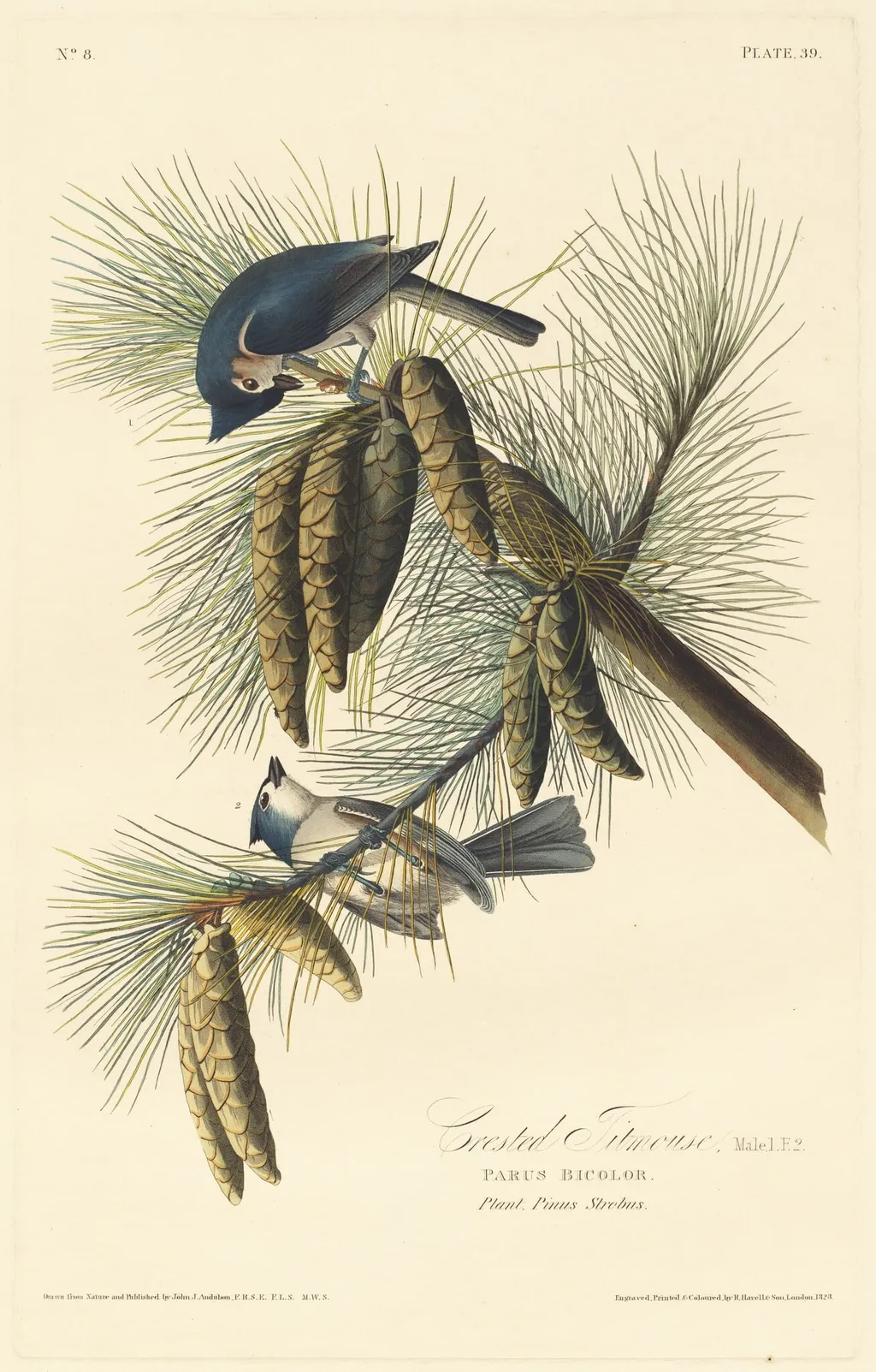
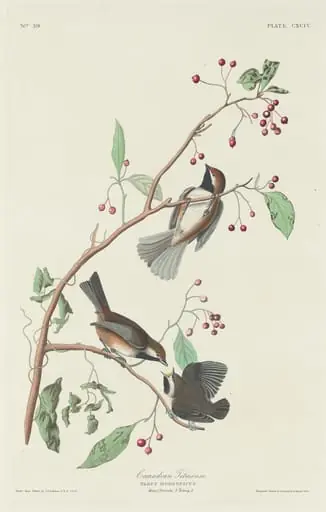
Crested Titmouse is an ink print by the Romanticist artist Robert Havell Jr.. It dates from 1828 and is held in the collection of the National Gallery of Art. Created in 1828, the work is a hand‑coloured engraving combined with aquatint, executed on fine Whatman wove paper.
About this work
Overview
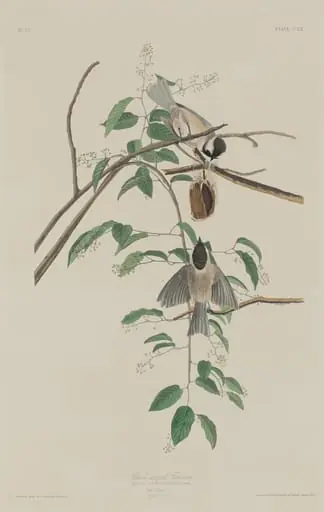
Created in 1828, the work is a hand‑coloured engraving combined with aquatint, executed on fine Whatman wove paper. It presents a pair of crested titmice perched on a pine branch, surrounded by needles and cones, rendered in a restrained palette of greens, browns and greys that convey a quiet woodland moment.
Subject & Meaning
The image focuses on two small European birds, the crested titmouse, shown in profile with dark blue upperparts, white underparts and characteristic head crests. The naturalistic portrayal emphasizes the birds’ delicate plumage and the texture of the surrounding pine, inviting contemplation of the subtle beauty of everyday fauna.
Technique & Style
The piece employs the aquatint process, a method the Havell family refined for producing tonal washes, alongside precise hand‑colouring to achieve subtle shading. The engraving lines define form, while the aquatint provides atmospheric depth, resulting in a balanced blend of line work and painterly colour.
History & Provenance
Robert Havell Jr., a member of the noted Havell family of engravers from Reading, Berkshire, produced the print. The family was renowned in the early nineteenth century for their contributions to scientific and natural history illustration, and this work reflects their expertise in combining accurate observation with artistic technique.
Context
During the 1820s, interest in natural history illustration was high, driven by expanding scientific societies and publications. Prints such as this served both educational and decorative purposes, supplying collectors with detailed images of wildlife that were accessible beyond original paintings.
Artist & collection

Artist
The Havell family of Reading, Berkshire, England, included a number of notable engravers, etchers and painters, as well as writers, publishers, educators, and musicians.