Artwork
House Wren
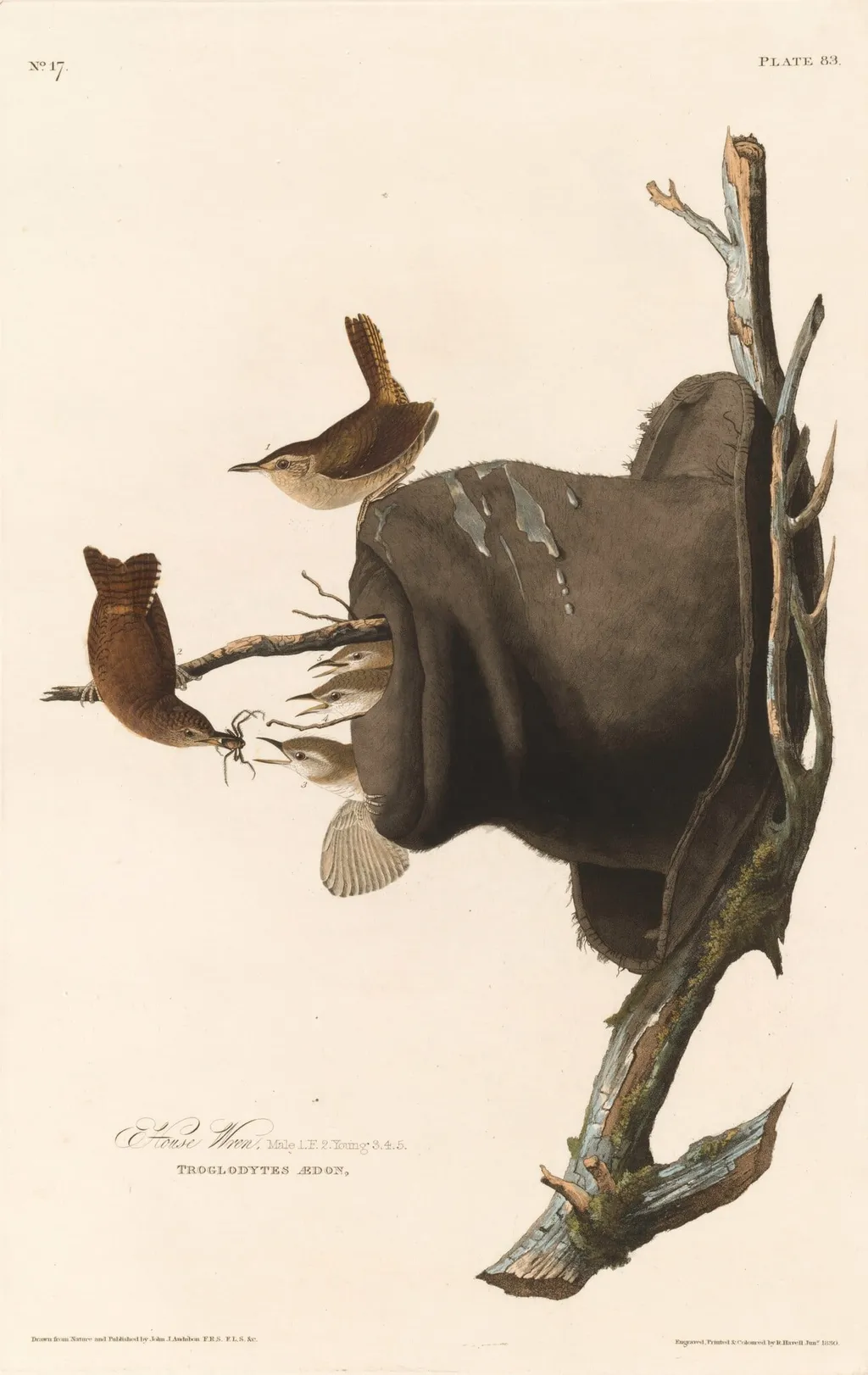
House Wren is an ink print by the Romanticist artist Robert Havell Jr.. It dates from 1830 and is held in the collection of the National Gallery of Art.
About this work
Overview
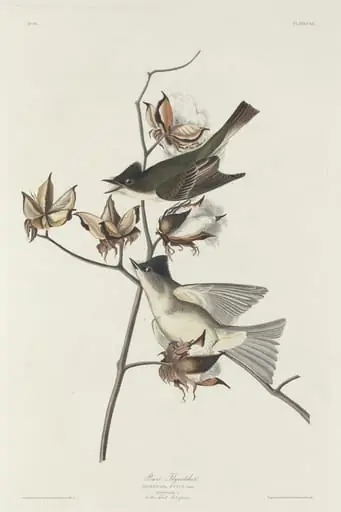
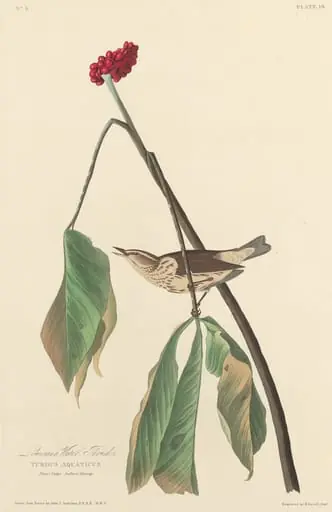
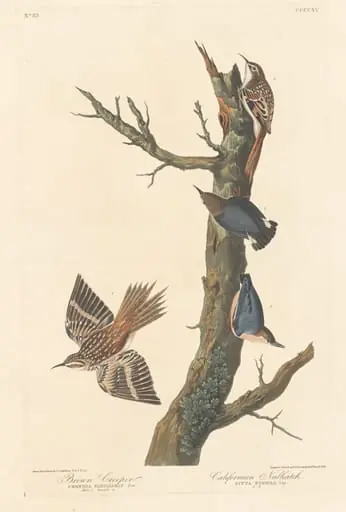
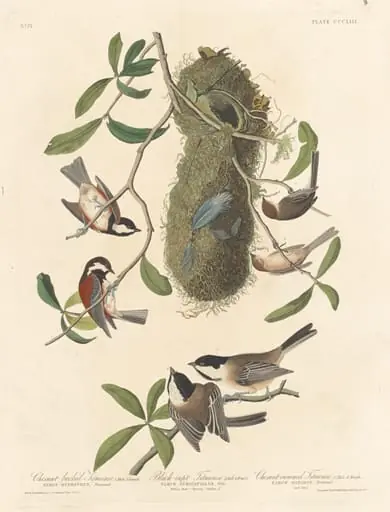
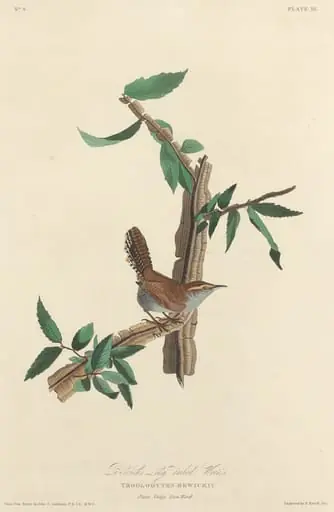
Created in 1830, *House Wren* is a hand‑coloured engraving combined with aquatint, printed on smooth Whatman wove paper. The image presents three diminutive birds perched upon a twisted branch, rendered with meticulous line work that emphasizes the texture of feathers, bark and moss.
Subject & Meaning
The central figure is a larger wren, its plumage a blend of brown and white, flanked by two smaller birds. The composition captures a quiet moment in nature, inviting close observation of avian form and the subtle interplay of light and shadow on the surrounding bark.
Technique & Style
Havell employed fine incised lines for the birds’ feathers and the bark’s rough surface, while the aquatint process supplied tonal washes that give depth to the background. Hand‑colouring adds selective hues, enhancing realism without obscuring the delicate line work.
History & Provenance
The print was produced by Robert Havell Jr., a member of the Havell family of Reading, Berkshire, noted for their expertise in aquatint and long‑standing involvement with Indian art and publishing. The work exemplifies the family’s broader output in engraving and printmaking during the early nineteenth century.
Context
During the 1830s, British printmakers frequently combined engraving with aquatint to achieve both line precision and tonal variation. *House Wren* reflects this trend, illustrating the era’s fascination with natural history illustration and the technical possibilities of metal‑plate printing.
Artist & collection

Artist
The Havell family of Reading, Berkshire, England, included a number of notable engravers, etchers and painters, as well as writers, publishers, educators, and musicians.