Artwork
Lesser Red-poll
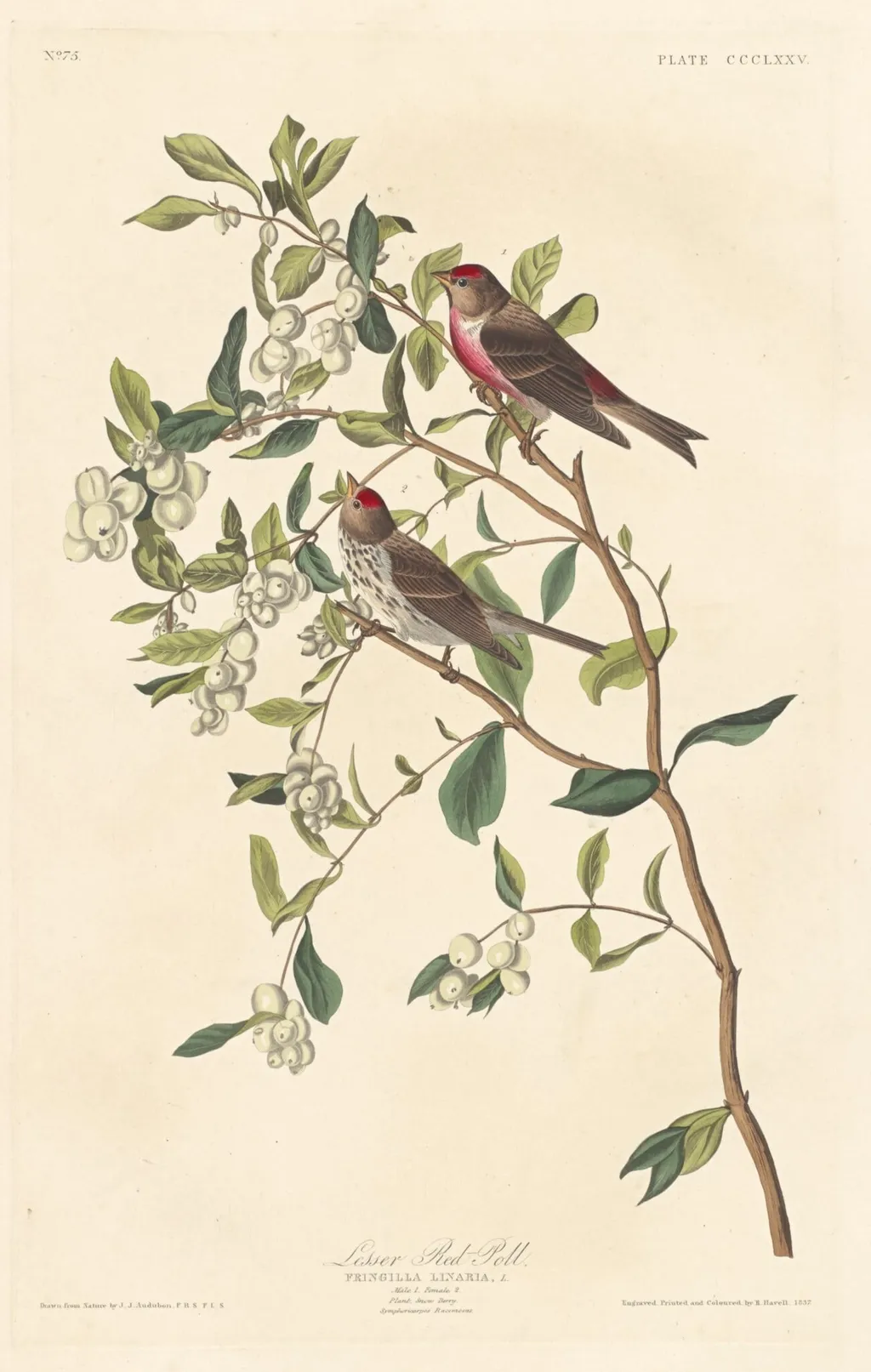
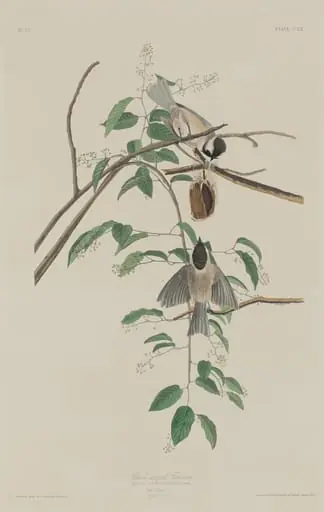
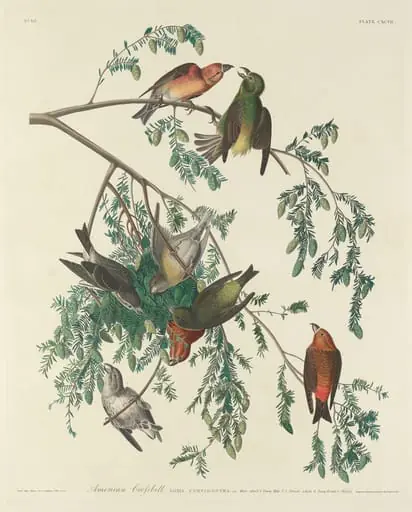
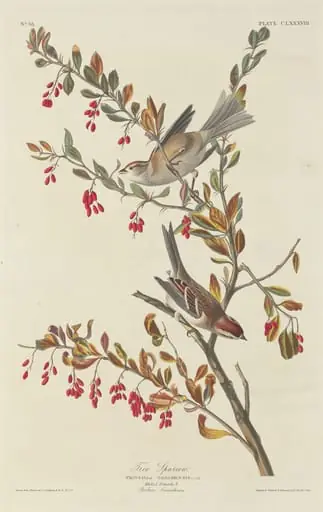
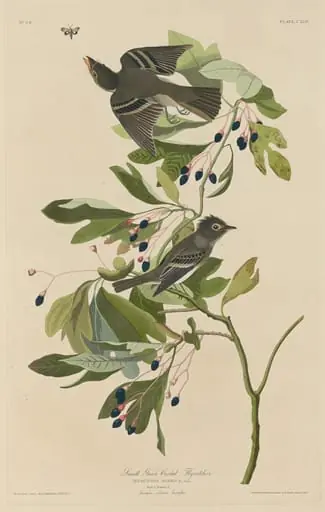
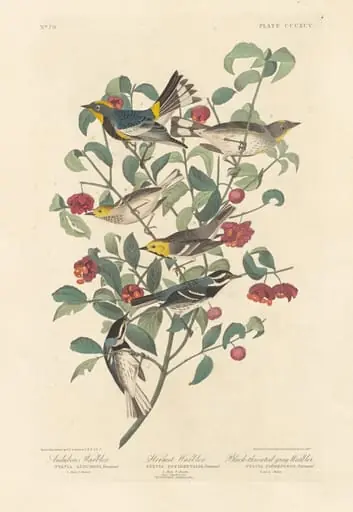
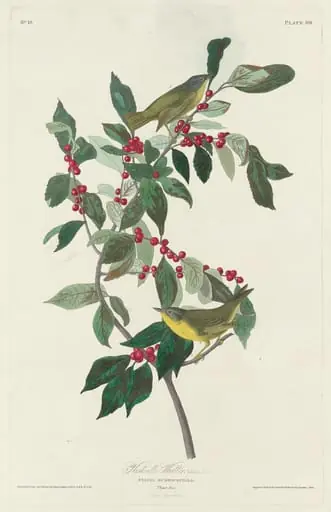
Lesser Red-poll is an ink print by the Romanticist artist Robert Havell Jr.. It dates from 1837 and is held in the collection of the National Gallery of Art.
About this work
Overview
The work exemplifies the Havell family’s technical mastery in printmaking, particularly their refined use of aquatint to achieve subtle tonal transitions.
Created in 1837 by Robert Havell Jr., *Lesser Red-poll* is a hand-colored engraving and aquatint on Whatman wove paper. It belongs to a series of natural history prints produced during a period of heightened interest in ornithological documentation. The work exemplifies the Havell family’s technical mastery in printmaking, particularly their refined use of aquatint to achieve subtle tonal transitions. The print was made in England, where the Havells were established as leading practitioners of the medium.
Subject & Meaning
The print depicts two birds perched on a branch, one with a pink chest and red head, the other brown with a speckled breast. Their postures and directional gaze suggest naturalistic observation rather than staged composition. The accompanying vegetation—green leaves and white berries—grounds the birds in a specific ecological context. This level of detail reflects a scientific intent: to record avian forms accurately, aligning with early 19th-century efforts to classify and document wildlife.
Technique & Style
Havell employed aquatint to render delicate gradations of tone, particularly in the birds’ plumage and the foliage’s texture. Engraved lines define fine feather structures, while hand-coloring adds lifelike hues without obscuring the underlying inkwork. The use of Whatman wove paper, prized for its smooth surface and durability, enhanced the print’s clarity. The technique allowed for both precision and atmospheric depth, distinguishing Havell’s work from flatter, more decorative contemporaries.
History & Provenance
Robert Havell Jr. was part of a multi-generational family of engravers based in Reading, Berkshire, whose practice extended from portraiture to natural history illustration. He worked under the influence of his father, Robert Havell the Elder, and uncle, Luke Havell, both respected in the field. *Lesser Red-poll* was likely produced for a larger ornithological publication, though its exact original context remains unconfirmed. The print survives as a representative example of British printmaking in the 1830s.
Context
In the 1830s, European naturalists increasingly sought to document global biodiversity through visual means. While Havell’s work focused on birds, his family had also engaged with Indian subjects through earlier commissions, reflecting broader imperial interests in natural history. This print, though depicting a European species, emerged from a cultural moment when scientific illustration and artistic craftsmanship converged to support emerging biological disciplines.
Legacy
Havell’s prints, including *Lesser Red-poll*, contributed to the standardization of ornithological imagery in the pre-photographic era. His technical precision influenced subsequent generations of natural history illustrators. Though not widely known today outside specialist circles, his work remains a reference point for the intersection of art and science in early Victorian Britain, preserved in institutional collections and historical archives.
Artist & collection

Artist
The Havell family of Reading, Berkshire, England, included a number of notable engravers, etchers and painters, as well as writers, publishers, educators, and musicians.