Artwork
American Crossbill
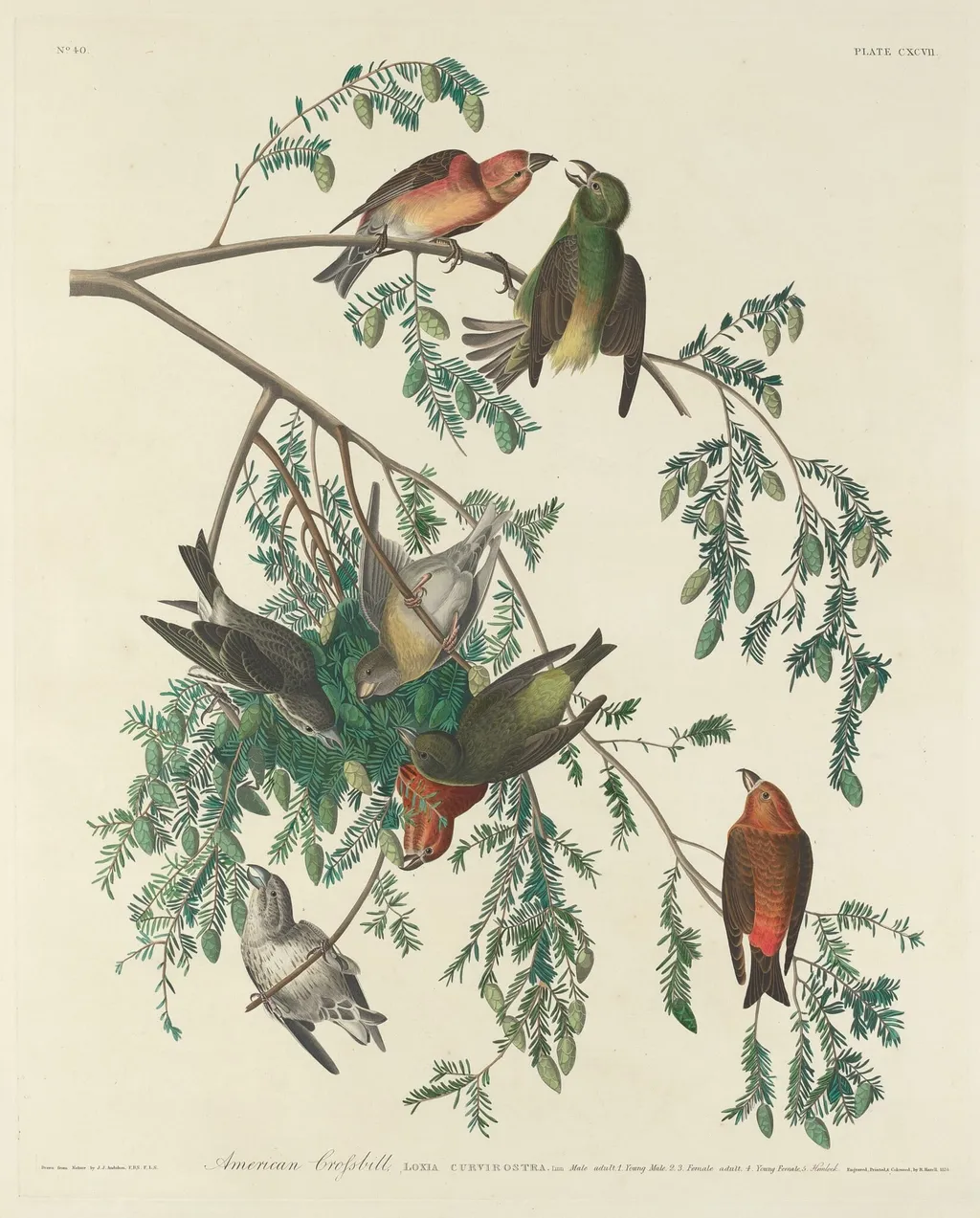
American Crossbill is an ink print by the Romanticist artist Robert Havell Jr.. It dates from 1834 and is held in the collection of the National Gallery of Art.
About this work
Overview
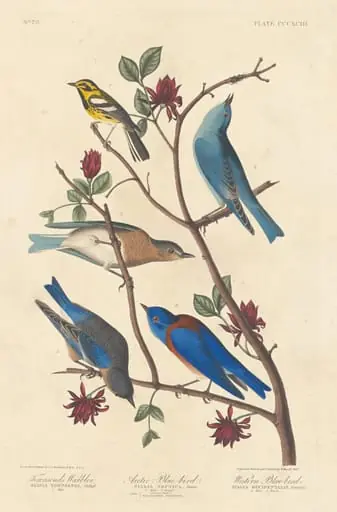
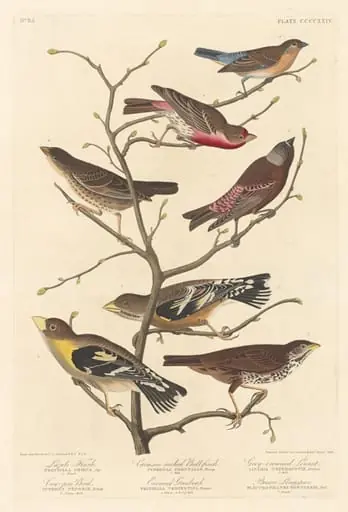
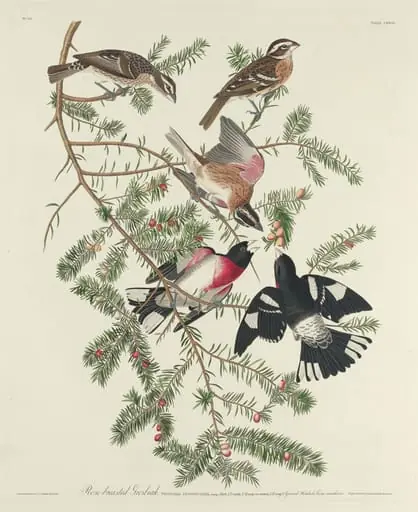
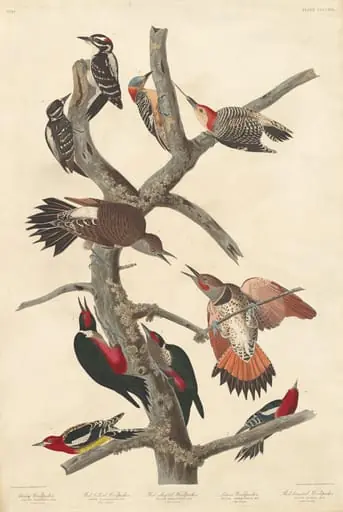
American Crossbill is a hand-colored engraving and aquatint print created by Robert Havell Jr. in 1834 on Whatman wove paper. It showcases the artist's family's renowned expertise in aquatint and their contribution to naturalist illustration.
Subject & Meaning
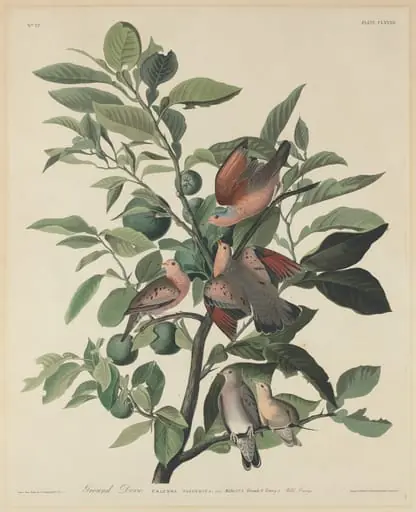
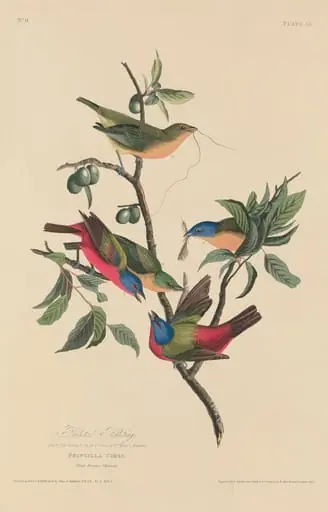
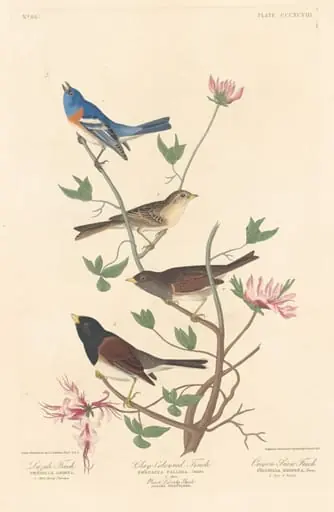
The print depicts six American crossbills, a finch species, in vivid detail. The birds, rendered in red, green, and brown hues, are shown interacting among themselves amidst twisted, leafy branches, conveying a sense of serene bustle.
Technique & Style
Havell employed a combination of etching and hand-coloring techniques to achieve vibrant colors, characteristic of the naturalist illustration style prevalent during the period for scientific and aesthetic purposes.
History & Provenance
Created in 1834, the work exemplifies the Havell family's prominent role in aquatint techniques within the context of 19th-century natural history art.
Context
American Crossbill reflects the era's emphasis on detailed naturalist illustrations for both scientific documentation and popular appreciation of nature, with the Havells at the forefront of this artistic and intellectual movement.
Artist & collection

Artist
The Havell family of Reading, Berkshire, England, included a number of notable engravers, etchers and painters, as well as writers, publishers, educators, and musicians.