Artwork
Republican Cliff Swallow
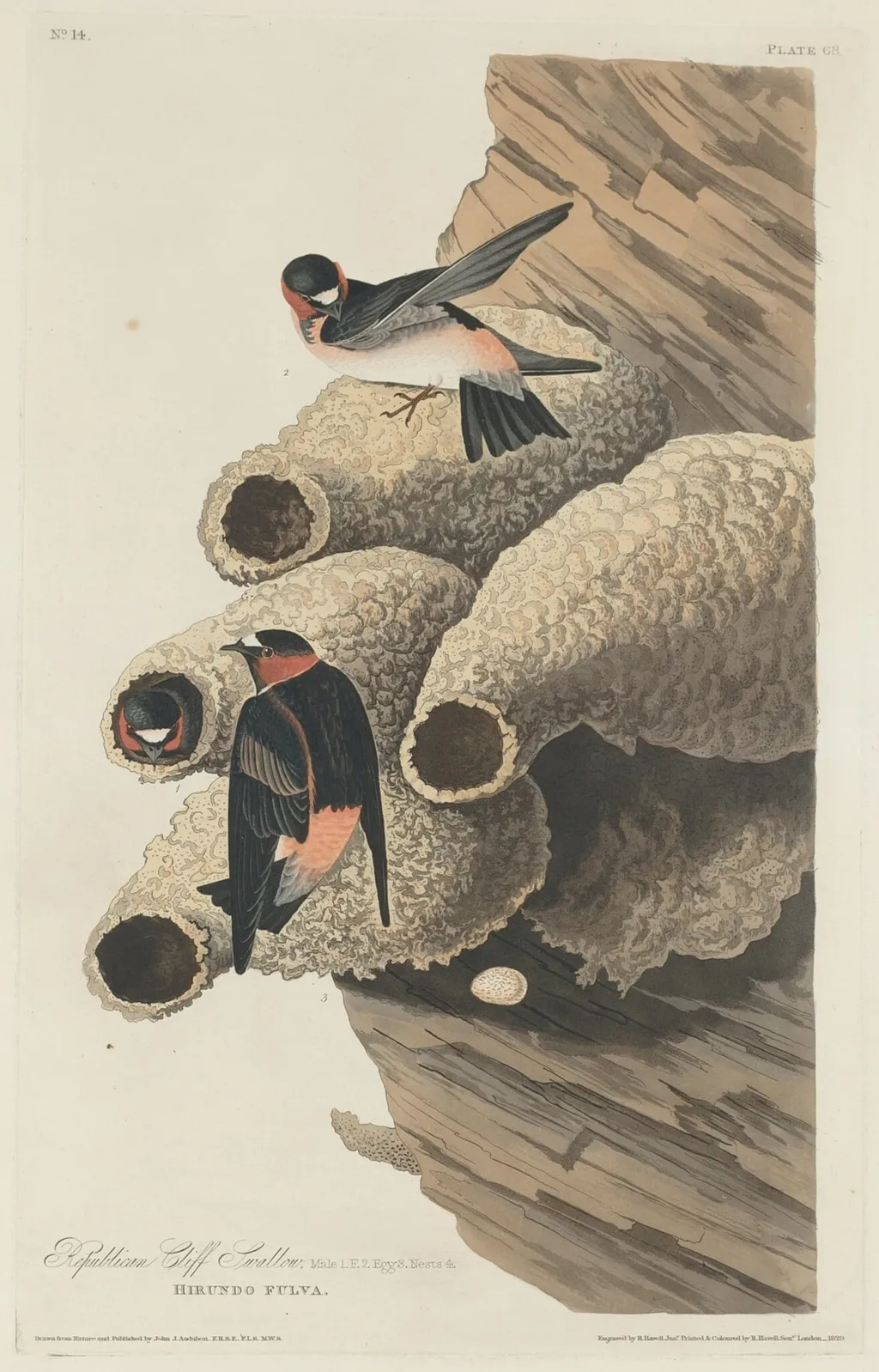
Republican Cliff Swallow is an ink print by the Romanticist artist Robert Havell Jr.. It dates from 1829 and is held in the collection of the National Gallery of Art.
About this work
Overview
The work exemplifies the Havell family’s technical mastery in printmaking, particularly their refined use of aquatint to achieve subtle tonal gradations.
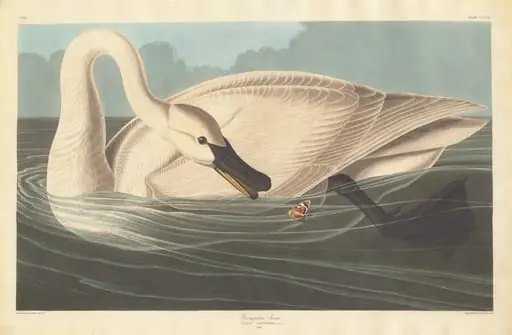
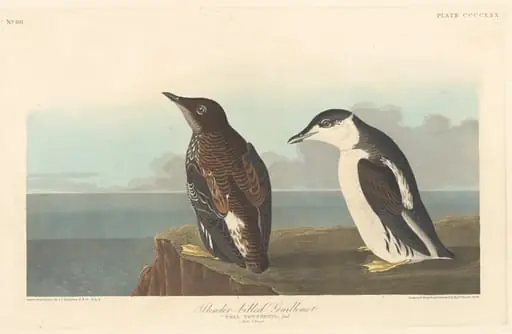
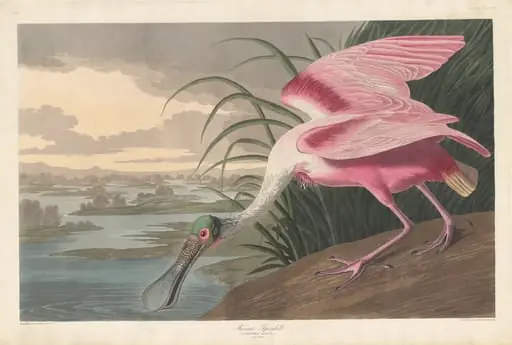
Robert Havell Jr. produced this hand-colored engraving and aquatint in 1829 on Whatman wove paper, part of a series documenting North American birds. The work exemplifies the Havell family’s technical mastery in printmaking, particularly their refined use of aquatint to achieve subtle tonal gradations. The image combines scientific observation with artistic precision, reflecting the family’s long-standing role in natural history illustration.
Subject & Meaning
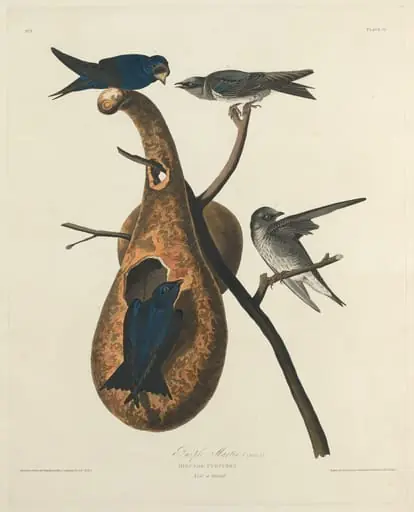
The print depicts two cliff swallows—one perched on a rocky ledge, the other in flight—against a textured cliff face with hollowed nests lined with twigs. The birds are labeled 'Republican Cliff Swallow,' a name reflecting contemporary naming conventions rather than political affiliation. The focus on nesting behavior underscores an interest in avian biology, aligning with early 19th-century naturalist efforts to catalog species through detailed visual records.
Technique & Style
Havell employed engraving for sharp linear definition and aquatint for soft atmospheric tones, particularly in the rock surfaces and feather textures. Hand-coloring enhanced the birds’ distinctive features: black wings, white underparts, and vivid red facial markings. The meticulous rendering of individual feathers and the rough, pitted cliff surface demonstrates a commitment to anatomical accuracy and tactile realism, characteristic of the Havell workshop’s approach.
History & Provenance
Created during a period when the Havell family was deeply involved in illustrating John James Audubon’s ornithological works, this print emerged from their established London-based printmaking studio. Robert Havell Jr. inherited and expanded the technical legacy of his father, Robert Havell the Elder, and uncle, Luke Havell, contributing to a body of work that became foundational in American natural history publishing.
Context
In the 1820s, American naturalists and European publishers collaborated to document the continent’s biodiversity. Havell’s prints were part of this transatlantic effort, blending European printmaking traditions with newly observed North American species. The use of Whatman paper, prized for its durability and texture, reflects the high standards of production expected in scientific illustration at the time.
Legacy
Though the term 'Republican Cliff Swallow' is no longer in use, the print remains a significant example of early American ornithological art. Havell’s technical precision and attention to ecological detail influenced later natural history illustrators. His work, alongside his family’s, helped establish visual documentation as a vital component of scientific study in the pre-photographic era.
Artist & collection

Artist
The Havell family of Reading, Berkshire, England, included a number of notable engravers, etchers and painters, as well as writers, publishers, educators, and musicians.