Artwork
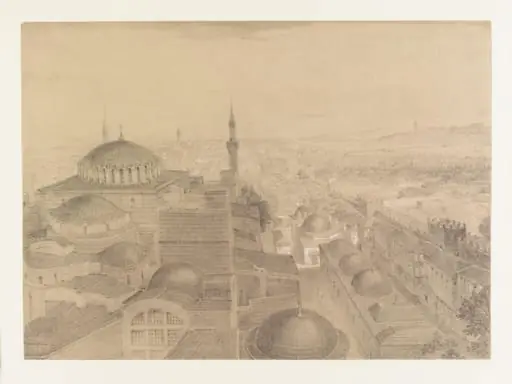
Vue des Turbé, ou Tombes Impériales
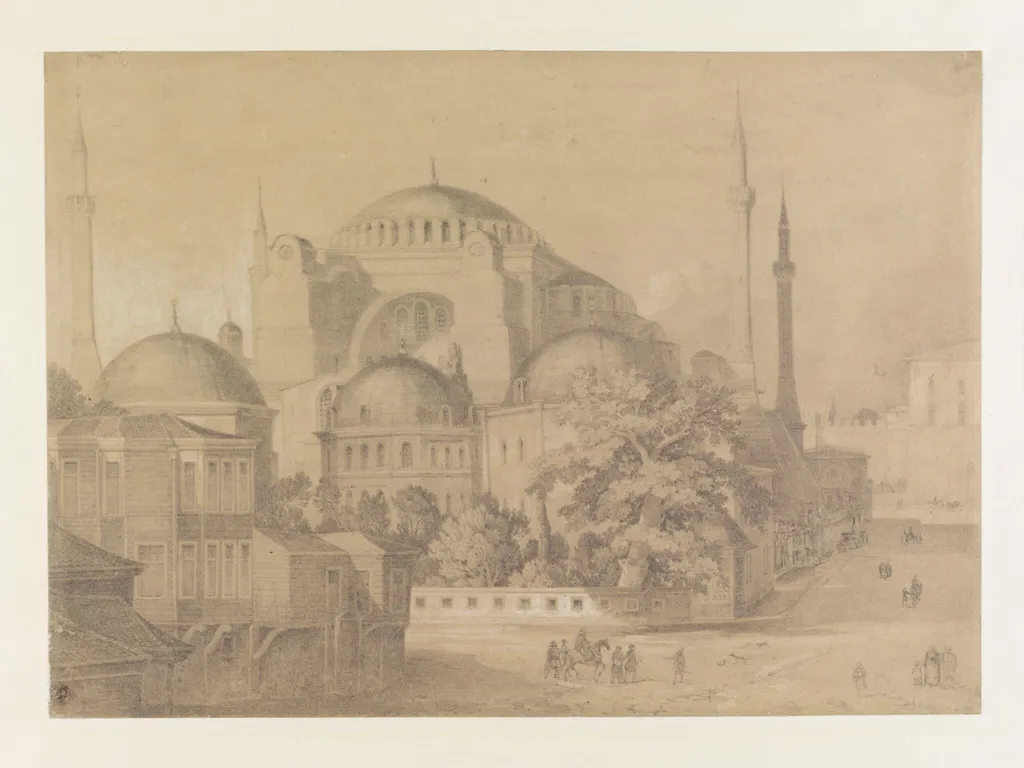
Vue des Turbé, ou Tombes Impériales is a drawing by the Impressionist artist Alexius Geyer. It dates from 1852 and is held in the collection of the Victoria and Albert Museum.
About this work
Overview
Alexius Geyer’s 1852 drawing *Vue des Turbé, ou Tombes Impériales* records the imperial mausoleums adjoining Hagia Sophia in Constantinople.
Alexius Geyer’s 1852 drawing *Vue des Turbé, ou Tombes Impériales* records the imperial mausoleums adjoining Hagia Sophia in Constantinople. Executed in graphite and wash, the sheet presents a measured, topographically precise view of the tombs’ exteriors, including their domes, minarets, and surrounding vegetation. The work formed part of a systematic survey initiated during Gaspard Fossati’s restoration campaign.
Subject & Meaning
The drawing isolates the Ottoman imperial sepulchers—known as türbe—flanking Hagia Sophia, then recently converted from a mosque back to an Orthodox basilica. By fixing the tombs’ forms on paper, Geyer preserved their architectural details at a moment of institutional transition, underscoring the layered histories embedded in the site.
Technique & Style
Geyer employed fine, controlled linework to delineate masonry joints, domical profiles, and foliage, while graded washes model volume and recession. The approach balances documentary exactitude with pictorial cohesion, aligning with mid-nineteenth-century architectural draftsmanship that valued both accuracy and legibility.
History & Provenance
Commissioned by Gaspard Fossati during his 1847–1849 restoration of Hagia Sophia, the drawing was engraved as plate 19 in Fossati’s 1852 folio *Aya Sofia Constantinople*. The original sheet remains associated with the published suite, reflecting its role in a collaborative, multi-volume record of the monument.
Context
Created amid European interest in Ottoman heritage, the drawing participated in a broader effort to document Constantinople’s landmarks. Fossati’s project, supported by Sultan Abdülmecid I, sought to reconcile preservation with modernization, positioning Geyer’s exterior views as both scientific inventory and cultural testimony.
Artist & collection
Artist
Alexius Geyer spent the 1850s wandering Constantinople’s hills with a folding stool and a camera lucida, sketching the city before photographers crowded the view.

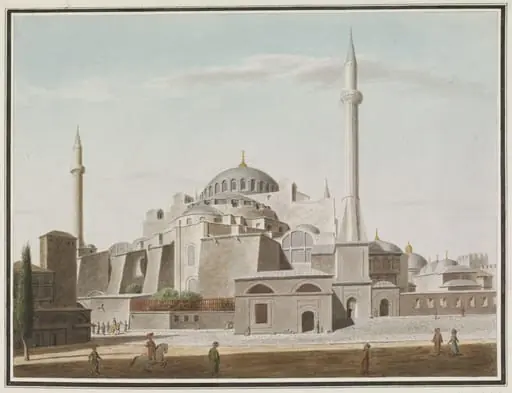 Haghia Sophia
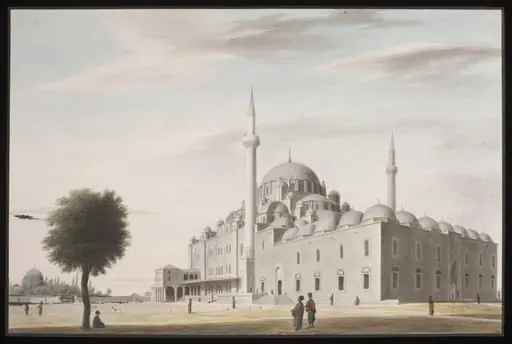 View of the Fatih Mehmet Camii
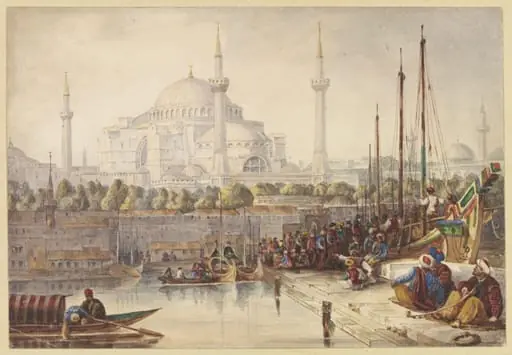 St.Sophia, from the Bosphorus
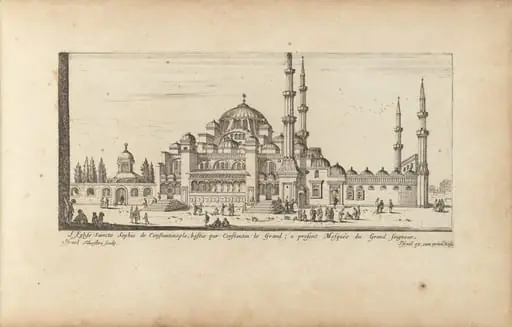 L'Eglise Saincte Sophie de Constantinople, bastie par Constantin le Grand; a present Mosquée du Grand seigneur
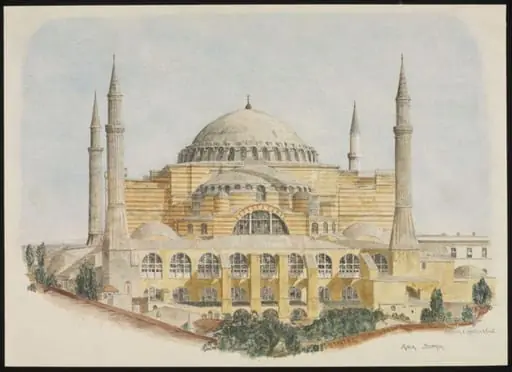 untitled
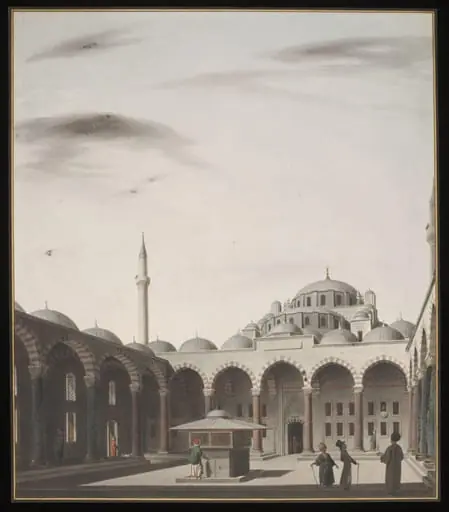 View of the Courtyard of the Fatih Mehmet Camii
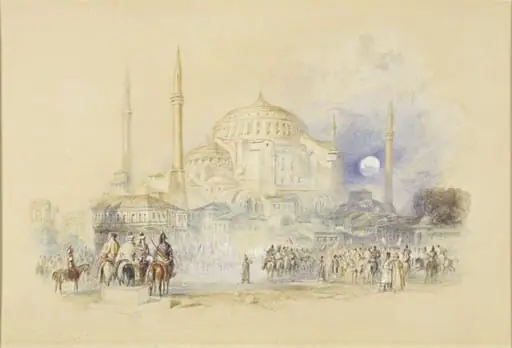 Hagia Sophia, Constantinople
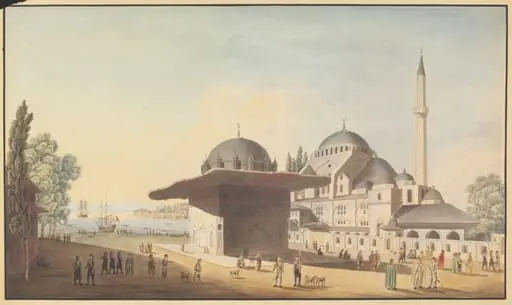 Tophane Çesmesi with Kiliç Ali Pasa Camii
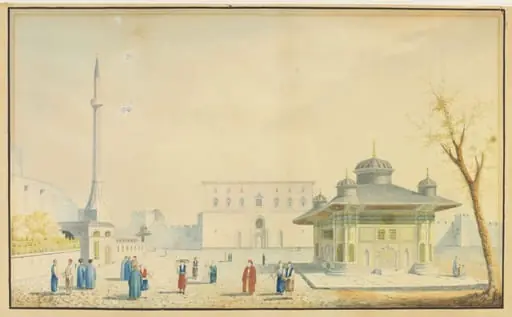 The Bab-i Hümayün or Imperial Gate of Topkapi Sarayi, with the Fountain of Sultan Ahmet III
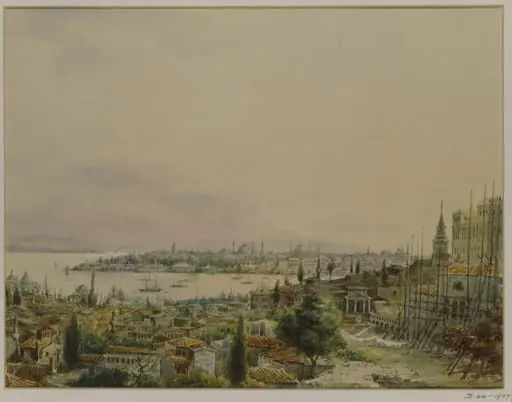 View of Constantinople from Pera
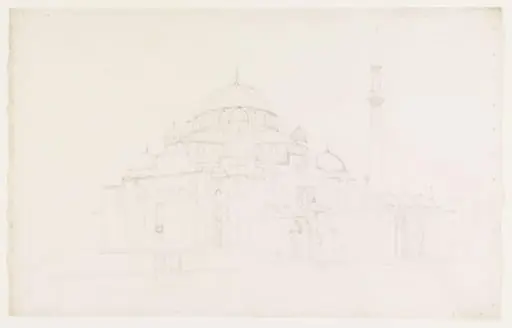 Sehzade Camii, Constantinople
 Panorama de Constantinople