Artwork
Untitled
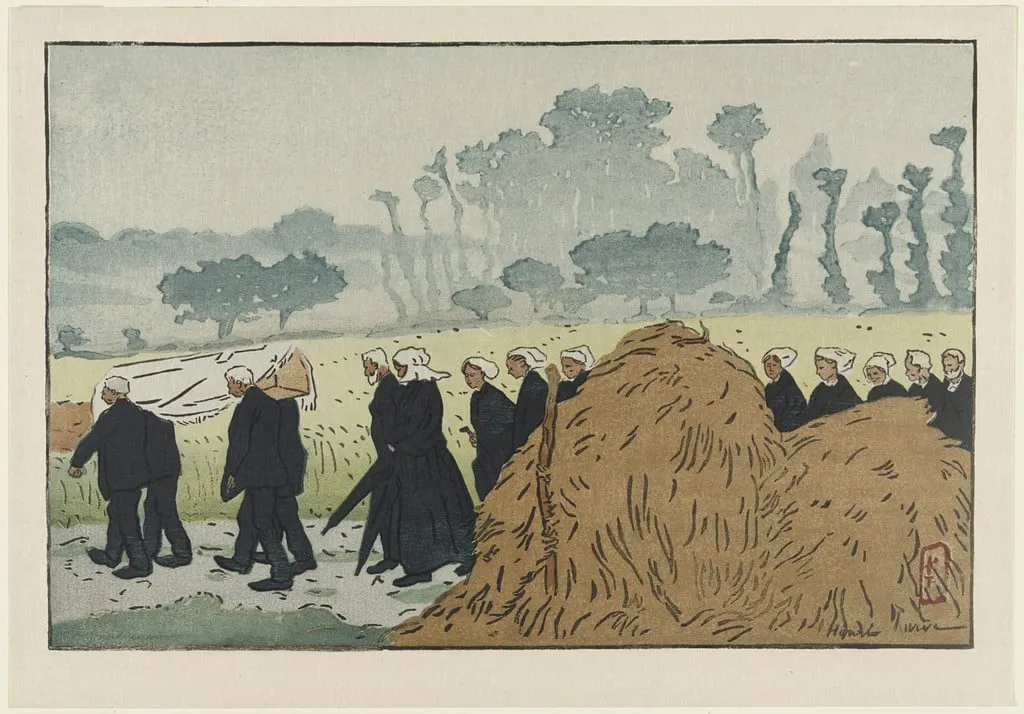
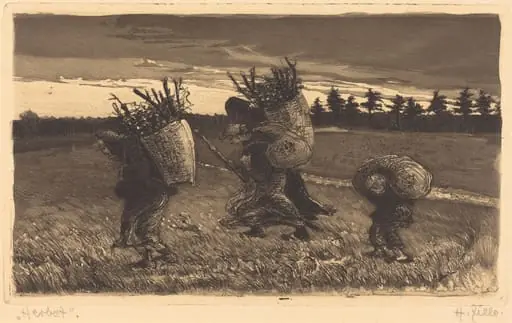
Untitled is an ink print by the Impressionist artist Henri Rivière. It dates from 1891 and is held in the collection of the Museum of Modern Art.
About this work
Overview
Rivière, known for his illustrations and experimental printmaking, used the medium to capture everyday rural life.
Created in 1891 by French artist Henri Rivière, this woodcut is part of his broader exploration of graphic arts. Rivière, known for his illustrations and experimental printmaking, used the medium to capture everyday rural life. The work reflects his interest in combining traditional techniques with modern visual sensibilities, aligning with broader trends in late 19th-century French print culture.
Subject & Meaning
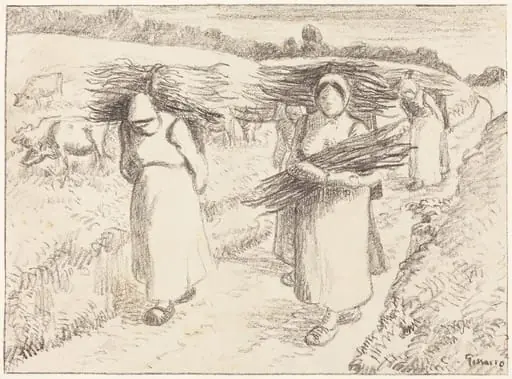
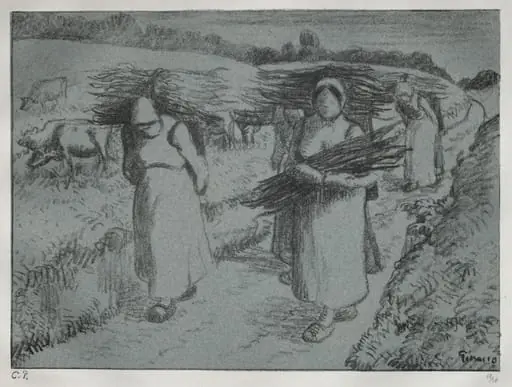
A procession of figures in dark clothing, some bearing bundles and umbrellas, moves along a narrow path beside a mound of hay. Their white head coverings suggest regional dress or ritual attire. The quiet, deliberate motion implies a routine or communal activity—perhaps a harvest-related procession. The absence of overt drama or narrative focus invites contemplation of labor and seasonal rhythms in rural France.
Technique & Style
Rivière employed woodcut to achieve sharp contrasts between the dense, dark forms of the figures and the muted, softly graded background. The coarse texture of the wood grain subtly informs the landscape, while the figures are rendered with simplified, almost silhouetted precision. The limited tonal range enhances the somber mood, echoing the aesthetic of Japanese prints and the emerging modernist interest in flatness and line.
History & Provenance
This print emerged during Rivière’s most active period in graphic design, following his work at the Chat Noir cabaret, where he developed shadow theater techniques. Though not widely exhibited at the time, it was likely produced for private or limited circulation among Parisian art circles. Its survival reflects its status as a personal experiment rather than a commercial product.
Context
Rivière’s woodcut aligns with the broader revival of printmaking in France during the 1890s, as artists sought alternatives to academic painting. His focus on rural scenes echoes Realist traditions, while the stylized composition shows influence from Japanese ukiyo-e. The work also resonates with contemporaries like Lautrec and Toulouse-Lautrec, who similarly drew from popular and folk imagery to redefine visual storytelling.
Legacy
Though less known than his shadow theater innovations, this woodcut exemplifies Rivière’s contribution to the graphic arts movement in fin-de-siècle France. It stands as a quiet testament to the artist’s commitment to print as a vehicle for observing ordinary life. Later scholars have cited it as an example of how regional themes were reinterpreted through modernist techniques in late 19th-century France.
Artist & collection
Artist
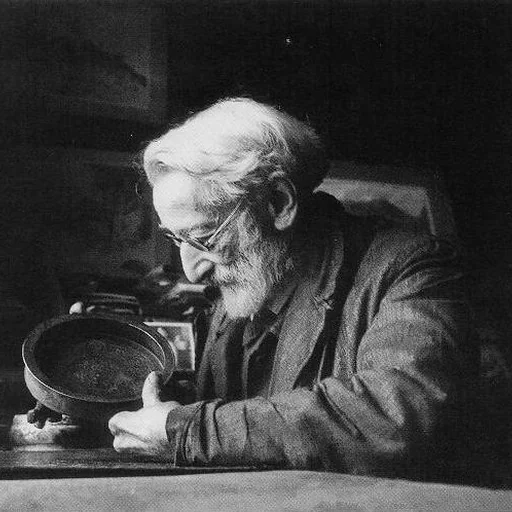
Henri Rivière (March 11, 1864 – August 24, 1951) was a French artist and designer best known for his creation of a form of shadow play at the Chat Noir cabaret, and for his post-Impressionist illustrations of Breton landscapes and the…

 Aspects of Nature: The Island
 Parisian Landscapes: The Fortifications
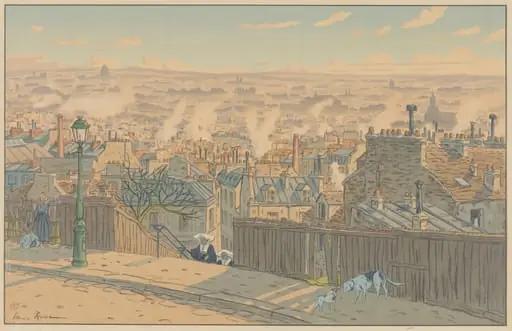 Parisian Landscapes: Paris seen from Montmartre
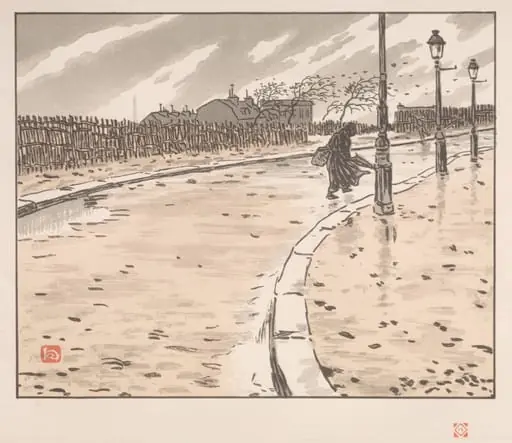 Thirty-Six Views of the Eiffel Tower: From Lamarck Street
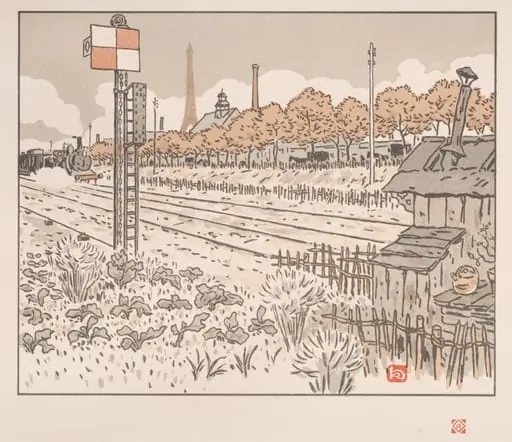 Thirty-Six Views of the Eiffel Tower: From the Quai de Javel (Switchman's Shanty)
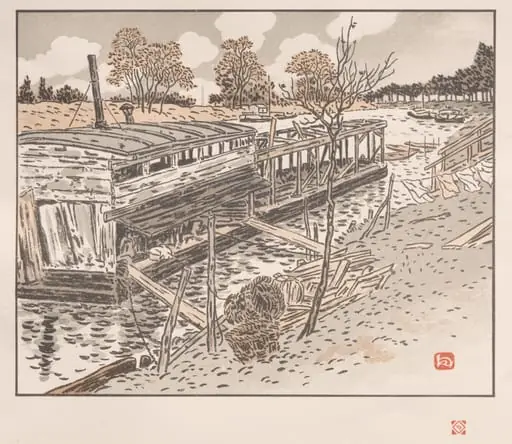 From Bas-Meudon, Old Lavoir
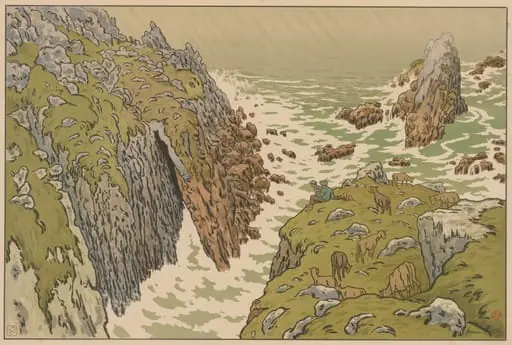 Aspects of Nature: The Cliff
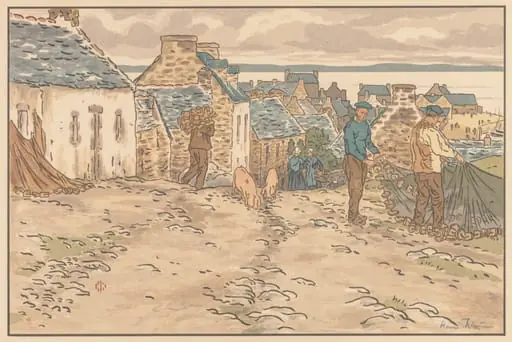 The Beautiful Countryside in Brittany: Street in Tréboul
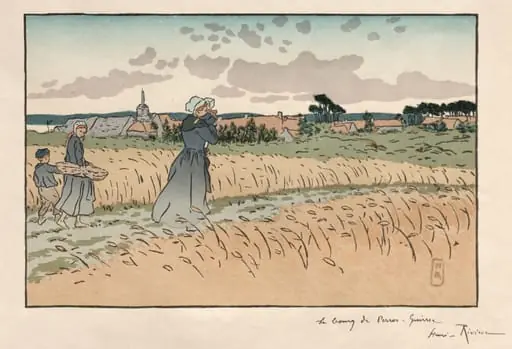 Parisian Landscapes: The Borough of Perros-Guirec
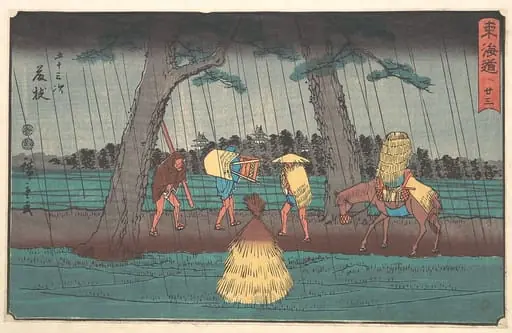 東海道五十三次 藤枝|Fujieda
 東海道五十三次 懸川 秋葉山別道|Kakegawa
 Peasants Carrying Sticks (Paysannes portant des fagots)
 Peasants Carrying Fagots
 東海道五十三次 平塚|Hiratsuka
 百人一首 うはかゑとき 天智天皇|Poem by Tenchi Tennō, from the series One Hundred Poems Explained by the Nurse (Hyakunin isshu uba ga etoki)
 Kanō, from the series Sixty-nine Stations of the Kisokaidō
 東海道五十三次 舞坂|Maizaka
 Herbst
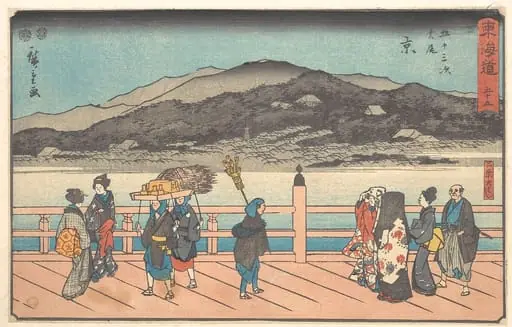 歌川広重画 「東海道 五十三次 大尾 京 三条大はし」|The Great Bridge at Sanjō (Taibi, Kyō, Sanjō Ōhashi), from the series The Tōkaidō Road: The Fifty-Three Stations (Tōkaidō: Gojūsan tsugi)