Artwork
Parisian Landscapes: The Borough of Perros-Guirec
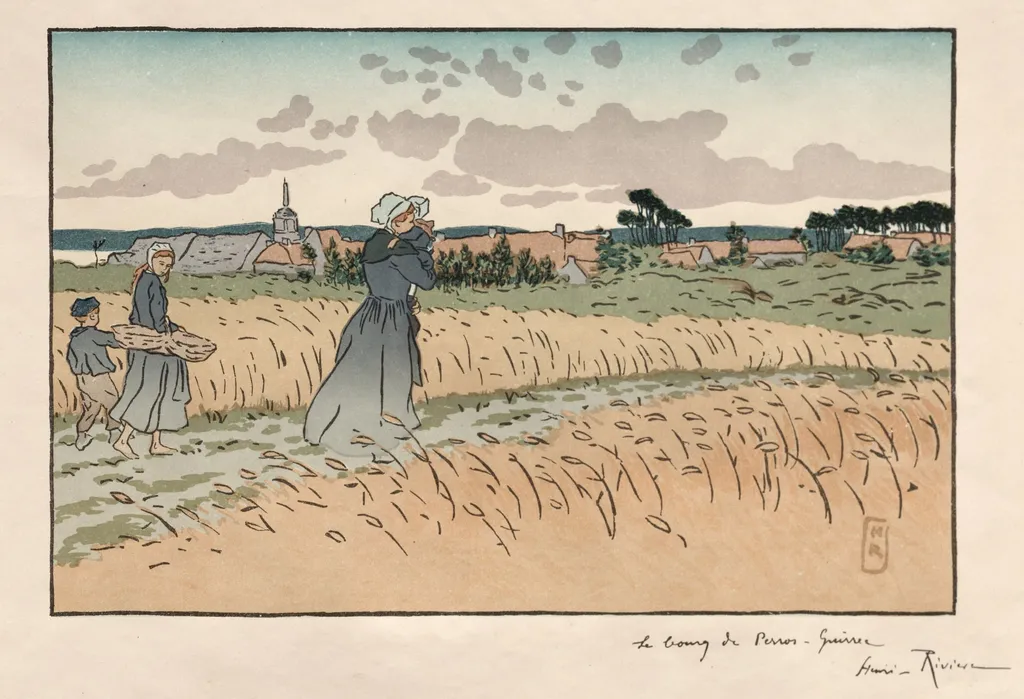
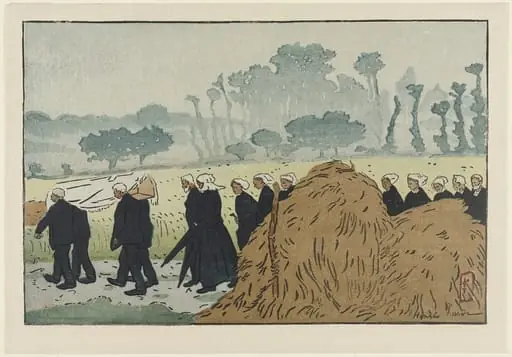
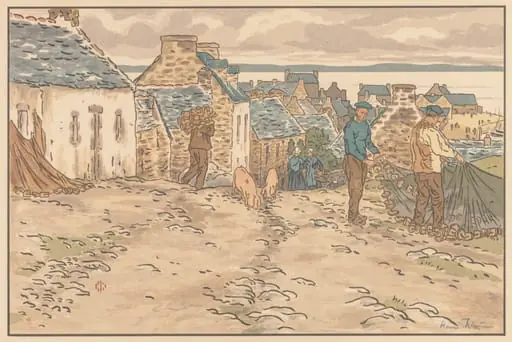
Parisian Landscapes: The Borough of Perros-Guirec is a print by the Impressionist artist Henri Rivière. It dates from 1896 and is held in the collection of the Cleveland Museum of Art.
About this work
Overview
Though often associated with Parisian cultural circles and shadow theater, Rivière turned frequently to the Breton landscape for inspiration.
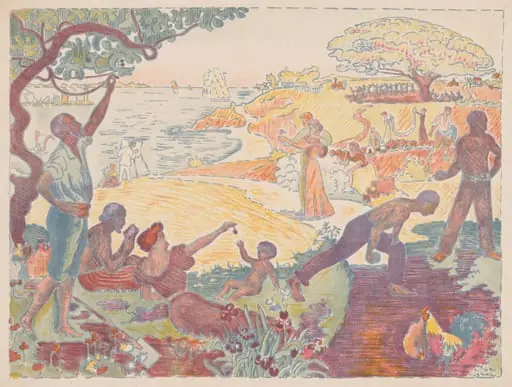
Created in 1896 by Henri Rivière, this print captures a quiet coastal scene in Perros-Guirec, Brittany. Though often associated with Parisian cultural circles and shadow theater, Rivière turned frequently to the Breton landscape for inspiration. The work belongs to the Cleveland Museum of Art’s collection and reflects his interest in regional life, rendered with the loose brushwork characteristic of late 19th-century French art.
Subject & Meaning
The scene portrays three figures engaged in rural labor near the shore: one standing with a staff, another stooping with a basket, and a third receding into the distance. Behind them, a modest village with a church steeple rises beside the water. The composition suggests daily rhythms of coastal life, emphasizing quiet endurance rather than drama. The absence of overt narrative invites contemplation of place and routine.
Technique & Style
Rivière employed fluid, abbreviated brushstrokes to convey texture and atmosphere, particularly in the wind-swept grass and soft clouds. The pale sky and muted earth tones reflect a restrained palette aligned with post-Impressionist tendencies. Rather than precise detail, the work prioritizes the impression of light and motion, echoing broader French artistic trends of the period while retaining a personal, observational tone.
History & Provenance
The print was produced in 1896 during a period when Rivière was actively exploring printmaking alongside his theatrical work. It entered the Cleveland Museum of Art’s collection through established acquisition channels, likely as part of broader interest in French graphic art of the 1890s. Its preservation reflects institutional recognition of Rivière’s contribution beyond the Chat Noir stage.
Context
Rivière’s focus on Brittany coincided with a wider French fascination with regional identities during the Third Republic. Artists increasingly turned away from urban subjects to depict rural and coastal communities, often idealizing their simplicity. This work aligns with such trends, situating Breton life within the evolving visual language of French modernism.
Legacy
Though less known than his shadow theater innovations, Rivière’s landscapes contribute to an understudied body of work that bridges Impressionist observation and Symbolist mood. His prints like this one helped expand the scope of French graphic art beyond urban satire, offering quiet, lyrical alternatives that influenced later regionalist movements in printmaking.
Artist & collection
Artist
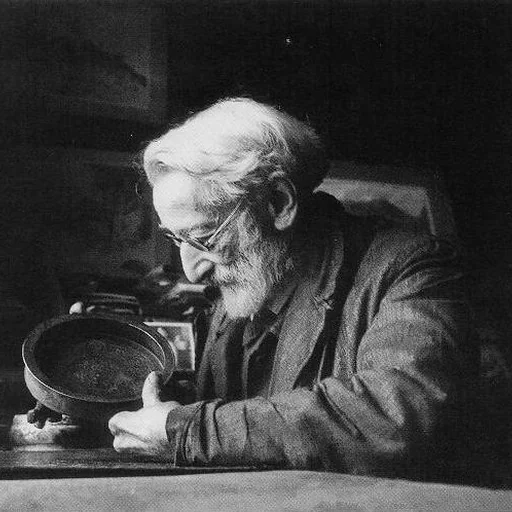
Henri Rivière (March 11, 1864 – August 24, 1951) was a French artist and designer best known for his creation of a form of shadow play at the Chat Noir cabaret, and for his post-Impressionist illustrations of Breton landscapes and the…

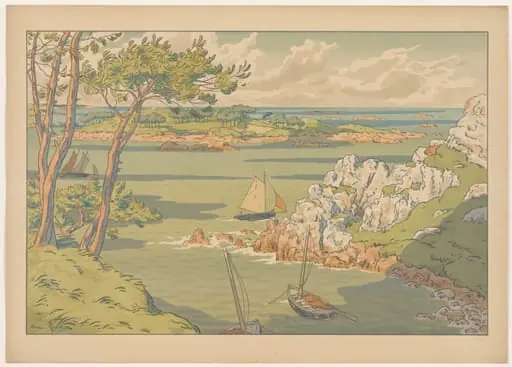 Aspects of Nature: The Island
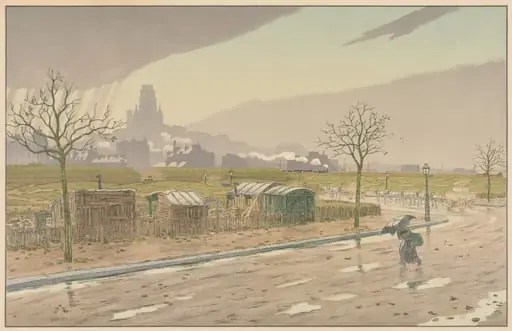 Parisian Landscapes: The Fortifications
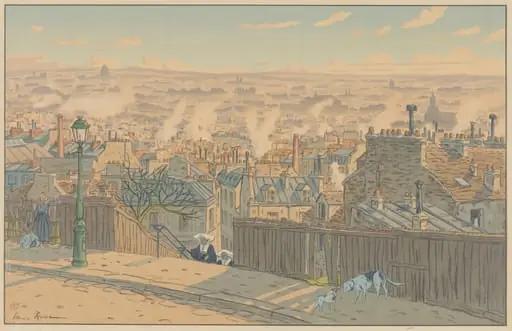 Parisian Landscapes: Paris seen from Montmartre
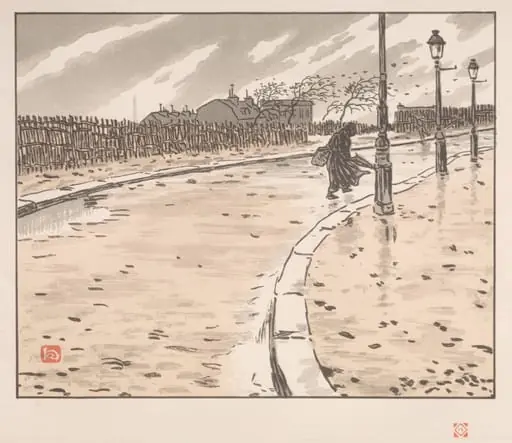 Thirty-Six Views of the Eiffel Tower: From Lamarck Street
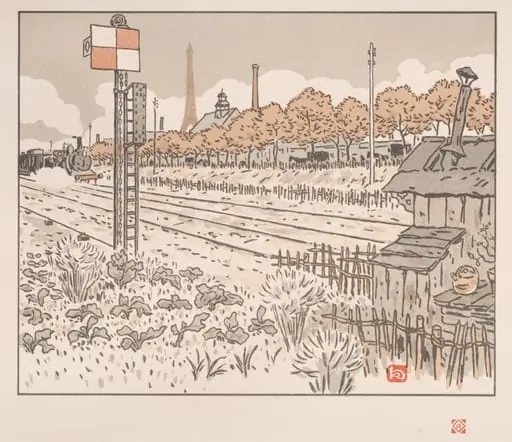 Thirty-Six Views of the Eiffel Tower: From the Quai de Javel (Switchman's Shanty)
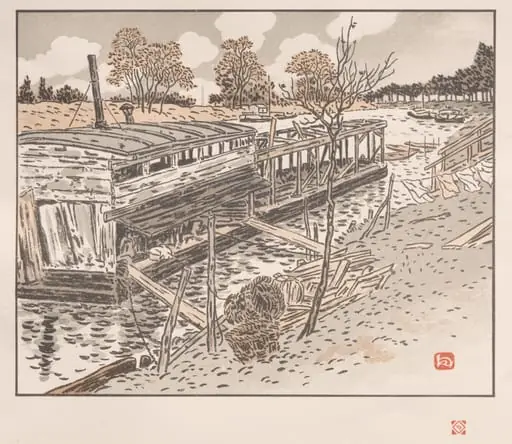 From Bas-Meudon, Old Lavoir
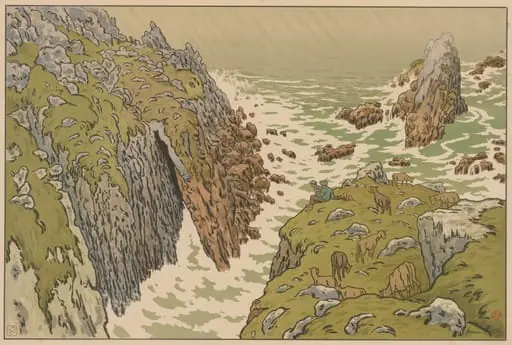 Aspects of Nature: The Cliff
 The Beautiful Countryside in Brittany: Street in Tréboul