Artwork
The Wandering Jew: The Plain
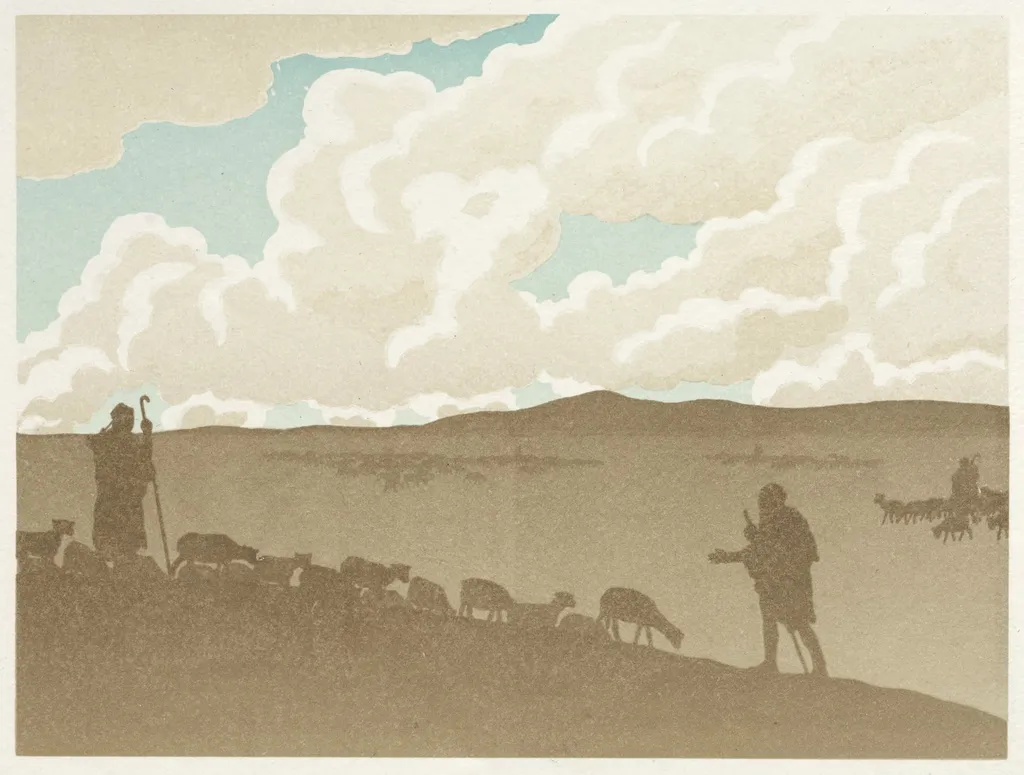
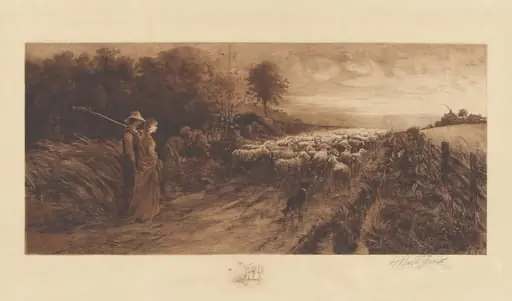
The Wandering Jew: The Plain is a work on paper by the Impressionist artist Henri Rivière. It dates from 1896 and is held in the collection of the Cleveland Museum of Art.
About this work
Overview
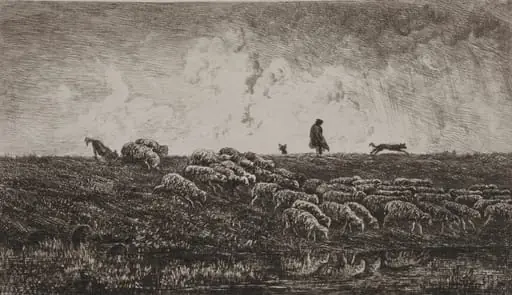
The scene depicts two figures guiding sheep across an open plain, rendered with restrained detail and a focus on atmospheric tone rather than narrative drama.
Created in 1896 by French artist Henri Rivière, this print is part of a portfolio titled *The Wandering Jew*, which draws from a medieval Christian legend. Rivière, known for his shadow theatre and landscape illustrations, uses quiet composition to evoke solitude and movement. The scene depicts two figures guiding sheep across an open plain, rendered with restrained detail and a focus on atmospheric tone rather than narrative drama.
Subject & Meaning
Though titled after the mythic figure condemned to eternal travel, the image avoids overt symbolism. Instead, it presents a mundane pastoral moment: two shepherds, one with a dog and a staff, moving livestock across a sunlit field. The connection to the legend lies in the implied endless journey, not in supernatural elements. The calm, uneventful scene transforms the myth into a meditation on labor and transience.
Technique & Style
Rivière employs soft, muted tones of tan, brown, and pale blue to suggest a dry, sun-baked landscape. Light and shadow are carefully modulated to create subtle depth without strong contrasts. The figures and animals are simplified, with minimal detail, emphasizing form and spatial relationships. The style aligns with post-Impressionist concerns for emotional resonance through color and composition rather than realism.
History & Provenance
This work originated as a print in Rivière’s 1896 portfolio, produced during a period when he was deeply engaged with printmaking and theatrical design. It was likely issued in a limited run, common for artists exploring serialized imagery. The portfolio was not widely distributed, and surviving examples are now held in institutional collections, primarily in France, reflecting its niche but thoughtful reception.
Context
Rivière’s interest in the Wandering Jew theme coincided with late 19th-century European fascination with mythic archetypes and existential solitude. While contemporaries like Gauguin sought spiritual meaning in exotic locales, Rivière found it in familiar French rural life. His approach echoes Realist traditions in depicting ordinary labor, yet his tonal subtlety and symbolic framing align more closely with Symbolist sensibilities.
Legacy
Though not widely exhibited during his lifetime, Rivière’s *Wandering Jew* series influenced later printmakers interested in narrative economy and atmospheric mood. Its quiet depiction of rural labor, stripped of sentimentality, contributed to a broader shift in French graphic arts toward introspective, non-dramatic imagery. Today, it is studied as an example of how myth could be reimagined through everyday observation.
Artist & collection
Artist
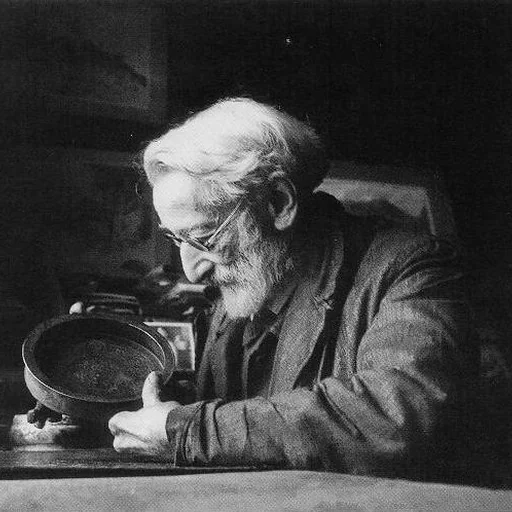
Henri Rivière (March 11, 1864 – August 24, 1951) was a French artist and designer best known for his creation of a form of shadow play at the Chat Noir cabaret, and for his post-Impressionist illustrations of Breton landscapes and the…

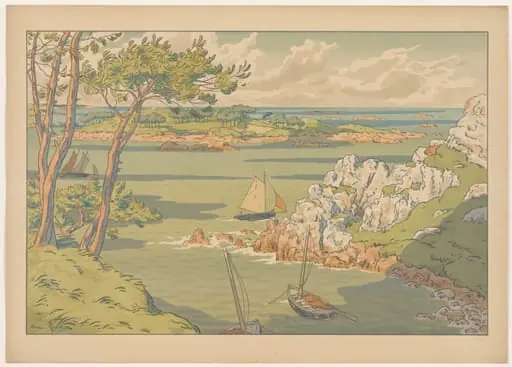 Aspects of Nature: The Island
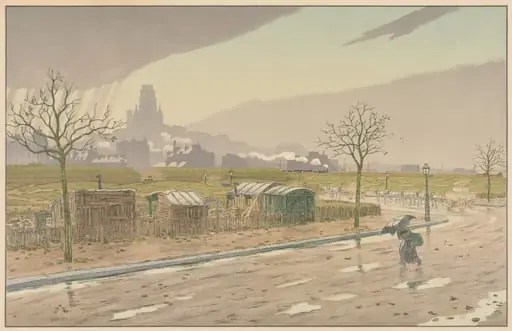 Parisian Landscapes: The Fortifications
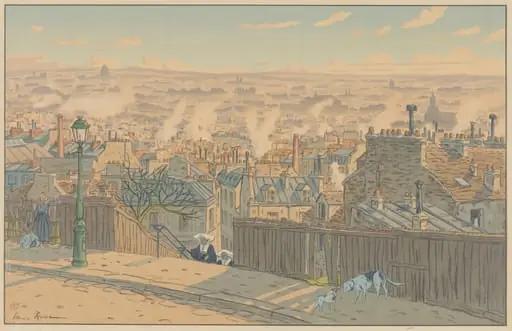 Parisian Landscapes: Paris seen from Montmartre
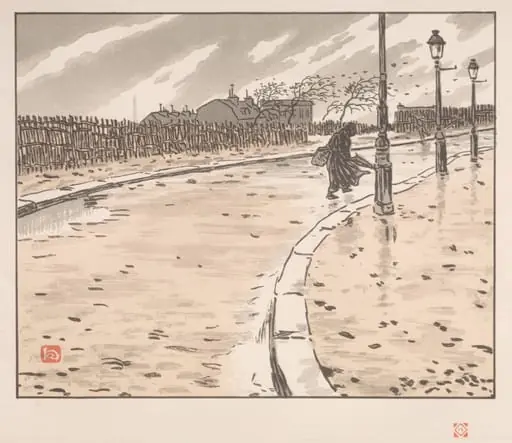 Thirty-Six Views of the Eiffel Tower: From Lamarck Street
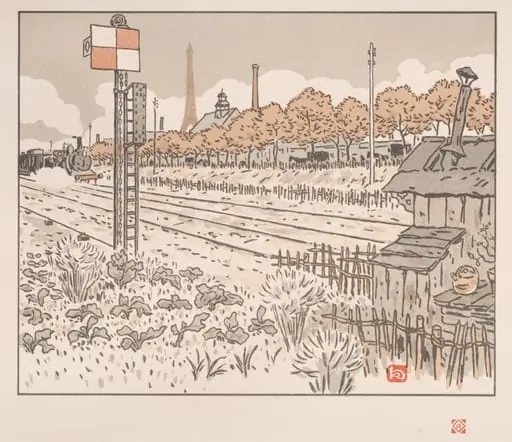 Thirty-Six Views of the Eiffel Tower: From the Quai de Javel (Switchman's Shanty)
 From Bas-Meudon, Old Lavoir
 Aspects of Nature: The Cliff
 The Beautiful Countryside in Brittany: Street in Tréboul