Artwork
Administrative Customs: Supernumerary
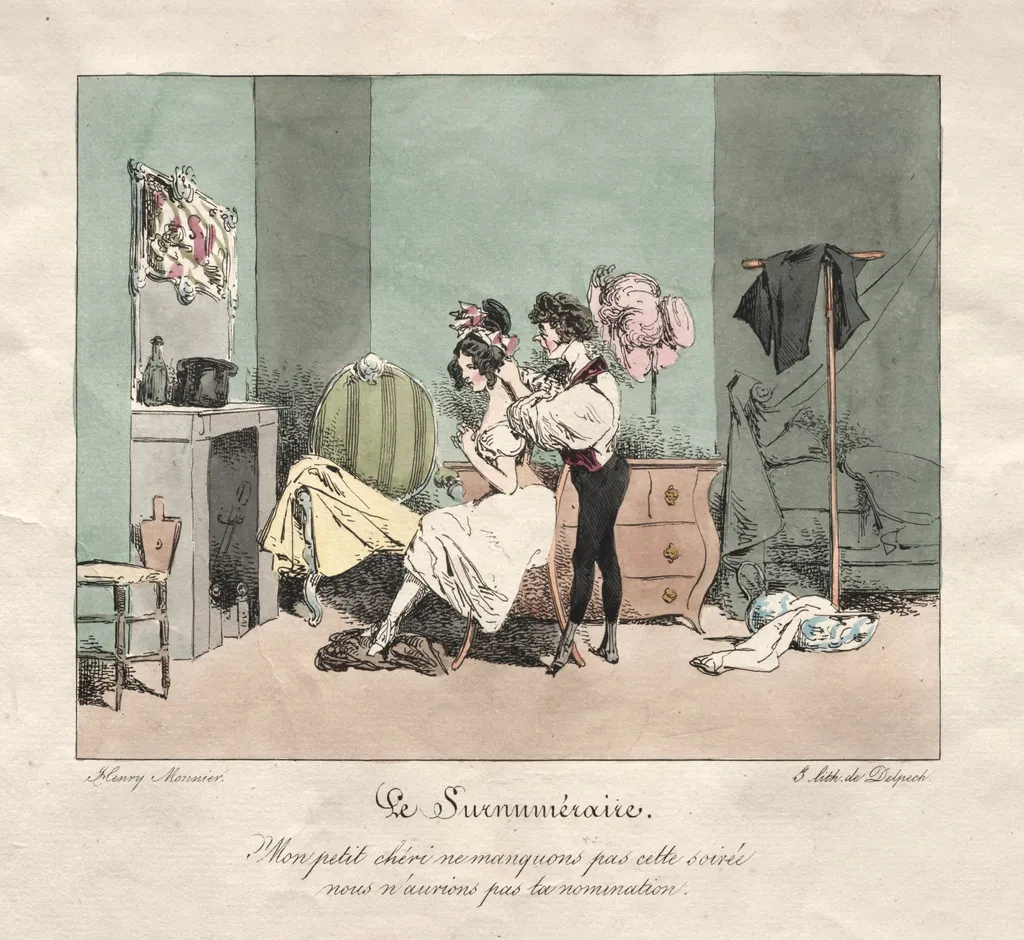
Administrative Customs: Supernumerary is a print by the Romanticist artist Henry Bonaventure Monnier. It dates from 1804 and is held in the collection of the Cleveland Museum of Art.
About this work
Overview
It resides in The Cleveland Museum of Art’s collection and reflects the artist’s interest in everyday social interactions.
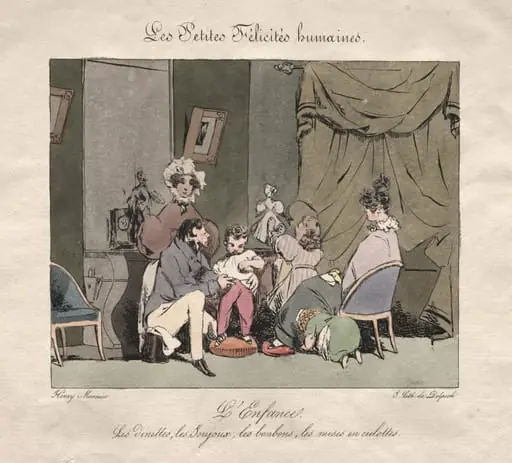
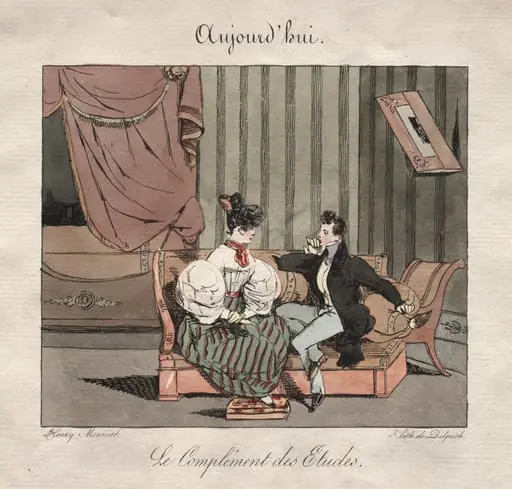
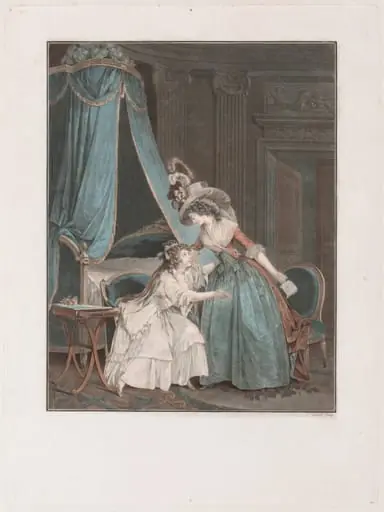
Created around 1804 by Henry Bonaventure Monnier, this print captures a quiet domestic moment between two figures. It resides in The Cleveland Museum of Art’s collection and reflects the artist’s interest in everyday social interactions. The composition is restrained, focusing on subtle gestures and interior details rather than dramatic action, aligning with early 19th-century French genre painting traditions.
Subject & Meaning
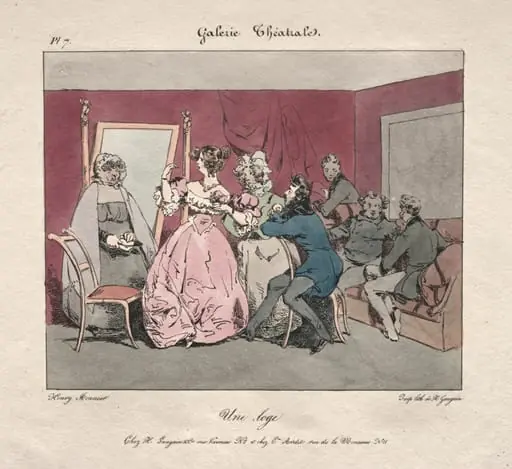
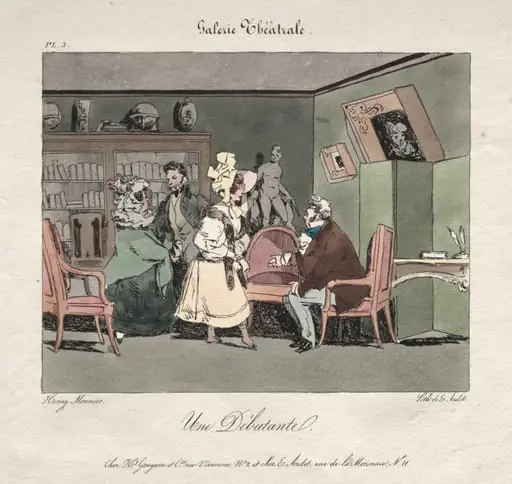
The scene portrays a man standing beside a seated woman in a modest interior, suggesting a private exchange. Their postures imply familiarity, though no clear narrative is given. The absence of overt emotion or gesture invites interpretation of their relationship—perhaps familial, marital, or servant and employer. The setting emphasizes routine rather than spectacle, grounding the image in the quiet rhythms of daily life.
Technique & Style
Monnier employs fine linear detail and muted tonal contrasts to render the interior and figures. The light blue-green walls and soft lighting suggest a calm, enclosed space. Clothing is rendered with precision, particularly the woman’s white dress and pink ribbon, which draw attention without overwhelming the scene. The print’s clarity and restrained palette reflect a shift toward observational realism over theatricality.
History & Provenance
The work entered The Cleveland Museum of Art’s collection as part of its broader holdings in 19th-century European prints. While specific early ownership records are not widely documented, its preservation suggests it was valued as a representative example of Monnier’s genre scenes. The print likely circulated in Parisian artistic circles during the early 1800s, where depictions of domestic life were gaining attention.
Context
Produced during the post-Revolutionary era in France, the print reflects a cultural turn toward intimate, non-heroic subjects. While Romanticism emphasized emotion and nature, Monnier’s work aligns more closely with the emerging genre tradition that found dignity in ordinary moments. This quiet realism contrasted with the grand historical narratives favored earlier in the century, signaling a broader shift in artistic priorities.
Legacy
Monnier’s prints, including this one, contributed to the development of French genre art in the early 19th century. Though less celebrated than contemporaries like Daumier, his focus on subtle social dynamics influenced later artists interested in domestic life. The work remains a quiet example of how everyday scenes became legitimate subjects for artistic observation during a period of social and aesthetic transition.
Artist & collection