Artwork
A Loge
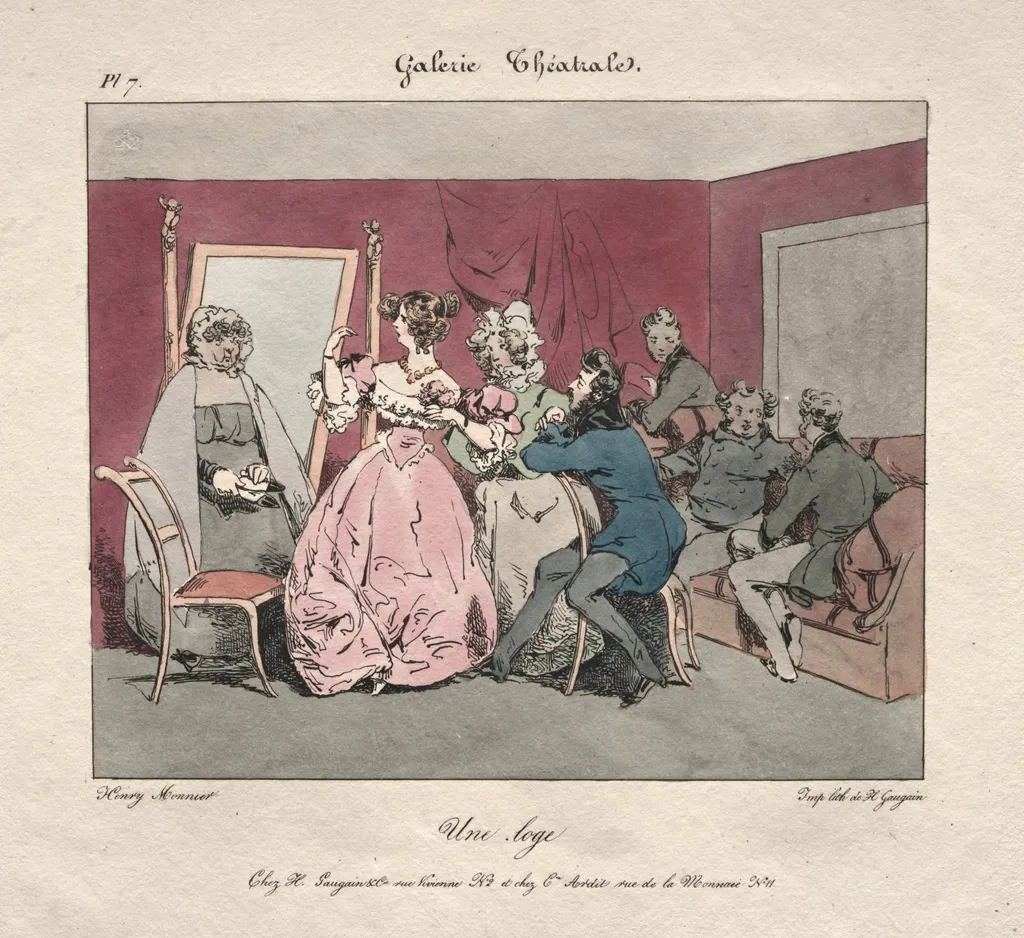
A Loge is a print by the Romanticist artist Henry Bonaventure Monnier. It dates from 1829 and is held in the collection of the Cleveland Museum of Art.
About this work
Overview
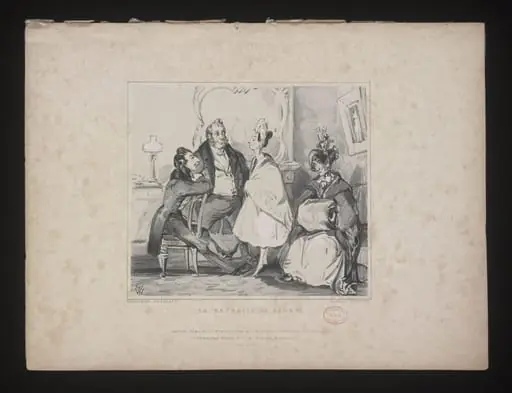
A Loge is a pen-and-ink drawing by French artist Henry Bonaventure Monnier, dated around 1829. Executed in a rapid, sketchlike manner, it captures a private theater box filled with spectators. The work is part of the collection at The Cleveland Museum of Art, where it is valued for its candid depiction of 19th-century social rituals in a public performance space.
Subject & Meaning
The woman in pink, standing with a fan, becomes a focal point, suggesting the theater as a stage for social display.
The scene portrays an upper-class audience in a theater loge, a private seating area reserved for the elite. Figures are arranged in a tight, informal cluster, emphasizing social observation over the performance itself. The woman in pink, standing with a fan, becomes a focal point, suggesting the theater as a stage for social display. The work subtly critiques the performative nature of public life among the bourgeoisie.
Technique & Style
Monnier employed swift, fluid ink lines with minimal shading and restrained color, likely in watercolor or wash. The composition avoids detail, favoring energetic contours that convey movement and density. Background elements like the red curtain and candleholder are rendered with economy, directing attention to the figures. The sketchlike quality reflects an immediate, observational approach rather than a polished finish.
History & Provenance
Created in the late 1820s, the drawing emerged during Monnier’s early career as a satirical illustrator. It entered The Cleveland Museum of Art’s collection through documented acquisition, though its earlier ownership history remains largely unrecorded. The work aligns with Monnier’s broader interest in documenting Parisian social life, particularly in theatrical settings, during the July Monarchy period.
Context
In 1820s Paris, theater loges were key social spaces where class, gender, and etiquette were performed as much as the plays themselves. Monnier’s drawing reflects a cultural moment when the bourgeoisie increasingly used public venues to assert status. His sketches, often published in journals, offered wry commentary on these rituals, distinguishing him from more formal portraitists of the era.
Legacy
A Loge exemplifies Monnier’s role in pioneering observational drawing as social commentary. Though not widely known today, his work influenced later artists interested in everyday urban life, including the Impressionists. The drawing remains a quiet but precise record of how leisure and social hierarchy intersected in 19th-century France, preserved as a document of cultural habit rather than artistic grandeur.
Artist & collection