Artwork
The Descent of Christ into Limbo
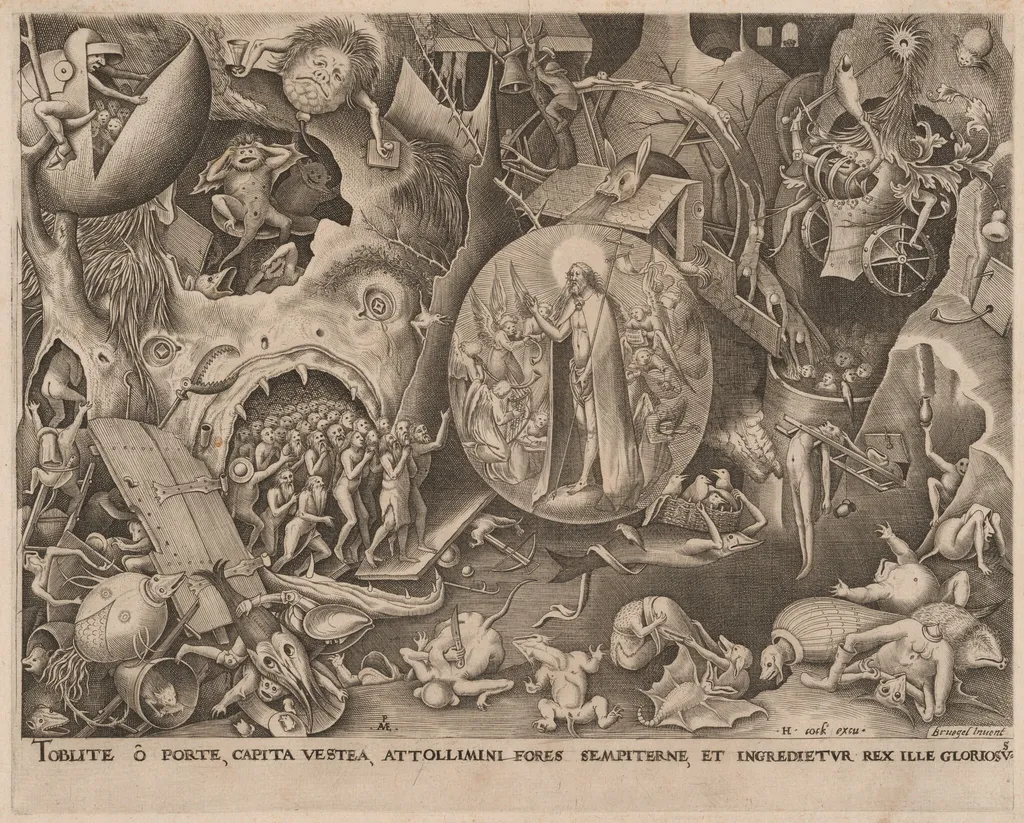
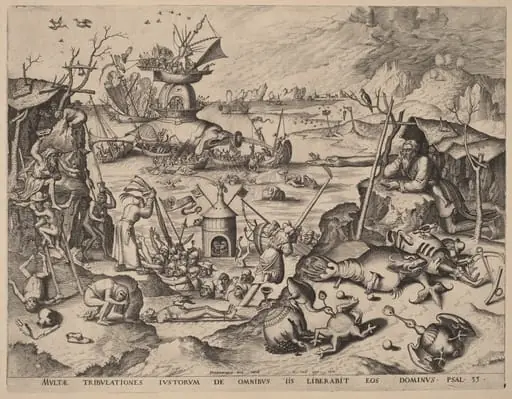
The Descent of Christ into Limbo is an ink print by the Renaissance artist Pieter van der Heyden. It dates from 1561 and is held in the collection of the National Gallery of Art.
About this work
Overview
Pieter van der Heyden, a Flemish engraver active in the mid-1500s, produced this print around 1561 using the engraving technique on laid paper.
Pieter van der Heyden, a Flemish engraver active in the mid-1500s, produced this print around 1561 using the engraving technique on laid paper. He specialized in translating paintings into detailed prints, often working from compositions by leading artists of his time. This piece, now in the National Gallery of Art in Washington, D.C., reflects his skill in rendering complex narratives through fine linear detail and tonal contrast.
Subject & Meaning
The scene illustrates Christ’s descent into Limbo, a theological concept in which he liberates the souls of righteous figures from the underworld before his resurrection. Central to the composition, Christ, clad in robes, holds a child while figures below reach upward in supplication. Above, a winged, lion-maned figure—likely Satan or Death—holds a key, symbolizing the unlocking of the gates of the afterlife.
Technique & Style
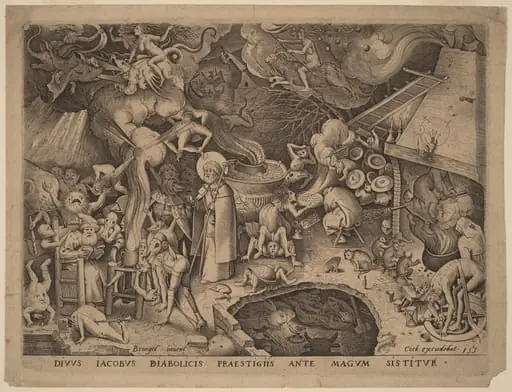
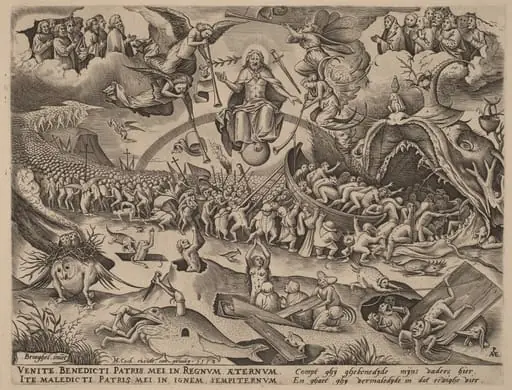
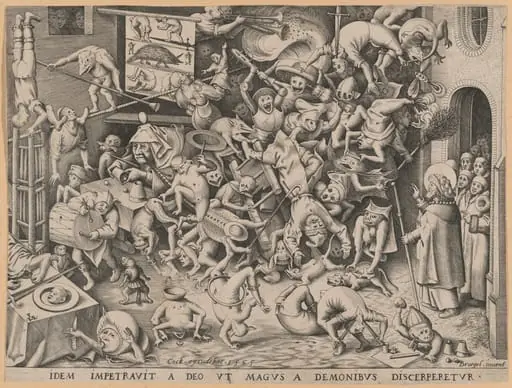
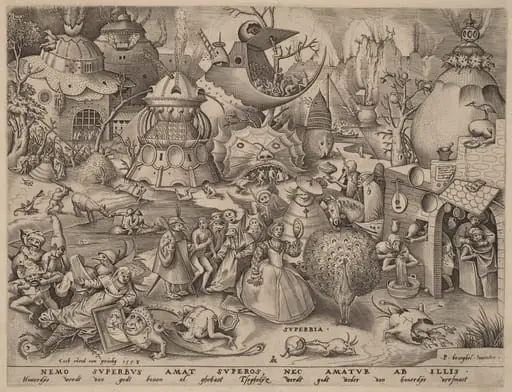
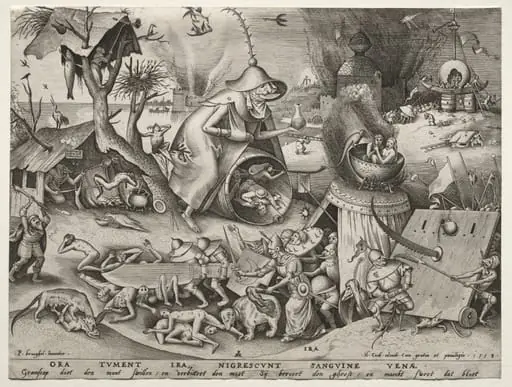
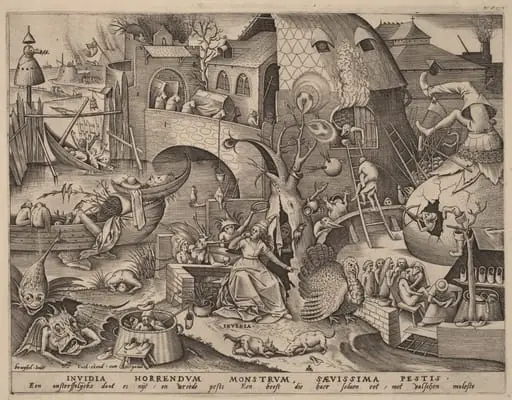
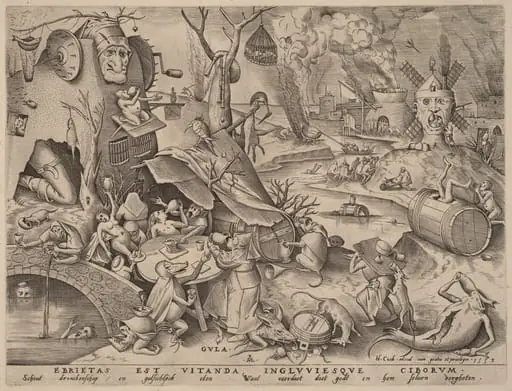
Van der Heyden employed sharp, precise engraving lines to build dense, layered imagery. Shadows and cross-hatching create volume and movement within a tightly packed space. The intricate details—floating tools, ships, and hybrid creatures—demonstrate his command of the burin, translating painterly complexity into the rigid medium of metalplate printing with remarkable clarity.
History & Provenance
The print was made during a period when reproductive engravings circulated widely across Europe, serving as accessible religious imagery. Van der Heyden’s works were often based on designs by Pieter Bruegel the Elder, though this piece’s original source remains unconfirmed. It entered the National Gallery of Art’s collection through established acquisition channels, preserving its historical and artistic significance.
Context
In 16th-century Flanders, religious prints like this one fulfilled devotional and educational roles, especially amid the Reformation’s challenges to traditional imagery. The harrowing of Hell was a popular subject, reinforcing Catholic doctrine of Christ’s triumph over death. Van der Heyden’s version reflects the era’s fascination with elaborate, symbolic depictions of spiritual battles.
Legacy
Though less known than his contemporaries, van der Heyden’s prints contributed to the dissemination of Flemish visual culture. His technical precision influenced later engravers and helped standardize the reproduction of religious narratives. This work remains a testament to the role of printmaking in shaping public religious understanding during the early modern period.
Artist & collection

Artist
Pieter van der Heyden (c. 1530 - after March 1572) was a Flemish printmaker who is known for his reproductive engravings after works by leading Flemish painters and designers of the 16th century.