Artwork
Madame Louis Antoine de Cambourg
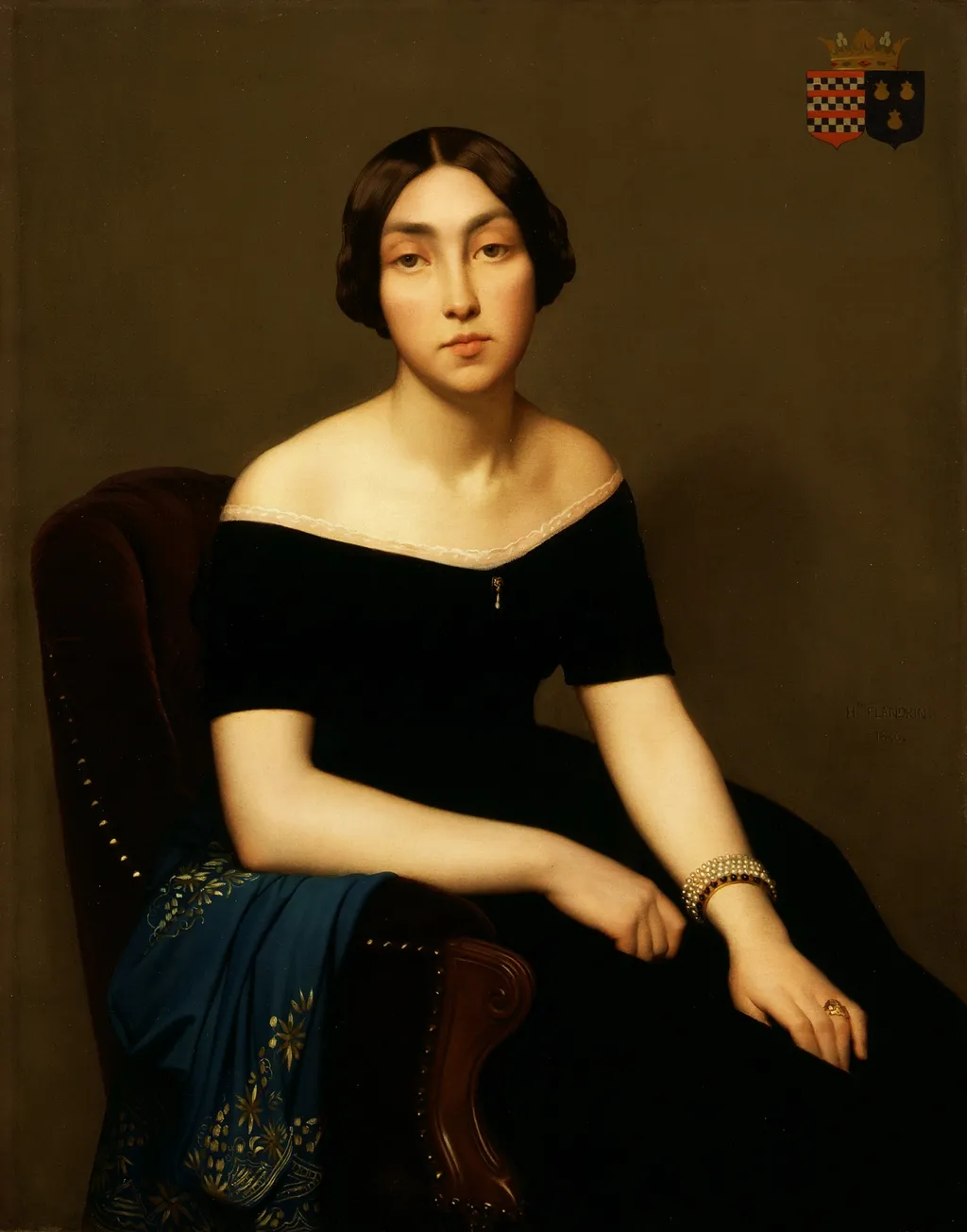
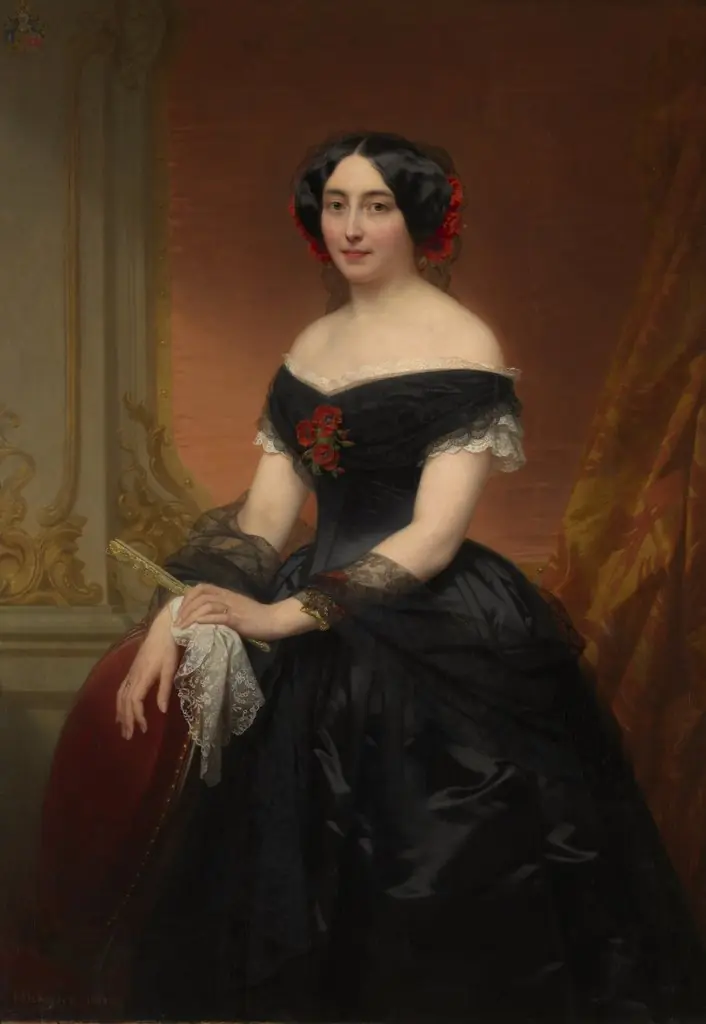
Madame Louis Antoine de Cambourg is an oil painting by Hippolyte Flandrin. It dates from 1846 and is held in the collection of the Detroit Institute of Arts.
About this work
Overview
Hippolyte Flandrin painted this oil portrait in 1846, depicting Madame Louis Antoine de Cambourg, a member of Parisian aristocracy. The work reflects Flandrin’s training under Ingres and his commitment to Neoclassical ideals of composure and clarity. Rendered with quiet precision, the portrait captures a moment of stillness, emphasizing the subject’s presence rather than narrative action.
Subject & Meaning
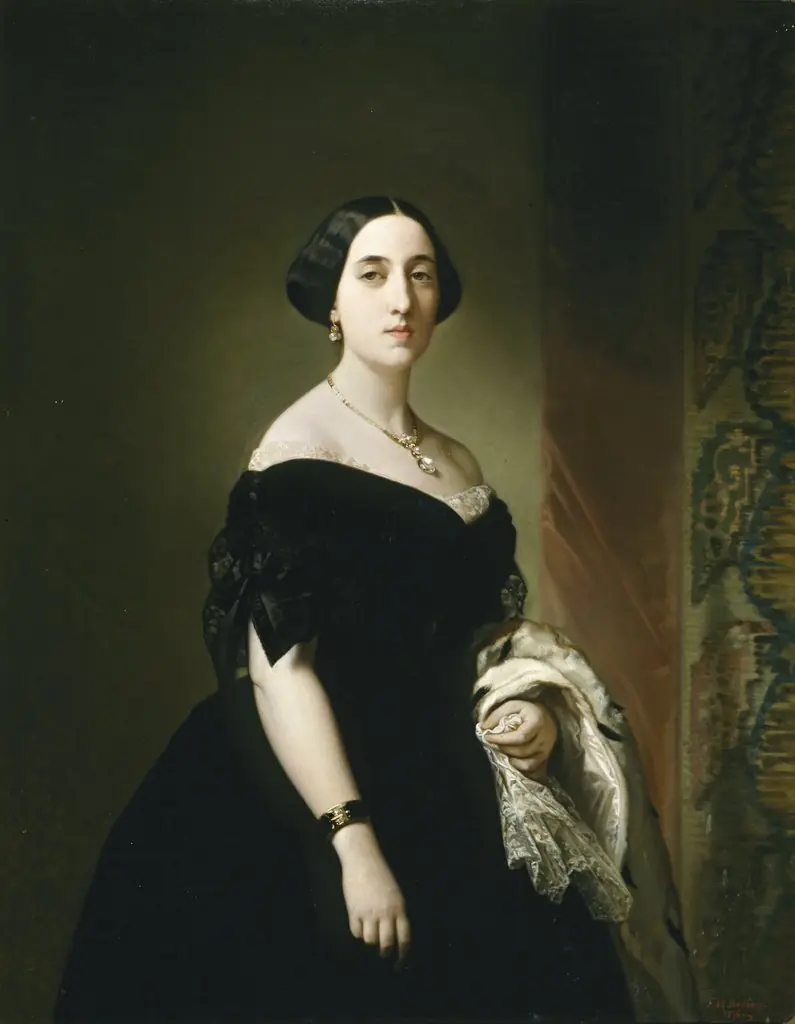
The sitter, dressed in a black gown with lace trim and a blue embroidered shawl, is portrayed with solemn dignity.
The sitter, dressed in a black gown with lace trim and a blue embroidered shawl, is portrayed with solemn dignity. Her direct gaze and folded hands suggest introspection, aligning with 19th-century ideals of female decorum. The absence of overt symbolism or setting shifts focus to her demeanor, presenting identity through restraint rather than status markers, consistent with the era’s refined portraiture.
Technique & Style
Flandrin employed smooth, controlled brushwork to define form and fabric, emphasizing texture without flourish. The solid brown background isolates the figure, enhancing spatial clarity. Delicate rendering of the lace, gold embroidery, and jewelry adds subtle detail, while the monochromatic dress contrasts with the shawl’s muted color, reinforcing the composition’s balance and quiet elegance.
History & Provenance
Commissioned during Flandrin’s peak years as a society portraitist, the painting remained within the Cambourg family until the 20th century. Its documented lineage traces through private collections in France, with no public exhibition history prior to its acquisition by a major institution. The work’s survival in familial hands underscores its personal significance over public display.
Context
In mid-19th century Paris, portraiture served as both social record and cultural statement. Flandrin’s approach, shaped by Ingres’s emphasis on line and structure, diverged from Romantic excess. This portrait reflects a shift toward intimate, psychologically grounded depictions among the elite, where understatement conveyed refinement more effectively than ornamentation.
Legacy
Though not widely exhibited, the painting exemplifies Flandrin’s contribution to French academic portraiture. Its restrained aesthetic influenced later artists seeking emotional depth without theatricality. Today, it stands as a quiet testament to the Neoclassical tradition’s endurance in private commissions, where formality and subtlety defined aristocratic identity.
Artist & collection
Artist
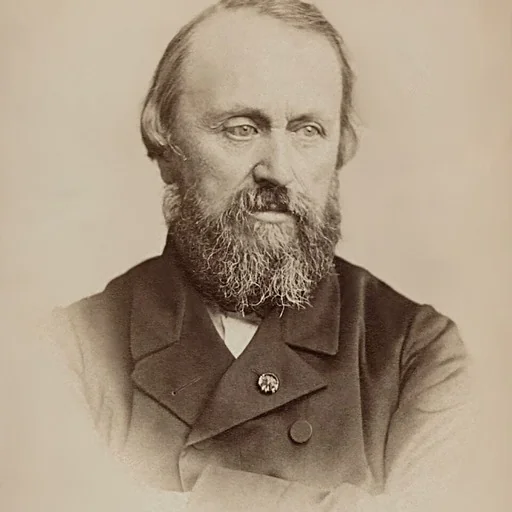
Jean-Hippolyte Flandrin (23 March 1809 – 21 March 1864) was a French Neoclassical painter. His most celebrated work, Jeune Homme Nu Assis au Bord de la Mer (1836) is held in the Louvre.

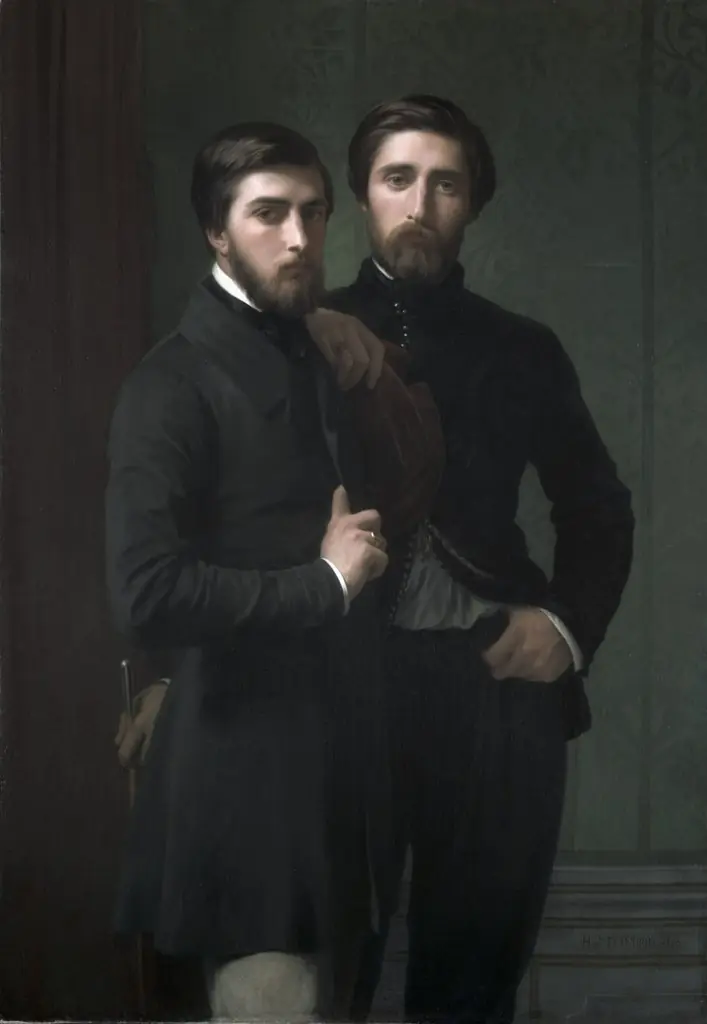 René-Charles Dassy and His Brother Jean-Baptiste-Claude-Amédé Dassy
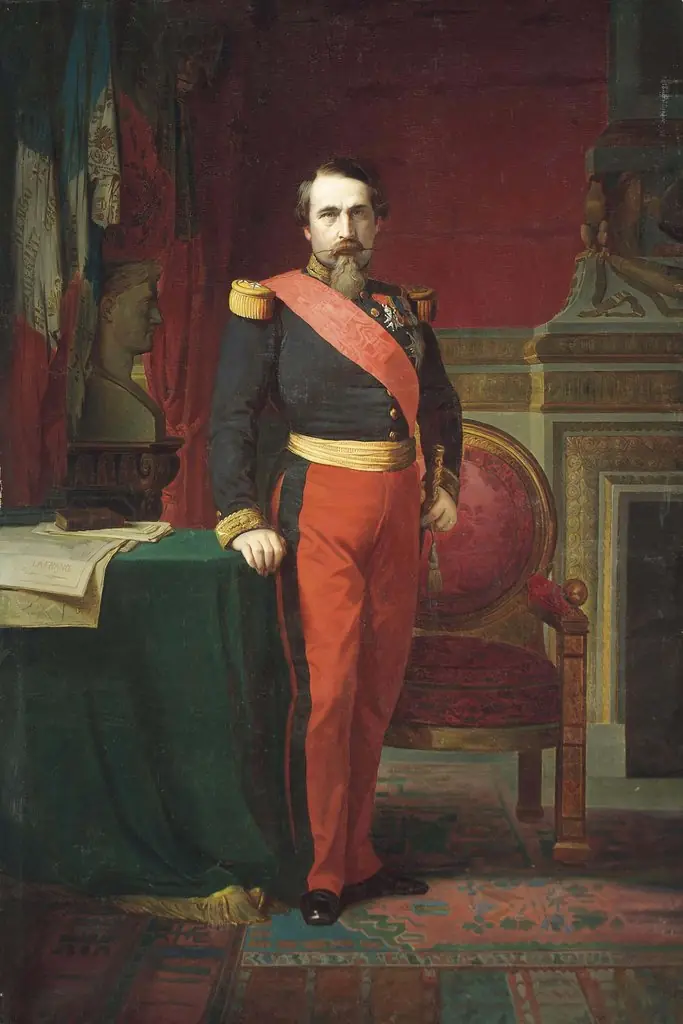 Portrait of Napoleon III
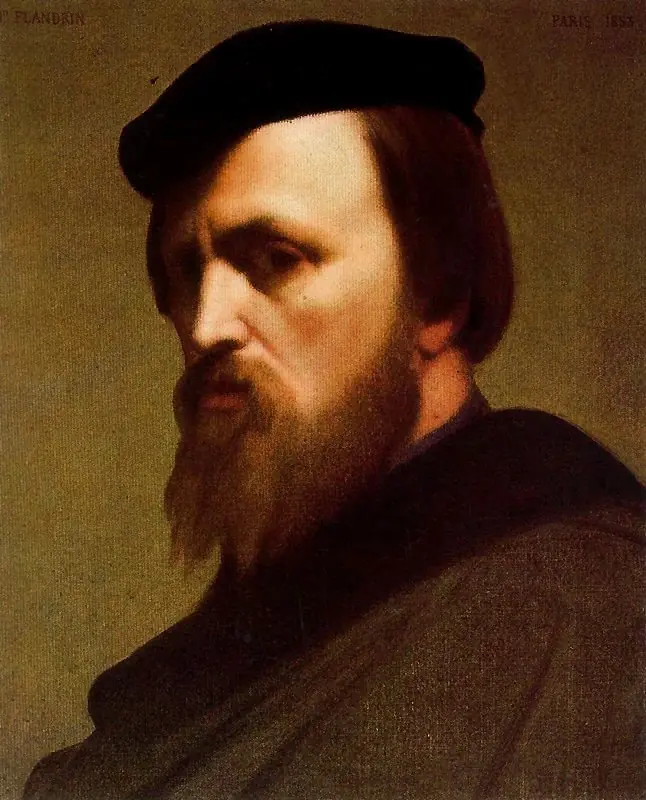 Self-portrait
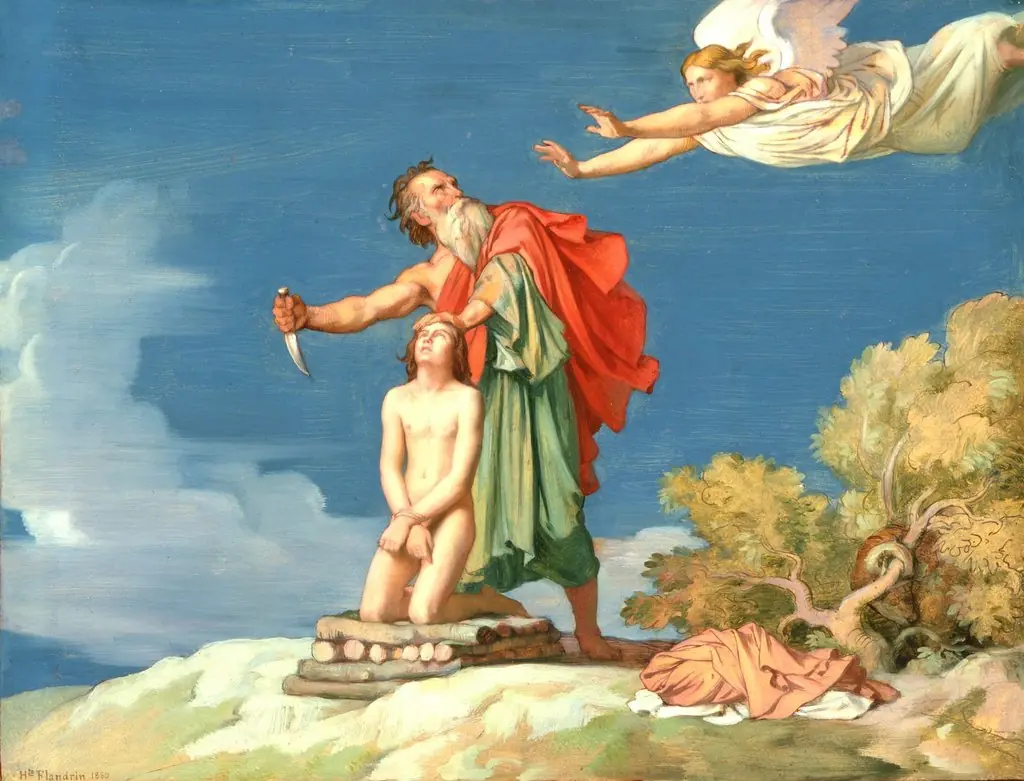 The Sacrifice of Isaac
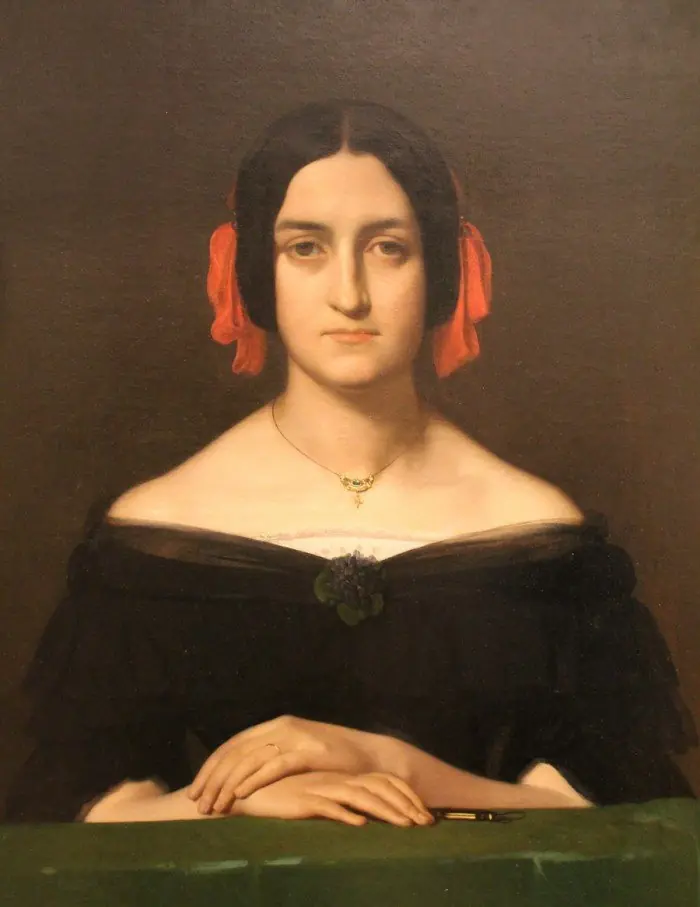 Portrait de Madame Oudiné
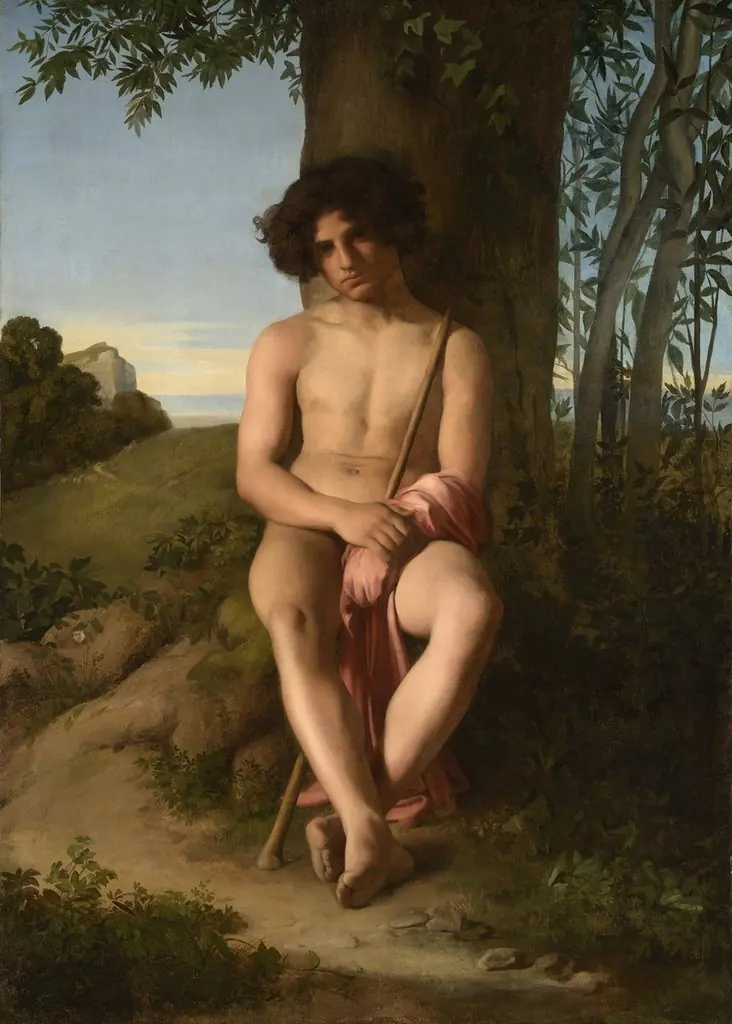 Seated Young Shepherd
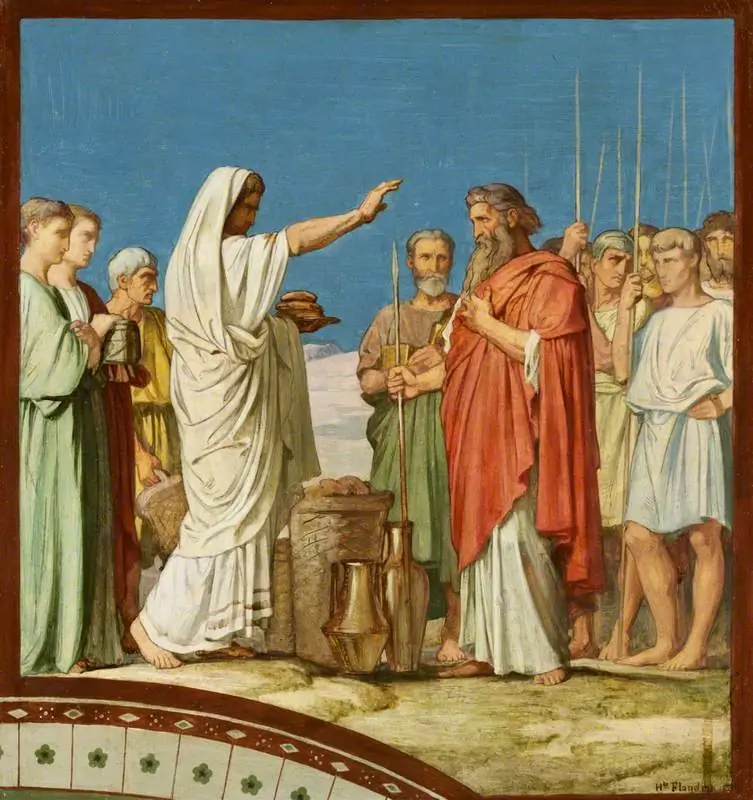 Melchisédech offrant du pain et du vin, bénit Abraham: Modello for the Fresco in the left nave of Saint-Germain-des-Prés, Paris, 1859 (Melchizedek Blesses Abraham and Offers Bread and Wine)
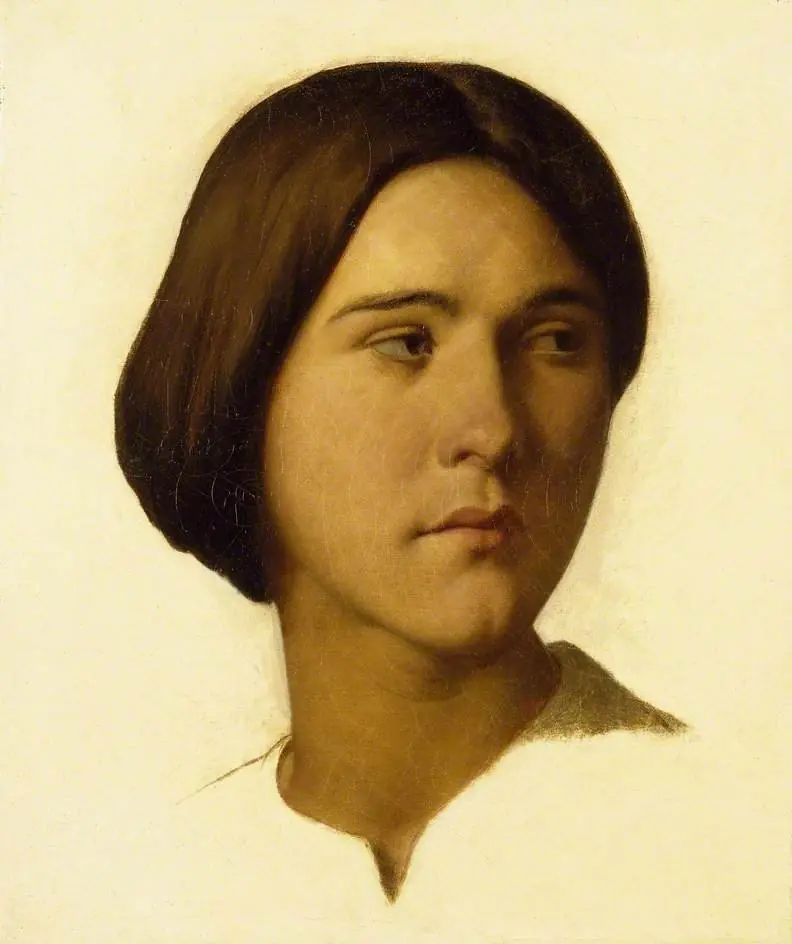 Head of a young Woman