Artwork
Man Carries the Cross after Christ
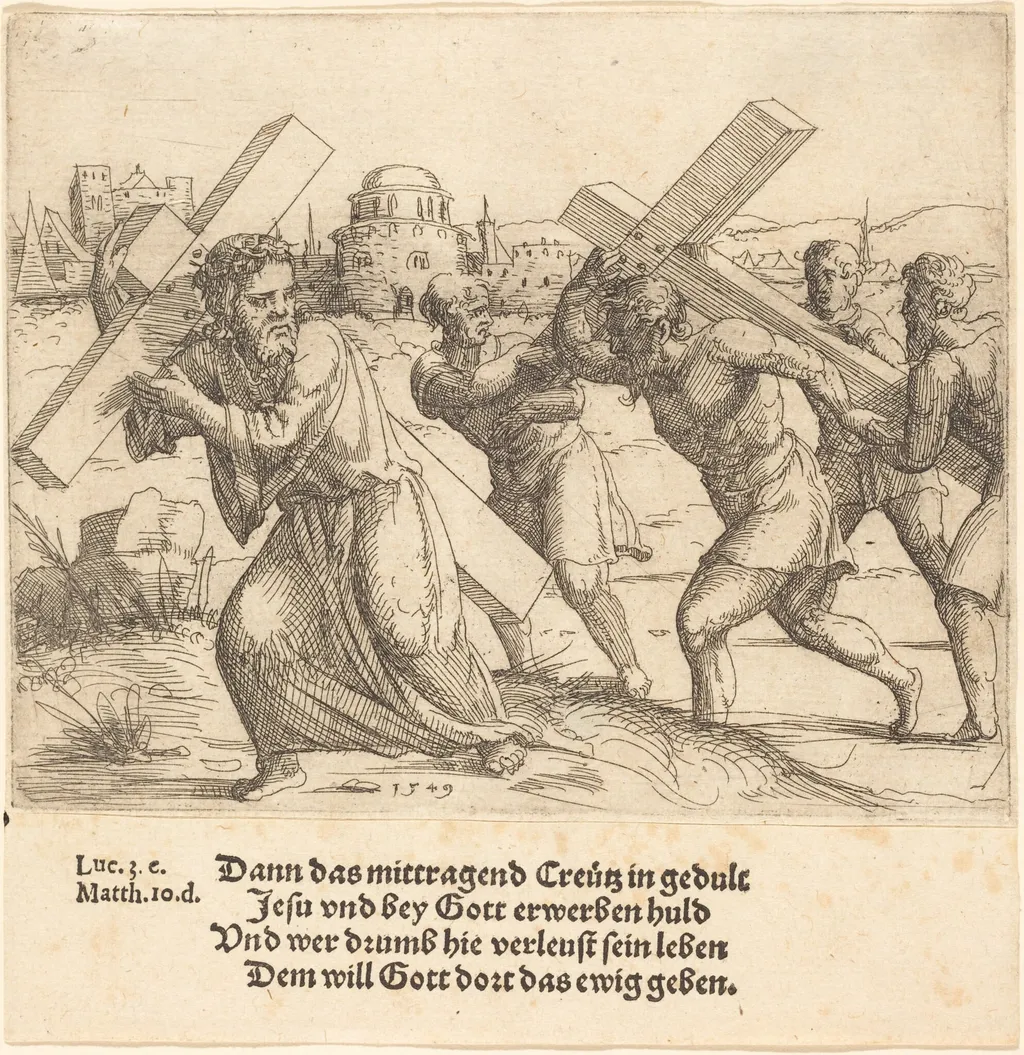
Man Carries the Cross after Christ is an ink print by the Renaissance artist Augustin Hirschvogel. It dates from 1549 and is held in the collection of the National Gallery of Art.
About this work
This etching shows Jesus struggling under the cross while a man helps him walk. The scene feels rough and urgent. The lines are scratchy, not smooth.
It’s from 1549—one of the earliest prints to show this moment. The artist used tiny dots and lines to create shadows and depth.
Try looking up etching next. This one uses the drypoint technique.
Overview
Man Carries the Cross after Christ is an etching created by Augustin Hirschvogel in 1549. It is a print that showcases the artist's skill in the medium.
Subject & Meaning
The etching depicts a scene from the Passion of Christ, where a man assists Jesus in carrying the cross. The image conveys a sense of urgency and struggle.
Technique & Style
Hirschvogel employed the drypoint technique, characterized by scratchy lines, to create the etching. The use of tiny dots and lines generates shadows and depth, adding complexity to the scene.
Context
As a member of the Danube School, Hirschvogel was part of a group of 16th-century artists active in Bavaria and Austria. This work is one of his religious etchings, produced during a period when he was also creating landscape etchings.
Artist & collection
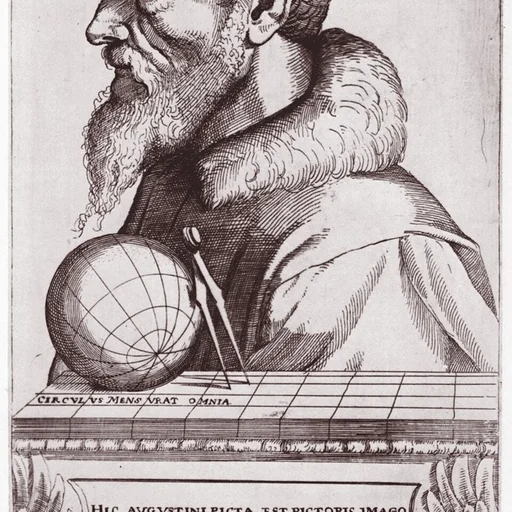
Artist
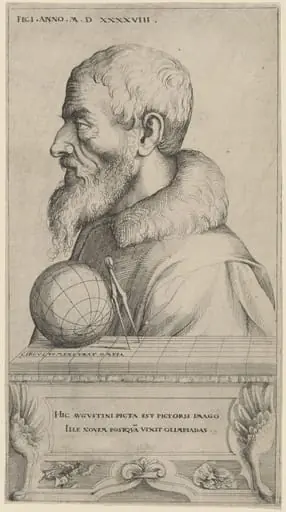
Augustin Hirschvogel (1503 – February 1553) was a German artist, mathematician, and cartographer known primarily for his etchings.

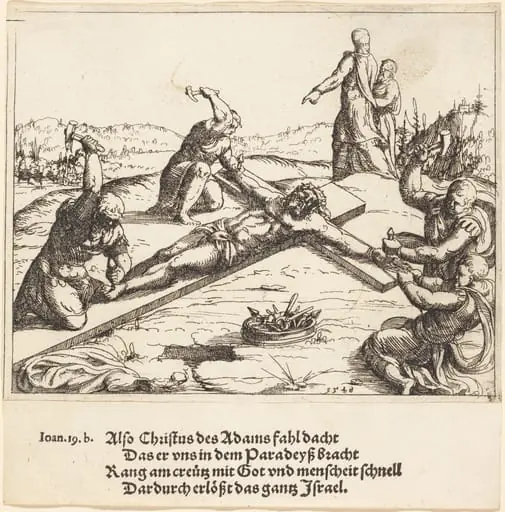
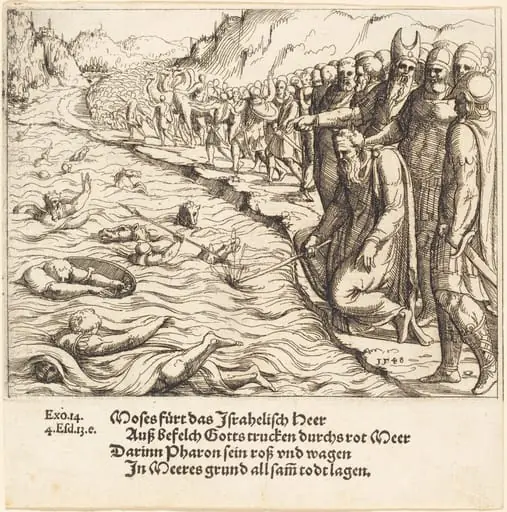
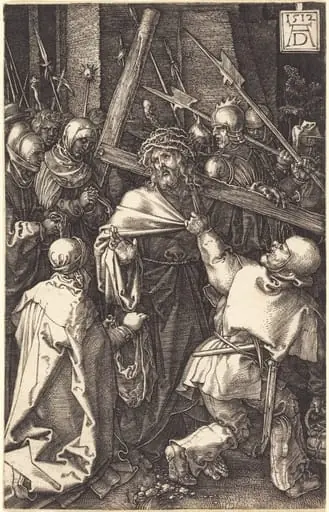 Christ Carrying the Cross
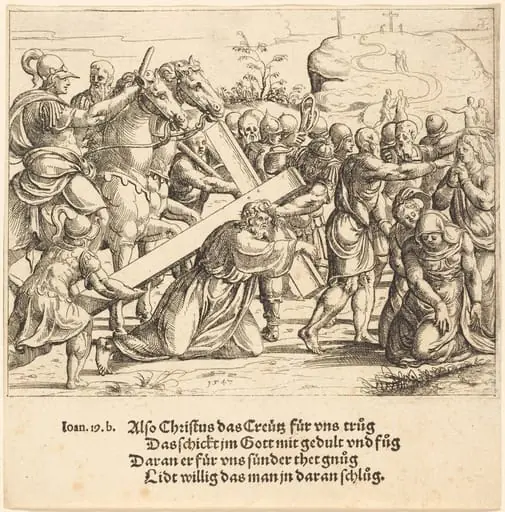 Christ Carrying the Cross
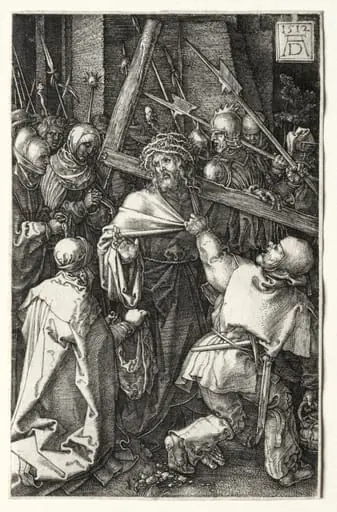 Christ Carrying the Cross
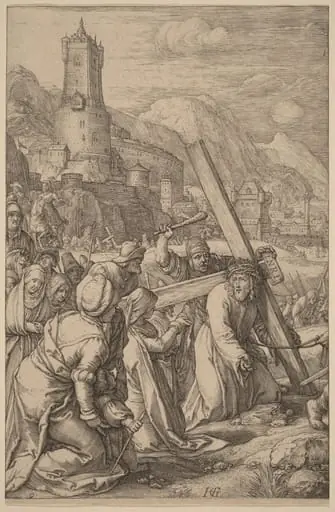 Christ Carrying the Cross
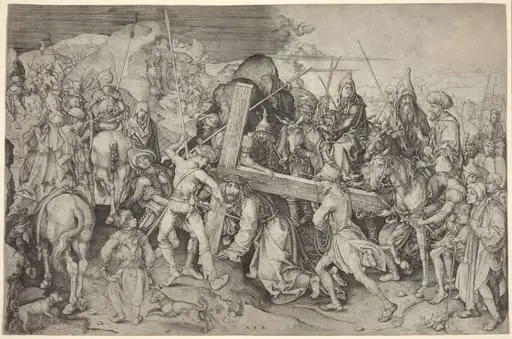 Christ Carrying the Cross
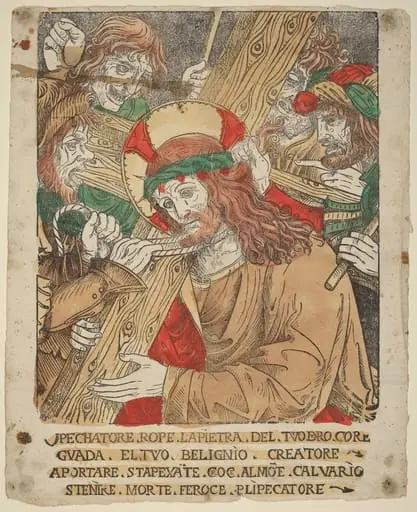 Christ Carrying the Cross
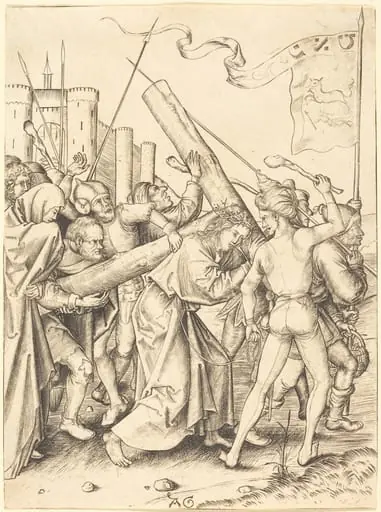 Christ Carrying the Cross
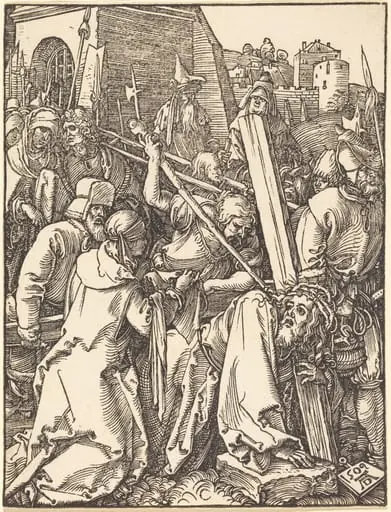 Christ Carrying the Cross
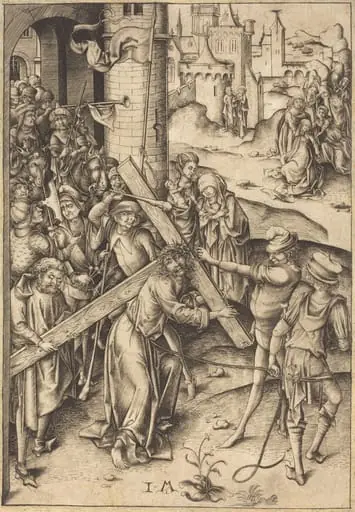 The Bearing of the Cross
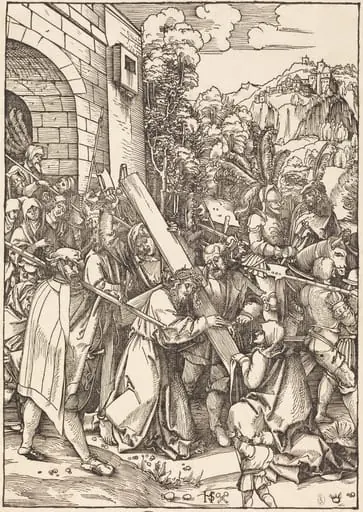 Christ Bearing the Cross
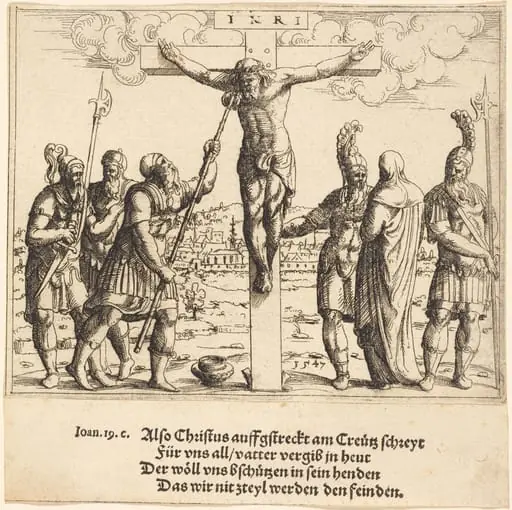 Christ is Given Vinegar to Drink
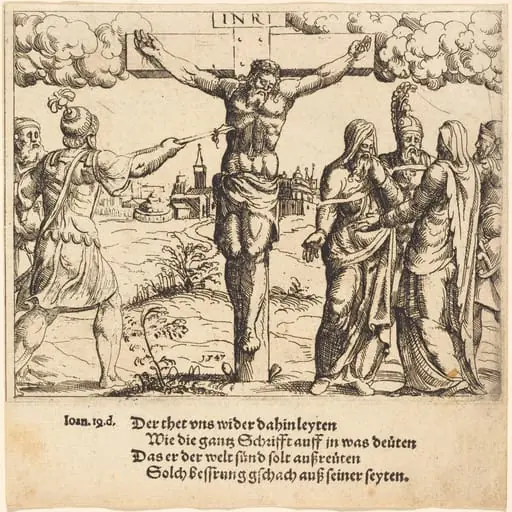 Christ is Pierced with the Lance