Artwork
Moses Closing the Red Sea
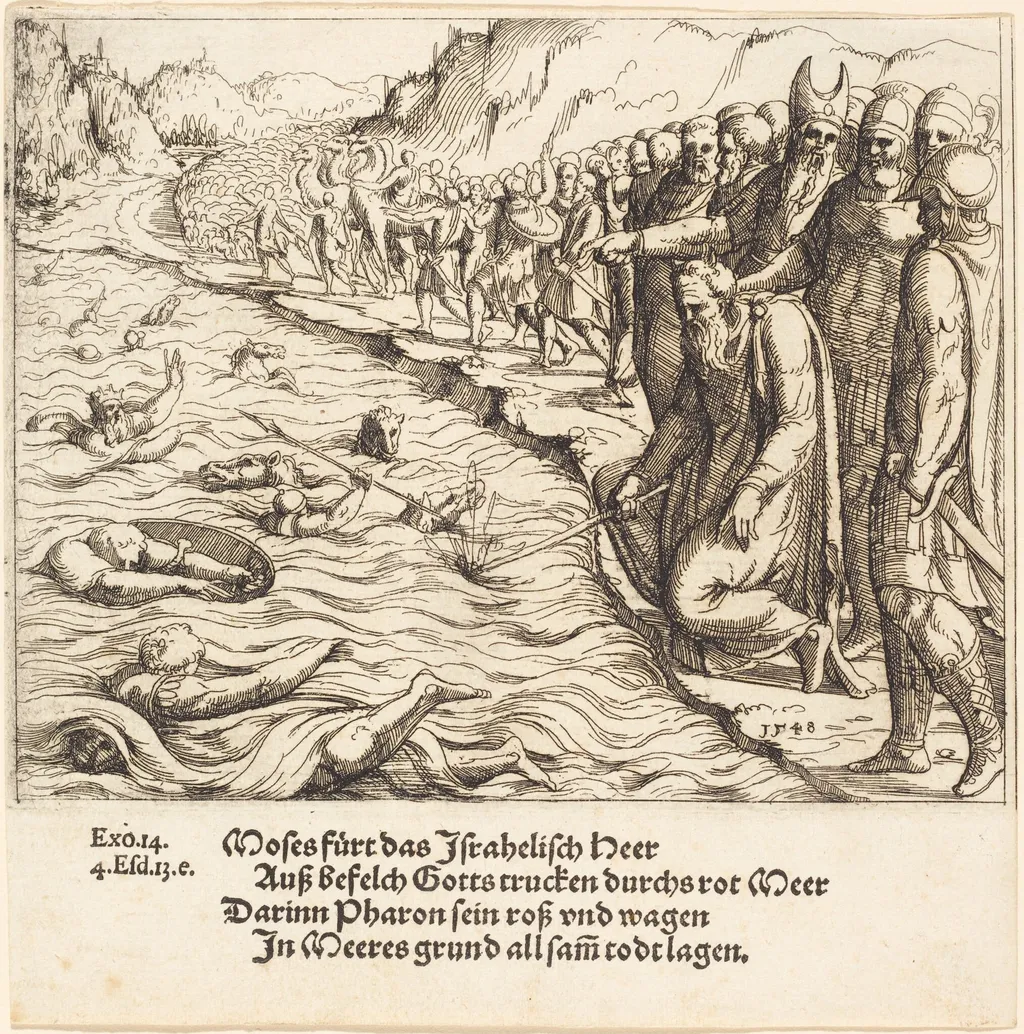
Moses Closing the Red Sea is an ink print by the Renaissance artist Augustin Hirschvogel. It dates from 1548 and is held in the collection of the National Gallery of Art.
About this work
Overview
Moses Closing the Red Sea is an etching created by Augustin Hirschvogel in 1548. It is one of a series of small landscape etchings produced by the artist during the late 1540s.
Subject & Meaning
The etching depicts the biblical scene of Moses closing the Red Sea, with a large crowd in the background. Moses stands in the foreground, staff in hand, set against a rocky landscape with crashing sea waves.
Technique & Style
The work is characterized by intricate lines and textures, creating a sense of depth and dimension. Light and shadow are used to dramatic effect, with sunlight casting long shadows across the ground, exemplifying the detailed and realistic style associated with the Danube School.
Context
The etching reflects the landscape traditions of the Danube School, a group of 16th-century artists active in Bavaria and Austria, with whom Hirschvogel was associated.
Artist & collection
Artist
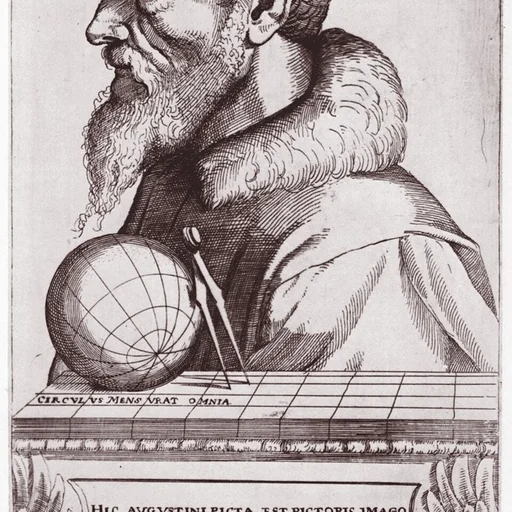
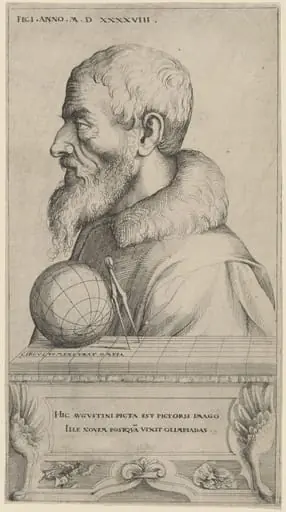
Augustin Hirschvogel (1503 – February 1553) was a German artist, mathematician, and cartographer known primarily for his etchings.

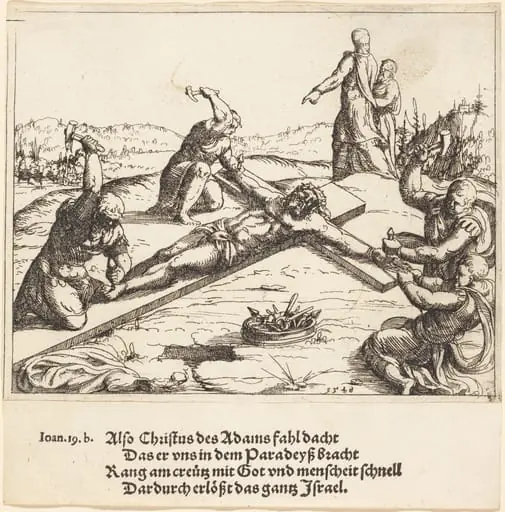
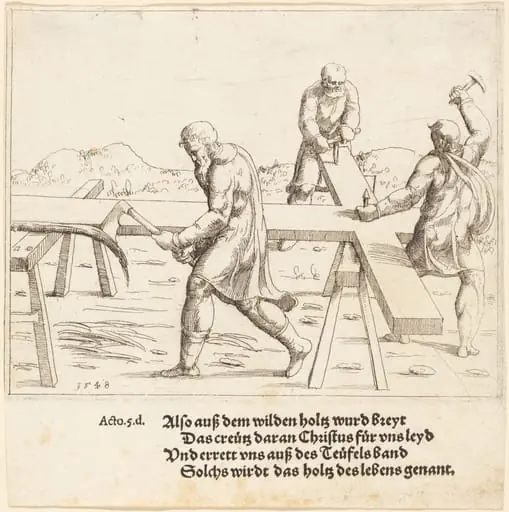
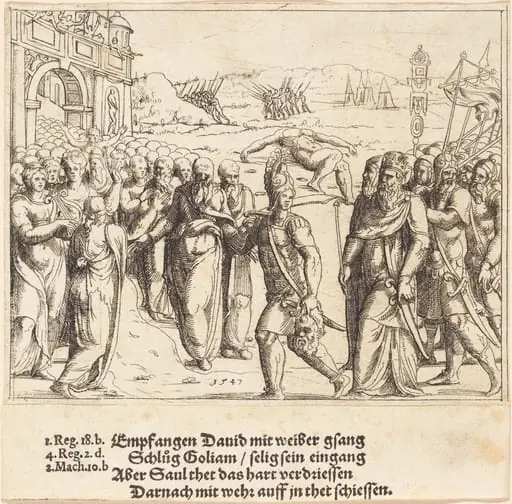 David is Welcomed after Killing Goliath, and Saul's Jealousy
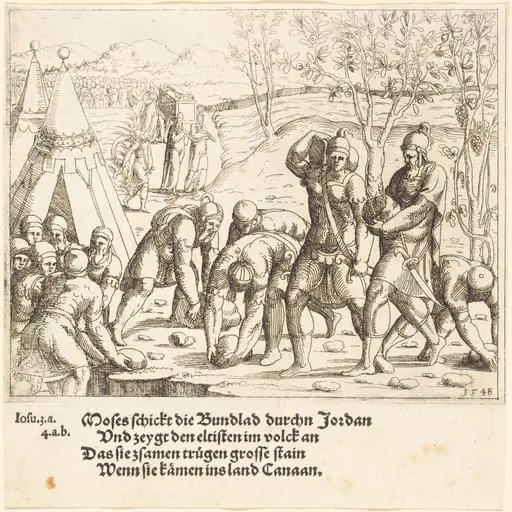 The Twelve Stones, and the Waters of the Jordan are Divided
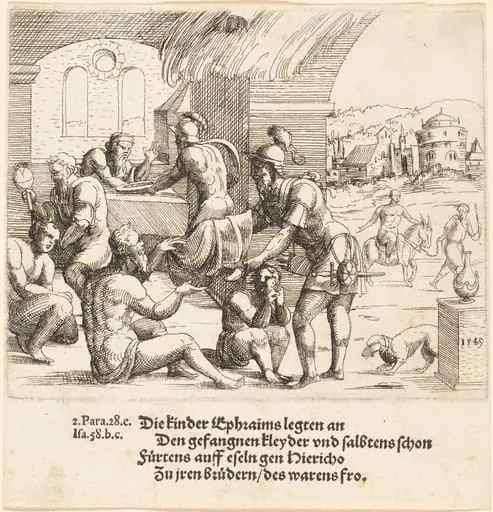 The Men of Ephraim Care for their Captives and Return Them to Jerico
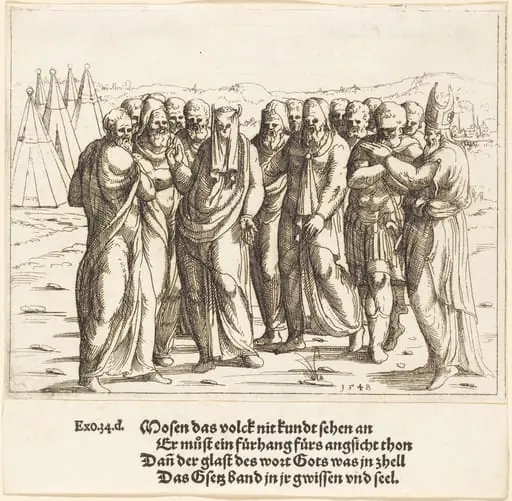 Moses Speaks to the Children of Israel
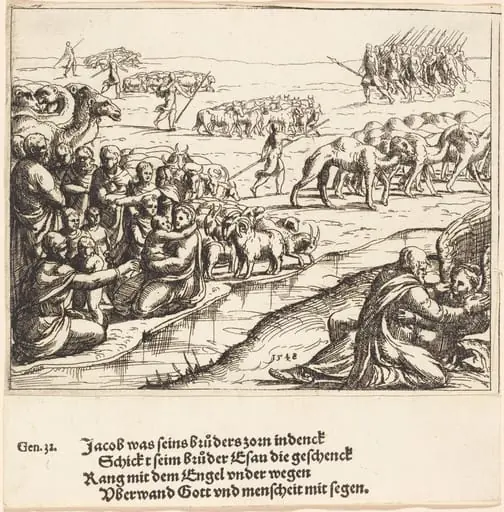 Jacob Wrestling with the Angel
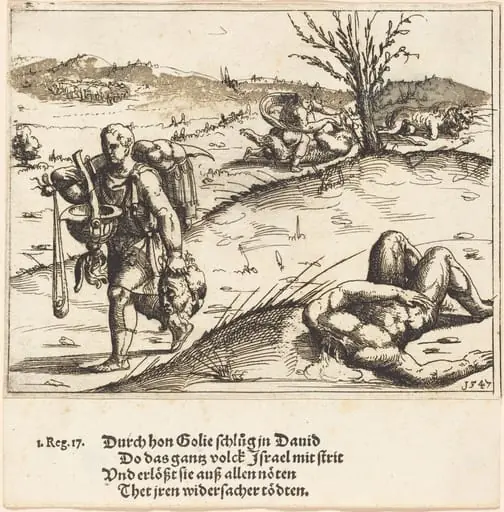 David Beheads Goliath
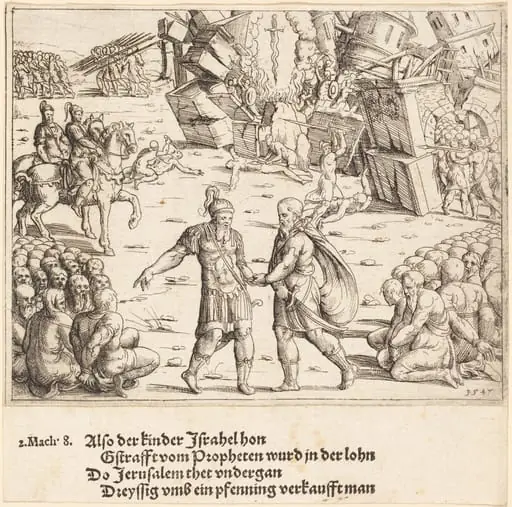 The Victory of Judas Maccabeus Over Niccanor
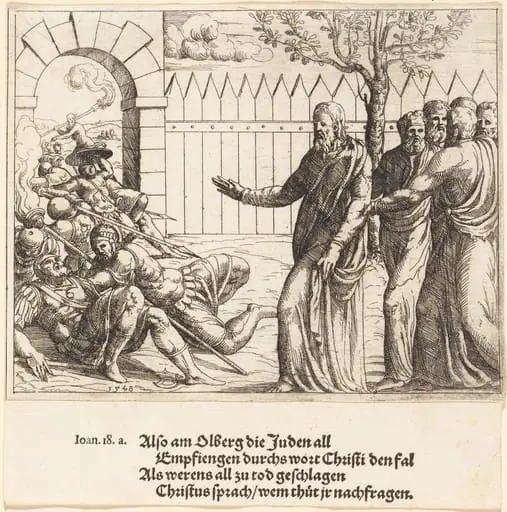 Jesus Identifies Himself before the Arrest
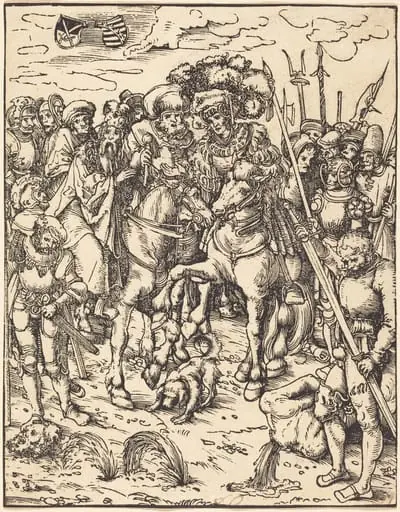 Saint Matthew
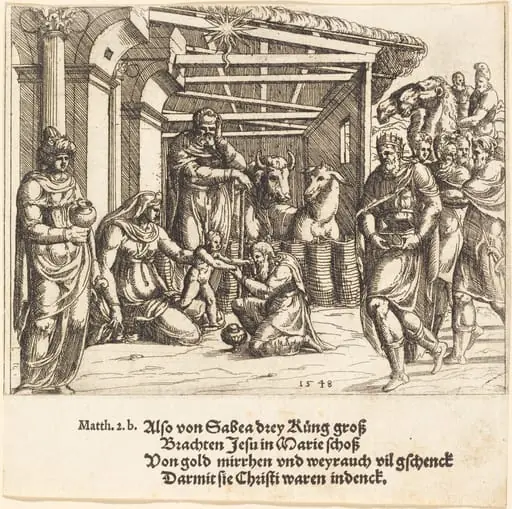 The Adoration of the Magi