Artwork
The Nailing to the Cross
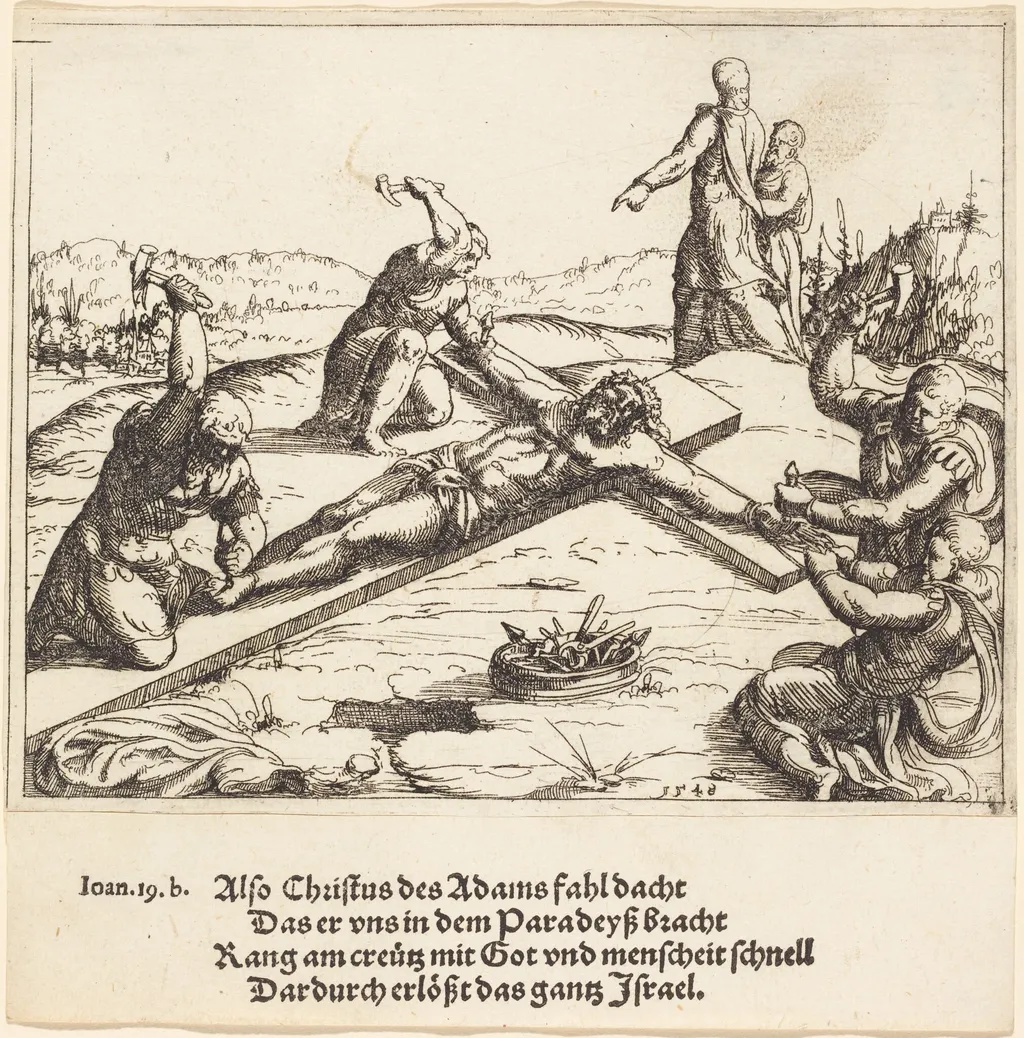
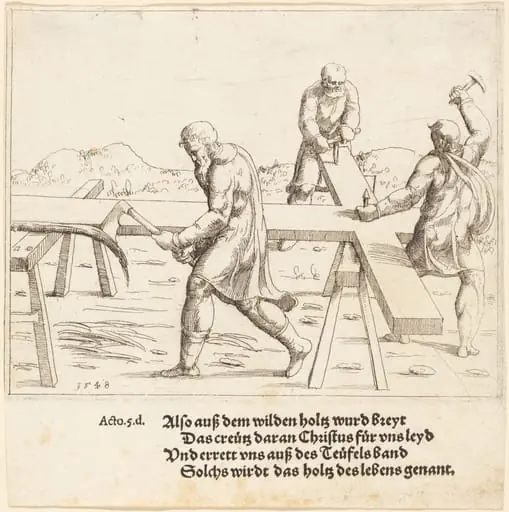
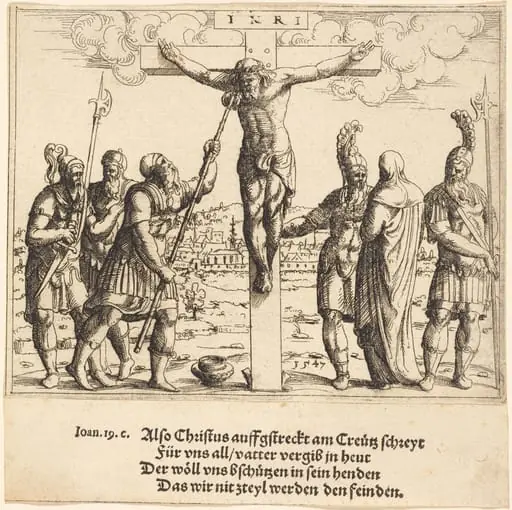
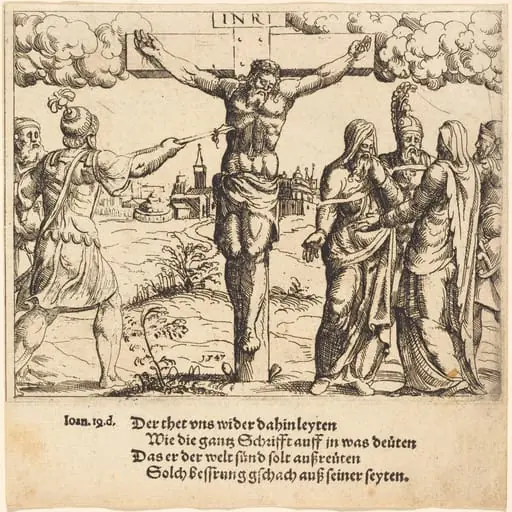
The Nailing to the Cross is an ink print by the Renaissance artist Augustin Hirschvogel. It dates from 1548 and is held in the collection of the National Gallery of Art.
About this work
Overview
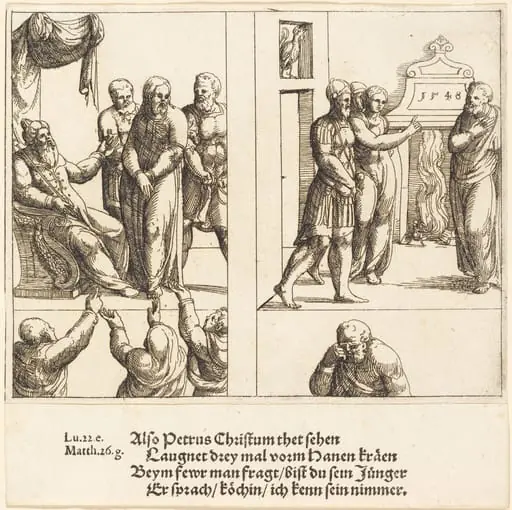
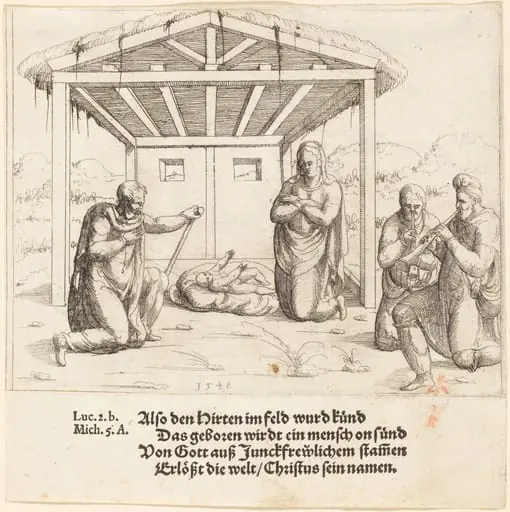
The work belongs to a series of thirty-five etchings made between 1545 and 1549, reflecting his engagement with both spiritual themes and the natural world.
Created in 1548 by Augustin Hirschvogel, *The Nailing to the Cross* is a black-and-white etching depicting the crucifixion of Christ. Hirschvogel, a German artist known for his precision in printmaking and his work in cartography, produced this piece during a period of intense activity in small-scale landscape and religious prints. The work belongs to a series of thirty-five etchings made between 1545 and 1549, reflecting his engagement with both spiritual themes and the natural world.
Subject & Meaning
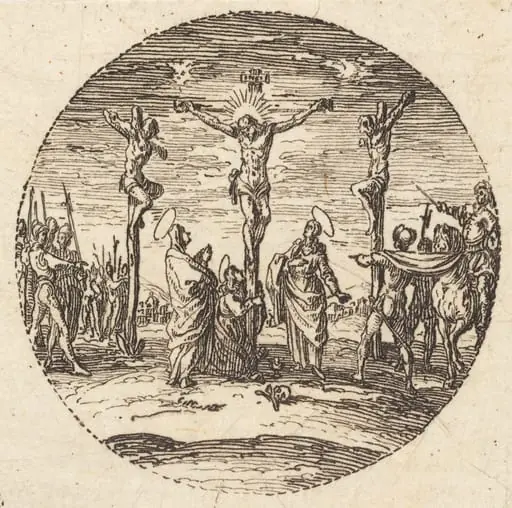
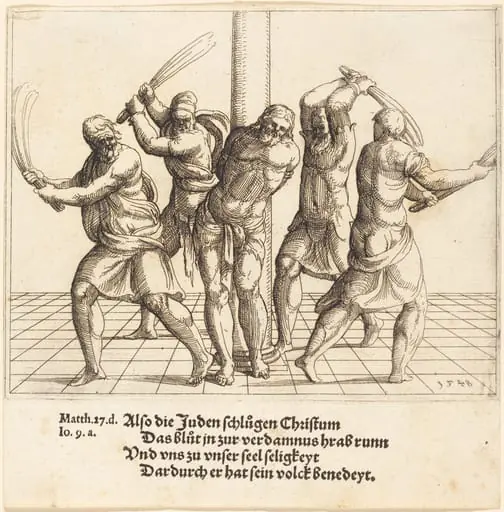
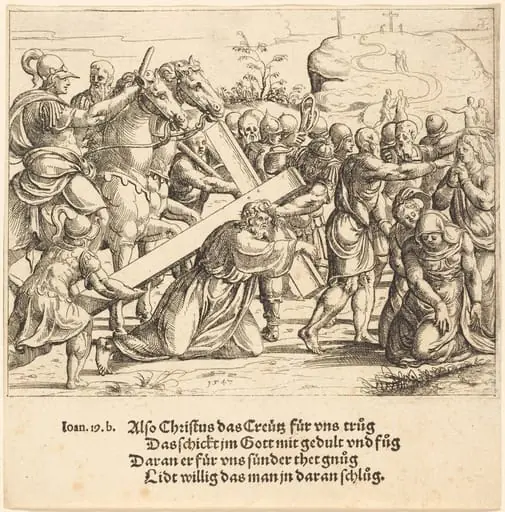
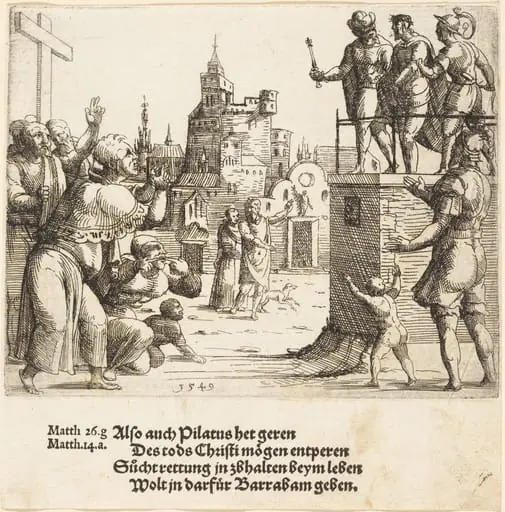
The scene captures the violent moment of Christ’s crucifixion, with figures in motion around the cross—some hauling the beam, others struggling on the ground, and a few reaching upward. The composition conveys chaos and urgency, emphasizing human involvement in the event. A distant boat and stormy sky suggest broader symbolic undertones, possibly alluding to the turmoil of the age or the cosmic significance of the sacrifice. German text beneath the image offers a devotional explanation, grounding the image in contemporary religious practice.
Technique & Style
Hirschvogel employed etching to achieve a dynamic, almost sketch-like texture. The lines are irregular, deliberately rough, and densely layered, creating a sense of agitation that mirrors the scene’s emotional intensity. Unlike polished engravings of the period, this work embraces the medium’s spontaneity, with hatched shadows and fragmented contours enhancing the feeling of movement. The lack of fine detail invites the viewer to focus on gesture and energy rather than anatomical precision.
History & Provenance
The print was made in Nuremberg during the height of Hirschvogel’s career, a time when religious imagery remained central despite growing Reformation tensions. Though no early ownership records are widely documented, the work likely circulated among educated Protestant and Catholic audiences who valued devotional prints. Its survival in multiple museum collections suggests it was reproduced and preserved as a significant example of mid-16th-century Northern printmaking.
Context
Hirschvogel worked within the orbit of the Danube School, a loose group of artists who blended landscape observation with religious narrative. His etchings often merged naturalistic detail with spiritual themes, reflecting a broader trend in German art where the sacred was rendered through intimate, human-scale scenes. The roughness of this print aligns with a growing interest in expressive line over idealized form, anticipating later Mannerist and even Baroque approaches to emotional intensity.
Legacy
Though less celebrated than contemporaries like Dürer, Hirschvogel’s etchings contributed to the evolution of printmaking as a vehicle for personal expression. *The Nailing to the Cross* stands as an example of how technical experimentation with line could convey spiritual drama without grandeur. Its raw aesthetic influenced later artists seeking emotional authenticity over decorative finish, securing its place in the history of Northern European print culture.
Artist & collection
Artist
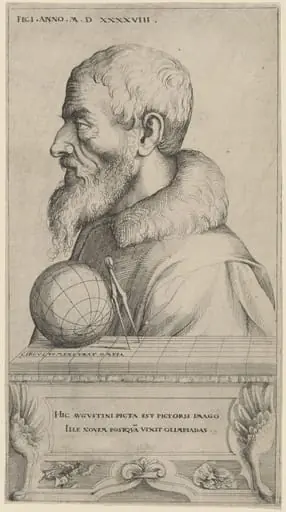
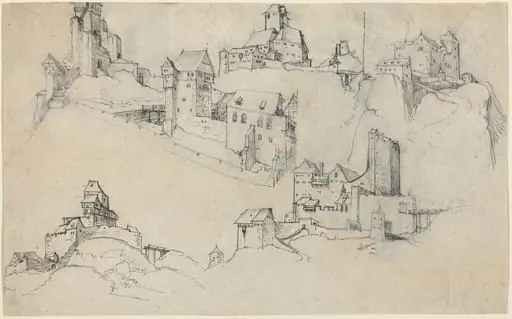
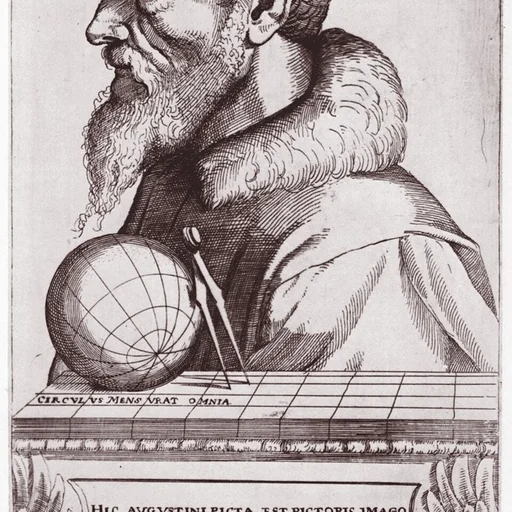
Augustin Hirschvogel (1503 – February 1553) was a German artist, mathematician, and cartographer known primarily for his etchings.