Artwork
Plate 60: Leafy Spurge Hawkmoth Caterpillar, Gray Dagger Caterpillar, and Pupae
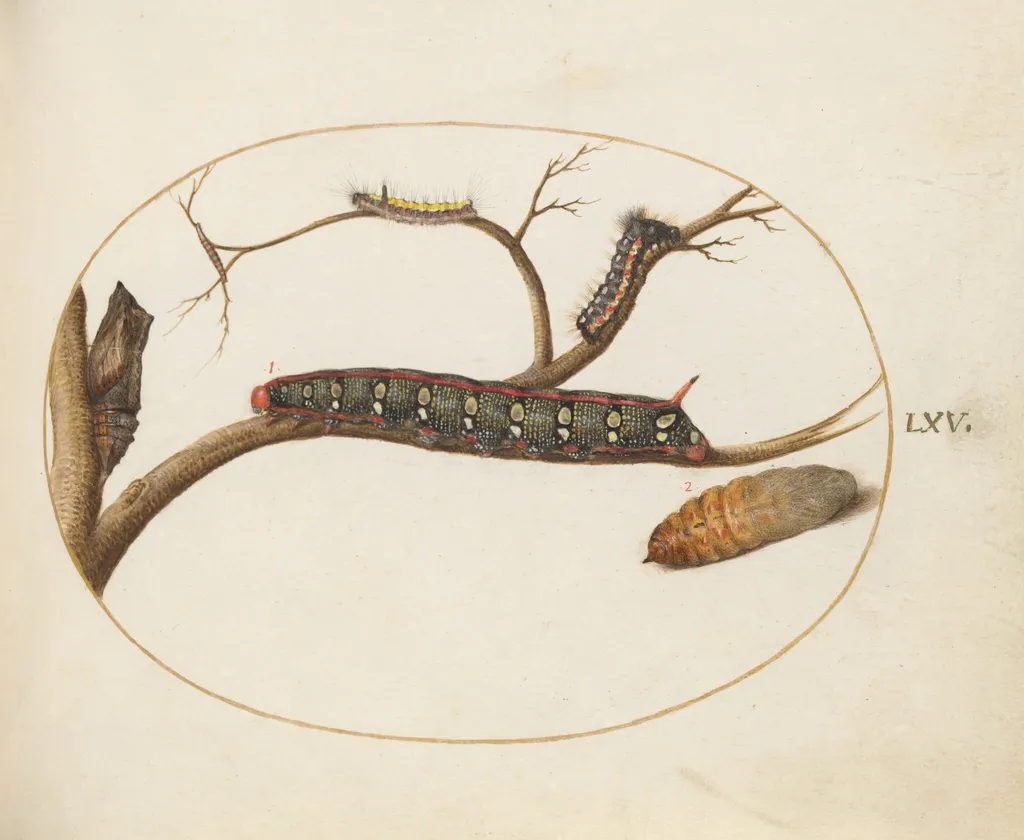
Plate 60: Leafy Spurge Hawkmoth Caterpillar, Gray Dagger Caterpillar, and Pupae is a gouache drawing by the Renaissance artist Joris Hoefnagel. It dates from 1594 and is held in the collection of the National Gallery of Art.
About this work
Overview
Created circa 1594, this miniature work by Flemish artist Joris Hoefnagel combines watercolor and gold pigment on a sheet of parchment.
Created circa 1594, this miniature work by Flemish artist Joris Hoefnagel combines watercolor and gold pigment on a sheet of parchment. It records three insect stages—a leafy spurge hawkmoth caterpillar, a gray dagger caterpillar, and a pupal form—arranged on a gently curving branch against a muted, creamy backdrop. The composition reflects Hoefnagel’s dual interest in natural observation and decorative illustration.
Subject & Meaning
The central figures are two vividly colored caterpillars, one bearing a red dorsal stripe and white speckles, the other displaying a darker, segmented form with a small red horn at its posterior. A modest brown pupa rests nearby, completing the life‑cycle narrative. By presenting these organisms together, Hoefnagel emphasizes the continuity of metamorphosis, a theme common to early modern natural studies.
Technique & Style
Hoefnagel employs fine watercolor washes to render the subtle textures of the branch and the delicate shading of the insects, while touches of gold paint highlight anatomical details and lend a decorative sheen. The rendering is precise yet retains the fluidity of a manuscript illumination, characteristic of late‑Renaissance northern European drawing.
History & Provenance
The plate forms part of a larger series of natural history illustrations produced by Hoefnagel in the late sixteenth century, a period when he was active in Antwerp and associated with courtly patrons interested in scientific curiosities. The work survived in a bound manuscript collection that later entered a European museum’s holdings, where it remains catalogued as Plate 60.
Context
Hoefnagel’s work coincides with a burgeoning interest in topographical and botanical subjects across northern Europe. His meticulous approach bridges the gap between scientific documentation and the ornamental aesthetics of illuminated books, contributing to the emergence of a genre that combined empirical observation with artistic elegance.
Legacy
The drawing exemplifies the early modern synthesis of art and natural history that influenced later naturalists and illustrators. Its detailed portrayal of insect morphology anticipates the more systematic studies of the seventeenth century, while its decorative qualities continued to inform the visual language of scientific illustration.
Artist & collection

Artist
Joris Hoefnagel or Georg Hoefnagel (1542 – 24 July 1601) was a Flemish painter, printmaker, miniaturist, draftsman and merchant.

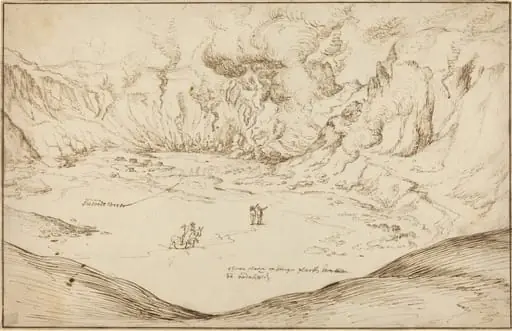 Forum Vulcani: The Hot Springs at Pozzuoli
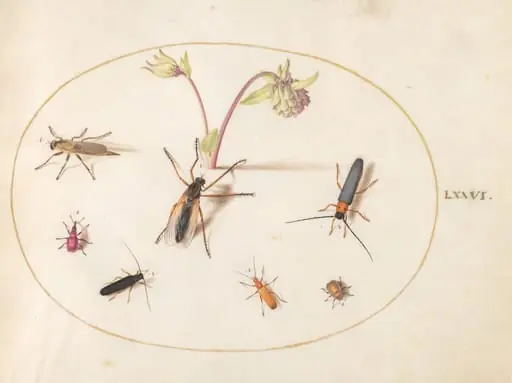 Plate 76: Insects with a Pink and Cream Columbine
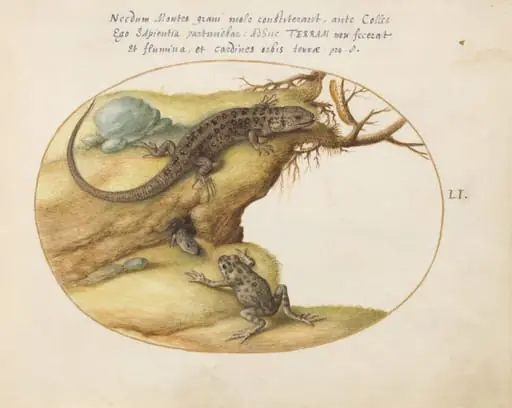 Plate 51: Two Sand Lizards, a Common Parsley Frog(?), and a Caterpillar
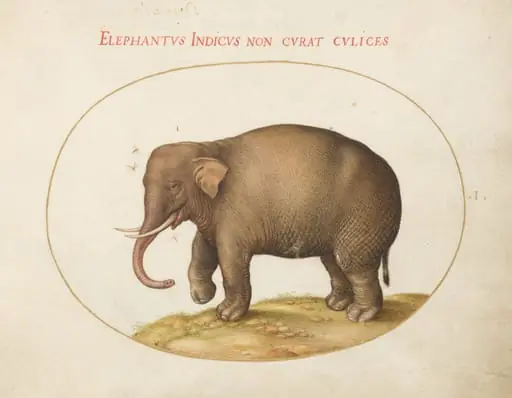 Plate 1: Elephant with Insects
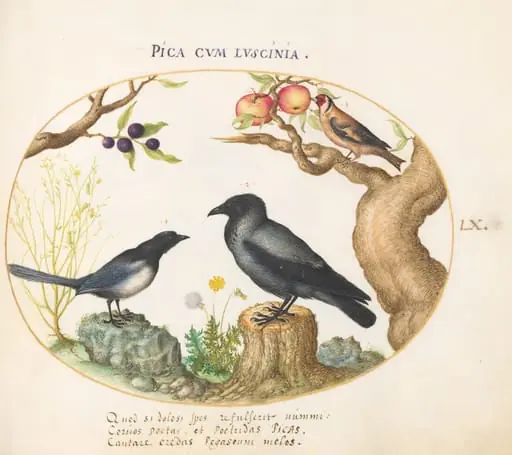 Plate 60: Magpie, Crow, and Goldfinch
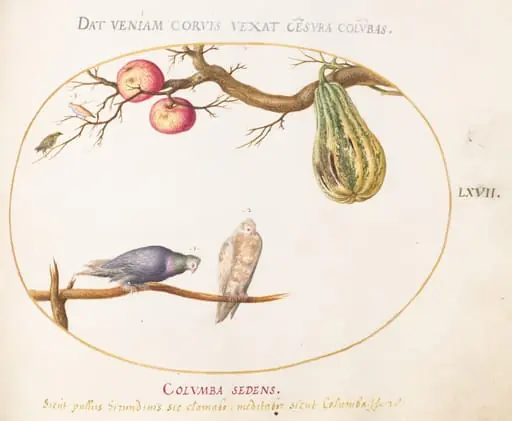 Plate 67: Two Doves beneath a Gourd and Apples
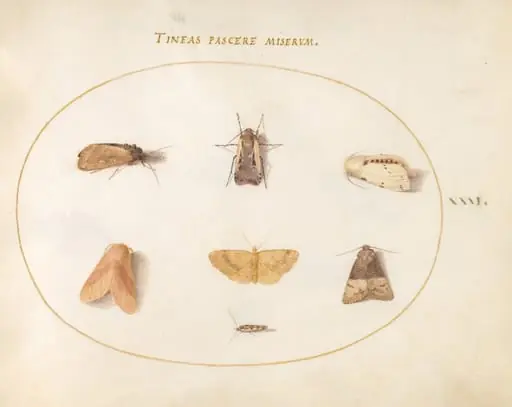 Plate 31: Seven Moths
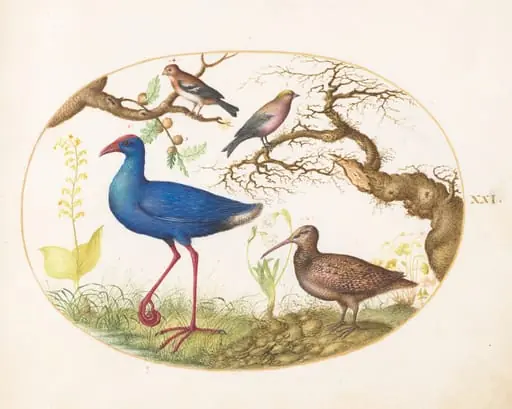 Plate 21: Swamp Hen and Woodcock with a Streaked Rosefinch, a Finch, and Oak Galls
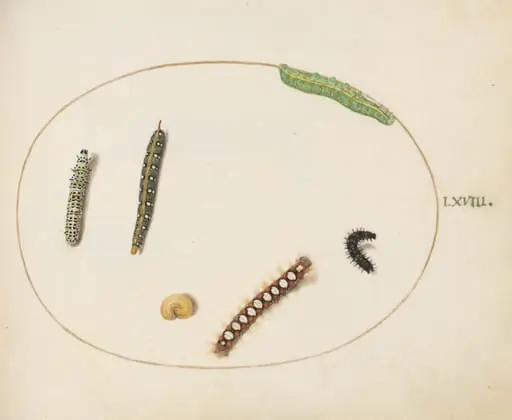 Plate 68: Leafy Spurge Hawkmoth Caterpillar, Mullein Moth Caterpillar, and Other Caterpillars
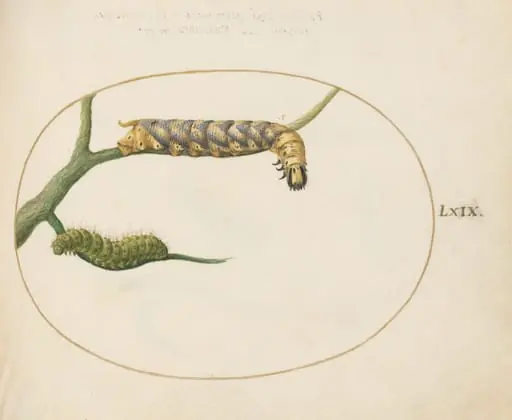 Plate 69: Emperor Moth Caterpillar with a Second Caterpillar on a Branch
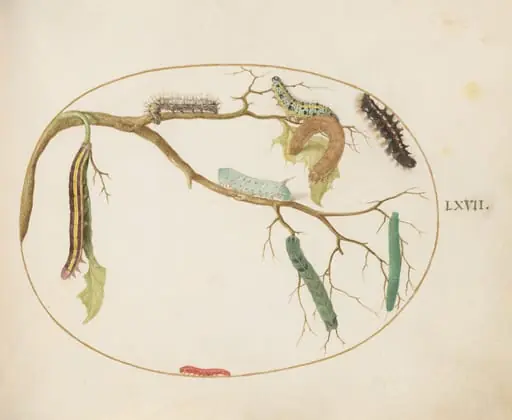 Plate 67: Large White and Small White Butterfly Caterpillars, Hornworm Caterpillar, Broom Moth Caterpillar, and Others
 Plate 66: Lackey Moth Caterpillar, Figure of Eight Caterpillar, Grey Dagger Caterpillar, and Other Caterpillars
 Plate 34: Two Moths with a Spider, a Caterpillar, a Damselfly, and Other Insects
 Plate 51: Grasshoppers and a Caterpillar with a Four O'Clock Flower
 Plate 22: A Cinnabar Moth and a Cockchafer with Butterflies, other Insects, and a Snapdragon
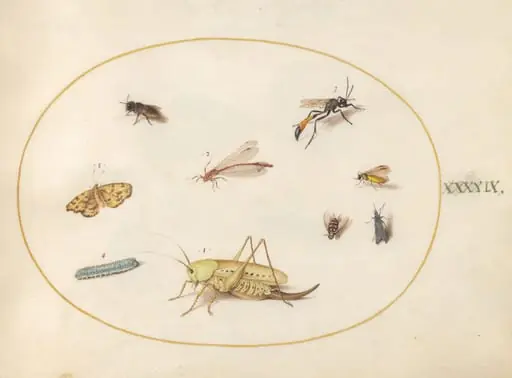 Plate 49: A Grasshopper, a Caterpillar, a Butterfly, a Moth, and Other Insects
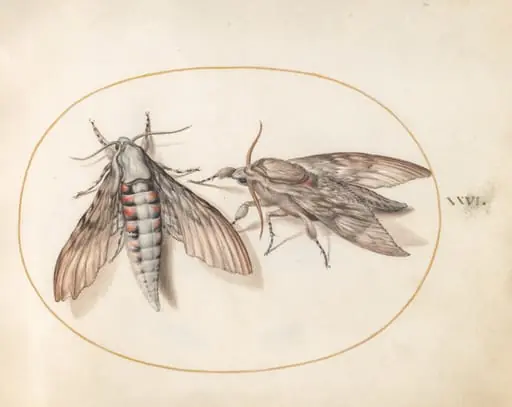 Plate 26: Two Hawk Moths
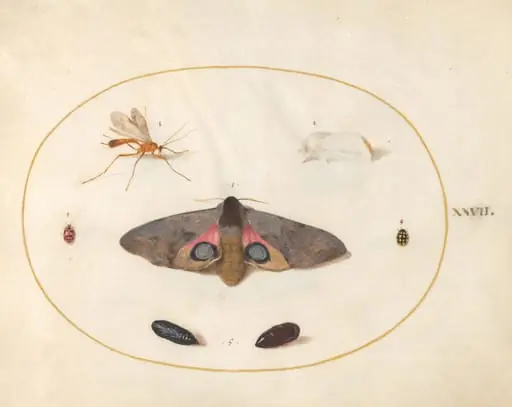 Plate 27: An Eyed Hawk-Moth, Two Chyrsalides, and Other Insects
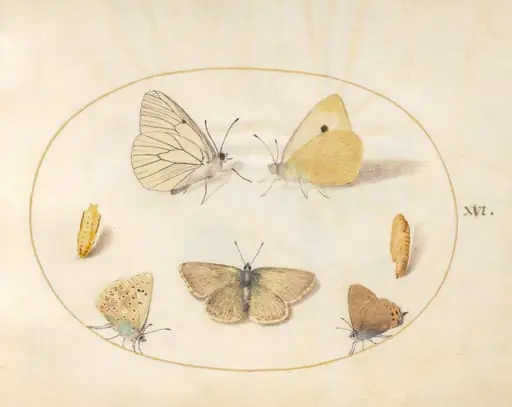 Plate 16: Black-Veined White, Clouded Yellow, Black Hairstreak(?), Geranium Argus(?), and Common Blue Butterflies with Two Chrysalides
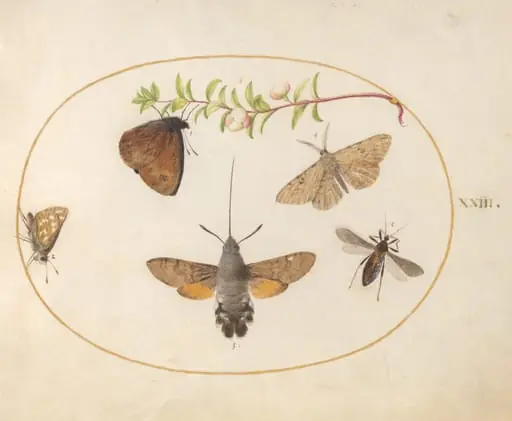 Plate 23: Hummingbird Hawk Moth, Butterflies, and Other Insects around a Snowberry Sprig