Artwork
Gamesters
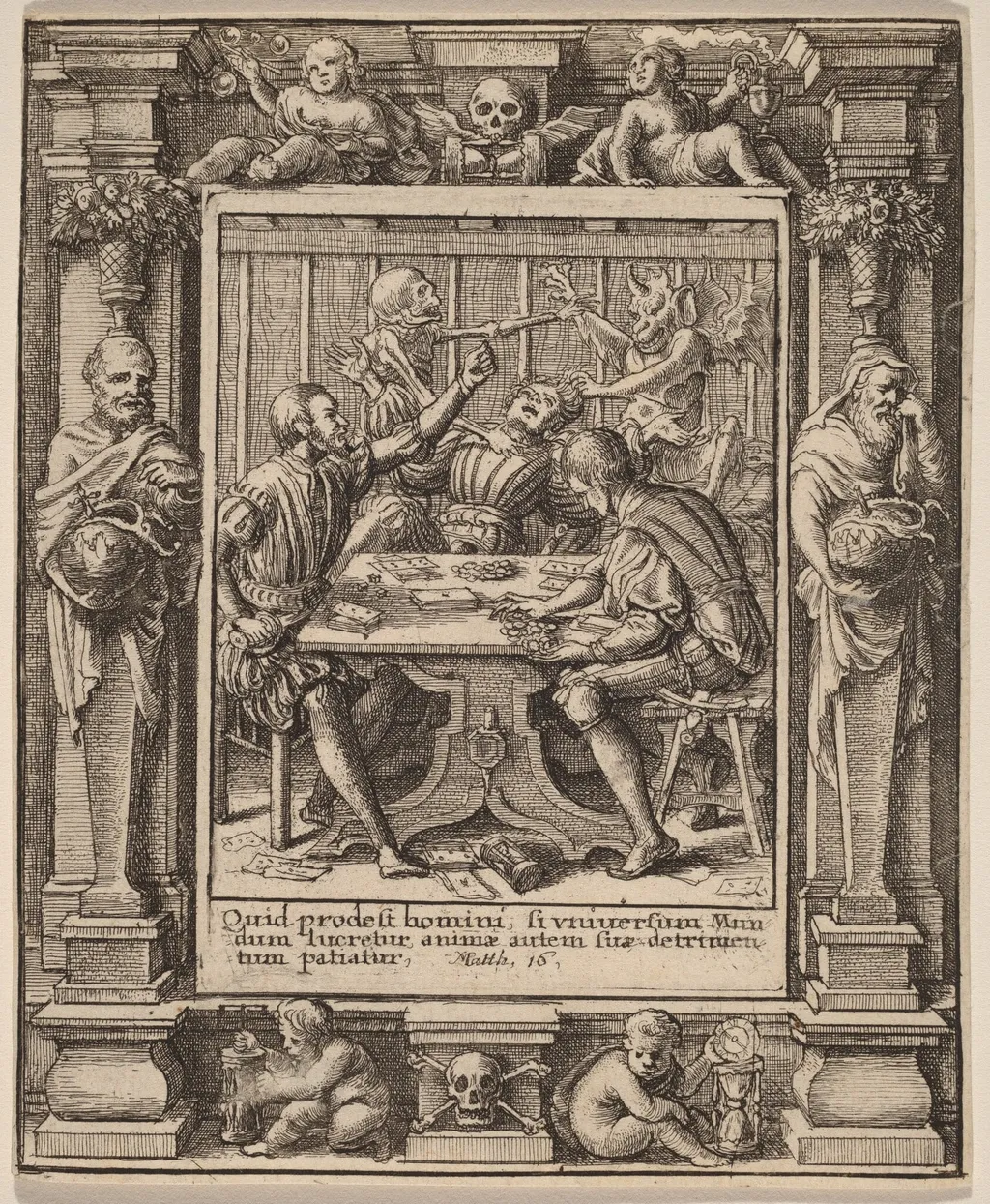
Gamesters is an ink print by the Baroque artist Wenceslaus Hollar. It dates from 1651 and is held in the collection of the National Gallery of Art.
About this work
Overview
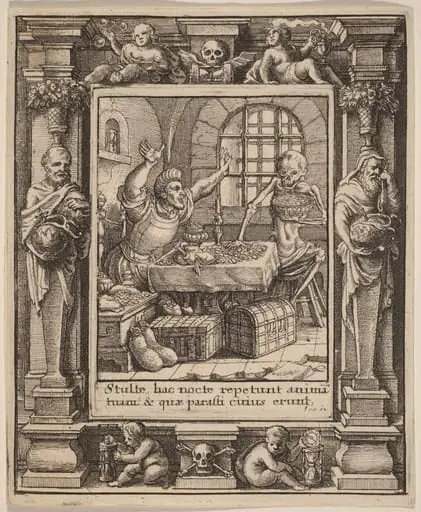
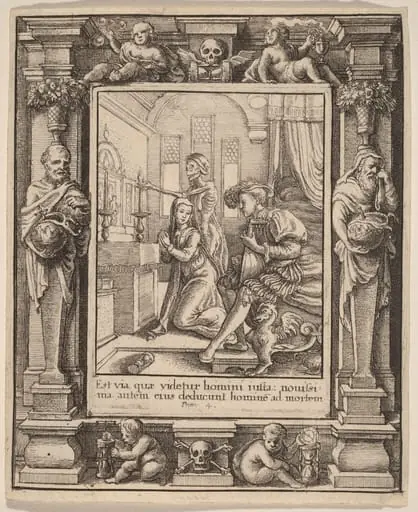
Gamesters is an etching created by Wenceslaus Hollar in 1651, framed by a border titled Democritus and Heraclitus. This print deviates from Hollar's typical cityscape and landscape themes, instead depicting a card game scene.
Subject & Meaning
The etching illustrates a chaotic card game with ominous undertones, as skeletons and unusual figures observe from the shadows. The contrasting border figures of Democritus (laughter) and Heraclitus (sorrow) underscore the theme, while the title suggests a cautionary message about the dangers of greed and the unpredictability of luck.
Technique & Style
Characterized by sharp, layered lines, Gamesters showcases Hollar's etching expertise. The dense border is populated with tiny, disparate creatures, some laughing and others holding skulls, adding to the work's intricacy and eerie atmosphere.
History & Provenance
Created in 1651 during Hollar's England-based career, the etching's specific ownership history is not detailed here. Hollar, a Czech-born artist, died in 1677 and was buried in London.
Artist & collection
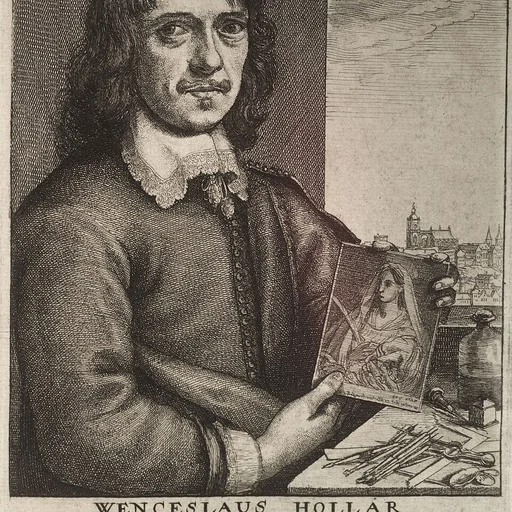
Artist
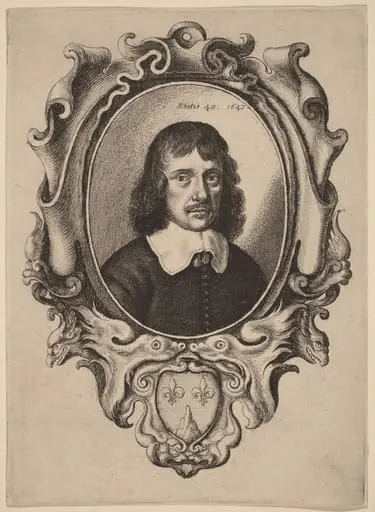
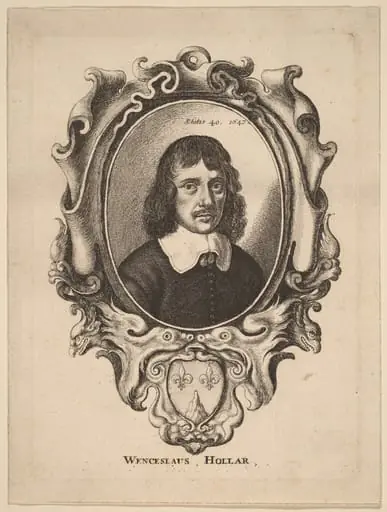
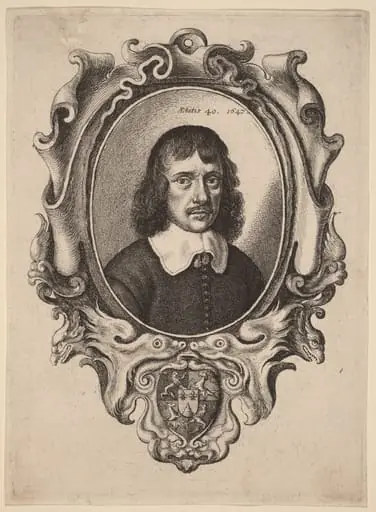
Wenceslaus Hollar (Czech: Václav Hollar (Czech pronunciation: ), German: Wenzel Hollar; 23 July 1607 – 25 March 1677) was a Czech engraver, etcher and painter.