Artwork
Mulier Anglica Habitans in Pago
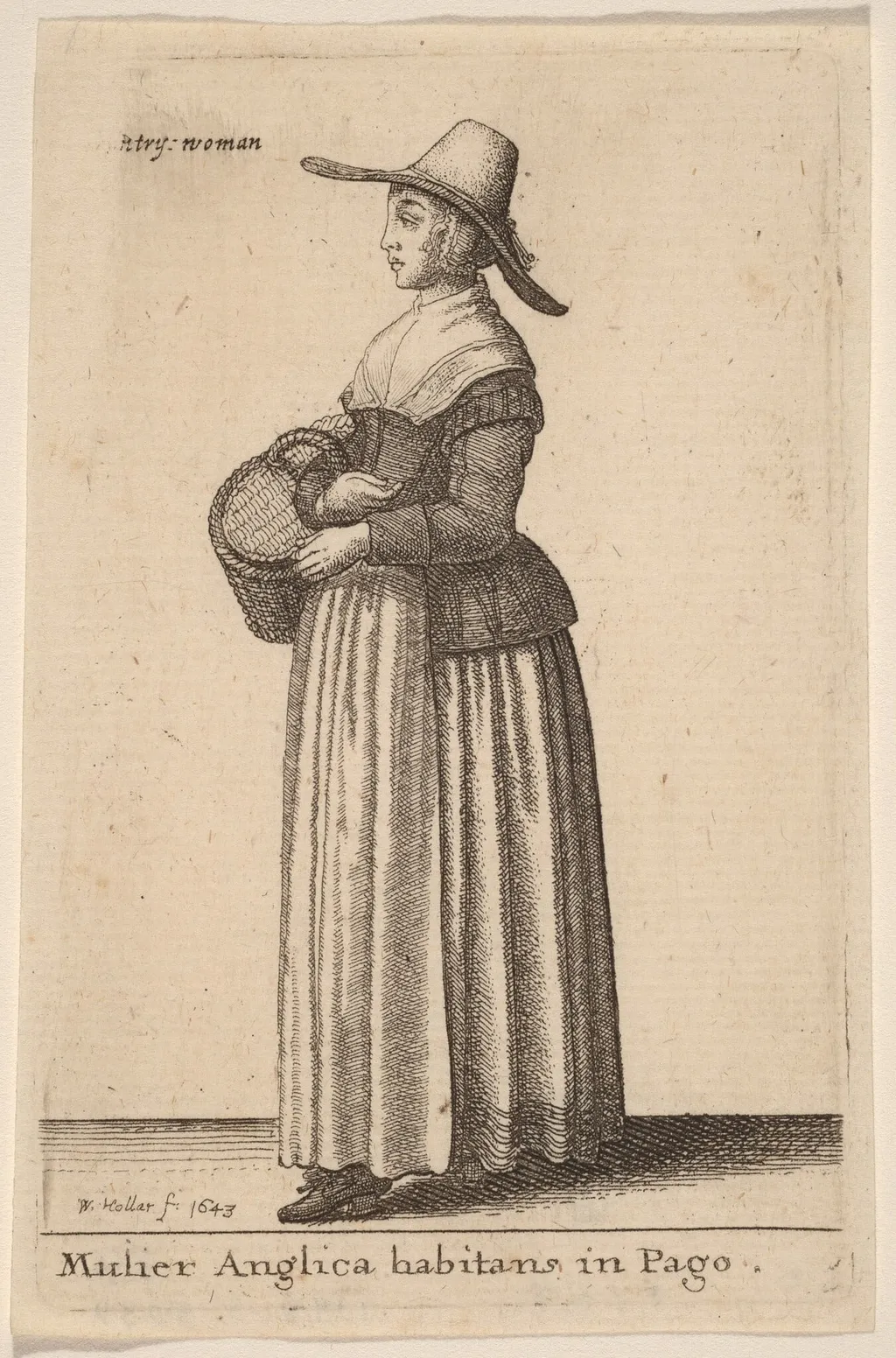
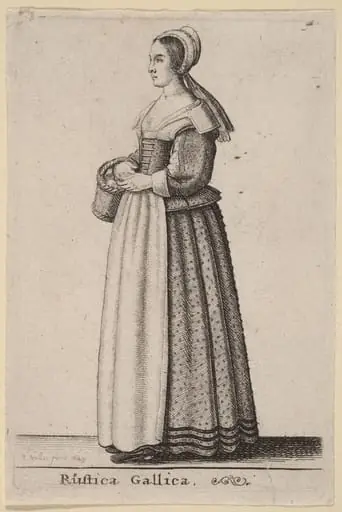
Mulier Anglica Habitans in Pago is an ink print by the Baroque artist Wenceslaus Hollar. It dates from 1643 and is held in the collection of the National Gallery of Art. Created in 1643, this black‑and‑white etching presents a solitary woman in profile, holding a small basket.
About this work
The title says she’s an "English woman living in Pago," but we don’t know more about her.
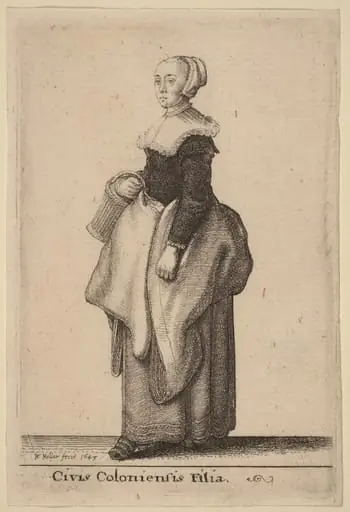
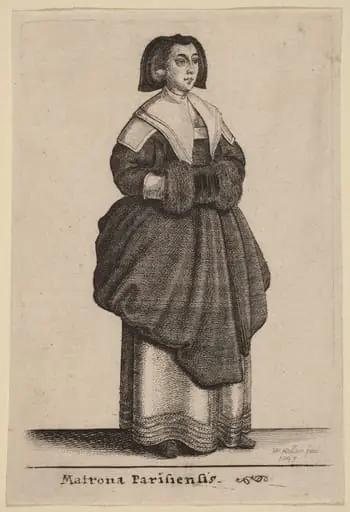
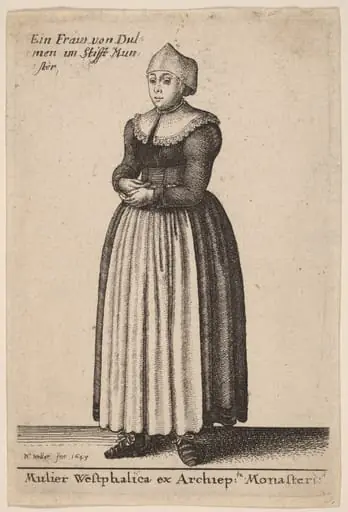
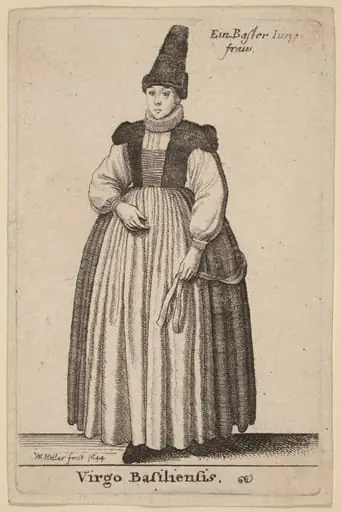
This is a black-and-white drawing of a woman standing sideways. She’s holding a small basket in one hand, and her long skirt is gathered at the waist. A wide-brimmed hat sits on her head, and her sleeves are puffy at the shoulders.
The title says she’s an "English woman living in Pago," but we don’t know more about her. The artist signed it in 1643, so it’s from that year.
Next, check out the technique: etching to see how this kind of print was made.
Overview
Created in 1643, this black‑and‑white etching presents a solitary woman in profile, holding a small basket. She wears a wide‑brimmed hat, a gathered long skirt, and puffed sleeves typical of English rural costume. The work is signed by the artist, confirming its date and authorship.
Subject & Meaning
The figure is identified as an Englishwoman residing in the town of Pago, though no further narrative is provided. The emphasis on her attire and everyday activity reflects an interest in documenting regional dress and domestic life rather than conveying a specific story.
Technique & Style
Executed with the etching process, the image relies on fine lines etched into a metal plate, allowing delicate rendering of fabric folds, the basket, and the hat’s brim. Hollar’s characteristic precision in texture and his focus on realistic detail are evident throughout the composition.
History & Provenance
The print was produced by Wenceslaus Hollar, a Czech-born engraver who spent much of his professional life in England. Hollar’s career spanned the mid‑17th century, and he died in 1677, being interred in London. The work remains an example of his output during his English period.
Context
The etching belongs to a broader 17th‑century European print tradition that recorded local customs and costumes. Such images served both as visual records of regional identity and as material for collectors interested in ethnographic subjects.
Artist & collection
Artist
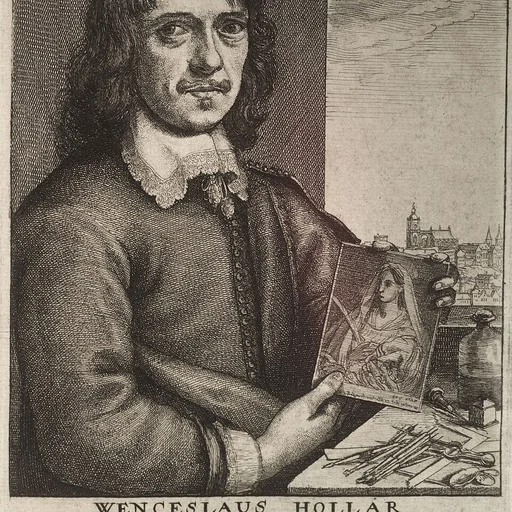
Wenceslaus Hollar (Czech: Václav Hollar (Czech pronunciation: ), German: Wenzel Hollar; 23 July 1607 – 25 March 1677) was a Czech engraver, etcher and painter.