Artwork
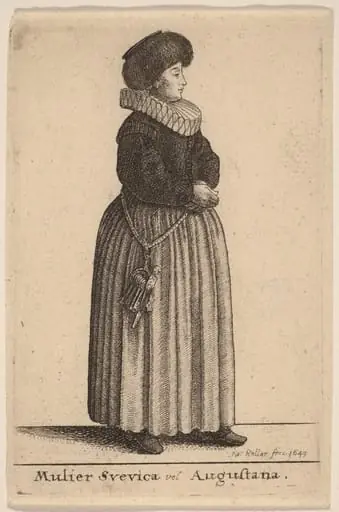
Mulier Augustana
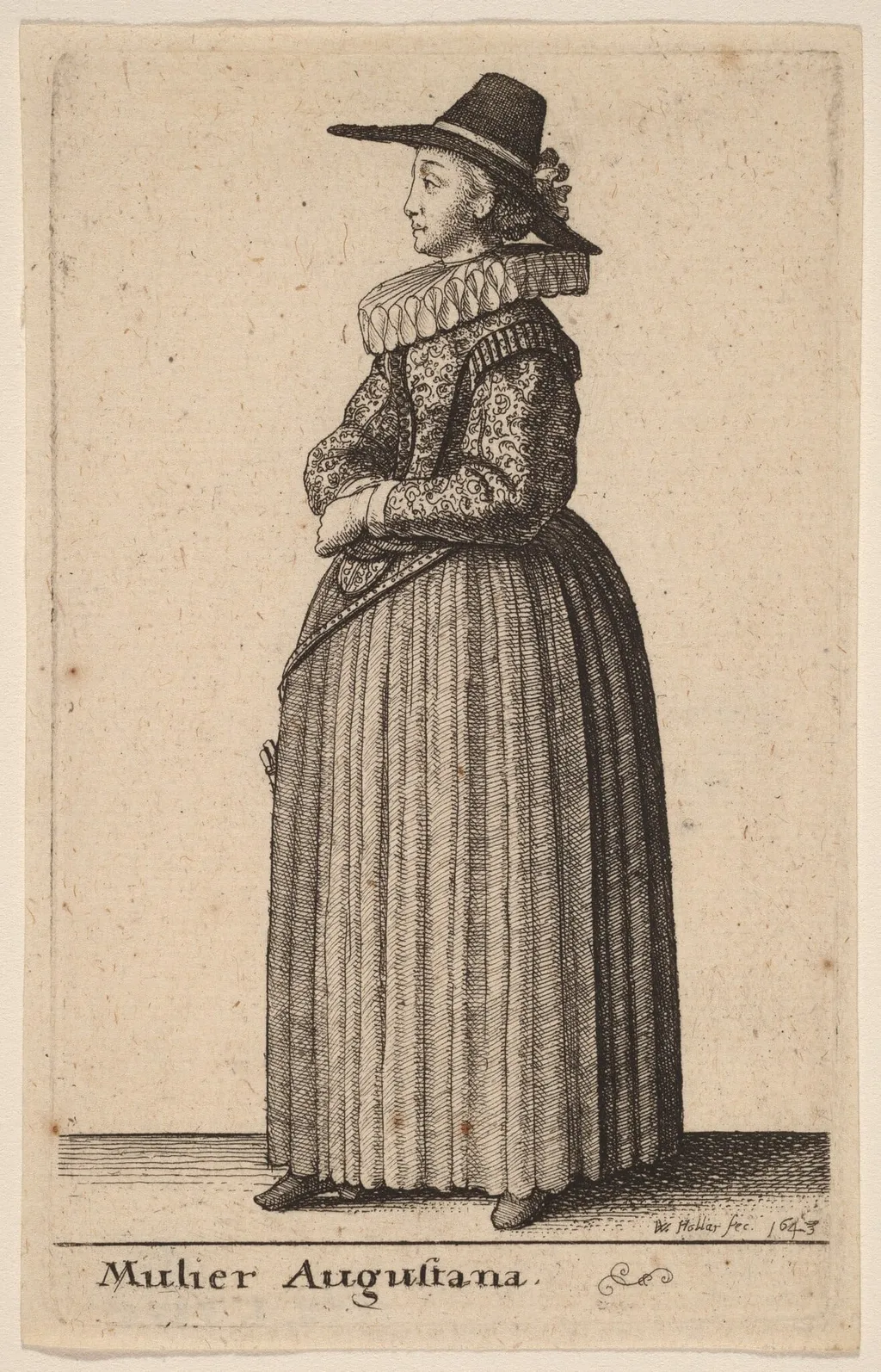
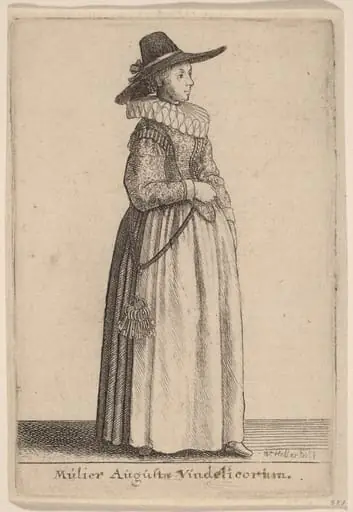
Mulier Augustana is an ink print by the Baroque artist Wenceslaus Hollar. It dates from 1643 and is held in the collection of the National Gallery of Art.
About this work
The title at the bottom reads *Mulier Augustana*, which might hint at a connection to Augsburg, Germany.
This is a black-and-white drawing of a woman standing sideways. She wears a wide-brimmed hat, a ruffled collar, and a long, striped skirt with puffy sleeves. Her hands rest on her stomach, and the lines in the picture show the folds of her clothes clearly.
The title at the bottom reads *Mulier Augustana*, which might hint at a connection to Augsburg, Germany. The artist signed it in 1643, so it’s from the mid-1600s.
If you like this style, look up etching to see how artists like this made detailed prints.
Overview
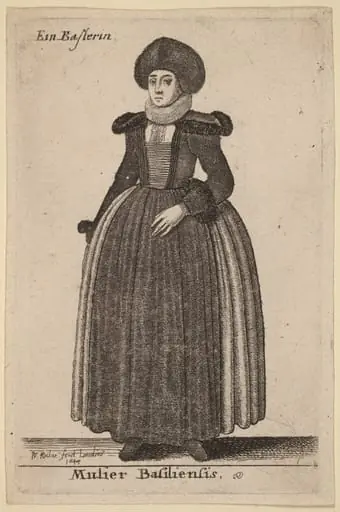
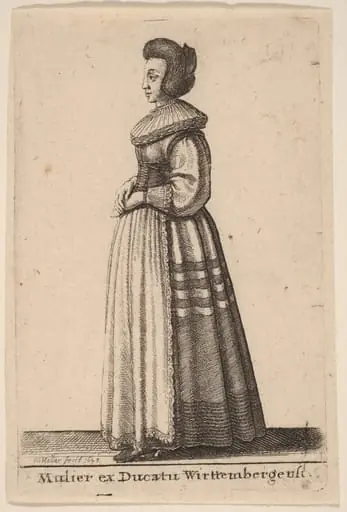
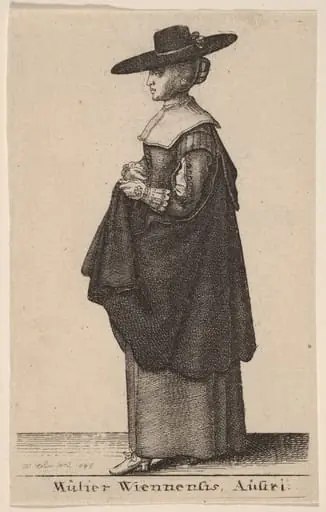
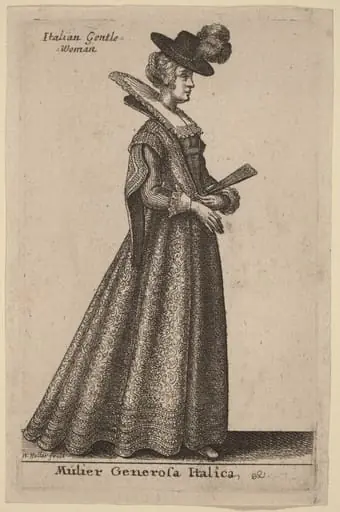
Created in 1643, *Mulier Augustana* is a black‑and‑white etching by the Czech‑born printmaker Wenceslaus Hollar, who spent most of his professional life in England. The image presents a solitary female figure rendered in profile, distinguished by a broad hat, ruffled collar and a striped, full‑length skirt with puffed sleeves. The composition is noted for its precise line work that delineates the folds of the costume and the figure’s poised stance.
Subject & Meaning
The sitter is portrayed in a historical or regional costume, suggesting an interest in ethnographic representation. The title, *Mulier Augustana*, links the figure to Augsburg, a German city known for its distinctive dress, implying that Hollar intended the work as a study of regional attire rather than a portrait of a specific individual.
Technique & Style
Executed as an etching, the print relies on incised lines to convey texture and volume. Hollar’s characteristic attention to detail is evident in the crisp rendering of fabric folds, hat brim and collar, while the restrained tonal range creates a clear, almost documentary quality. The linear precision aligns with his broader oeuvre of cityscapes and landscape vedutas.
History & Provenance
Hollar produced the work during the mid‑17th century, a period when he was active in England after relocating from Bohemia. He signed and dated the plate in 1643, and the piece later entered collections of print enthusiasts and museums that focus on early modern graphic art. Hollar died in London, where he was buried, and his prints continued to circulate among collectors of the era.
Context
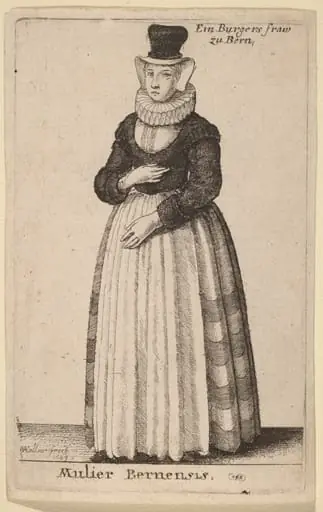
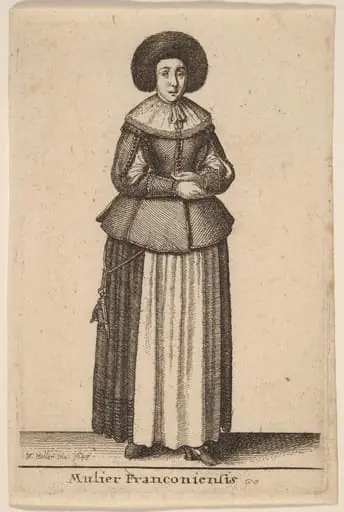
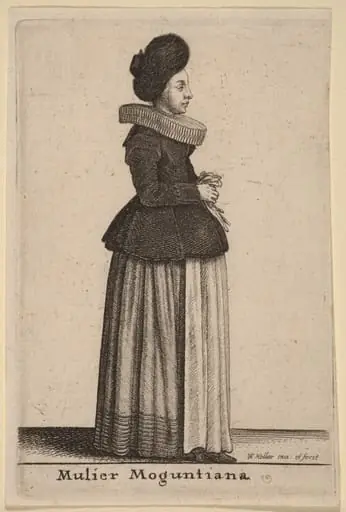
The etching belongs to a larger body of Hollar’s figure studies, which complement his more famous topographical prints. By documenting regional dress, he contributed to a growing European curiosity about cultural diversity, a theme that resonated with the burgeoning interest in travel literature and ethnography during the 1600s.
Artist & collection
Artist
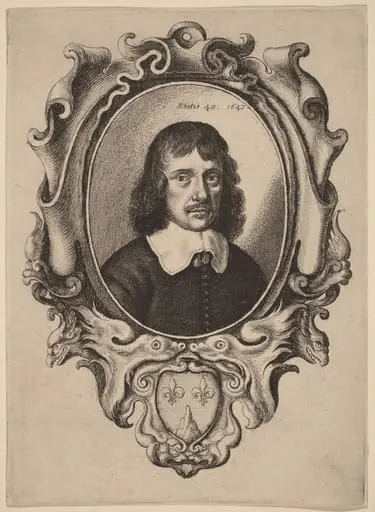
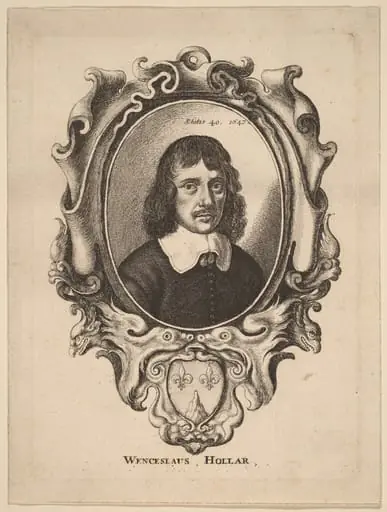
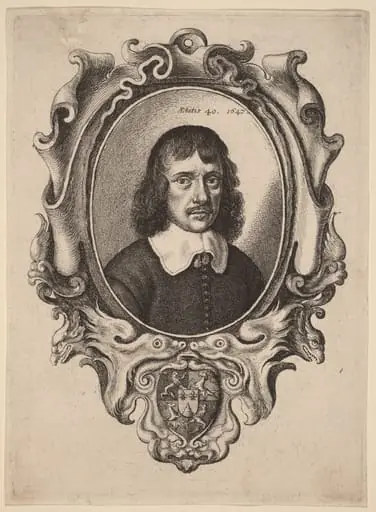
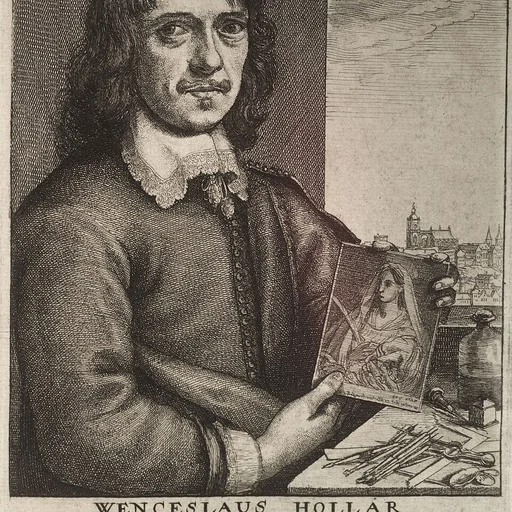
Wenceslaus Hollar (Czech: Václav Hollar (Czech pronunciation: ), German: Wenzel Hollar; 23 July 1607 – 25 March 1677) was a Czech engraver, etcher and painter.