Artwork
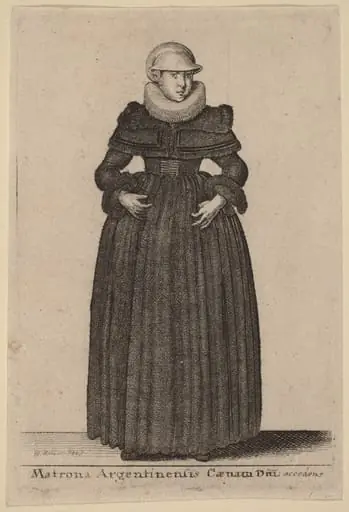
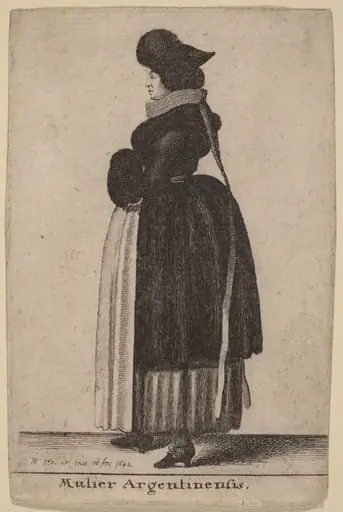
Mulier Argentinensis
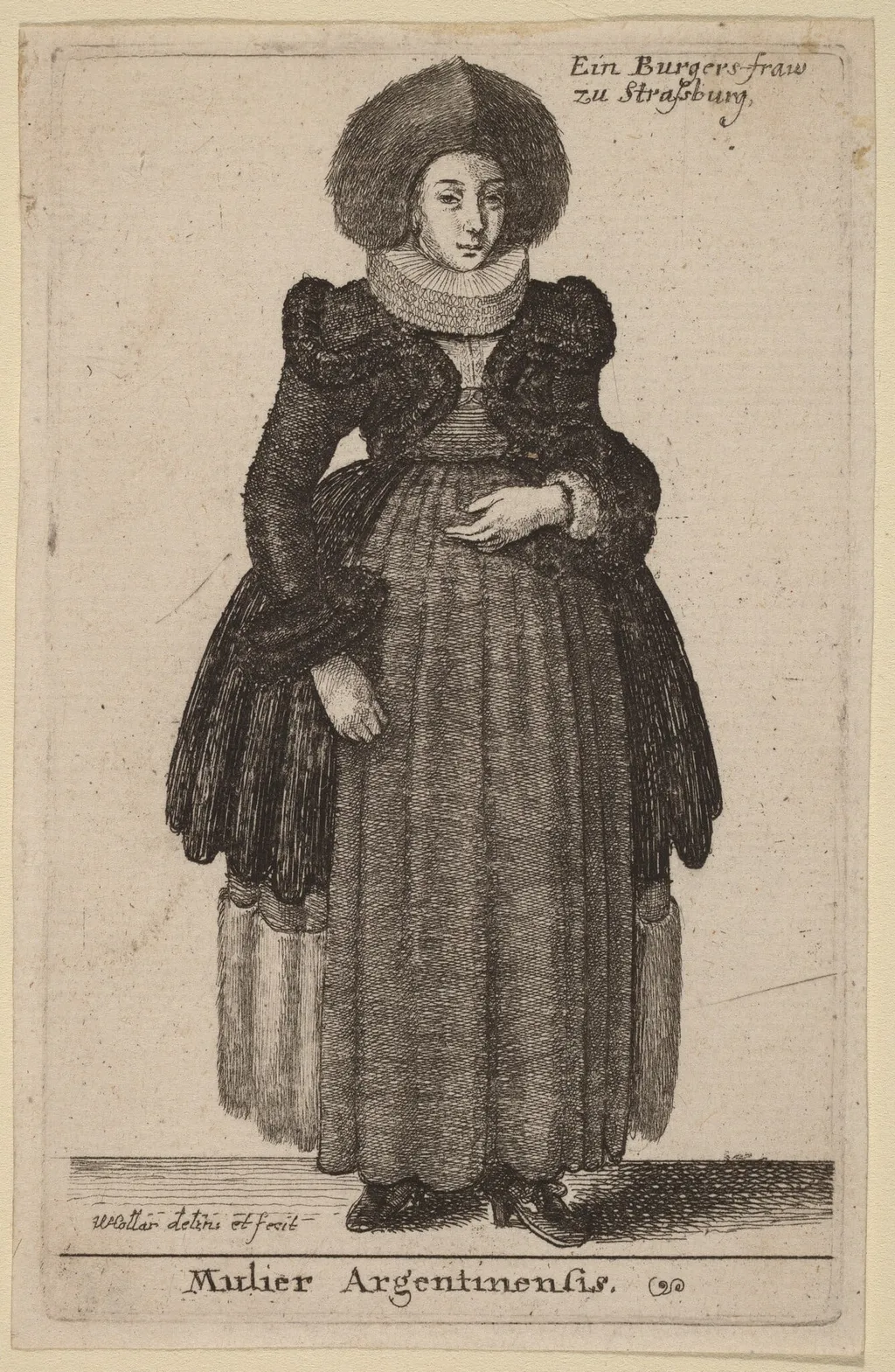
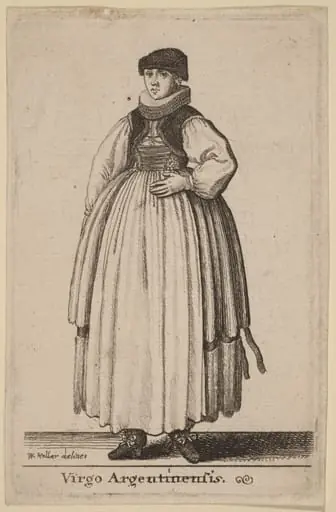
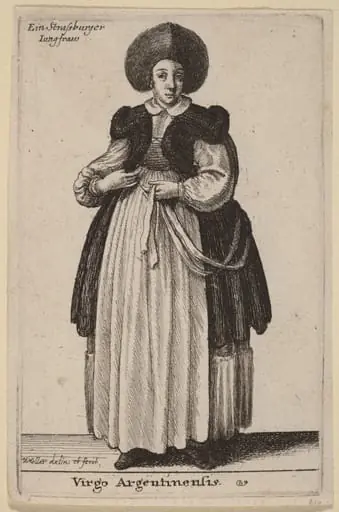
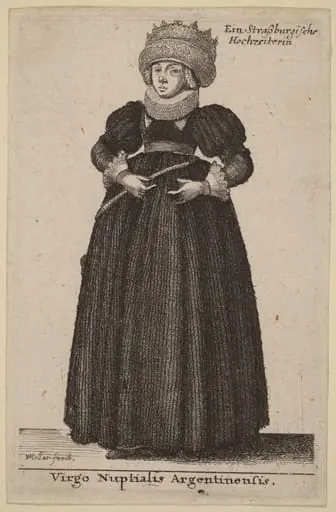
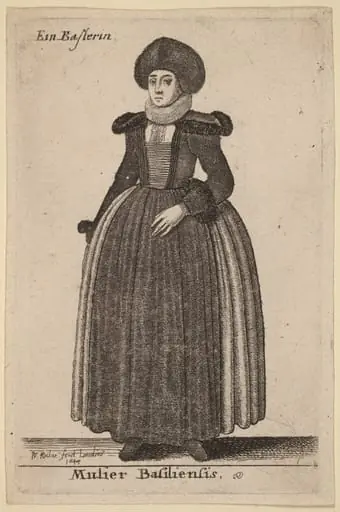
Mulier Argentinensis is an ink print by the Baroque artist Wenceslaus Hollar. It dates from 1647 and is held in the collection of the National Gallery of Art.
About this work
Overview
Created in 1647, *Mulier Argentinensis* is an etching by the Czech-born printmaker Wenceslaus Hollar. The work depicts a solitary woman in a long dress and coat, her hands clasped before her as she gazes to the right. Rendered entirely in black and white, the image focuses on the figure without any surrounding scenery or additional figures.
Subject & Meaning
The composition presents a single female figure, dressed in a full‑skirted gown with an open coat that reveals a striped shirt beneath, and a hat topped with a ruffled collar. Her posture, with hands together and a sideways glance, suggests a moment of quiet contemplation, though the work offers no explicit narrative beyond the portrayal of the individual.
Technique & Style
Hollar employed fine, intersecting lines to render the textures of fabric, hair and accessories, achieving a high level of detail characteristic of his etching practice. The contrast between the dark outlines and the lighter areas creates a sense of depth, while the absence of background elements emphasizes the precision of the figure’s rendering.
History & Provenance
Wenceslaus Hollar, born in Prague in 1607, spent much of his professional life in England, where he produced a wide range of cityscapes and landscapes. *Mulier Argentinensis* reflects his mastery of printmaking during the mid‑17th century, a period when he was establishing his reputation as a leading European etcher.
Artist & collection
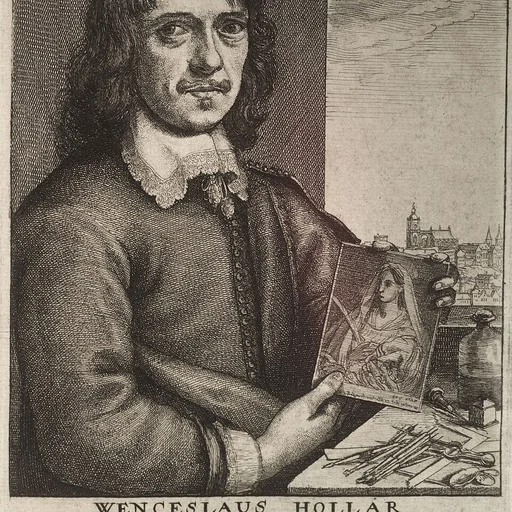
Artist
Wenceslaus Hollar (Czech: Václav Hollar (Czech pronunciation: ), German: Wenzel Hollar; 23 July 1607 – 25 March 1677) was a Czech engraver, etcher and painter.