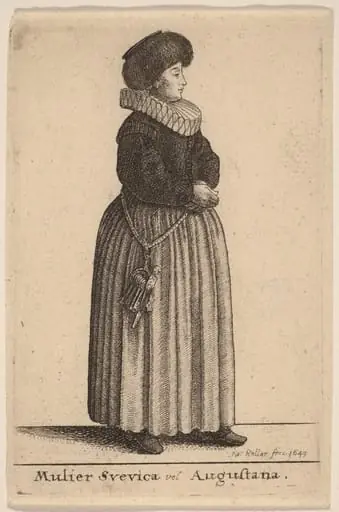
Artwork
Mulier ex inferiori Palainatu
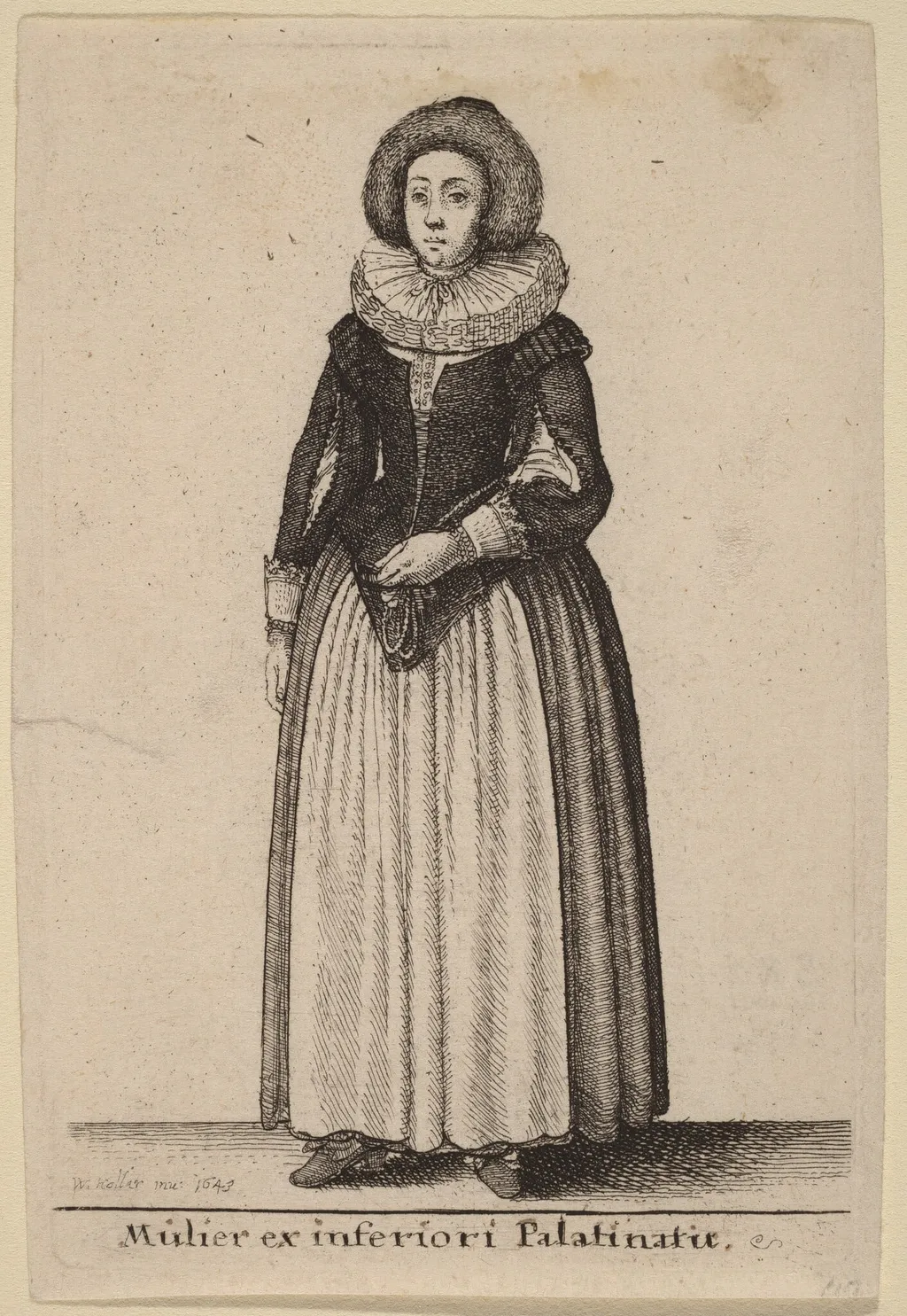
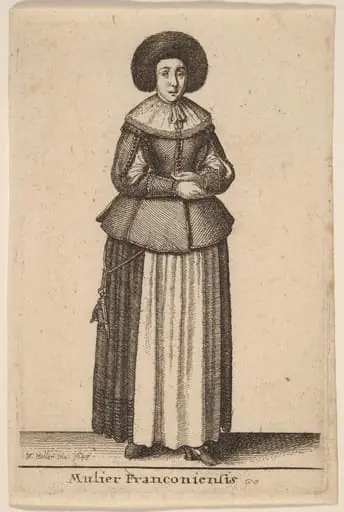
Mulier ex inferiori Palainatu is an ink print by the Baroque artist Wenceslaus Hollar. It dates from 1643 and is held in the collection of the National Gallery of Art.
About this work
Overview
Unlike his more famous urban vistas, this work focuses on a solitary woman, rendered with precise linear detail characteristic of his technique.
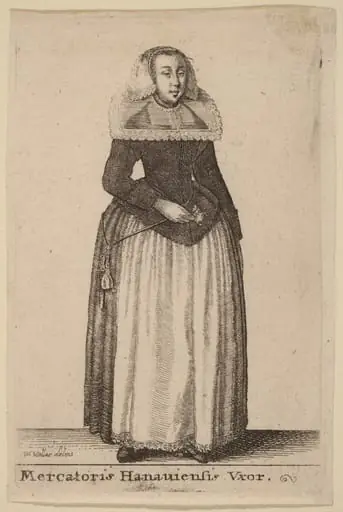
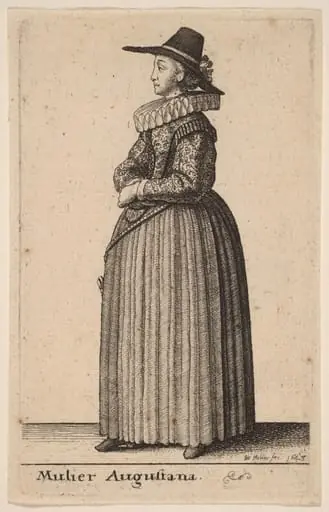
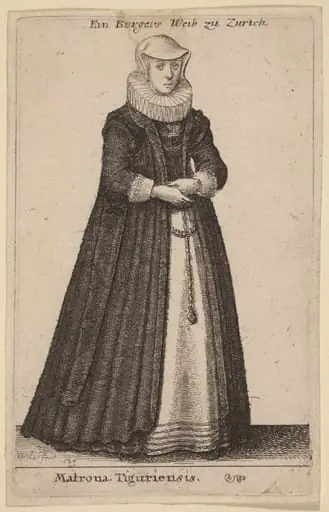
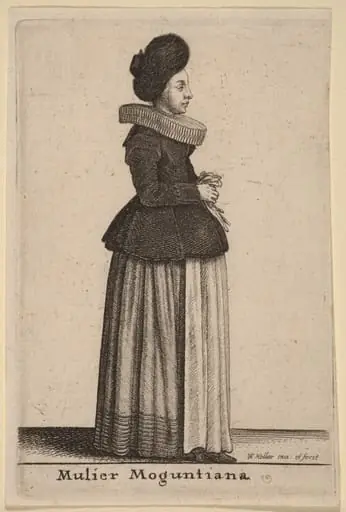
Created in 1643 by Wenceslaus Hollar, a Czech artist active in England, this etching is one of many intimate figure studies he produced during his years in London. Unlike his more famous urban vistas, this work focuses on a solitary woman, rendered with precise linear detail characteristic of his technique. The image is monochrome, relying on fine hatching and cross-contour lines to suggest form and texture without color or shading.
Subject & Meaning
The figure is a woman dressed in a long skirt, dark coat, and wide ruffled collar, wearing a low-crowned hat that obscures her face. She holds a small, indistinct object in her hands, its purpose ambiguous. The Latin title, translating loosely to 'Woman from the Lower Palatinate,' suggests regional identity, possibly referencing displaced nobility or refugees from the Thirty Years’ War, though no definitive link to a specific person or event is established.
Technique & Style
Hollar employed etching to achieve fine, controlled lines on a metal plate, using acid to bite into the surface after drawing through a wax ground. His method emphasized clarity and precision, with delicate parallel and cross-hatched strokes defining fabric folds, hat brims, and the subtle contours of the figure. The absence of tone or washes underscores his reliance on line alone to convey volume and texture.
History & Provenance
Hollar produced this work during his extended stay in England, where he was employed by patrons including the Earl of Arundel. While many of his prints documented architecture and topography, this piece belongs to a smaller group of character studies, likely made for private circulation. Its early provenance is undocumented, but it survives in several institutional collections, indicating continued interest in his figure work.
Context
Made during the height of the Thirty Years’ War, the image may reflect the displacement of German-speaking populations, including those from the Palatinate region. Hollar, himself a refugee from Prague, often depicted individuals with quiet dignity, capturing the ordinary amid political upheaval. This etching fits within a broader European tradition of genre figures, yet avoids overt narrative or symbolism.
Legacy
Though less celebrated than his architectural views, this etching exemplifies Hollar’s skill in rendering human form with restraint and observation. His technique influenced later generations of printmakers, particularly in the use of line to suggest texture and presence. The work remains a quiet testament to his ability to elevate everyday subjects through meticulous draftsmanship.
Artist & collection
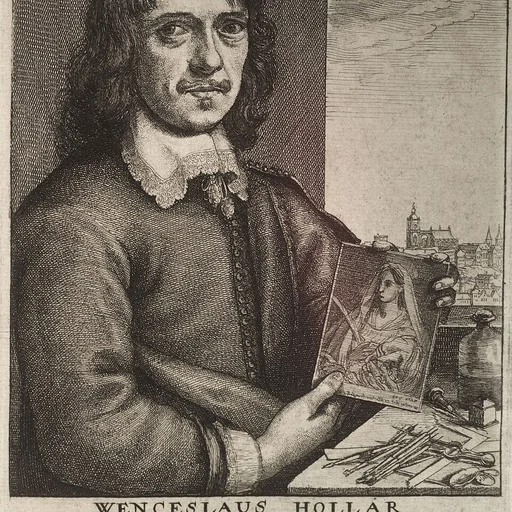
Artist
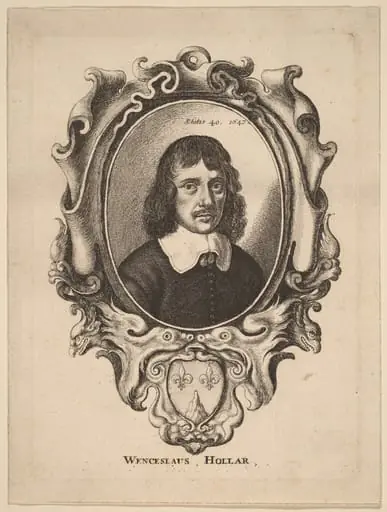
Wenceslaus Hollar (Czech: Václav Hollar (Czech pronunciation: ), German: Wenzel Hollar; 23 July 1607 – 25 March 1677) was a Czech engraver, etcher and painter.