Artwork
Mulier Primaria Antuerpiensis, in Ornatu Domestico
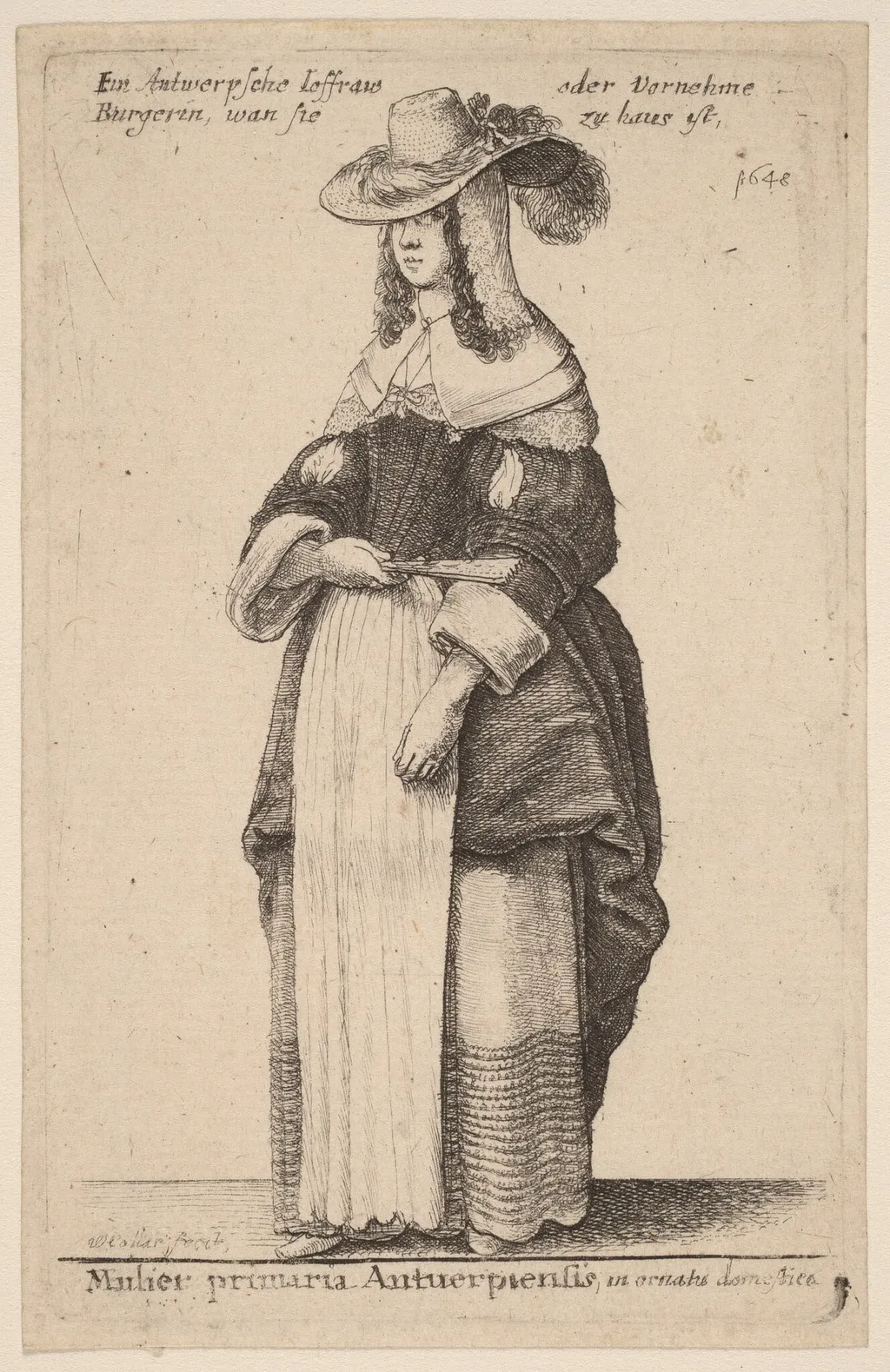
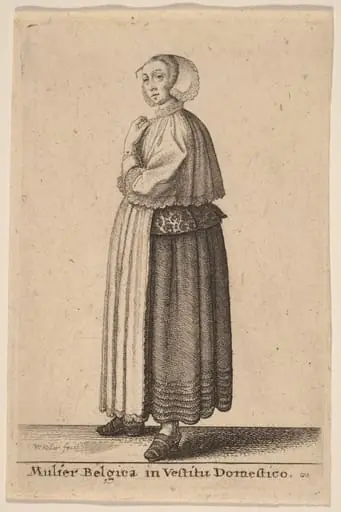
Mulier Primaria Antuerpiensis, in Ornatu Domestico is an ink print by the Baroque artist Wenceslaus Hollar. It dates from 1648 and is held in the collection of the National Gallery of Art.
About this work
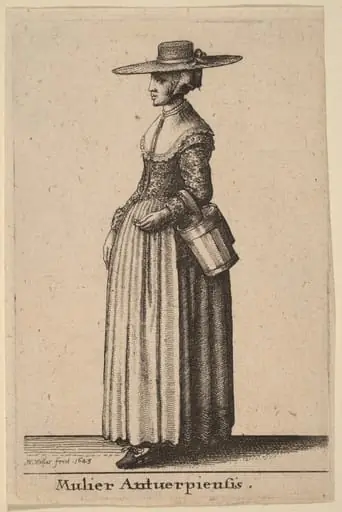
She wears a wide-brimmed hat with a feather tucked behind her ear, a dark collar, and a long skirt that touches the floor.
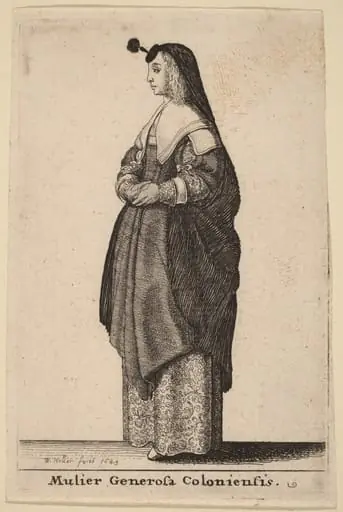
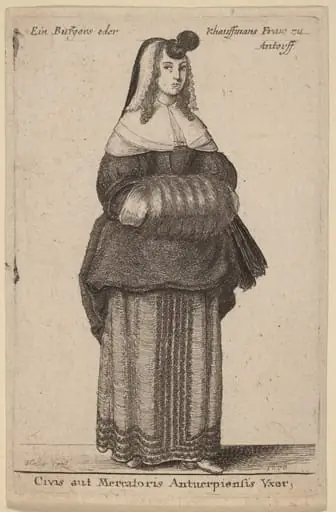
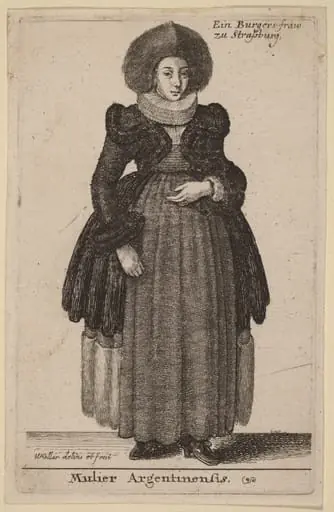
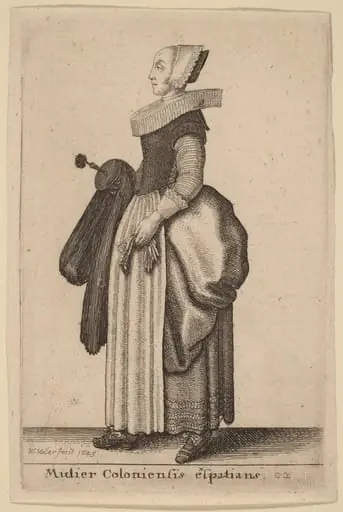
This is a black-and-white drawing of a woman standing still. She wears a wide-brimmed hat with a feather tucked behind her ear, a dark collar, and a long skirt that touches the floor. Her hands are folded in front of her, and she looks straight ahead with a calm face.
The text above her says it’s a woman from Antwerp dressed for home. The artist signed it in 1648, and the lines are made with a sharp tool, not paint.
Look up etching to see how this kind of drawing was made.
Overview
Created in 1648, this monochrome print by Wenceslaus Hollar presents a solitary female figure rendered in fine lines. The image shows a woman standing upright, her hands clasped before her, gazing directly ahead. A wide-brimmed hat with a feather tucked behind the ear crowns her head, while a dark collar and floor‑length skirt complete the attire. The inscription identifies her as an Antwerp resident dressed for domestic life.
Subject & Meaning
The figure embodies the 17th‑century fascination with everyday costume, offering a visual record of a middle‑class woman's home dress in the Southern Netherlands. By portraying her in a calm, forward‑facing pose, Hollar emphasizes both the modesty and the individuality of domestic attire, inviting viewers to consider the social roles and sartorial norms of the period.
Technique & Style
Executed as an etching, the work was produced by incising lines into a metal plate with a sharp needle, then printing the image onto paper. Hollar’s characteristic precision is evident in the delicate rendering of fabric folds, the feather’s texture, and the subtle modeling of the face, all achieved without any use of colour.
History & Provenance
Wenceslaus Hollar, a Czech‑born engraver who spent most of his professional life in England, signed the plate with his name and the date 1648. The print was likely circulated among collectors interested in costume studies and genre scenes, though specific ownership records before the modern era are scarce.
Context
The mid‑1600s saw a growing market for prints that documented regional dress and daily life, catering to both scholarly curiosity and the tastes of a burgeoning bourgeois audience. Hollar’s output, which includes cityscapes, landscapes, and portraiture, reflects this trend, and the Antwerp domestic costume serves as a representative example of his broader interest in cultural documentation.
Artist & collection
Artist
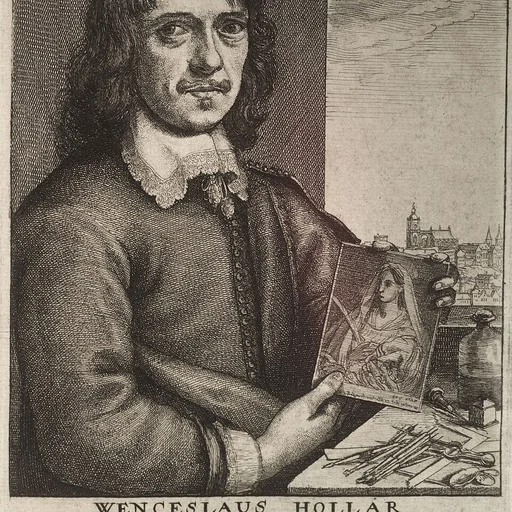
Wenceslaus Hollar (Czech: Václav Hollar (Czech pronunciation: ), German: Wenzel Hollar; 23 July 1607 – 25 March 1677) was a Czech engraver, etcher and painter.