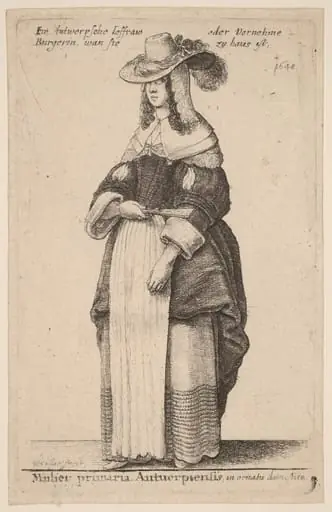
Artwork
Mulier Antuerpiensis
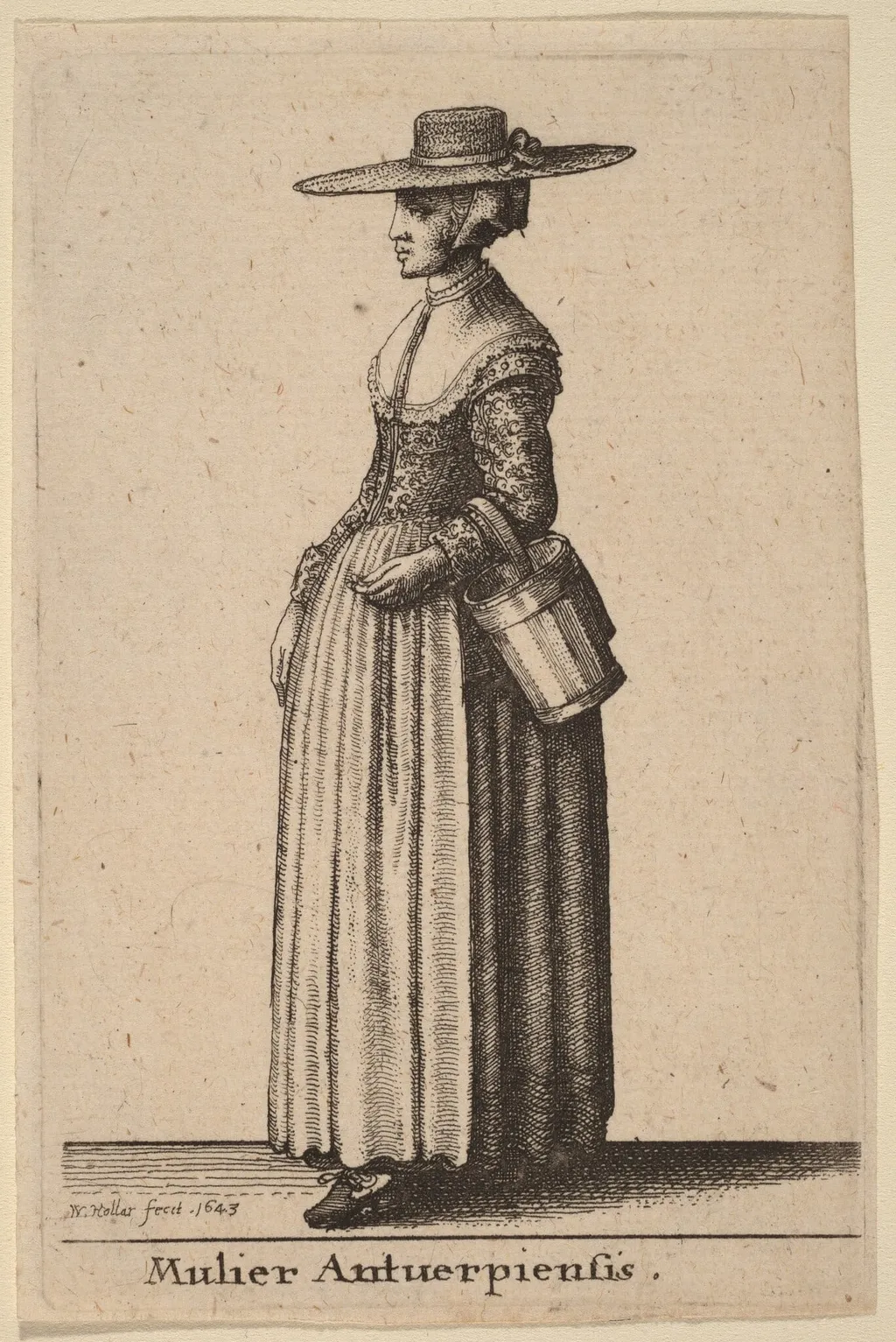
Mulier Antuerpiensis is an ink print by the Baroque artist Wenceslaus Hollar. It dates from 1643 and is held in the collection of the National Gallery of Art.
About this work
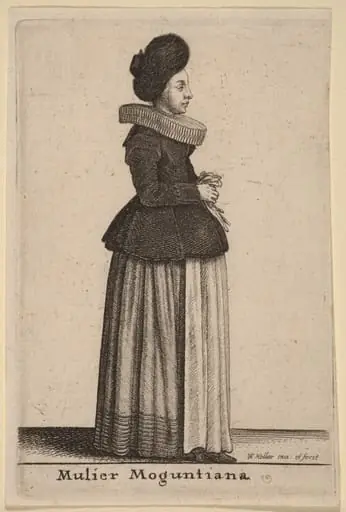
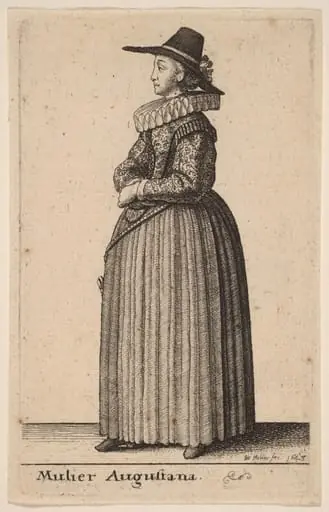
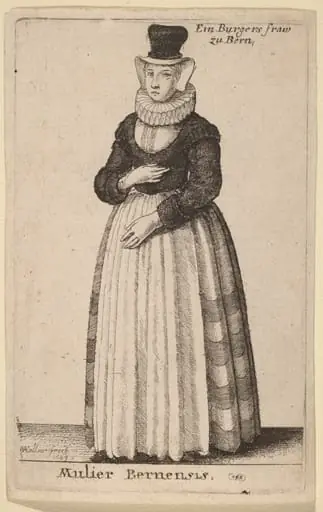
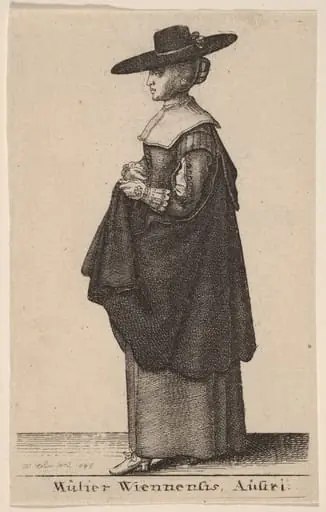
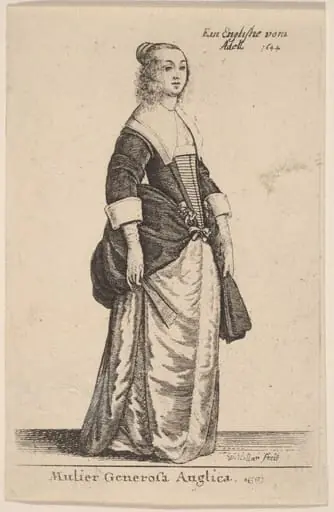
This black-and-white etching shows a woman standing sideways, wearing a wide-brimmed hat and a long, patterned dress.
This black-and-white etching shows a woman standing sideways, wearing a wide-brimmed hat and a long, patterned dress. Her sleeves are puffy, and she holds a small bag at her side. The lines in the print are sharp, with lots of cross-hatching to show fabric folds and shadows.
The title at the bottom, *Mulier Antuerpiensis*, suggests she’s meant to represent someone from Antwerp. The artist signed it in 1643, so it’s from that year.
Next, check out etching to see how artists like this made detailed prints.
Overview
Created in 1643 by Wenceslaus Hollar, *Mulier Antuerpiensis* is a black-and-white etching depicting a woman dressed in attire associated with Antwerp. Hollar, a Czech artist active in England, specialized in precise graphic work that captured the textures and fashions of urban Europe. This print exemplifies his focus on costume and daily life, rendered through fine, controlled lines and tonal shading.
Subject & Meaning
The figure is portrayed in profile, wearing a broad-brimmed hat, puffed sleeves, and a patterned gown, suggesting regional dress from Antwerp. The small bag at her side hints at everyday activity, possibly commerce or travel. The Latin title, meaning 'Woman of Antwerp,' frames her as a representative type rather than a specific individual, aligning with 17th-century interest in documenting regional identities through visual means.
Technique & Style
Hollar employed etching to achieve fine detail, using sharp, incised lines and dense cross-hatching to model fabric folds and shadow. The contrast between light and dark areas enhances the three-dimensionality of the dress and hat. His technique reflects mastery of the medium, prioritizing clarity and texture over dramatic expression, consistent with the observational approach of Northern European printmakers of the period.
History & Provenance
The work was produced during Hollar’s time in England, where he documented both English and continental subjects. Though created abroad, it reflects his continued engagement with Flemish culture, likely informed by earlier travels or printed sources. The 1643 signature confirms its date, and it remains part of the broader corpus of his graphic studies, held in major print collections since the 17th century.
Context
This print belongs to a flourishing tradition of Dutch and Flemish graphic art that cataloged regional dress, occupations, and urban scenes. Such images served both documentary and commercial purposes, appealing to collectors interested in ethnographic detail. Hollar’s work fits within this trend, contributing to a visual archive of European cities during a period of expanding trade and cultural exchange.
Legacy
Hollar’s etchings, including *Mulier Antuerpiensis*, influenced later generations of printmakers through their technical precision and attention to material culture. While not widely exhibited as standalone works today, they remain valuable references for historians studying 17th-century fashion and urban life. His systematic approach to recording appearances helped shape the role of print as a tool for visual documentation.
Artist & collection
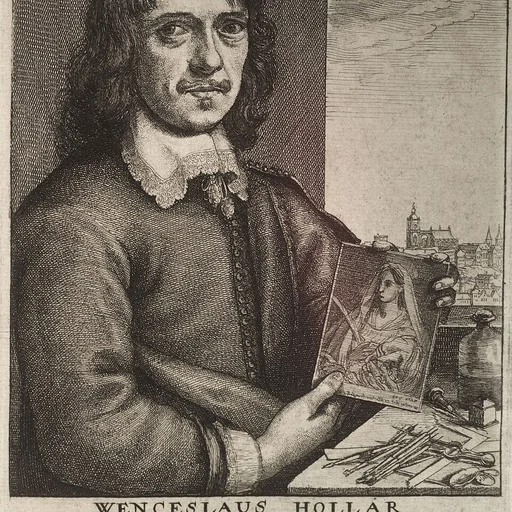
Artist
Wenceslaus Hollar (Czech: Václav Hollar (Czech pronunciation: ), German: Wenzel Hollar; 23 July 1607 – 25 March 1677) was a Czech engraver, etcher and painter.