Artwork
Kunz von der Rosen
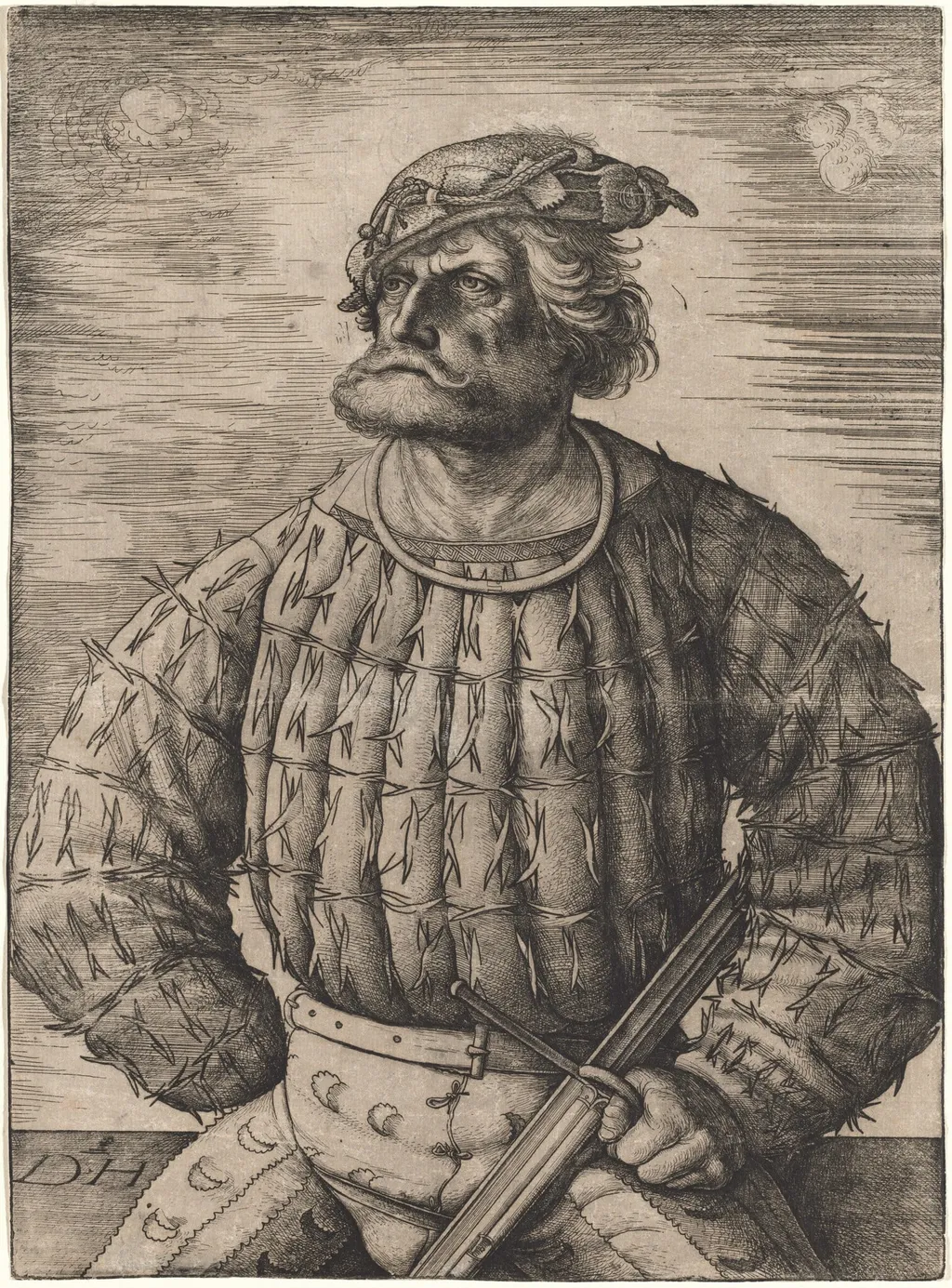
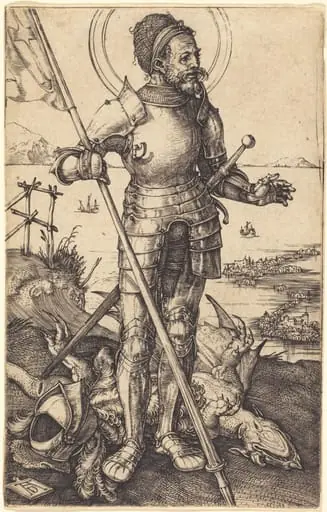
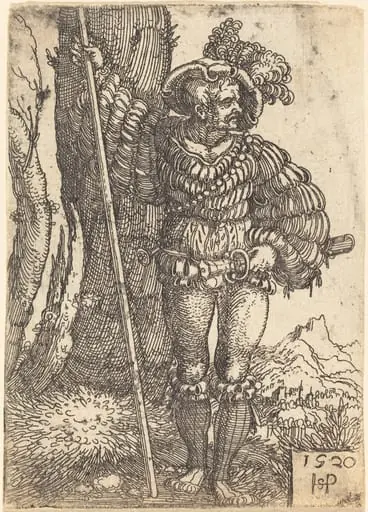
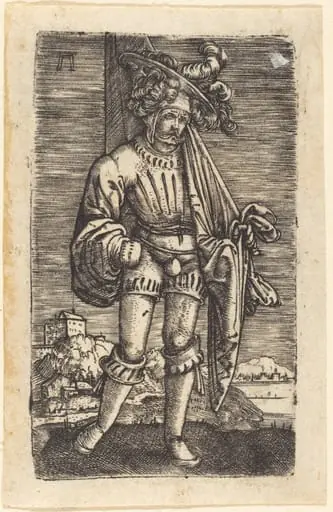
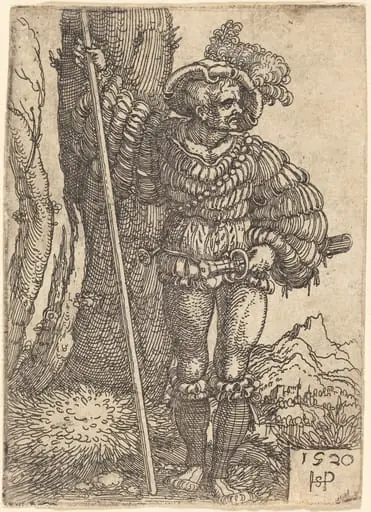
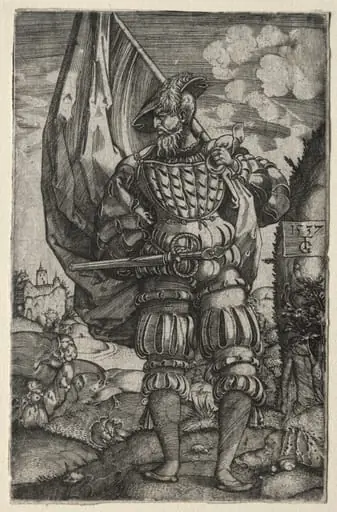
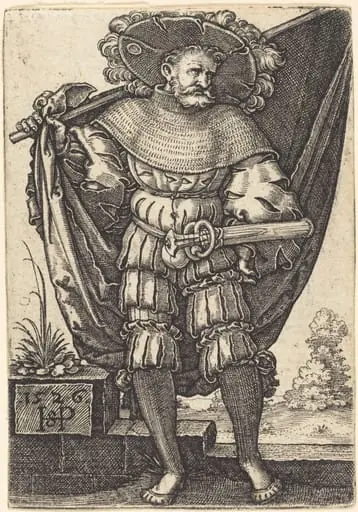
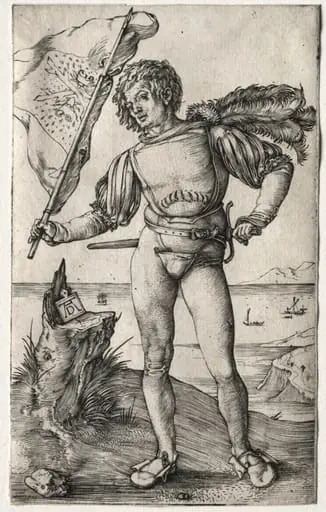
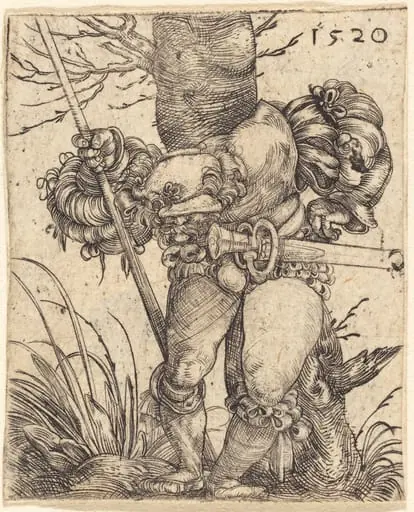
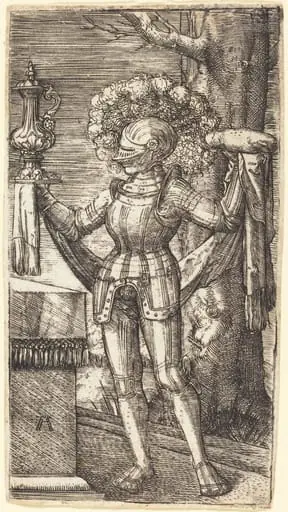
Kunz von der Rosen is an ink print by the Renaissance artist Daniel Hopfer. It dates from 1518 and is held in the collection of the National Gallery of Art.
About this work
Overview
Hopfer, based in Augsburg, was among the earliest artists to use etching as a printmaking method, drawing on his experience as an armor decorator.
Created around 1518 by Daniel Hopfer, this etching on iron depicts Kunz von der Rosen, a figure associated with the imperial court. Hopfer, based in Augsburg, was among the earliest artists to use etching as a printmaking method, drawing on his experience as an armor decorator. The choice of iron as a plate material was unusual and reflects his technical background, distinguishing his work from later copper-based prints.
Subject & Meaning
The subject, Kunz von der Rosen, is portrayed in a suit of armor adorned with sharp, pointed projections, suggesting a ceremonial or symbolic function rather than practical use. His stern gaze and upright posture convey authority, possibly referencing his role as a court official or knight. The absence of context or background focuses attention on the figure’s imposing presence and the intricate detail of his attire.
Technique & Style
Hopfer employed etching and possibly drypoint to render fine lines and textures across the iron plate. The sharp, linear quality of the armor’s points and the subtle tonal variations in the face demonstrate his command of the medium. The use of iron, harder than copper, required greater force and precision, resulting in a distinctive, dense texture that few contemporaries could replicate.
History & Provenance
Though Hopfer’s prints were not widely collected in his lifetime, they circulated among local patrons and craftsmen. Over time, scholars recognized his role in transitioning decorative metalwork into print culture. Surviving impressions of this work are rare, with most held in European institutional collections, reflecting its early status as a technical experiment rather than a mass-produced image.
Context
In early 16th-century Augsburg, metalworking and printmaking overlapped in artisan workshops. Hopfer’s adaptation of armor decoration techniques into etching aligned with broader trends in northern European art, where craftsmanship and innovation merged. His work emerged alongside the rise of printed imagery for both religious and secular audiences, contributing to the medium’s growing accessibility.
Legacy
Hopfer’s use of etching on iron laid groundwork for later printmakers who adopted copper plates and refined the technique. His approach influenced the emergence of the print publisher model, enabling artists to distribute images beyond direct commission. Though overshadowed by later figures, his early experiments helped establish etching as a legitimate and commercially viable art form.
Artist & collection

Artist
Daniel Hopfer (c. 1470 – 1536) was a German artist who is widely believed to have been the first to use etching in printmaking, at the end of the 15th century. He also worked in woodcut. Although his etchings were…

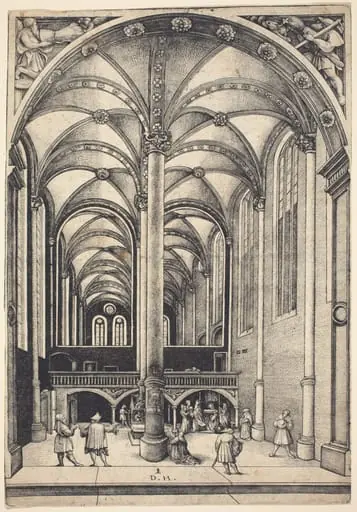 Interior of the Church of Saint Maria Magdalena with the Parable of the Offering of the Widow
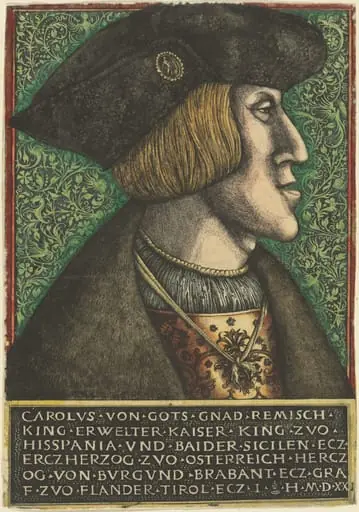 Emperor Charles V
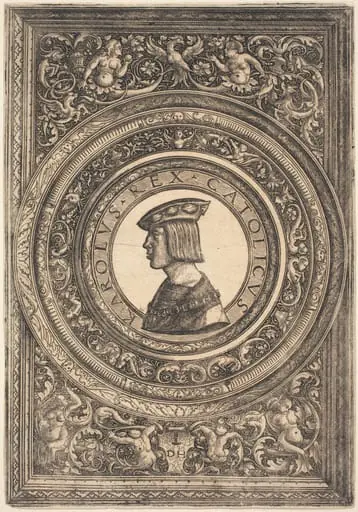 Emperor Charles V
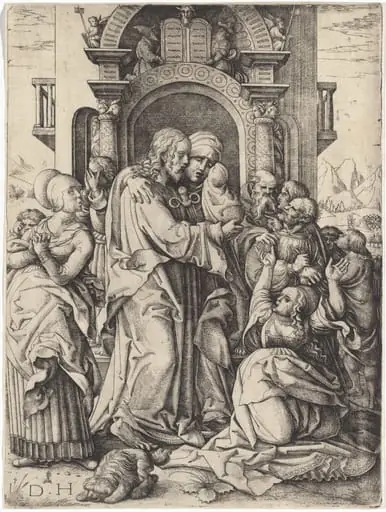 The Virgin Mary Taking Leave of Christ
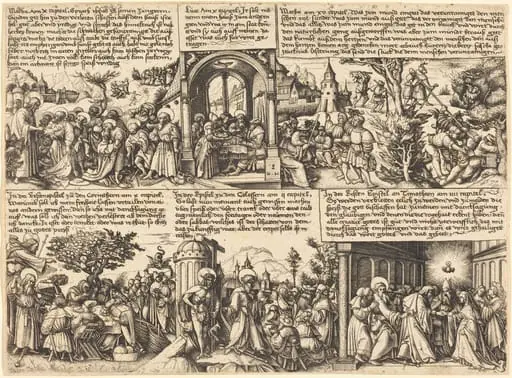 Jesus Christ Giving the Mission to the Apostles and Other New Testament Scenes
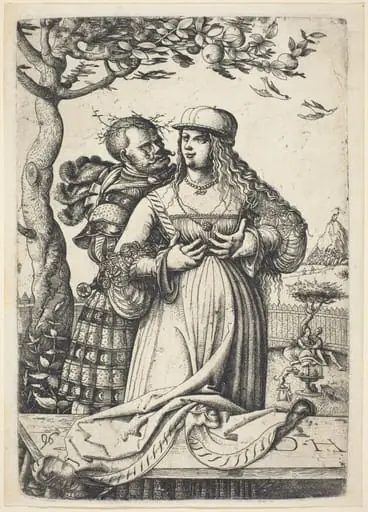 Soldier Embracing a Woman
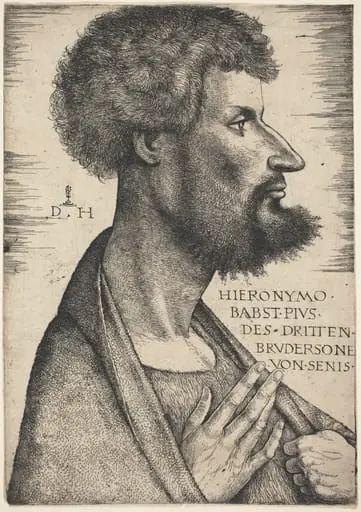 Girolamo da Siena
 The Virgin and Child with Saint Anne by a Portal