Artwork
The Letter "K"
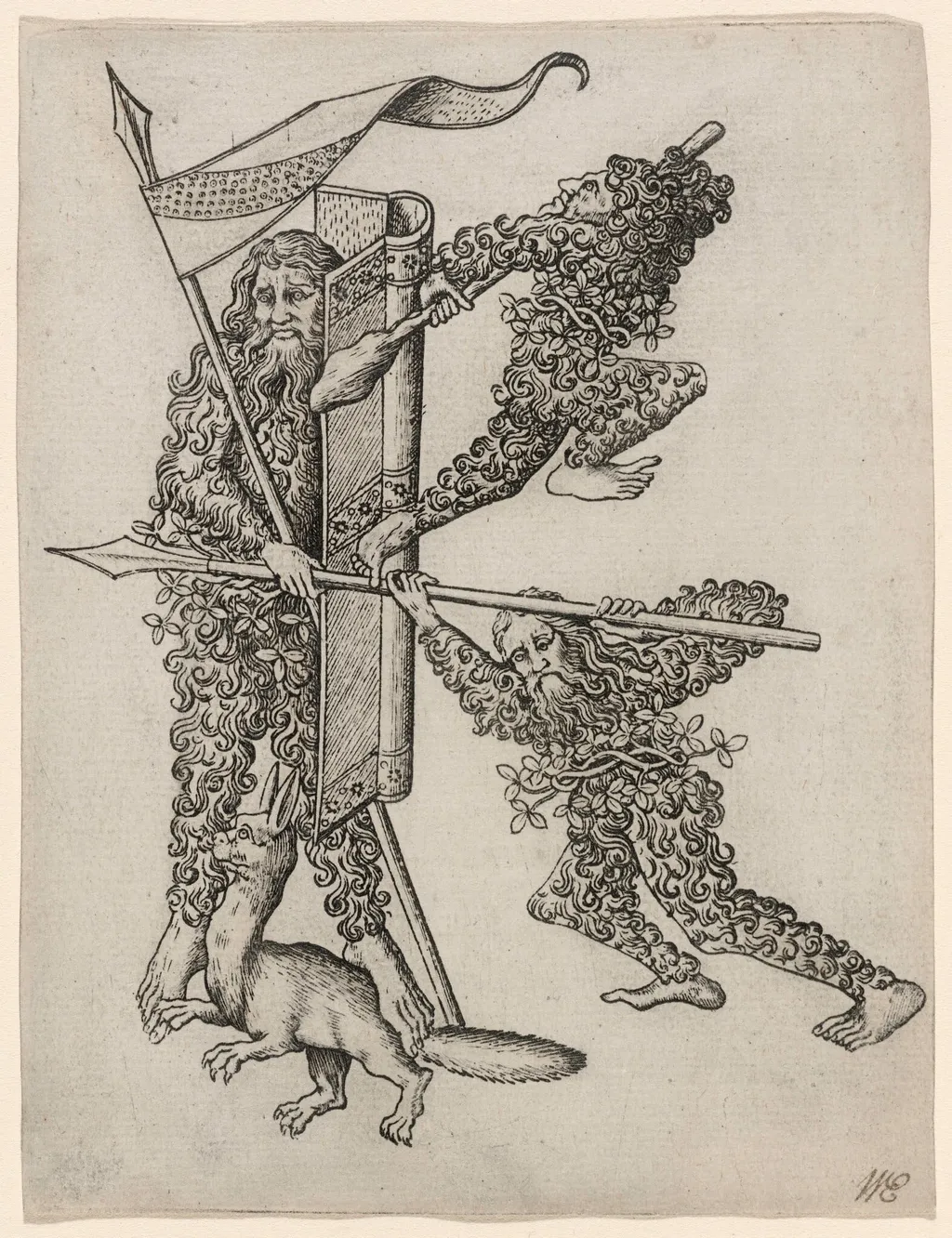
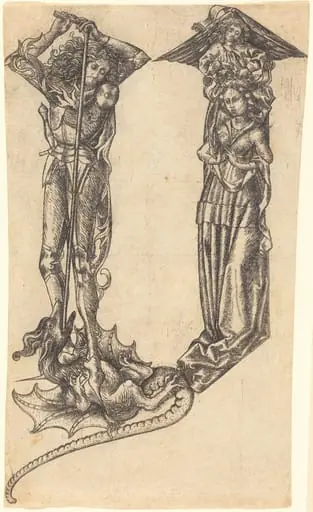
The Letter "K" is an ink print by the Renaissance artist Master E.S.. It dates from 1466 and is held in the collection of the National Gallery of Art. Created around 1466 by an anonymous German engraver known as Master E.
About this work
Overview
Executed in fine black lines on laid paper, it demonstrates advanced technical control and a distinctive visual language.
Created around 1466 by an anonymous German engraver known as Master E.S., this print is one of the earliest examples of a signed artistic print in Northern Europe. Executed in fine black lines on laid paper, it demonstrates advanced technical control and a distinctive visual language. The artist’s monogram, E.S., appears on the work, signaling a shift toward individual authorship in printmaking during the mid-15th century.
Subject & Meaning
The central figure, a bearded man holding a tall cross, forms a visual pun: his profile resembles the letter K. Surrounding him are hybrid creatures—a cat-headed winged being, a lion, and a small archer—suggesting a symbolic or allegorical scene. The composition likely served an educational purpose, using imagery to aid in letter recognition, a practice common in late medieval instructional materials.
Technique & Style
The engraving employs precise, dense linework to render texture and movement, characteristic of Master E.S.’s style. Deeply incised lines create strong contrasts between light and shadow, while intricate patterns fill the background, enhancing the scene’s rhythmic energy. The artist’s control over the burin allowed for unprecedented detail, setting a new standard for engraving in the German tradition.
History & Provenance
Master E.S. was active between approximately 1420 and 1468, and his works were widely disseminated through copies and adaptations by other artists. Though his identity remains unknown, his monogram became a recognizable signature, one of the first used consistently by a printmaker. The survival of multiple impressions of this print suggests it circulated among collectors and artisans in the Rhineland and beyond.
Context
In the mid-15th century, printmaking emerged as a means of reproducing images beyond manuscript illumination. Master E.S. operated in a period of growing literacy and urban patronage, where visual mnemonics like the K-shaped figure helped bridge text and image. His work reflects the intersection of craft, education, and emerging artistic identity in late Gothic Germany.
Legacy
Master E.S. influenced generations of engravers by demonstrating that prints could carry complex iconography and technical sophistication. His use of a personal monogram paved the way for later artists to claim authorship. Though little is known of his life, his prints, including this one, helped establish engraving as a respected medium in early Northern Renaissance art.
Artist & collection

Artist
Master E. S. (c. 1420 – c. 1468; previously known as the Master of 1466) is an unidentified German engraver, goldsmith, and printmaker of the late Gothic period. He was the first major German artist of old master prints…

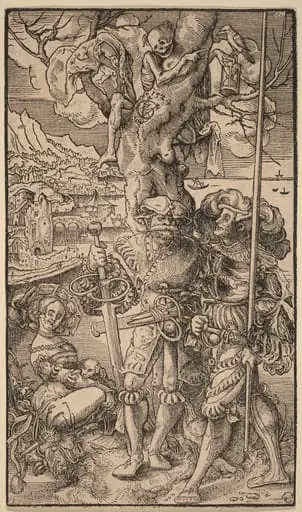 Two Mercenaries and a Woman
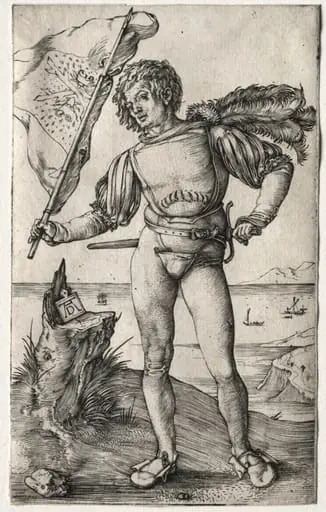 The Burgundian Standard Bearer
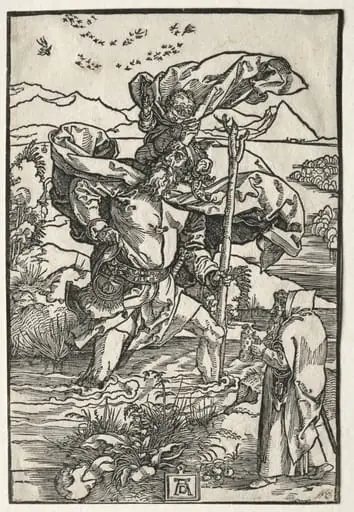 St. Christopher with the Birds
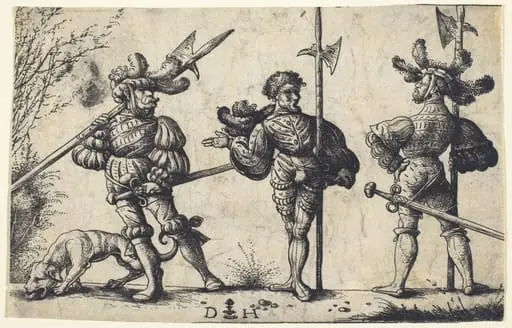 Three German Soldiers Armed with Halberds
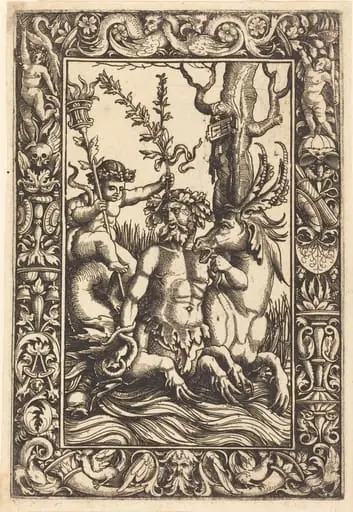 Mythological Marine Subject
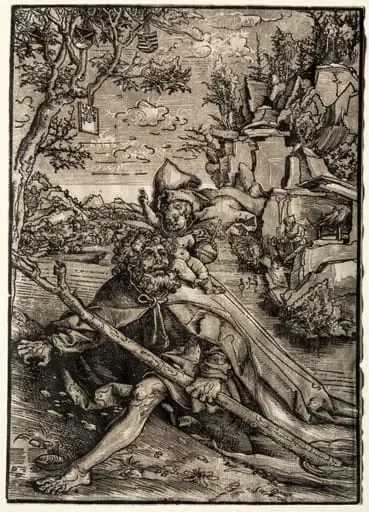 St. Christopher
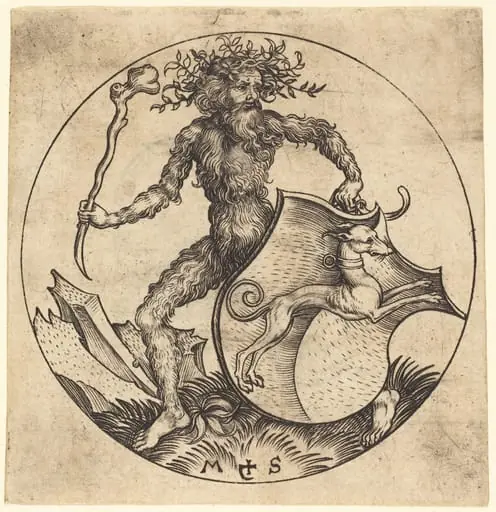 Wild Man Holding a Shield with a Greyhound
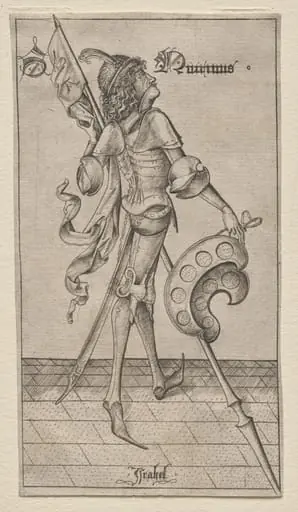 St. Quirinus
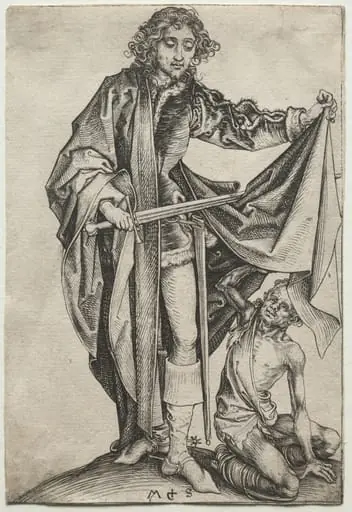 St. Martin
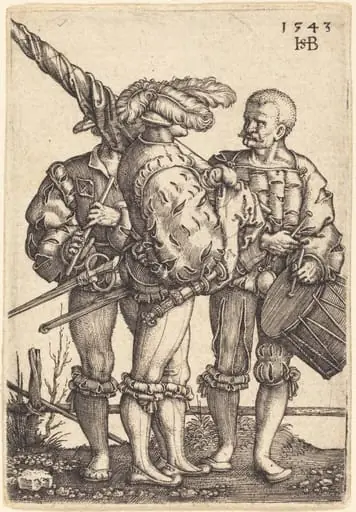 Standard Bearer, Drummer, and Piper
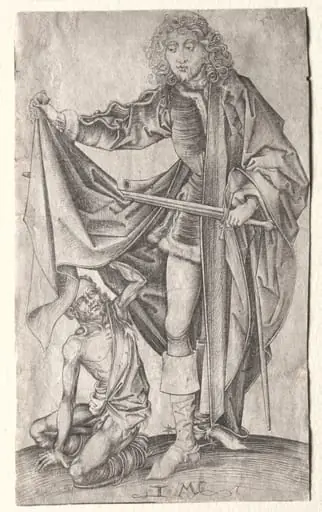 St. Martin Dividing His Cloak for a Beggar
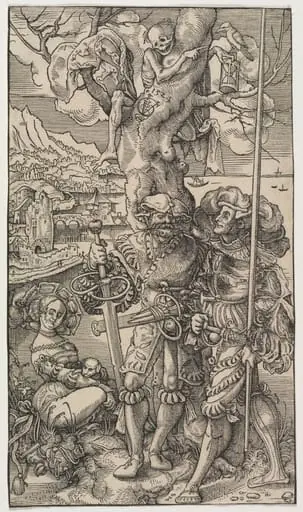 Mercenaries and a Woman with Death in a Tree