Artwork
Fortitude
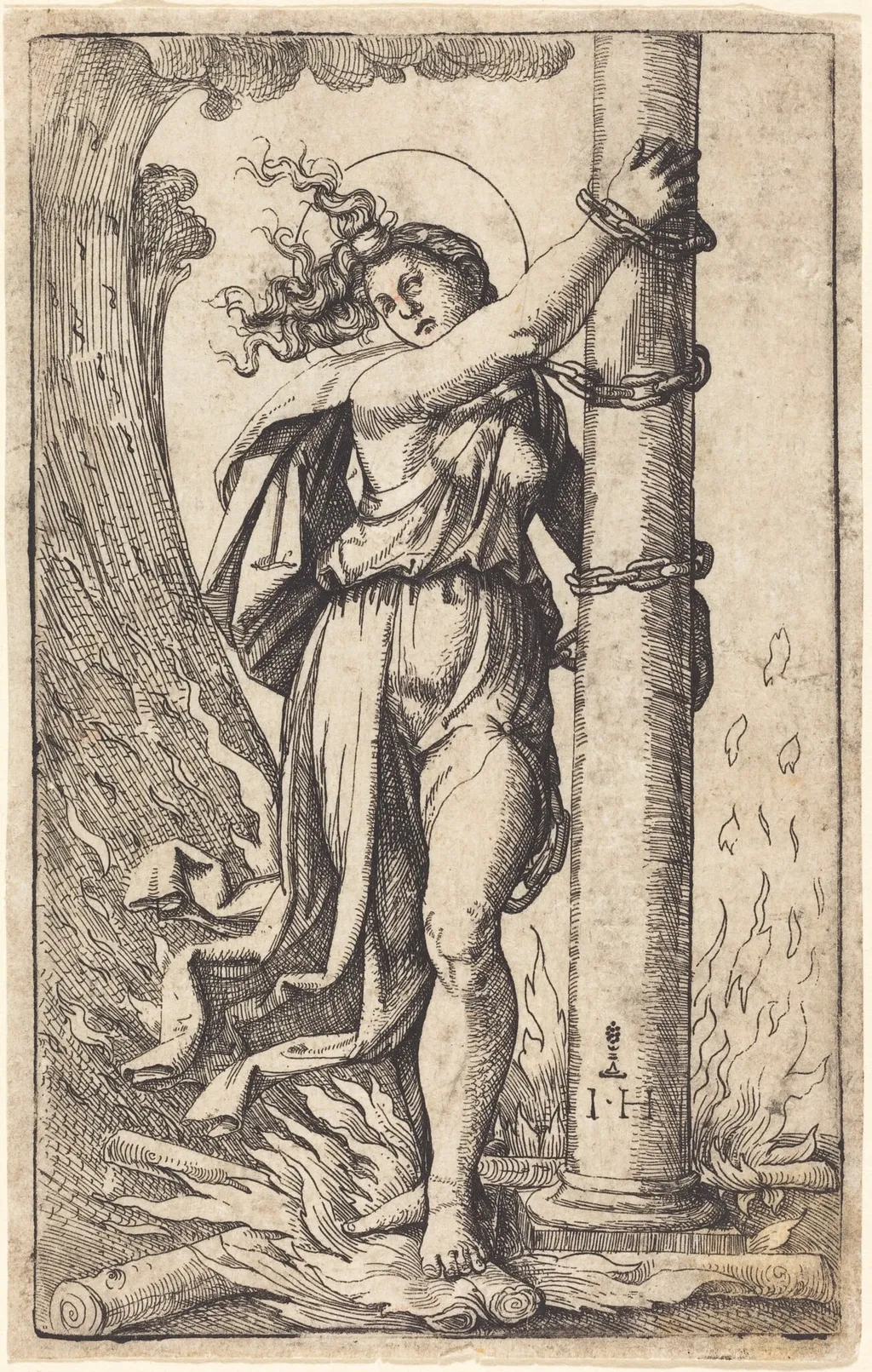
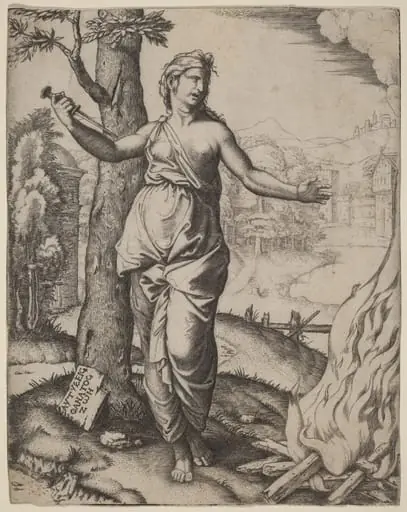
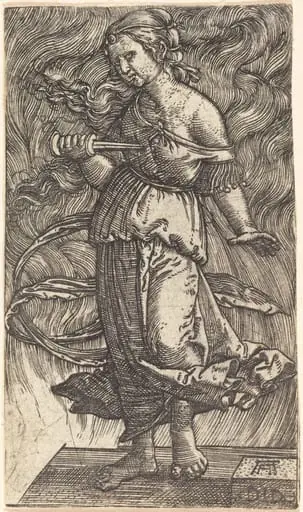
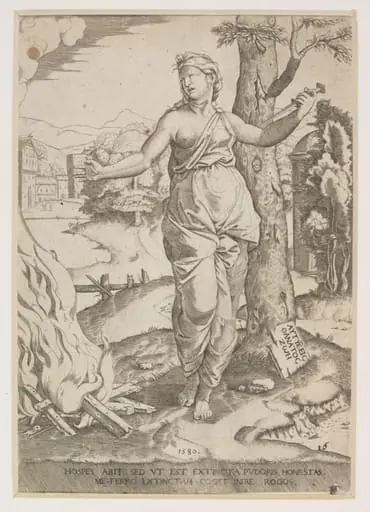
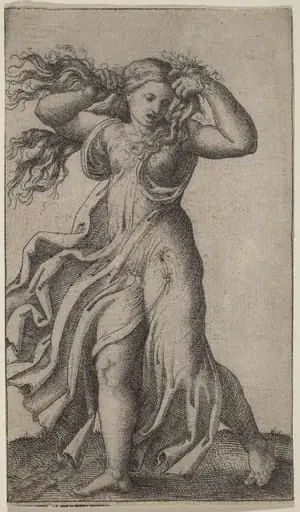
Fortitude is an ink print by the Renaissance artist Hieronymus Hopfer. It dates from 1525 and is held in the collection of the National Gallery of Art.
About this work
Overview
The background features jagged rocks and a turbulent sky, reinforcing an atmosphere of endurance against elemental forces.
Created in 1525 by Hieronymus Hopfer, Fortitude is a black-and-white etching on laid paper. It depicts a solitary, muscular figure gripping a vertical pillar as fire licks at its base. The figure’s flowing hair and cloak suggest motion, while a chain rests beneath their other hand. The background features jagged rocks and a turbulent sky, reinforcing an atmosphere of endurance against elemental forces.
Subject & Meaning
The figure represents Fortitude as an allegorical virtue, not a historical individual. The pillar symbolizes steadfastness, the flames suggest trials or adversity, and the chain may imply liberation from constraint. The composition draws on classical and moral traditions, using physical strength to convey inner resolve. This visual language was common in Renaissance humanist imagery, where abstract virtues were personified for ethical instruction.
Technique & Style
Hopfer employed etching to achieve fine, expressive lines that define muscle tension and dynamic drapery. The contrast between dark, dense strokes and open areas creates depth and movement. The rough texture of the rocks and the swirling clouds are rendered with controlled incisions, emphasizing the figure’s dominance over chaotic surroundings. The medium’s precision allows for both detail and emotional intensity without color.
History & Provenance
The print originates from the early 16th-century German printmaking tradition, where artists like Hopfer produced allegorical subjects for educated audiences. Though specific early ownership records are sparse, similar works circulated among collectors and scholars interested in moral philosophy. Its survival reflects the enduring appeal of virtue imagery in Northern European print culture during the Reformation era.
Context
In the decades before the Protestant Reformation, visual allegories of virtues were widely used to communicate ethical ideals. Hopfer’s work aligns with humanist interests in classical themes and moral education. While religious imagery dominated much of the period, secular virtues like Fortitude offered a neutral, intellectual alternative, appealing to both Catholic and emerging Protestant audiences seeking moral clarity.
Legacy
Fortitude exemplifies the Renaissance shift toward personifying abstract concepts through human form. Hopfer’s technique influenced later printmakers who sought to convey psychological depth through line alone. Though not widely reproduced today, the work remains a representative example of how Northern European artists translated philosophical ideas into accessible visual forms during a time of cultural transformation.
Artist & collection