Artwork
Silenus
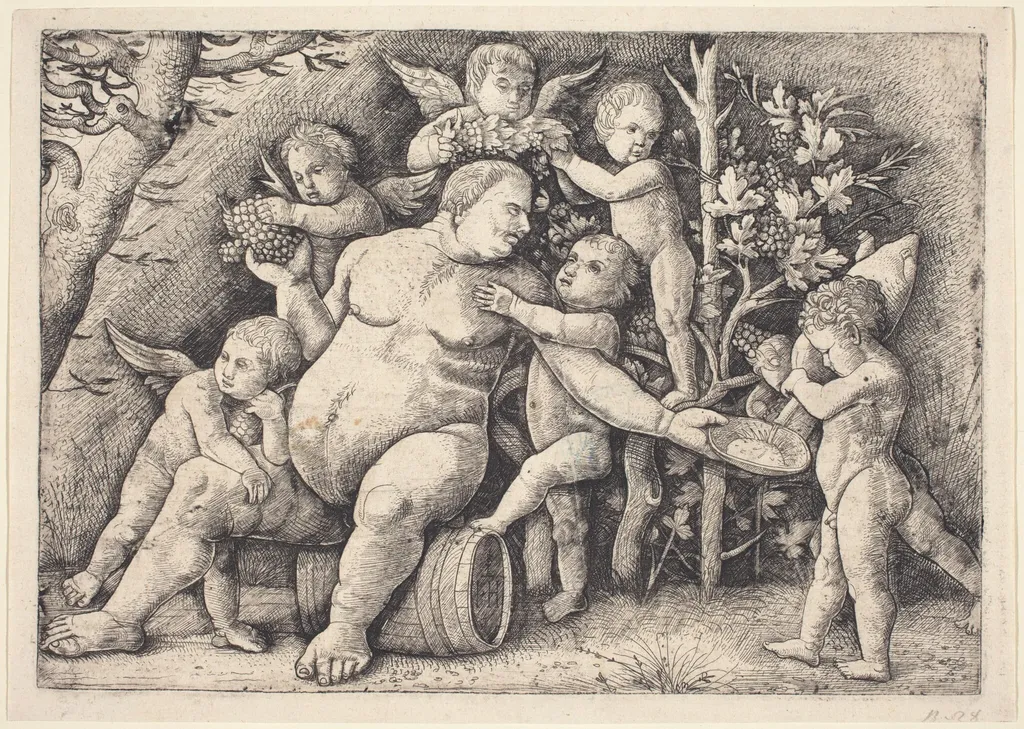
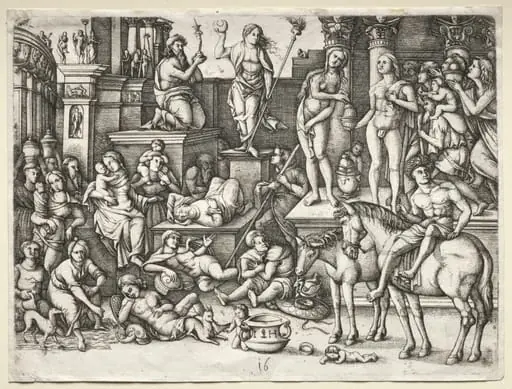
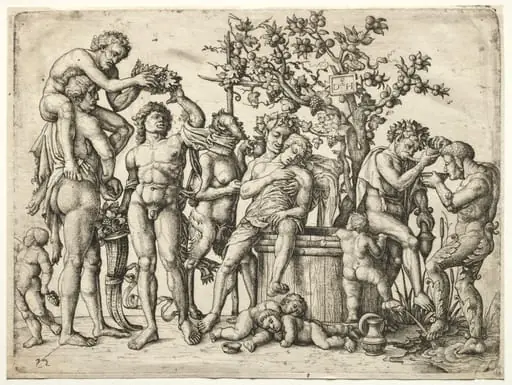
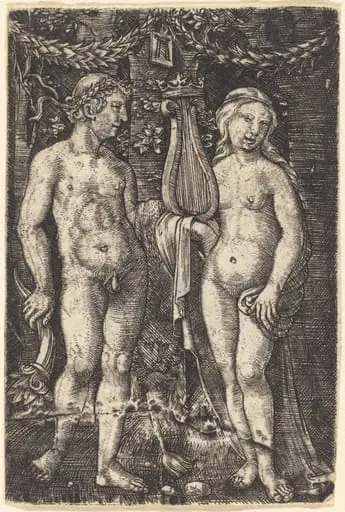
Silenus is an ink print by the Renaissance artist Hieronymus Hopfer. It dates from 1525 and is held in the collection of the National Gallery of Art.
About this work
Overview
Created in 1525, this iron‑plate etching on laid paper is attributed to the German artist Hieronymus Hopfer. The work presents a solitary figure rendered in fine line work, characteristic of early 16th‑century printmaking.
Subject & Meaning
The central figure appears to be a mythological character, likely Silenus, the companion of Dionysus, depicted with a calm demeanor. He is shown in modest attire, his expression subdued, suggesting a moment of quiet contemplation rather than the usual revelry associated with the figure.
Technique & Style
Hopfer employed the relatively new etching process, incising lines into an iron plate before printing onto laid paper. The delicate hatching and cross‑hatching create subtle shading and texture, allowing intricate detailing of clothing folds and facial features that surpass the capabilities of earlier woodcut methods.
History & Provenance
The print originates from the early Renaissance period in Germany, a time when etching was gaining popularity among artists seeking greater expressive range. It is recorded in several early collections of Northern European prints, though its exact ownership trail before the 19th century remains undocumented.
Context
During the 1520s, German printmakers were experimenting with the possibilities of etching to capture nuanced tonal variation. Hopfer’s work reflects this shift, aligning with contemporary interests in classical mythology and the humanist revival of ancient subjects.
Legacy
Although not as widely reproduced as later prints, this etching exemplifies the early adoption of iron‑plate etching in Northern Europe and contributes to the understanding of how artists like Hopfer expanded the visual vocabulary of print media.
Own this work as a print
Artist & collection