Artwork
Portrait of Taco Hajo van den Honert
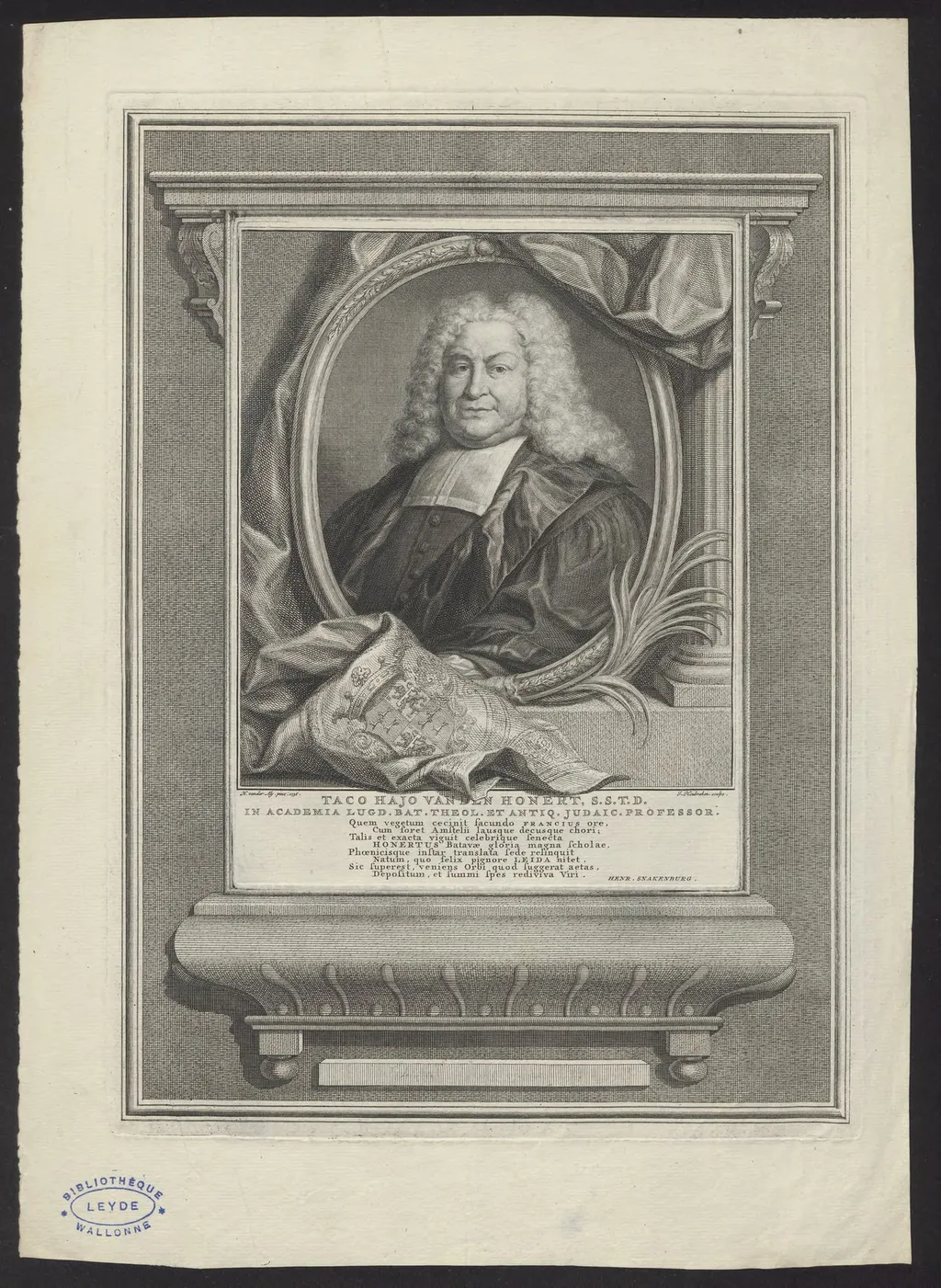
Portrait of Taco Hajo van den Honert is an unspecified painting by the Rococo painting artist Jacob, Houbraken. It dates from 1750 and is held in the collection of the Leiden University Libraries. The portrait depicts Taco Hajo van den Honert, presented in a formal stance and attired in period costume.
About this work
The painting can be compared to works by artist Houbraken, Jacob, (1698-1780).
The painting shows a man, Taco Hajo van den Honert, in a formal pose.
He's dressed in old-fashioned clothes.
This painting is interesting because it was made after another work by H. van der Mij from 1736, and it has a Latin verse by H. Snakenburg below the image, which adds a layer of history to it.
The verse and the image together tell us more about the subject.
The painting can be compared to works by artist Houbraken, Jacob, (1698-1780).
Overview
The portrait depicts Taco Hajo van den Honert, presented in a formal stance and attired in period costume. The image is a later rendition of an earlier 1736 work by H. van der Mij, and it includes a Latin inscription composed by H. Snakenburg positioned beneath the figure.
Subject & Meaning
Taco Hajo van den Honert is rendered with a dignified bearing, his attire reflecting the fashion of an earlier era. The accompanying Latin verse, authored by Snakenburg, serves to contextualize the sitter’s identity and status, offering a textual complement to the visual representation.
Technique & Style
The composition follows the conventions of 18th‑century portraiture, employing a restrained palette and a clear, frontal arrangement. The formal pose and attention to costume detail echo the stylistic choices evident in contemporary Dutch portraiture, aligning with the manner of H. van der Mij’s original work.
History & Provenance
Created as a derivative of H. van der Mij’s 1736 painting, the portrait incorporates Snakenburg’s Latin epigraph, indicating a later addition or reinterpretation. Its lineage suggests a continuity of interest in van den Honert’s likeness across successive generations of artists.
Context
The portrait can be situated alongside the oeuvre of Jacob Houbraken (1698–1780), whose engravings and portraits share similar compositional rigor and emphasis on textual annotation. This comparison highlights a broader Dutch tradition of integrating literary elements within visual portraiture.
Artist & collection
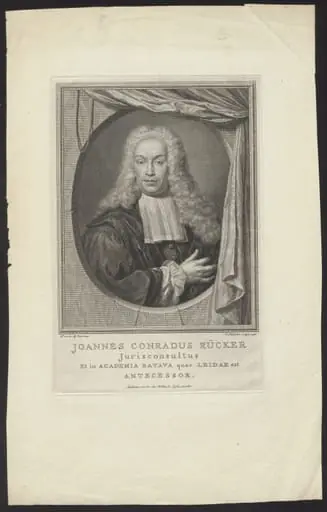 Portrait of Joannes Conradus Rücker
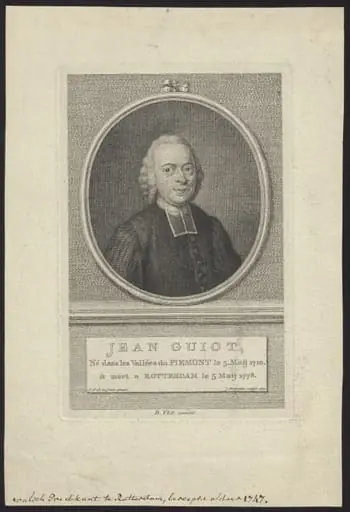 Portrait of Jean Guiot
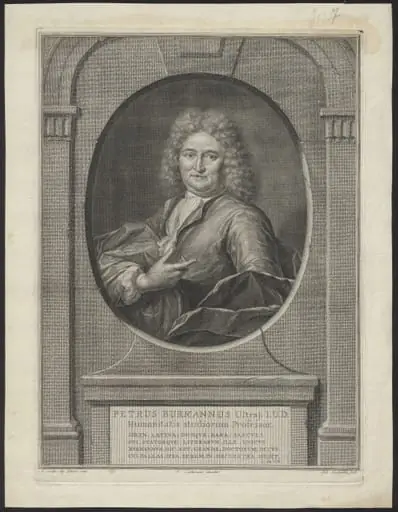 Portrait of Petrus Burmannus, Professor of Humanities
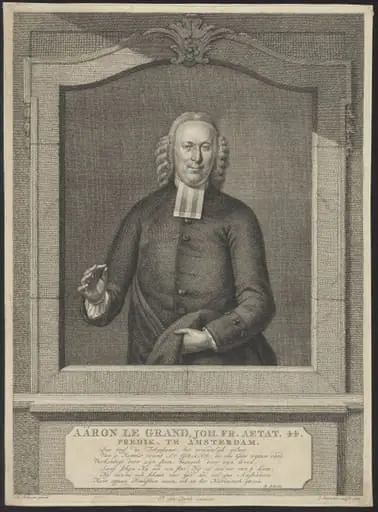 Portrait of Aaron le Grand, minister in Amsterdam
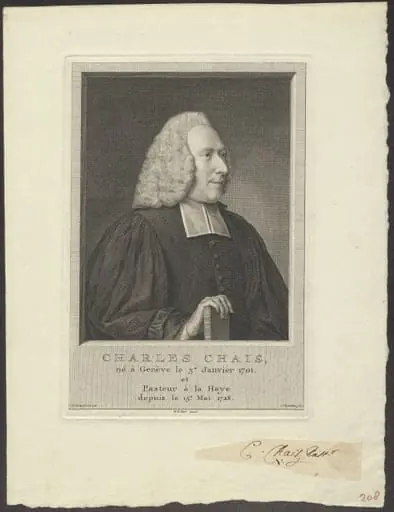 Portrait of Charles Chais, Pastor in The Hague
![Portrait of [Pierre Jacques Courtonne], by Jacob, Houbraken](https://artifactworldgallery.com/img/jacob-houbraken--portrait-of-pierre-jacques-courtonne--6455a7507ab17d46-w320.webp) Portrait of [Pierre Jacques Courtonne]
Portrait of [Pierre Jacques Courtonne]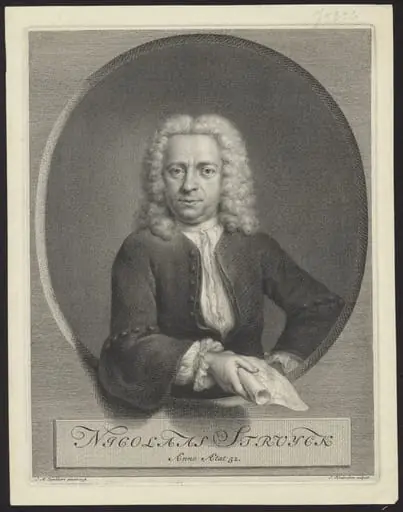 Portrait of Nicolaas Struyck
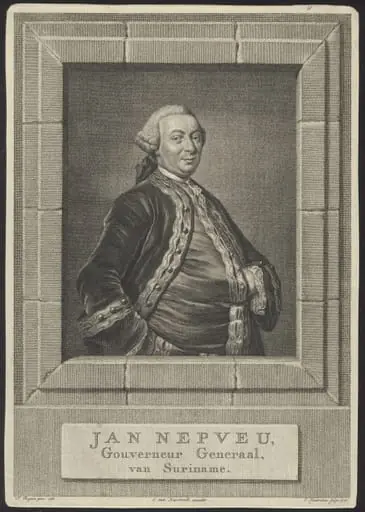 Portrait of Jan Nepveu, Governor-General of Surinam
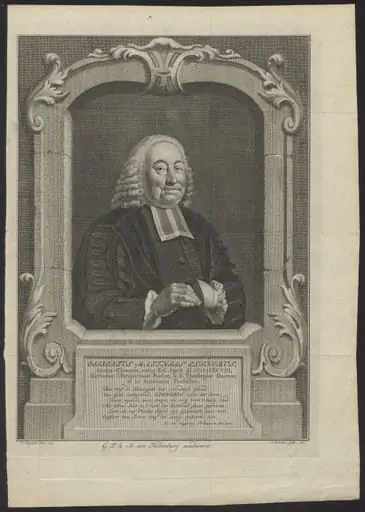 Portrait of Gisbertus Matthias Elsnerus
![Portrait of J. Basnage, [Walloon minister and historian], by Pieter van, Gunst](https://artifactworldgallery.com/img/pieter-van-gunst--portrait-of-j-basnage-walloon-minister-and-historian--be59663770daddd2-w320.webp) Portrait of J. Basnage, [Walloon minister and historian]
Portrait of J. Basnage, [Walloon minister and historian]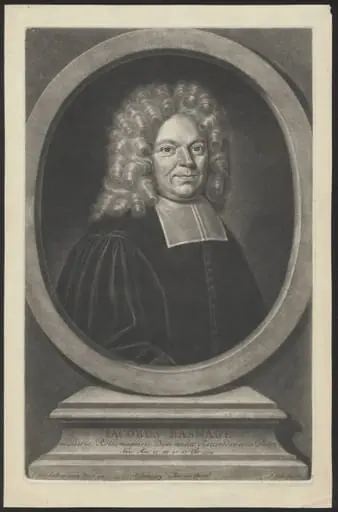 Portrait of Jacobus Basnage, Walloon minister and historian
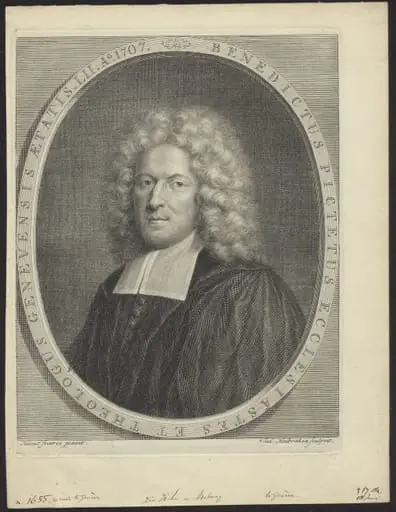 Portrait of Benedictus Pictetus, theologian from Geneva
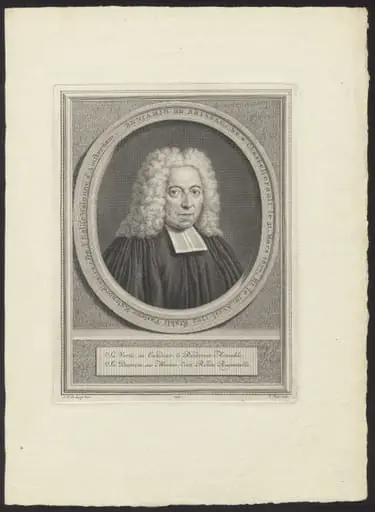 Portrait of Benjamin de Brissac, minister of the Walloon Church in Amsterdam
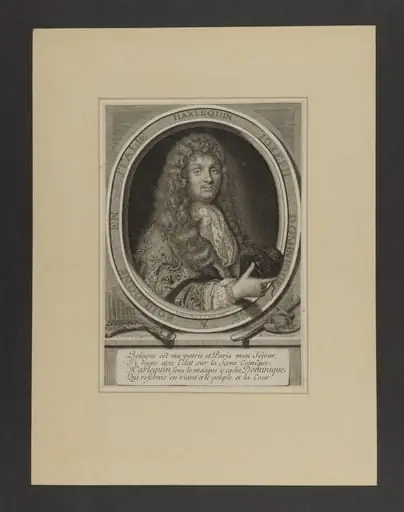 H Beard Print Collection
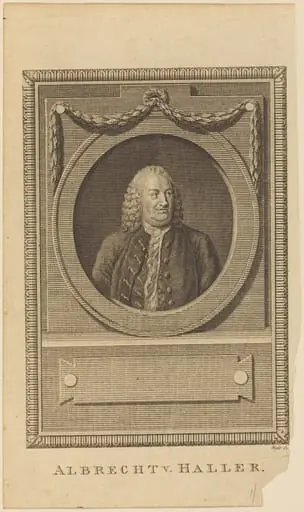 Albrecht V. Haller
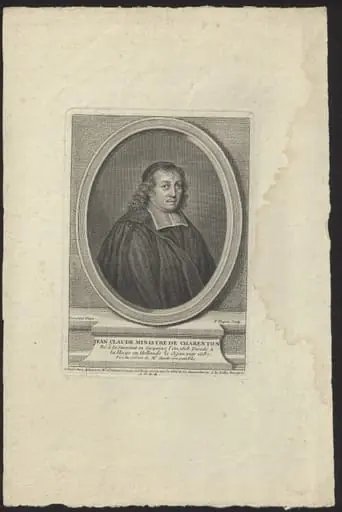 Portrait of Jean Claude, Ministre de Charenton
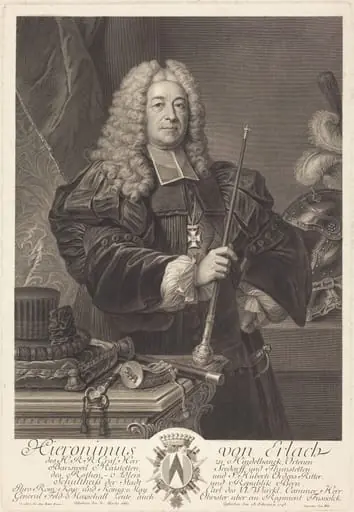 Johann von Erlach
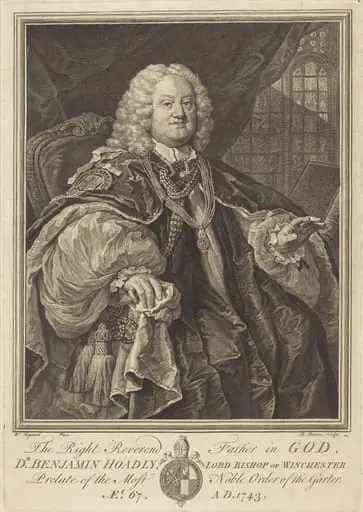 Bishop Hoadly
![Portrait of J. Basnage, [Walloon minister and historian], by Unknown](https://artifactworldgallery.com/img/unknown--portrait-of-j-basnage-walloon-minister-and-historian--5c5b22a95cb99991-w320.webp) Portrait of J. Basnage, [Walloon minister and historian]
Portrait of J. Basnage, [Walloon minister and historian]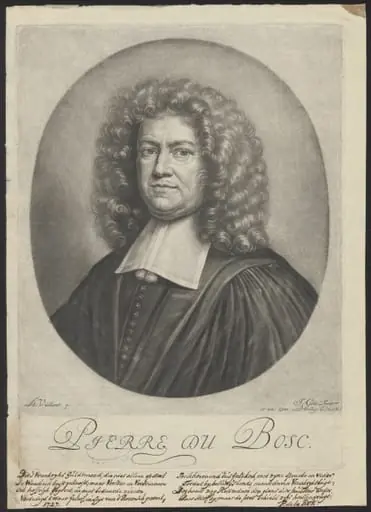 Portrait of Piere du Bosc