Artwork
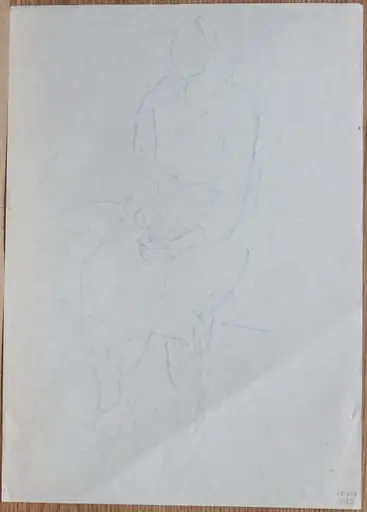
verso: O colegă de clasă
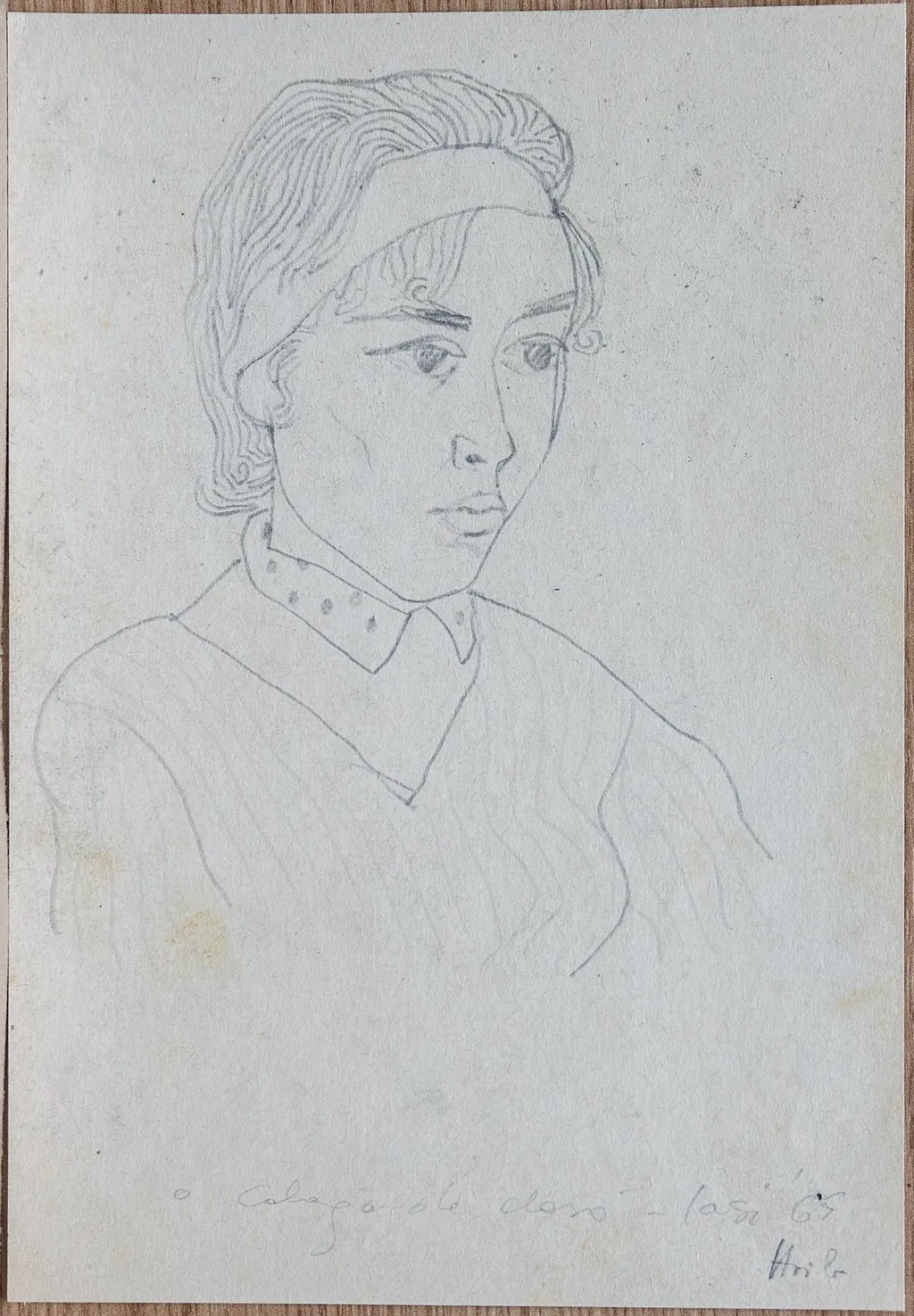
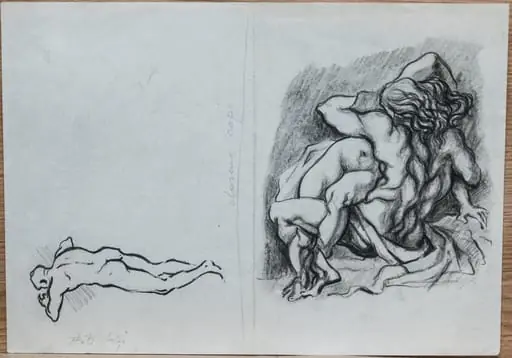
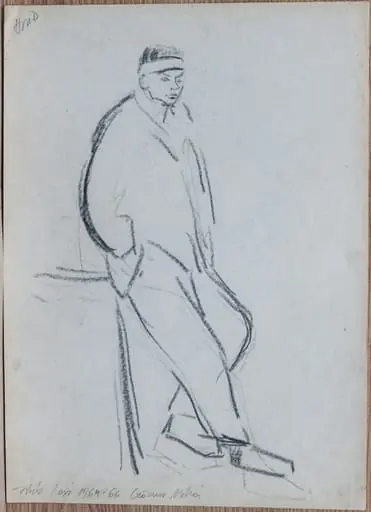
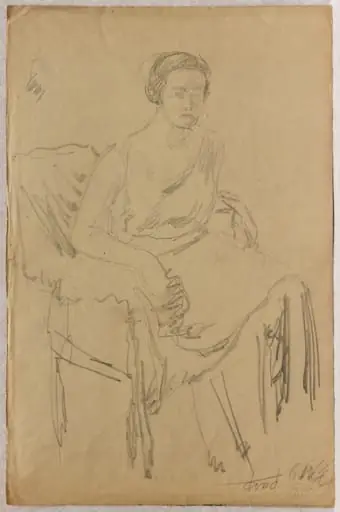
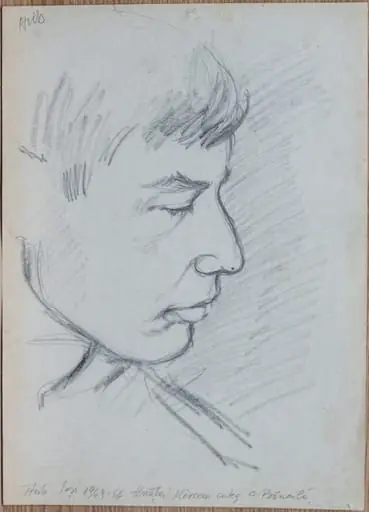
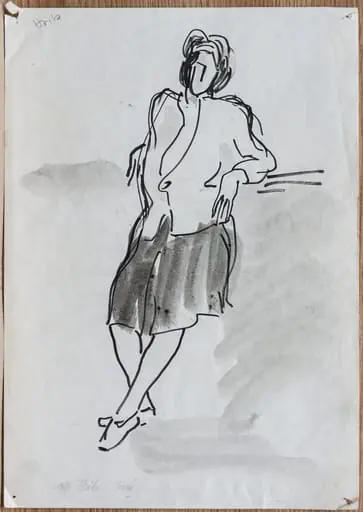
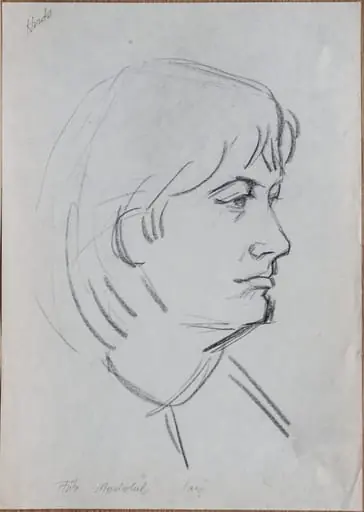
verso: O colegă de clasă is a drawing by Teodor Hrib. It dates from 1950 and is held in the collection of the Gavrila Simion Eco-Museum Research Institute Tulcea.
About this work
Overview
Created around 1950 by Romanian artist Teodor Hrib, this pencil sketch is part of the Museum of Ethnography’s collection.
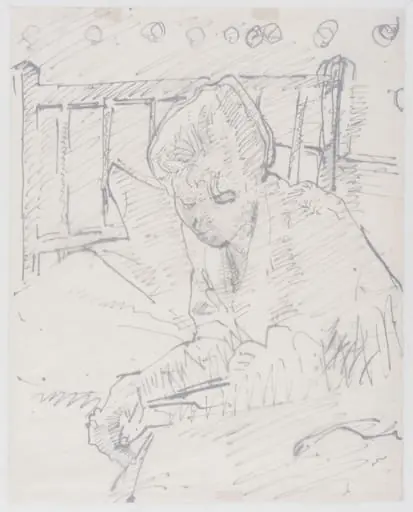
Created around 1950 by Romanian artist Teodor Hrib, this pencil sketch is part of the Museum of Ethnography’s collection. It depicts a female figure from the shoulders up, rendered with minimal, fluid lines. The work’s informal quality suggests it was made as a quick observational study rather than a finished piece. Faint smudges and residual marks on the paper hint at prior use or handling, reinforcing its intimate, private character.
Subject & Meaning
The subject appears to be a classmate, as suggested by the title, though no identifying details are present. The restrained portrayal focuses on posture and expression rather than individual features, evoking a sense of quiet familiarity. The absence of context or background shifts attention to the person’s presence, possibly reflecting a moment of casual recognition or personal memory captured in passing.
Technique & Style
Hrib employed light, rapid pencil strokes to define the face and shoulders, avoiding fine detail in favor of suggestive form. Subtle shading around the eyes and jaw adds depth without modeling, while the collar’s dotted edge implies fabric texture through minimal notation. The sketch’s looseness and lack of correction reflect an immediate, intuitive approach, prioritizing emotional resonance over precision.
History & Provenance
The drawing entered the Museum of Ethnography’s holdings as part of Hrib’s broader archive of personal sketches. Its date, circa 1950, places it within a period of postwar artistic experimentation in Romania. Though undocumented in public exhibitions, its preservation suggests it was valued by the artist or his circle as a representative example of his observational practice.
Context
In mid-20th century Romania, many artists turned to intimate, unpolished drawings as a counterpoint to state-mandated realism. Hrib’s sketch aligns with this trend, emphasizing personal perception over public narrative. Its simplicity reflects a broader cultural shift toward private expression, where everyday subjects became vessels for quiet authenticity amid political constraints.
Legacy
Though not widely exhibited, this sketch contributes to understanding Hrib’s private artistic process. It stands as an example of how everyday observation informed the work of artists operating outside official channels. Its preservation in a museum context underscores the growing recognition of informal drawings as legitimate records of artistic thought and human connection.
Artist & collection
Artist
Teodor Hrib shaped small plaster figures and ink drawings in the 1800s academic tradition.
Museum
Gavrila Simion Eco-Museum Research Institute Tulcea
Continue through works from the same source collection.