Artwork
Nud cu lalele
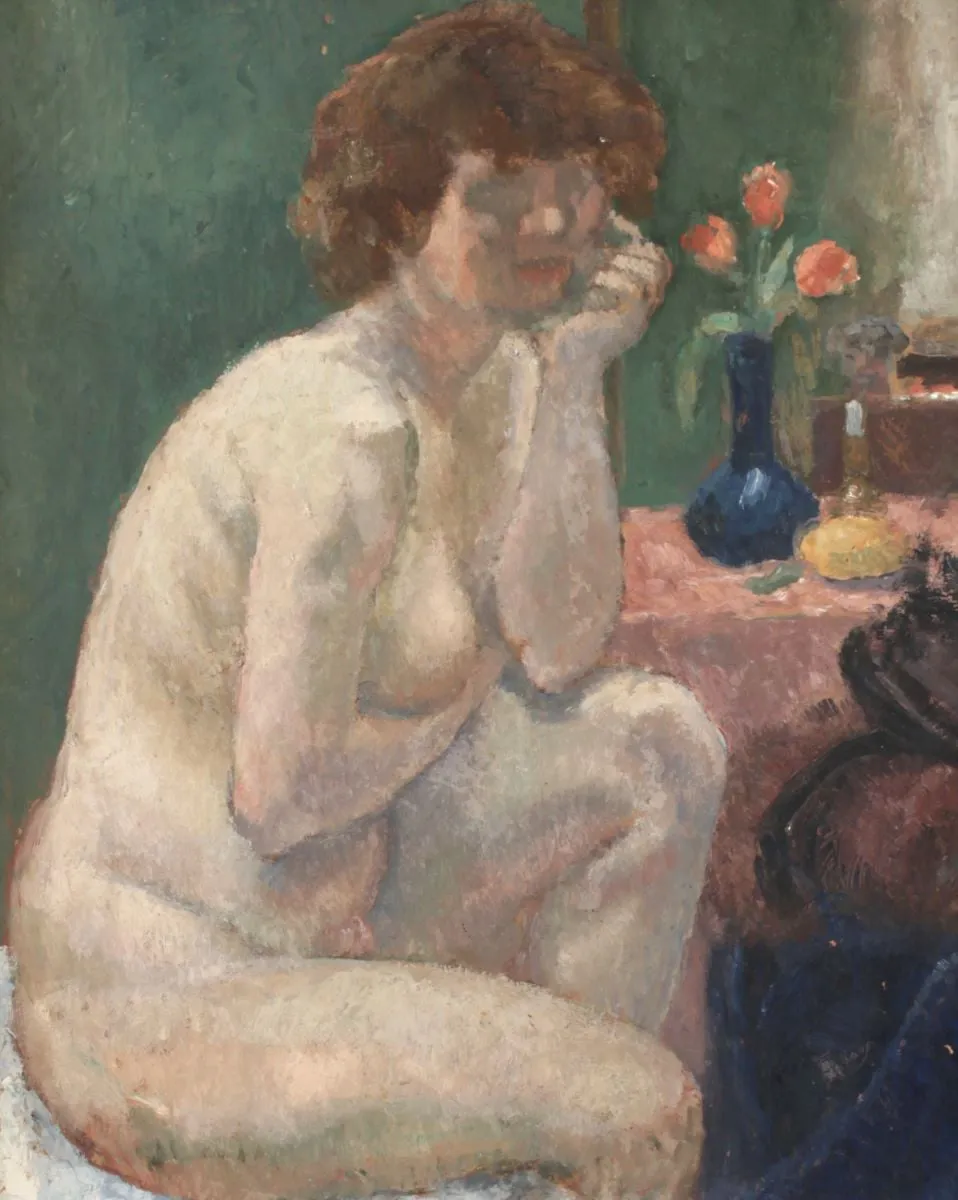
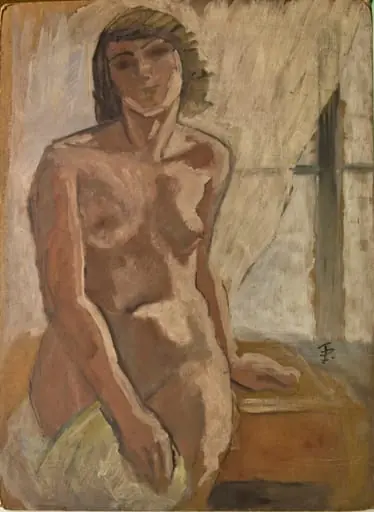
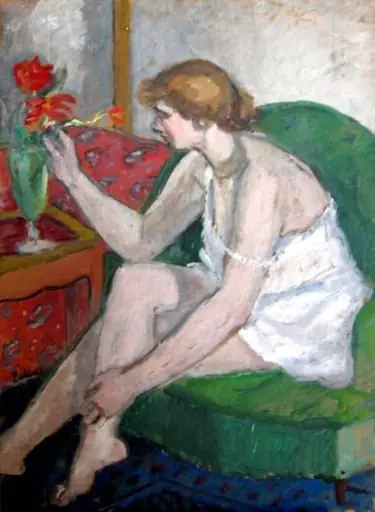
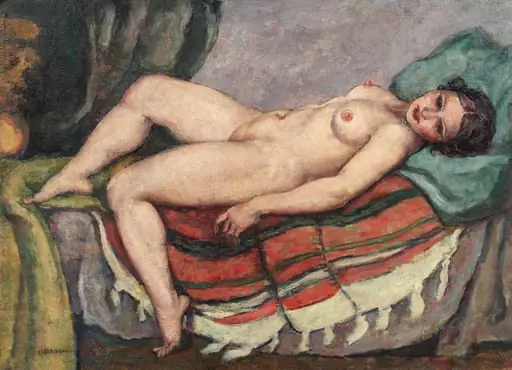
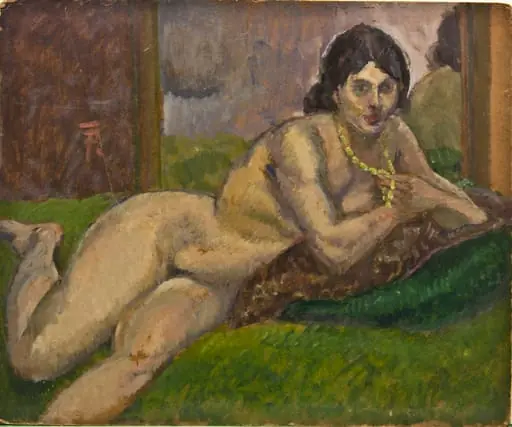
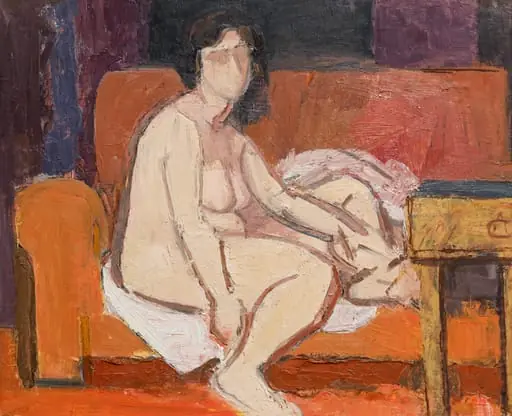
Nud cu lalele is an unspecified painting by Theodor Pallady. It is held in the collection of the Art Museum of Constanta. The painting depicts a seated woman in a domestic interior, rendered with thick, tactile brushwork.
About this work
Overview
The painting depicts a seated woman in a domestic interior, rendered with thick, tactile brushwork.
The painting depicts a seated woman in a domestic interior, rendered with thick, tactile brushwork. Her posture is relaxed, one hand near her face, the other resting on her leg. The background includes a table with a blue vase of red flowers and scattered objects. The palette is restrained, favoring soft skin tones, muted greens, and warm reds, while the surface is built up with visible layers of paint, creating a physical texture across the canvas.
Subject & Meaning
The figure appears introspective, her gesture suggesting quiet contemplation rather than performance. The absence of direct eye contact and the informal setting convey intimacy rather than narrative drama. The flowers on the table may symbolize transience or domestic beauty, but their presence is understated, avoiding overt symbolism. The focus remains on the stillness of the moment and the quiet dignity of the figure.
Technique & Style
The artist employs impasto, applying paint thickly to create a raised, sculptural surface. Brushstrokes are deliberate and visible, emphasizing the materiality of the medium. This technique enhances the tactile quality of fabric, skin, and objects, grounding the scene in physical presence. The color transitions are subtle, avoiding sharp outlines, which contributes to a sense of atmospheric softness despite the textured surface.
History & Provenance
The work’s origin and early ownership are not documented in available records. It has not been widely exhibited or published in major scholarly catalogs, suggesting it may have remained in private hands or been overshadowed by the artist’s more prominent pieces. Its current location and acquisition history remain unclear, limiting contextual understanding beyond its visual attributes.
Context
Created during a period when intimate domestic scenes were common among artists exploring everyday life, the painting aligns with trends in late 19th- to early 20th-century figurative work. Its emphasis on texture and subdued color reflects influences from Post-Impressionist and Symbolist approaches, though it lacks the overt emotional intensity of those movements. The setting and subject suggest a quiet, personal vision rather than a public statement.
Legacy
The painting has not entered mainstream art historical discourse, and no significant critical analysis or reproductions have emerged in major publications. Its preservation suggests it holds value to private collectors or institutions, but its influence on later artists or movements remains unrecorded. It endures as a quiet example of personal observation rendered through tactile paint application.
Artist & collection
Artist
Theodor Pallady made still lifes and interiors in early 20th-century Bucharest. His Place Dauphine shows a quiet Parisian square, while Natură moartă (Ulcică cu flori și chibrituri) piles everyday objects on a table.…