Artwork
Maica Domului, întinsă pe catafalcul drapat cu galben- verde, în plan superior Iisus Hristos, într-o mandorlă a slavei, flancat de doi îngeri în veșminte albe, privind către dreapta, ține sufletul Maicii(în formă de prunc înfășat)pe mâna stângă, iar cu dreapta binecuvintează. Maica are mâinile împreunate pe piept,stola verde-brun, marforion negru. Lângă catafalc apostoli: trei la cap(în fruntea lor sfântul Petru, la picioare apostolul Pavel și încă un apostol tânăr. Toți sunt desculți, în veșmintele specifice epocii, culori sobre. Fundalul redă un interior. Cromatica: tonuri de brun, crem, alb(falduri, aureole, iluminarea chipurilor), negru(linia desenului, inscripții), albastru(veșminte), galben muștar, tonuri de verde, roșu. Veșminte: roșu cărămiziu, albastru, verde, galben, alb, negru, argintiu(foița metalică)..Bordura lată, roșiatică, o înscrie în tipologia icoanelor de krashnuskha.
Maica Domului, întinsă pe catafalcul drapat cu galben- verde, în plan superior Iisus Hristos, într-o mandorlă a slavei, flancat de doi îngeri în veșminte albe, privind către dreapta, ține sufletul Maicii(în formă de prunc înfășat)pe mâna stângă, iar cu dreapta binecuvintează. Maica are mâinile împreunate pe piept,stola verde-brun, marforion negru. Lângă catafalc apostoli: trei la cap(în fruntea lor sfântul Petru, la picioare apostolul Pavel și încă un apostol tânăr. Toți sunt desculți, în veșmintele specifice epocii, culori sobre. Fundalul redă un interior. Cromatica: tonuri de brun, crem, alb(falduri, aureole, iluminarea chipurilor), negru(linia desenului, inscripții), albastru(veșminte), galben muștar, tonuri de verde, roșu. Veșminte: roșu cărămiziu, albastru, verde, galben, alb, negru, argintiu(foița metalică)..Bordura lată, roșiatică, o înscrie în tipologia icoanelor de krashnuskha. is a drawing by Hugo Kołłątaj. It is held in the collection of the "Dimitrie Gusti" National Village Museum. This religious icon depicts the Dormition of the Virgin Mary, a moment of solemn transition between earthly life and heavenly glory.
About this work
Overview
The composition follows Eastern Orthodox iconographic conventions, with spatial depth suggested through layered planes rather than perspective.
This religious icon depicts the Dormition of the Virgin Mary, a moment of solemn transition between earthly life and heavenly glory. The Virgin lies on a draped catafalque, while Christ, encircled in a mandorla, receives her soul in the form of a swaddled infant. Two angels flank him, gazing toward the right. Below, apostles gather barefoot around the bier, their garments rendered in subdued hues. The composition follows Eastern Orthodox iconographic conventions, with spatial depth suggested through layered planes rather than perspective.
Subject & Meaning
The scene illustrates the theological belief in the Virgin Mary’s peaceful passing and immediate assumption into heaven. Christ, holding her soul as a child, signifies divine acceptance and the promise of resurrection. The apostles, present without mourning, affirm the event as a sacred transition rather than a tragedy. Their bare feet and modest attire reflect humility before the divine mystery. The clasped hands of the Virgin convey prayerful surrender, reinforcing the theme of obedient faith.
Technique & Style
The painting employs traditional iconographic methods: flat, hierarchical composition, symbolic color use, and fine linear definition. Shading is minimal, with form suggested through contour and tonal contrast rather than chiaroscuro. Metallic leafing in silver outlines halos and garment edges, enhancing luminosity. The palette relies on earth tones—browns, creams, and blacks—with accents of blue, green, and red to distinguish figures and sacred elements. The border’s crimson band aligns with the krashnuskha tradition, marking it as a regional variant of Orthodox icon painting.
History & Provenance
The work originates from a region where Orthodox Christian traditions merged with local artistic practices, likely in the 17th or 18th century. Its stylistic features—particularly the krashnuskha border and restrained palette—suggest a provenance in Eastern European ecclesiastical workshops. No documented patronage or specific artist is recorded, but its craftsmanship reflects the work of anonymous monastic or guild painters trained in established iconographic models. It was likely created for private devotion or a small parish church.
Context
This icon belongs to a broader tradition of Eastern Christian art that emphasized theological clarity over naturalism. During the period of its creation, such images served as focal points for liturgical memory and personal prayer, especially in communities where literacy was limited. The depiction of the Dormition was widely venerated, reinforcing beliefs in Mary’s unique role and the continuity between earthly and heavenly realms. Regional variations, like the krashnuskha border, reveal local adaptations of canonical forms.
Legacy
Though not attributed to a named master, the icon preserves a vital strand of Orthodox visual theology. Its quiet dignity and adherence to tradition reflect the endurance of iconographic norms in rural and provincial contexts. Later scholars and conservators have recognized such works as essential to understanding the diversity within Eastern Christian art, beyond the more famous centers of Constantinople or Moscow. It remains a testament to the devotional discipline of anonymous artisans who sustained sacred imagery across generations.
Artist & collection
Artist
This Polish folk painter worked in the late eighteenth and early nineteenth centuries, creating religious scenes with bold colors and simple shapes.
Museum
"Dimitrie Gusti" National Village Museum
Continue through works from the same source collection.
 Alexandru Ipsilanti
 Fecioara Maria cu Pruncul Isus (în Reg. Inv.: Maria cu copilul Isus)
 Regele Charles I Stuart al Angliei și soția sa Henrietta Maria de Franța (în Reg. Inv.: Carol I al Angliei și soția sa Henriette din Franța)
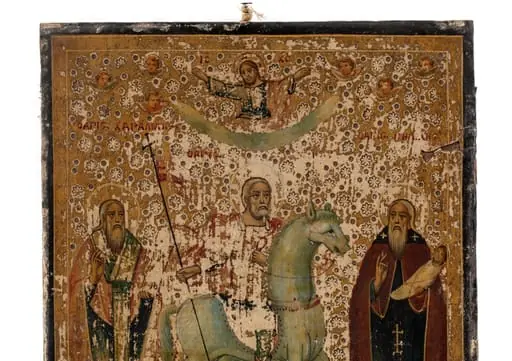 Sfântul Haralambie cu alți doi sfinți
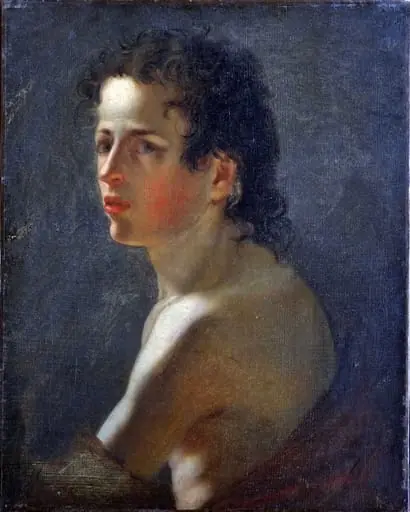 Portret de bărbat
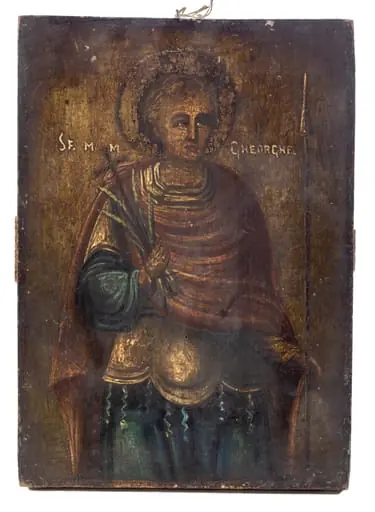 Sfântul Gheorghe
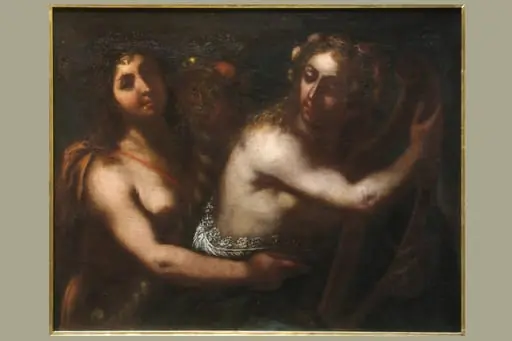 Vertumnus și Pomona (în Reg. Inv.: Vertumnus și Flora)
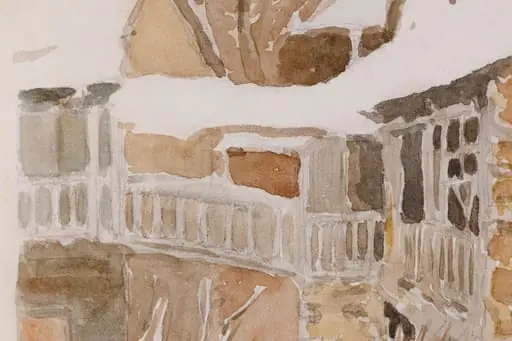 Iarnă
Iarnă
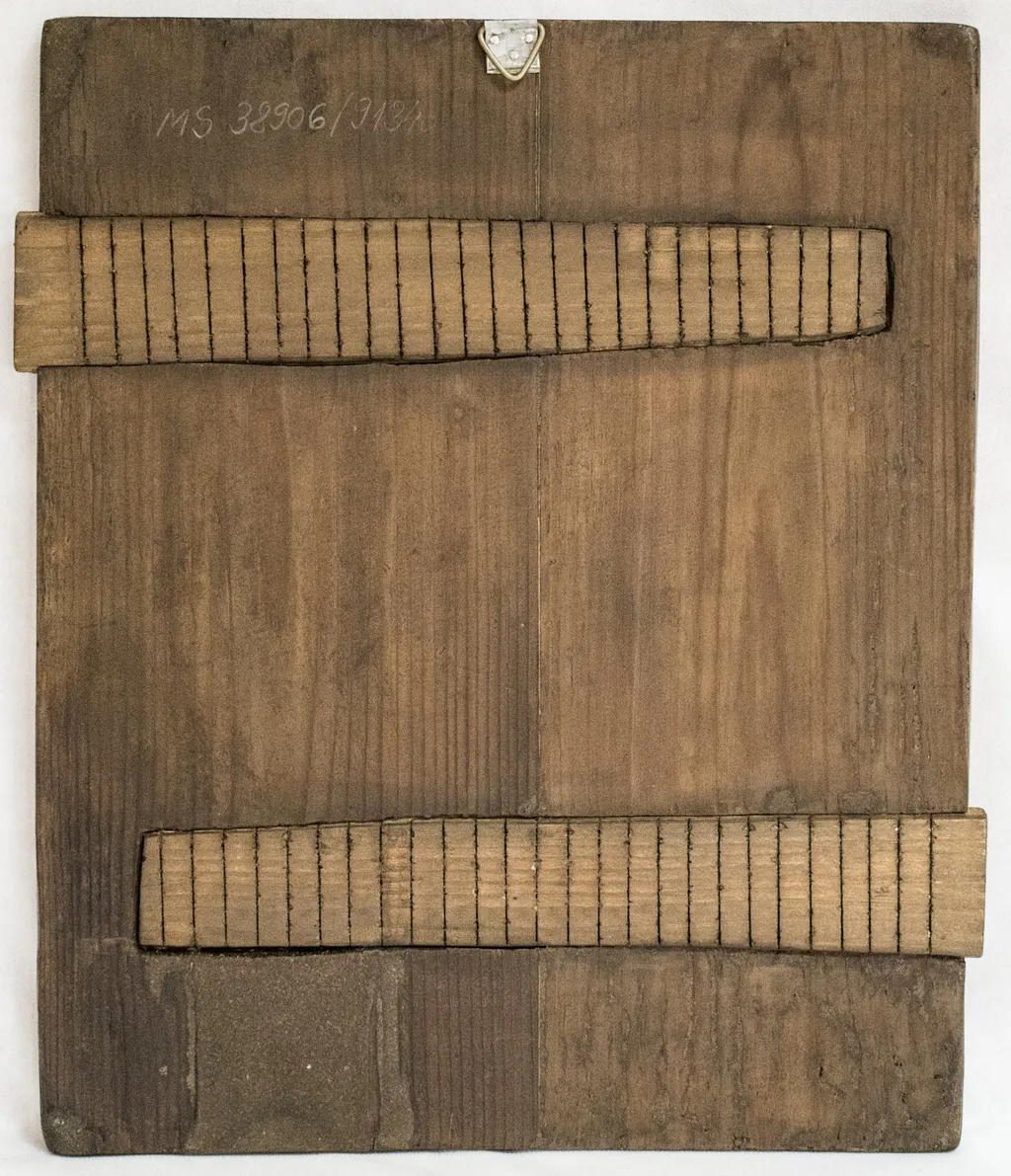
 Icoana este pictată pe dosul unei bucăți de glajă de formă dreptunghiulară în ax vertical. Sfântul Nicolae este redat în prim plan, așezat pe un tron, ținînd Evanghelia închisă în mâna stângă în timp ce cu dreapta binecuvintează. Sfântul Nicolae este înveșmântat ca Mare Arhiereu, cu mitră înaltă, bipartită, omofor mare, verde, decorat cu cruci "patee", sacos roșu cărămiziu cu galon auriu cu motiv spiralat, stihar roșu. De mâna dreaptă îi atârnă bedernița, percepută ca decor al veșmântului. Chipul este sobru, barba albă,scurtă,la fel părul scurt, ondulat. Ochii sunt negri, bine definiți, arcadele evidențiate. Nimb auriu. Tronul, cu spătarul înalt, are marginea aurită realizată în trepte(surmontatea de câte o cruce) și decorată cu motiv spiralat. Spătarul este alb, decorat cu o rețea de linii negre dublate cu bleu, întretăiate. În colțurile de sus câte un serafim pe nori. Câmpul verde intens în partea de jos, până la nivelul jilțului, albastru de Prusia în registrul superior. Desenul este îngrijit, compoziția aglomerată, paleta cromatică variată, culorile tari, Inscripția cu negru în partea de sus, greu vizibilă. Rama, din lemn de brad băițuit, este alcătuită din patru șipci profilate pe o porțiune mică spre interior, îmbinate oblic la colțuri, decorată cu un motiv ușor ondulat, imitînd fibra lemnului, dispus oblic. Dos din scândurele subțiri de brad, dispuse orizonal și fixate în cuie.
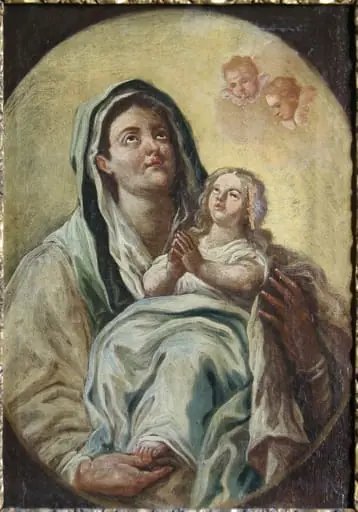
 Maica Domnului este înveșmântată în cămașă femeiască tradițională, presupusă iie cu câmpuri verticale alternativ pictate cu roșu vermillon și verde, cu danteluță aurie la baza gâtului, cu maforion roșu vermillon, poartă coroniță de împărăteasă și aureolă. Maica Domnului are gâtul neacoperit cu veșmânt și pe sub maramă se observă părul șaten castaniu. Este mai puțin frecventă această atitudine vestimentară a Maicii Domnului, asemănătoare femeilor din vremea aceea. Icoana este de la Poiana Sibiului, pictată în manieră specifică Mărginimii Sibiului. Pruncul Iisus Hristos este înveșmântat în roșu vermillon și verde și auriu la gulerașul cămășii populare, cu coroană și aureolă. Pruncul Iisus o ține pe Maica Domnului cu mânuța pe după gât, într-o tandrețe mângâietoare, lipindu-și capetele, unul de celălalt. Este a atitudine a Maicii Domnului Eleusa. Fondul icoanei este cerul de culoarea albastru ultramarin. Întreaga icoană este încadrată de un chenar decorativ geometrizant și floral compact, un ușor baroc, de culoare brun-roșcat-verde. Cromatică: roșu vermillon, albastru, verde de China, auriu, ocru-brun-bronziu, alb, negru, roșu stacojiu, brun-roșcat. Icoana este aparte și prin compoziție și prin veșminte. Chipurile au o delicatețe și o tandrețe emoționante. Inscripția din româno-chirilică se traduce MP Maica Domnului IC XC Iisus Hristos.
 Răstignirea lui Iisus Hristos plasată pe un câmp central sub formă de cruce, împarte spațiul pictural în patru casete dreptunghiulare, Iisus Hristos răstignit pe crucea cu 6 brațe (specifică ortodoxiei ruse), cu un veșmânt alb în jurul mijlocului, ochii închișiNimbul cu inscripțiile consacrate. La baza crucii, sugerat dealul Golgota și craniul lui Adam. Pe latura de sus un nor cu inscripția XC Cele 4 casete conțin următoarele scene: Stânga sus Maica Domnului cu Pruncul tipul Kazanskaia. Este reprezentată până la piept, nu se văd mâinile. Capul ușor înclinat spre Prunc. Maforion roșu, pe frunte și pe umeri stelele Fecioriei, albe, discrete.Iisus – Emanuel, binecuvintează cu dreapta, nimbul cruciger. Chiton albastru și himationgalben. Dreapta sus - Sf. Nicolae în veșminte de arhiereu, cărunt, cu barba rotundă capul descoperit. Nu se văd mâinile.. Înveșmântat cu sacos roșu cu drapaj galben, omofor lat, închis la culoare. Stânga jos - Sf. Gheorghe, oștean, călare pe un cal alb în poziție cambrată.Înfige, cu ambele mâini, sulița în gura balaurului, redat aici ca un șarpe negru, subțire. În oglindă, sfântul mucenic Dimitrie, în veșminte identice, călare pe un cal negru, cu o suliță în mâini. Fondul: brun pentru scena centrală, scenele de sus: brun roșcat, cu o bandă îngustă, aurită sus, niburile cu linie albă, scenele de jos: inferior bandă brună, pământul cu galben, cerul - verde închis, nimburile galbene cu linie discretă, albă pe margine. Chenarul marginal specific icoanelor tip krasnushka.Inscripții caligrafice cu negru. Inscripții cu llitere negre, caligrafice la scenele de sus, alb central. Caracter popular
 Tânguirea, Maica Domnului și Iisus Hristos pe cruce
 Sfântul Nicolae
 Icoa Zug
 Sfinții Împărați Constantin și Elena, plasați sub brațele crucii pe care a fost răstignit Iisus. Crucea, cu brațele drepte, trilobate, în centrul compoziției, ușor asimetric. La întretăierea brațelor raze multicolore(orange, albastru și roșu, roșu și alb). Sfinții reprezentați cu veșminte împărătești, coroane înalte pe cap, mantii roșii și tunici bleumarin cu borduri aurite, bogat decorate. Ambii sunt tineri, cu părul lung, castaniu revărsat pe umeri. Aureolele și coroana Elenei aurite. Împărăteasa ține o ramură în mâna dreaptă, împăratul un sceptru. Deasupra crucii pe niște nori albi și înconjurați de raze, Dumnezeu Tatăl(bătrân, cu nimbul triunghiular)și Isus Hristos cu aură circulară, îneșmântați în roșu și albastru.Sunt flancați de câte un heruvim așezat pe norișori. Câmp albastru de Prusia, decorat cu steluțe albe și roșii, colțurile de sus ale icoanei acoperite de draperii roșii și cafenii. Sfinții plasați deasupra unor nori albi cu margini dantelate, gri. Fondul în 2/3 inferioară este de culoare vernil cu brâuri surmontate de forme ovoidale, pictate cu vernil roșu și bleumarin. Paleta cromatică este variată: roșu, galben, negru, alb, verde-oliv, bleu, albastru, cafeniu. Compoziția este echilibrată, dar încărcată. Desenul îngrijit, cu stângăcii. Rama este de lemn de brad, profilată la interior(culoare brun roșcat), la exterior decorată cu motiv de culoare mai închisă realizat cu pieptenele.
 Isus Hristos și Ioan Botezătorul copii. Vegherea lui Isus în mormânt
 Icoajumă
 Scene din viața lui Iisus (Coborârea la iad și cele douăsprezece praznice împărătești)
 Tema icoanei face parte din ciclul Pascal și înfățișează Învierea Domnului. În plan central apare reprezentat Iisus Hristos biruitor, deasupra unor nori stilizați, ținând în mâna dreaptă un steag cu cruce, iar cu stânga binecuvintează. În partea stângă a compoziției e pictat un paznic, iar în dreapta apare un înger cu un filacter deschis în mână. Cromatica icoanei se compune din tonuri de roșu vermillon, alb, ocru galben, verde, albastru, negru și gri. Rama icoanei e simplă, băițuită și e formată din îmbinarea a patru baghete de lemn. Sticla este spartă în partea dreaptă.
 Conform tradiției, icoana Maicii Domnului de la Mănăstirea Sfântul Teodor a fost pictată de către Sfântul Evanghelist Luca și seamănă cu celebra icoană a Maicii Domnului din Vladimir. Au fost executate numeroase copii. Tip Eleusa – Fecioara ține pe Iisus cu ambele mâini într-o îmbrățișare maternă. Privirea tristă și gânditoare a Maicii, chipul serios și matur al Pruncului prevestesc Patimile. Iisus are fața îndreptată spre Maica sa, iar mâna stângă petrecută în jurul gâtului ei. Dreapta o ține pe marginea maforionului . Înveșmântat cu o tunică roșie cu drapaj galben, încins cu un brâu aurit. Picioarele desculțe, cel stâng dezgolit până la genunchi. Veșmântul Fecioarei, pe întreaga suprafață a mânecii stângi, prezintă un motiv floral amplu. Nimbul marcat cu motive punctiforme ștanțate formează motive florale stilizate, maforionul bordat cu șiruri de puncte incizate, la fel mânecuțele. Restul veșmântului simplu, vișiniu, stola galbenă. Maniera de tratare a chipurilor personajelor se înscrie pe linia vechii tradiții, la fel și cromatica cu număr restrâns de culori. Ochii fin desenați, accentuați volumetric, irisul de formă ovală, pupila neagră. Buzele, mici înguste, sunt trasate cu o linie subțire de culoare închisă, expresia lor fiind definitorie pentru starea Maicii. Cromatica: Culoarea predominantă este roșul (atât veșmintele Maicii Domnului, cât și ale pruncului, dar și chenarul); alb, galben;tonuri de pământ, fondul auriu. Chenarul interior dublat de două șiruri de cercuri ștanțate în foiță.