Artwork
Fiul pădurarului
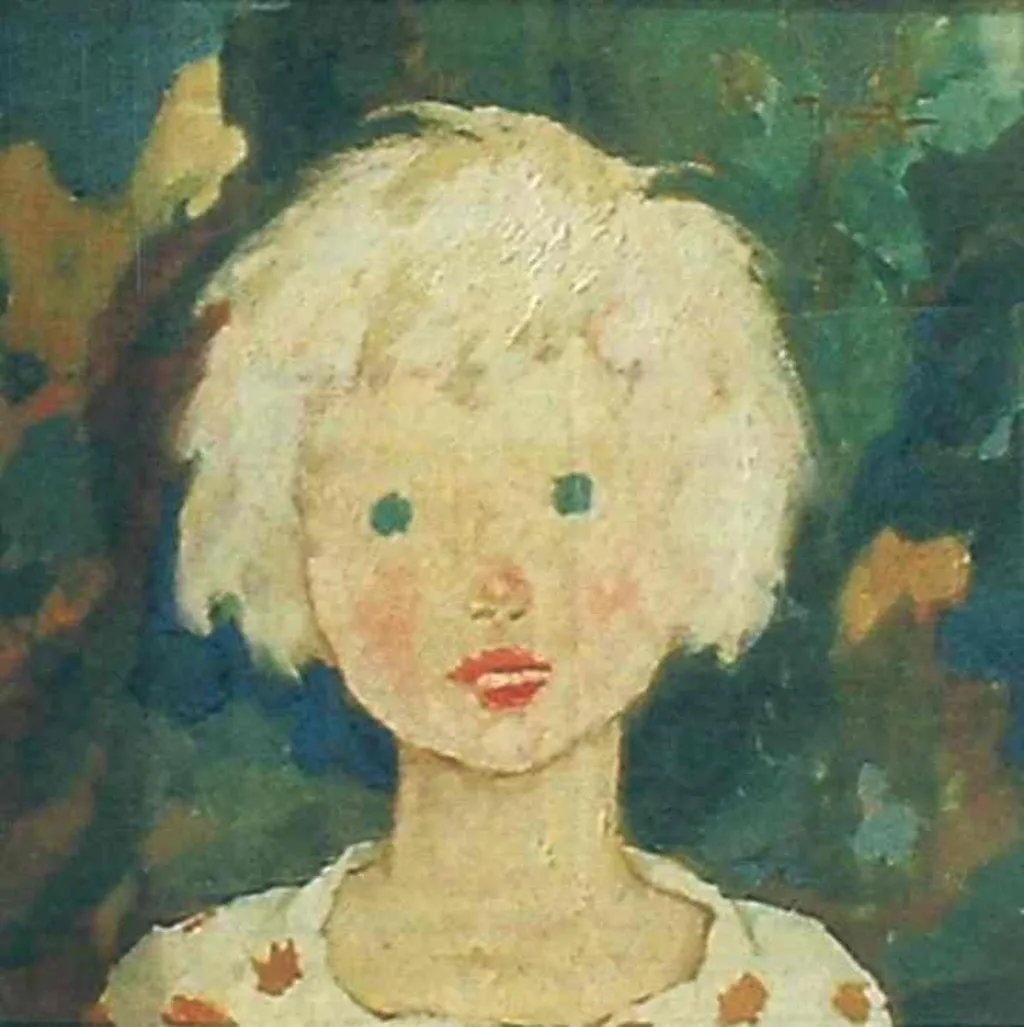
Fiul pădurarului is an unspecified painting by Nicolae Tonitza. It dates from 1926 and is held in the collection of the Vasile Pârvan Bârlad Museum.
About this work
Overview
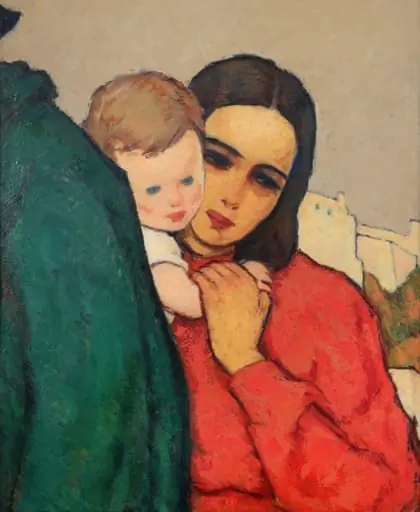
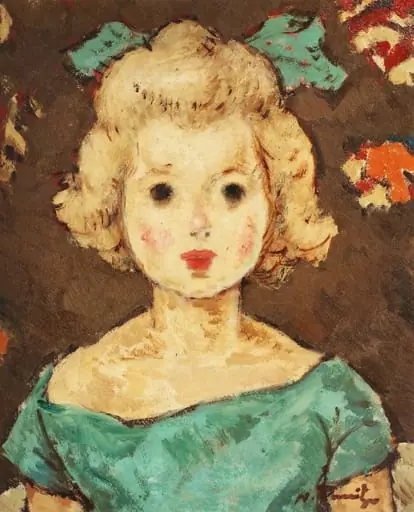
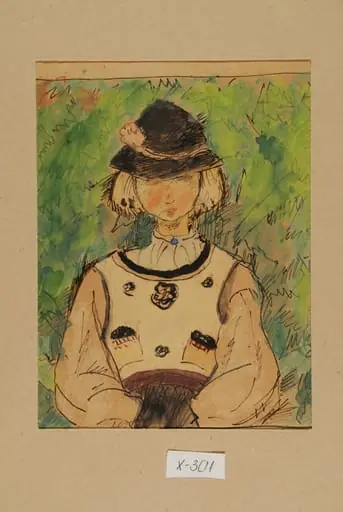
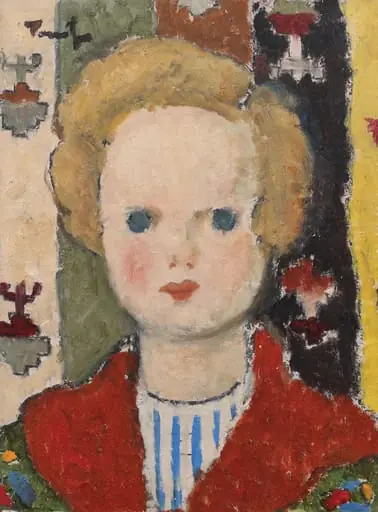
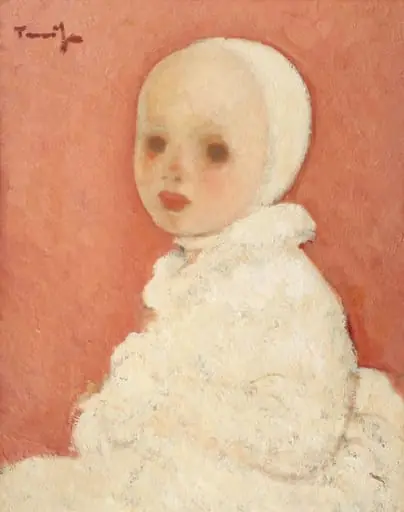
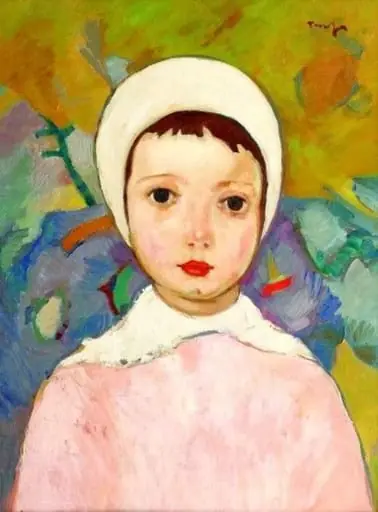
Created around 1926 by Romanian painter Nicolae Tonitza, Fiul pădurarului is part of the collection of the Museum of Ethnography. The work presents a portrait of a young girl rendered with a direct, unembellished gaze. Its modest dimensions and intimate subject place the piece within Tonitza’s broader exploration of everyday figures during the interwar period.
Subject & Meaning
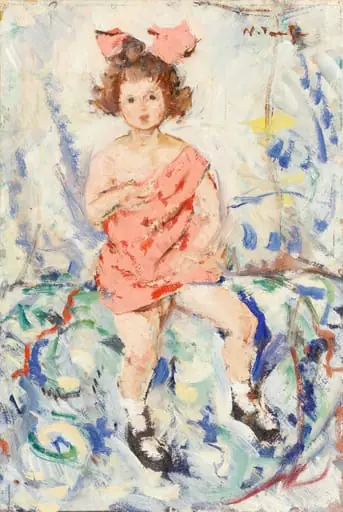
The central figure is a child with a rounded face, short hair, and striking red lips, her eyes reduced to tiny green specks. She wears a light‑toned dress accented by a few orange motifs, suggesting a simple, perhaps rural, attire. The straightforward pose and lack of narrative detail invite viewers to contemplate the innocence and immediacy of childhood.
Technique & Style
Tonitza employs a vigorous impasto technique, laying on paint in thick, textured strokes that give the background a mottled green‑brown surface. The rapid, almost slap‑on application creates a tactile quality, while the limited palette emphasizes the contrast between the vivid dress and the subdued surroundings. This approach aligns with the artist’s interest in expressive surface treatment.
History & Provenance
Since its creation in the mid‑1920s, Fiul pădurarului has remained within public holdings, currently displayed at the Museum of Ethnography. The work’s provenance reflects the institution’s commitment to preserving Romanian visual culture, and its presence in the museum’s collection underscores Tonitza’s role in the nation’s artistic heritage.
Artist & collection
Artist
Nicolae Tonitza painted quiet still lifes and village scenes, often showing colorful vegetables on a table or blooming flowers in simple pots.