Artwork
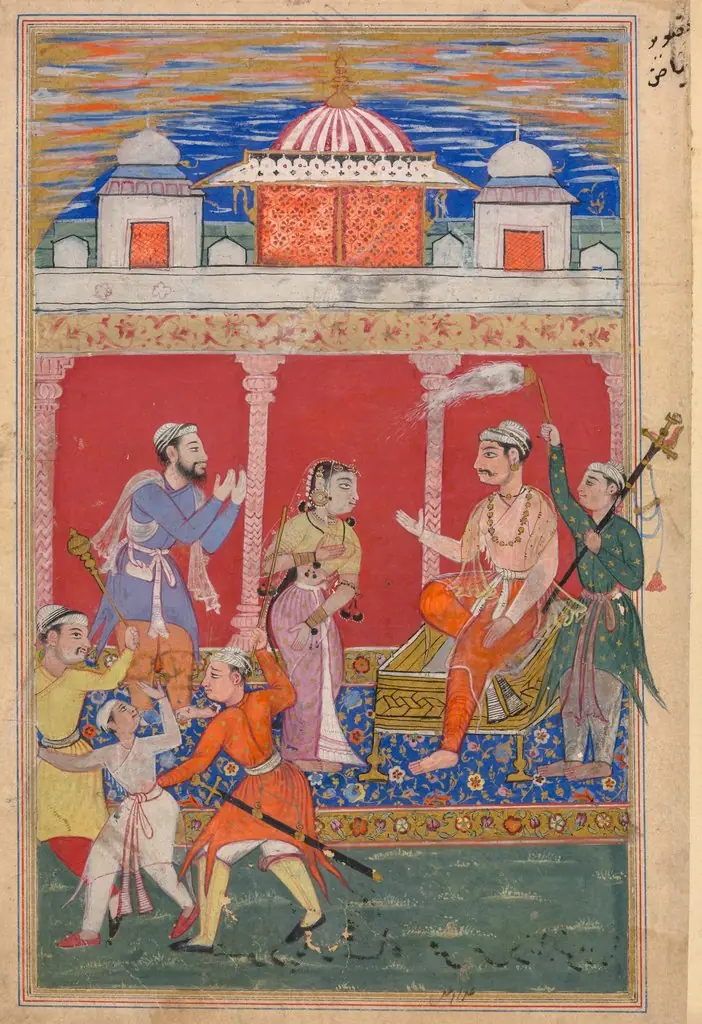
The Brahman, unable to select from the four gifts of the king of the Ocean seeks the Raja’s advice, from a Tuti-nama (Tales of a Parrot): Eleventh Night
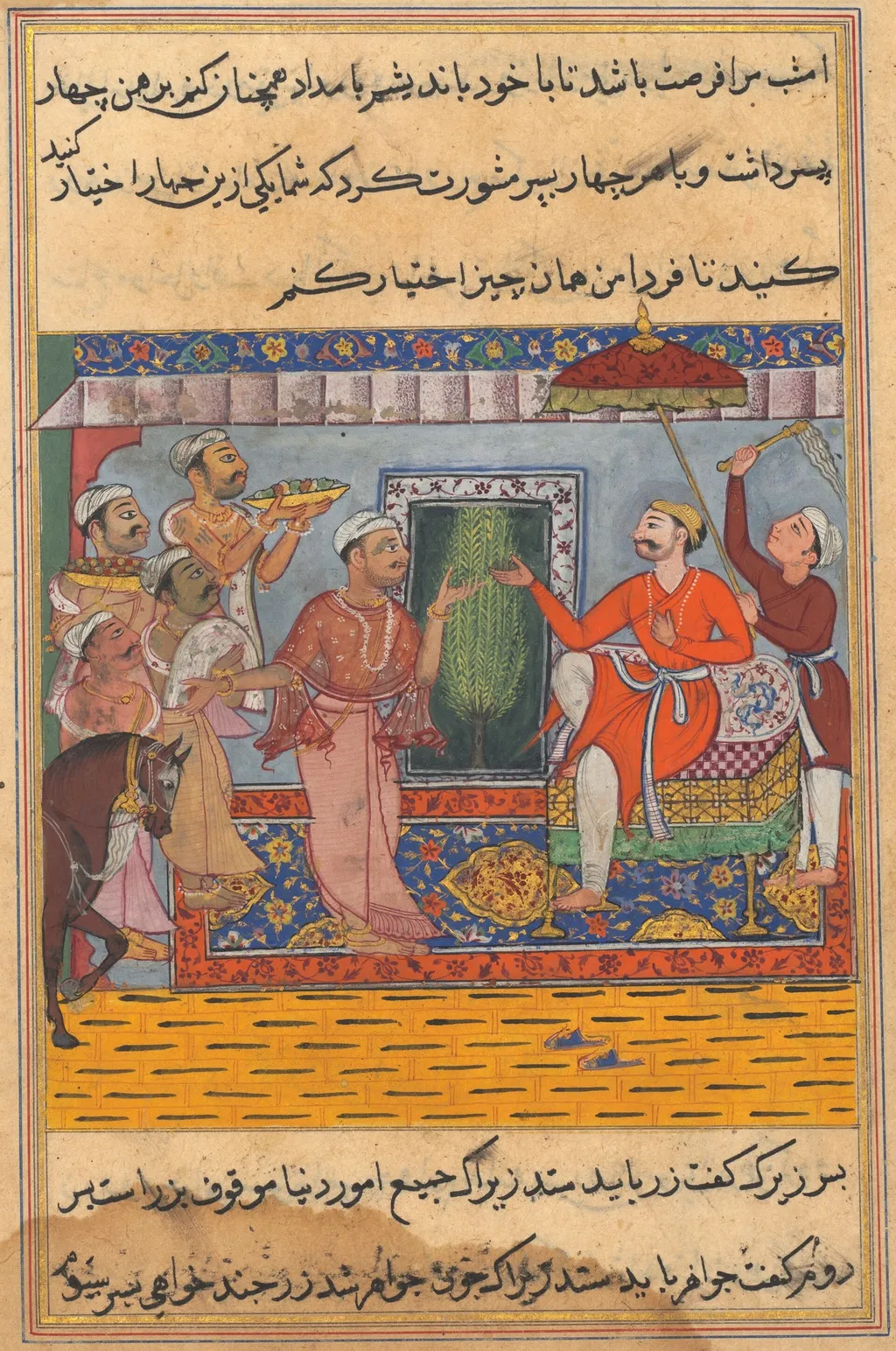
The Brahman, unable to select from the four gifts of the king of the Ocean seeks the Raja’s advice, from a Tuti-nama (Tales of a Parrot): Eleventh Night is an unspecified painting. It dates from 1560 and is held in the collection of the Cleveland Museum of Art. The work illustrates a narrative episode from the eleventh night of the Tuti‑nama, a Persian collection of parrot‑told tales.
About this work
Overview
The work illustrates a narrative episode from the eleventh night of the Tuti‑nama, a Persian collection of parrot‑told tales. Central to the composition is a man dressed in red, clutching a green sprig, while surrounding figures listen attentively. The scene unfolds within a richly decorated interior, its walls edged in blue with gold motifs and a floor of yellow brick‑patterned tiles.
Subject & Meaning
The painting captures the moment when a Brahman, unable to choose among four gifts presented by the Ocean king, turns to a Raja for counsel. The gestures of the orange‑clad figure on a raised platform suggest he is offering guidance, emphasizing the theme of seeking wisdom from authority in the story.
Technique & Style
Executed in vivid pigments, the artist employs a flat, decorative approach typical of manuscript illustration, with bold outlines and intricate surface patterning. The use of contrasting reds, blues, and yellows creates a luminous effect, while the Arabic inscription framing the scene integrates textual and visual elements.
Context
The image belongs to a tradition of Persian book art that visualized literary episodes for elite audiences. Its composition reflects the courtly aesthetic of the Safavid period, where narrative scenes were rendered with elaborate architectural backdrops and stylized figures.
Legacy
Works of this type informed later South Asian and Islamic visual cultures, influencing decorative painting and manuscript illustration. The piece, now part of a museum collection, serves as a reference for scholars studying cross‑cultural storytelling and the visual language of Persian literary manuscripts.
Artist & collection

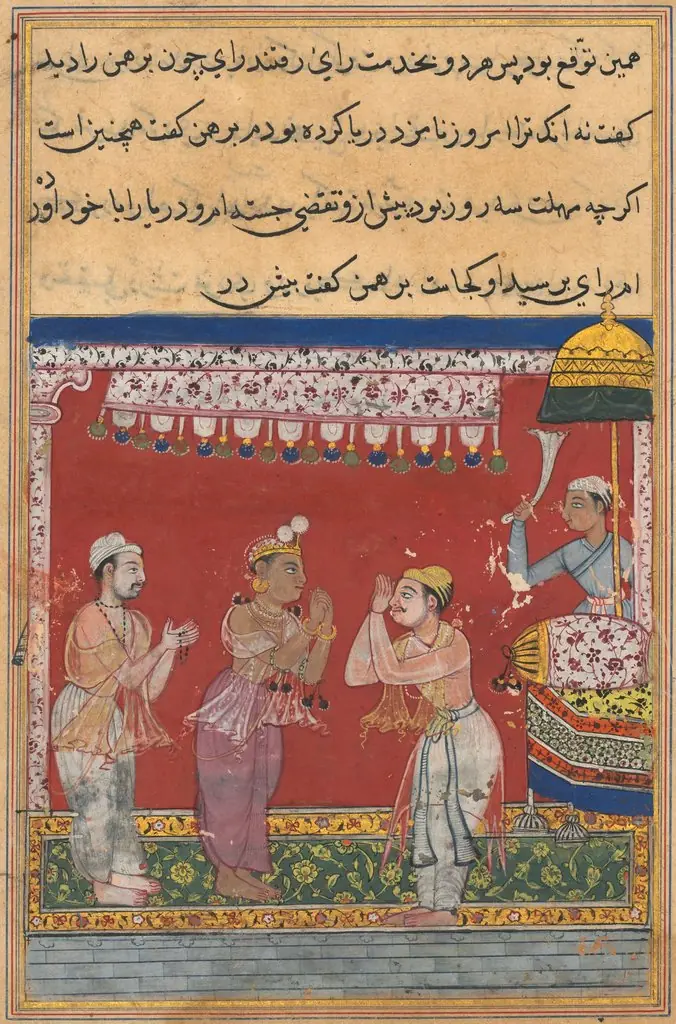 The king of the Ocean, having assumed human form, arrives at the court of the Raja, from a Tuti-nama (Tales of a Parrot): Eleventh Night
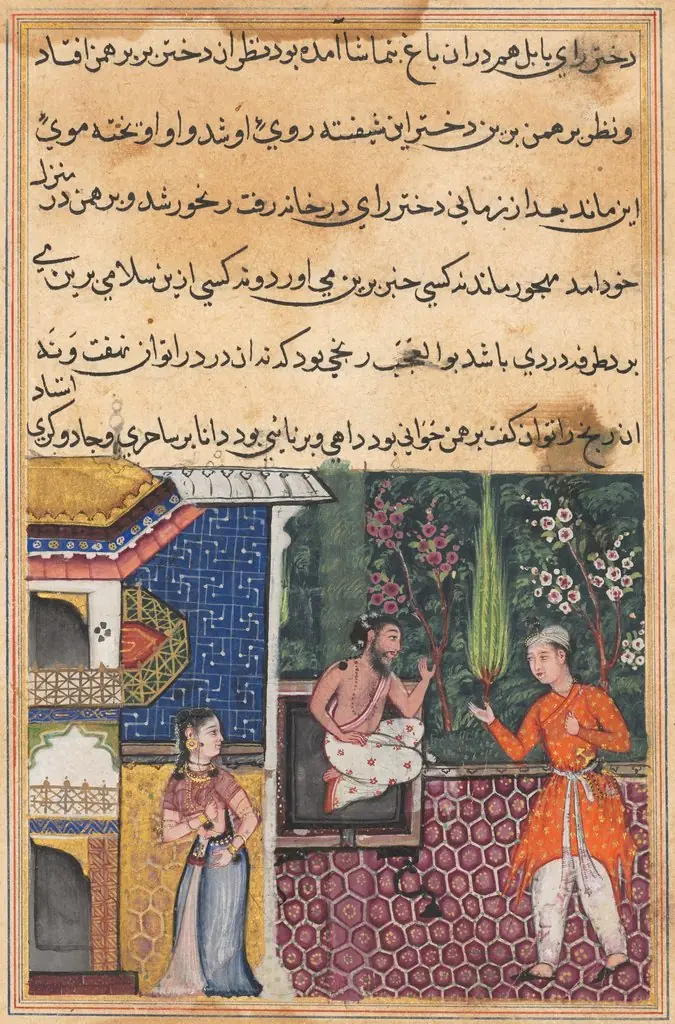 The Brahman gives an account of his falling in love with the king of Babylon’s daughter to his friend, the magician, from a Tuti-nama (Tales of a Parrot): Thirty-fifth Night
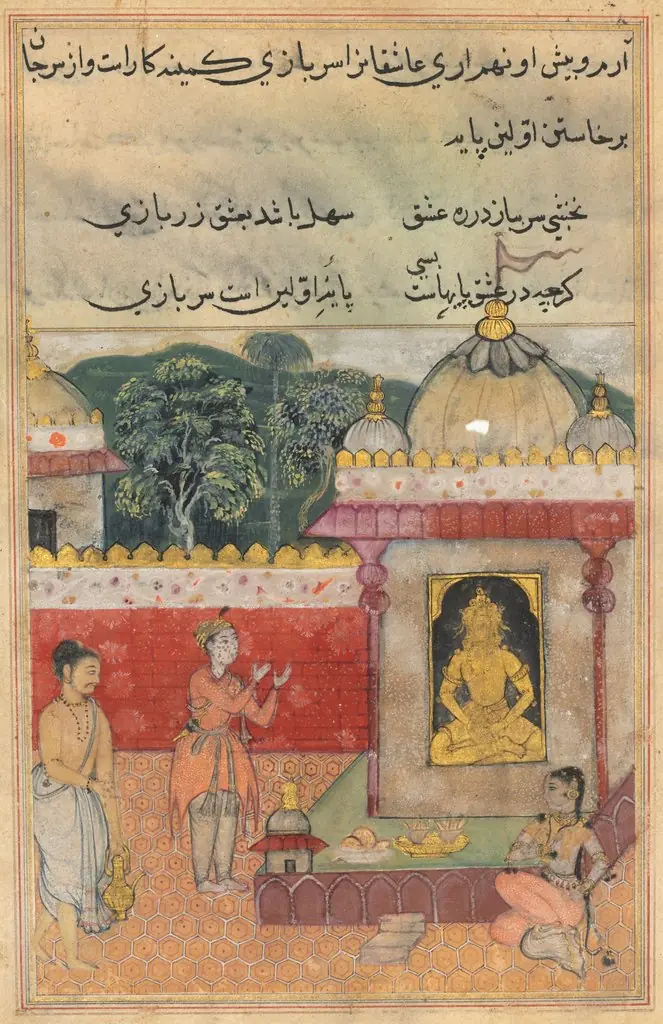 The Raja’s son vows to sever his head and offer it to the image if he is united with the princess he has seen in the temple, from a Tuti-nama (Tales of a Parrot): Thirty-fourth Night
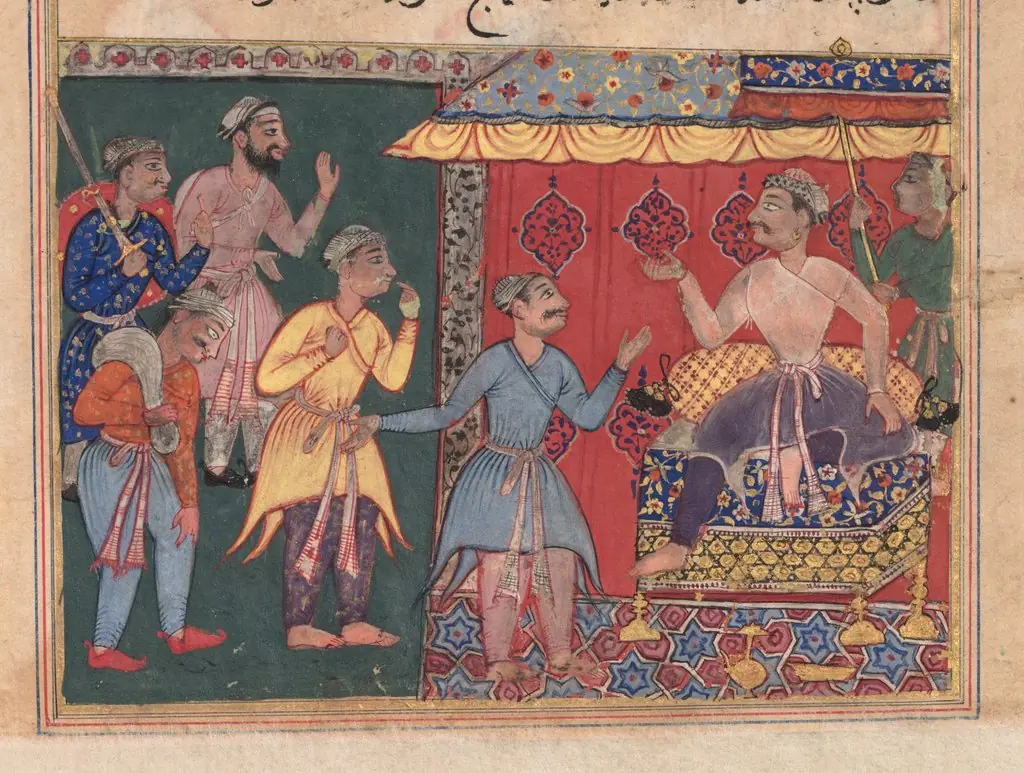 King Bhojaraja tries in vain to ascertain the whereabouts of the pearl from the four travelling companions, from a Tuti-nama (Tales of a Parrot): Twelfth Night
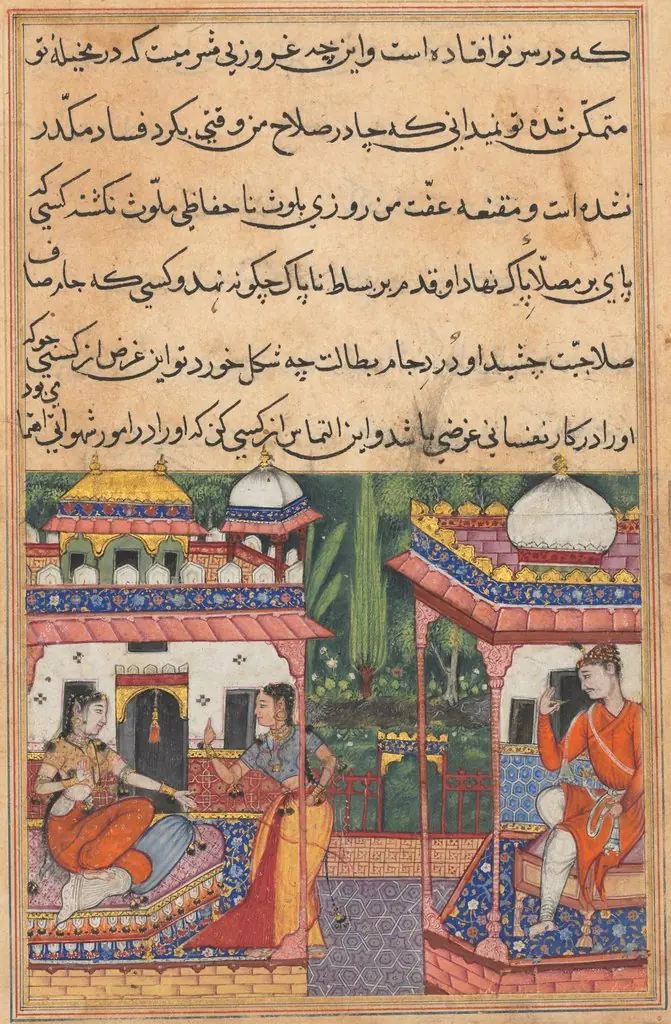 Kaiwan sends a message of love to Khurshid, wife of his brother Utarid who is away on a journey, from a Tuti-nama (Tales of a Parrot): Thirty-second Night
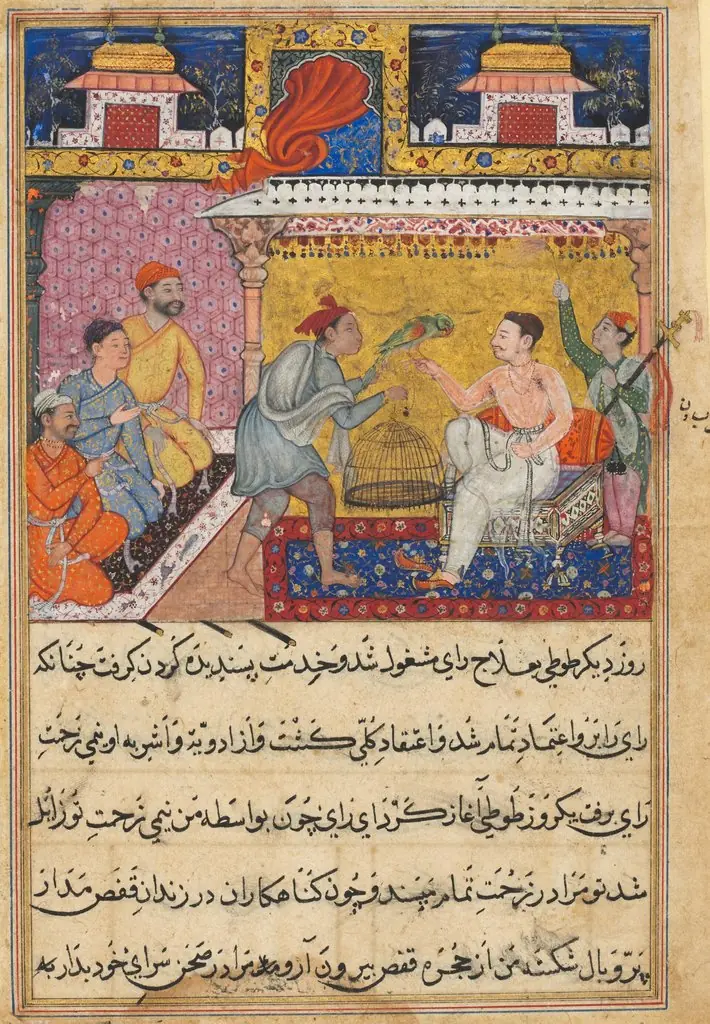 The hunter offers the mother parrot to the king of Kamarupa, from a Tuti-nama (Tales of a Parrot): Fifth Night
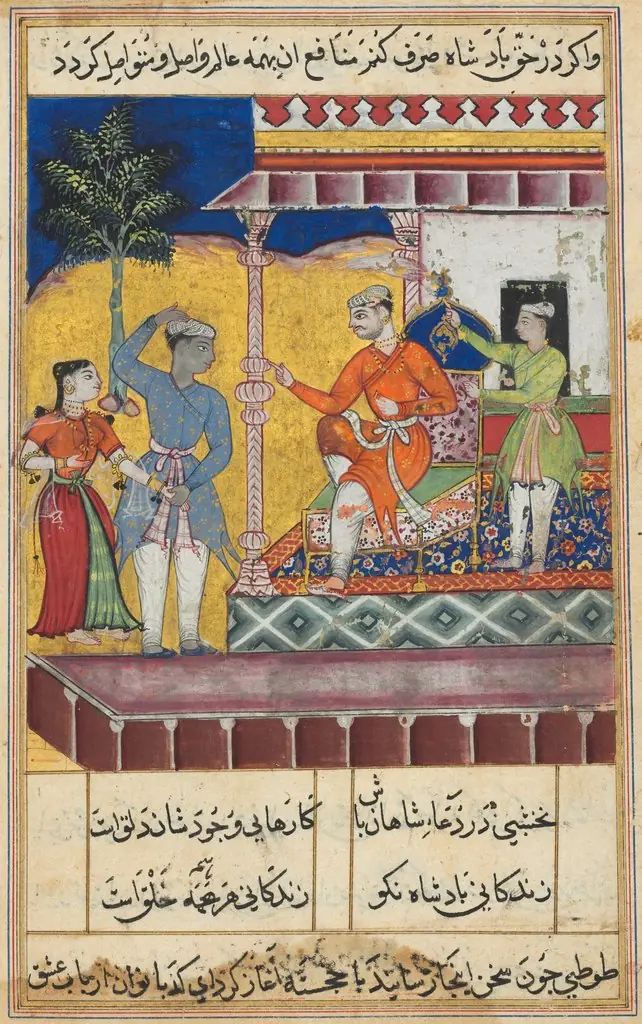 The rejuvenated old man and the daughter of the king of the jinns take leave of the King of Kings, from a Tuti-nama (Tales of a Parrot): Seventh Night
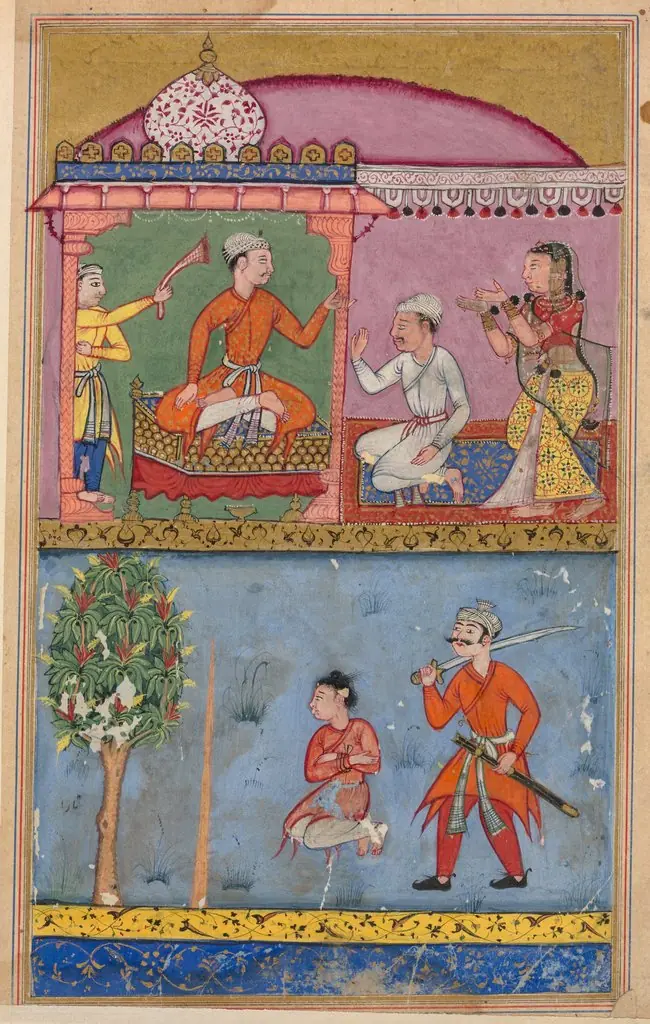 Page from Tales of a Parrot (Tuti-nama): text page
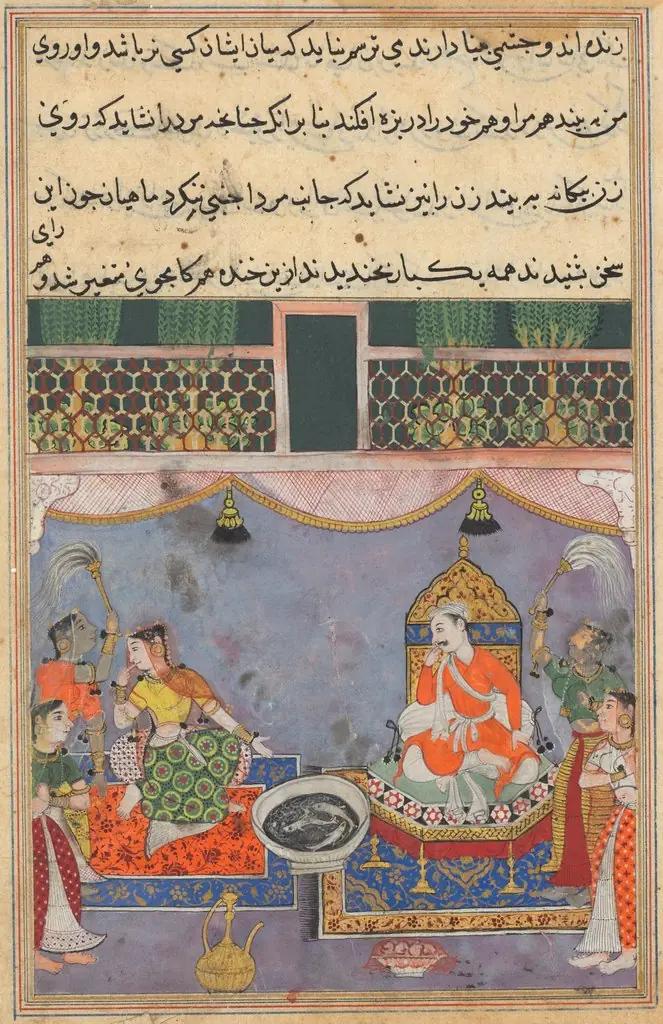 Kamjuy, the wife of the Raja, averts her face from the fishes, from a Tuti-nama (Tales of a Parrot): Twenty-third Night
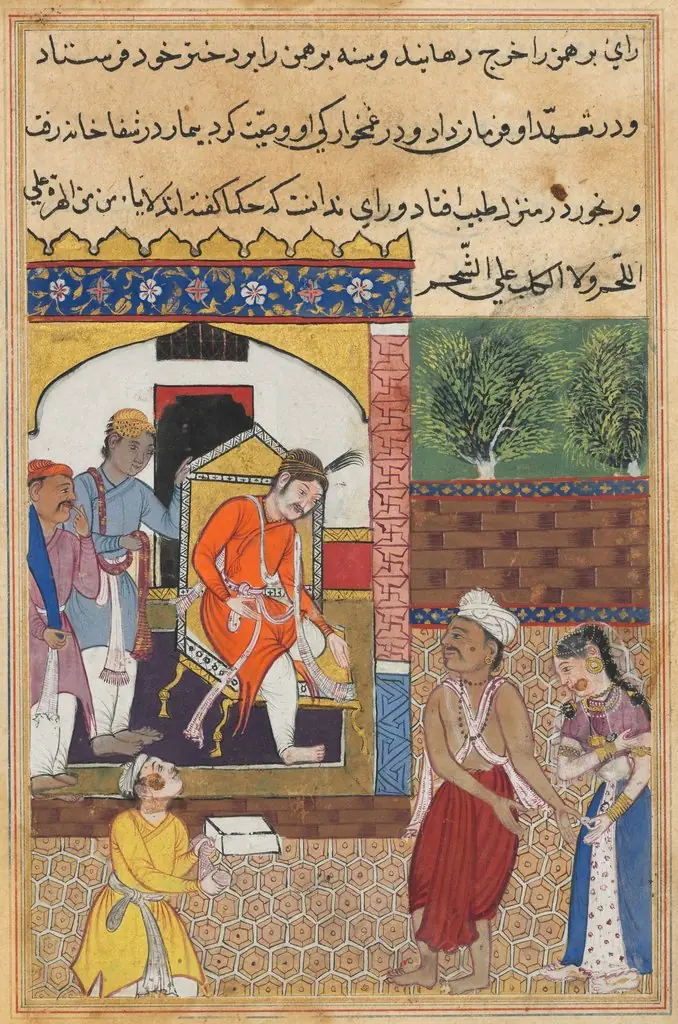 The magician, disguised as a Brahman, visits the king of Babylon, from a Tuti-nama (Tales of a Parrot): Thirty-fifth Night
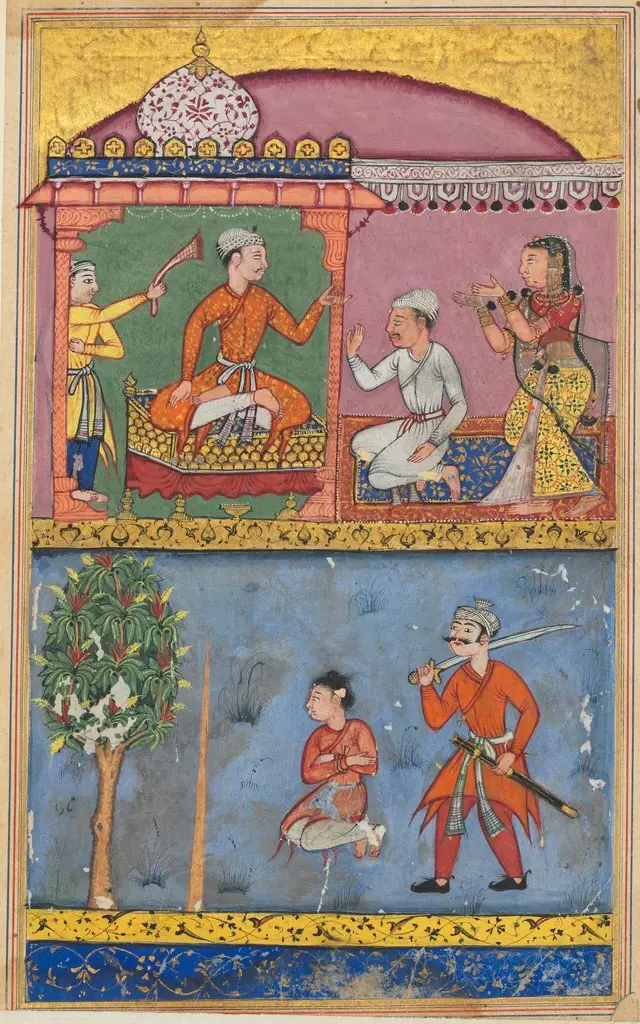 The handmaiden appeals for justice and the prince is taken to the execution site for the fourth time, from a Tuti-nama (Tales of a Parrot): Eighth Night
 Page from Tales of a Parrot (Tuti-nama): text page