Artwork
King Bhojaraja tries in vain to ascertain the whereabouts of the pearl from the four travelling companions, from a Tuti-nama (Tales of a Parrot): Twelfth Night
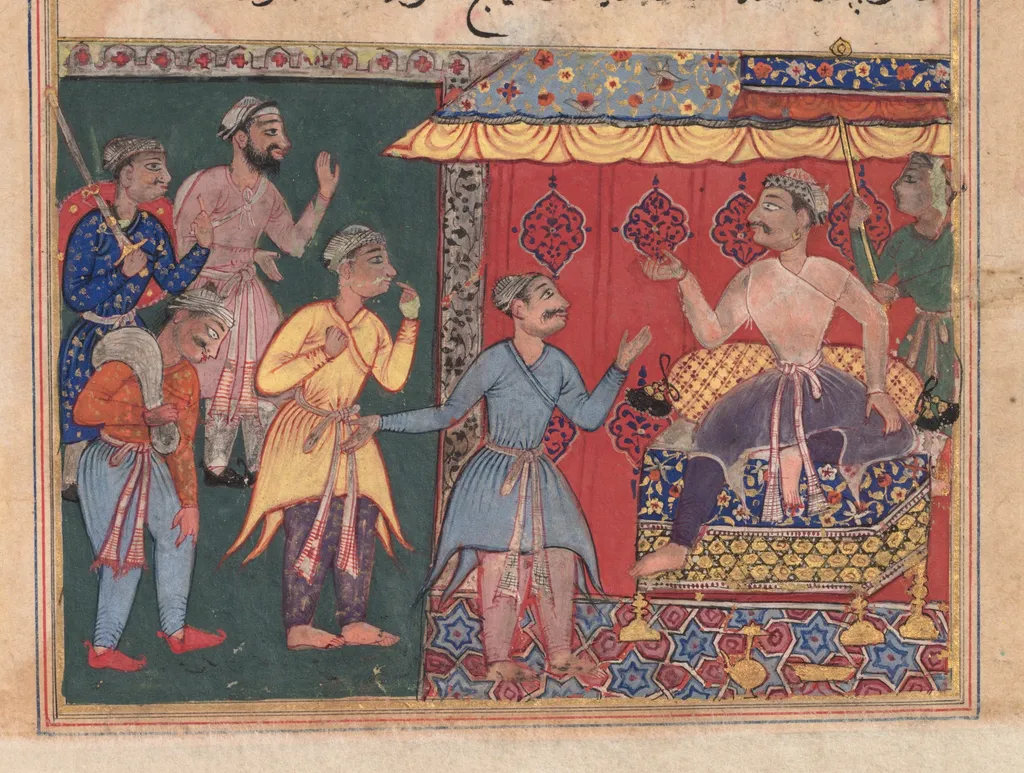
King Bhojaraja tries in vain to ascertain the whereabouts of the pearl from the four travelling companions, from a Tuti-nama (Tales of a Parrot): Twelfth Night is an unspecified painting. It dates from 1560 and is held in the collection of the Cleveland Museum of Art. The work depicts a courtly gathering in which a seated figure, positioned beneath a yellow canopy, addresses three companions.
About this work
Overview
The composition is dense yet organized, set against a backdrop of saturated reds, greens, and golds embellished with intricate decorative motifs.
The work depicts a courtly gathering in which a seated figure, positioned beneath a yellow canopy, addresses three companions. The attendants, dressed in vivid patterned garments, hold various objects and appear engaged in a dialogue concerning a missing pearl. The composition is dense yet organized, set against a backdrop of saturated reds, greens, and golds embellished with intricate decorative motifs.
Subject & Meaning
The scene illustrates a narrative episode from the Tuti‑nama, a collection of parrot‑told tales, in which King Bhojaraja interrogates his four traveling companions to locate a lost pearl. The painting visualizes the king’s authority and the tension of the inquiry, reflecting themes of royal justice and the value placed on precious objects within courtly storytelling.
Technique & Style
Executed in a miniature painting tradition, the piece employs fine brushwork to render detailed textile patterns and ornamental architecture. A bright palette of primary colors combined with gold leaf creates a luminous surface, while the flattened spatial arrangement and stylized figures align with the Persian‑influenced court aesthetic of the period.
History & Provenance
The painting originates from the Indian sub‑continent, likely produced for an aristocratic patron during the era when the Tuti‑nama was popular among elite circles. It entered the collection of the Cleveland Museum of Art through acquisition in the late twentieth century, though earlier ownership records remain sparse.
Context
Courtly narrative paintings such as this were commonly commissioned to accompany literary manuscripts, serving both decorative and didactic purposes. The depiction of King Bhojaraja aligns with the tradition of illustrating moral and political lessons drawn from folklore, reinforcing the ruler’s role as arbiter of truth and wealth.
Artist & collection

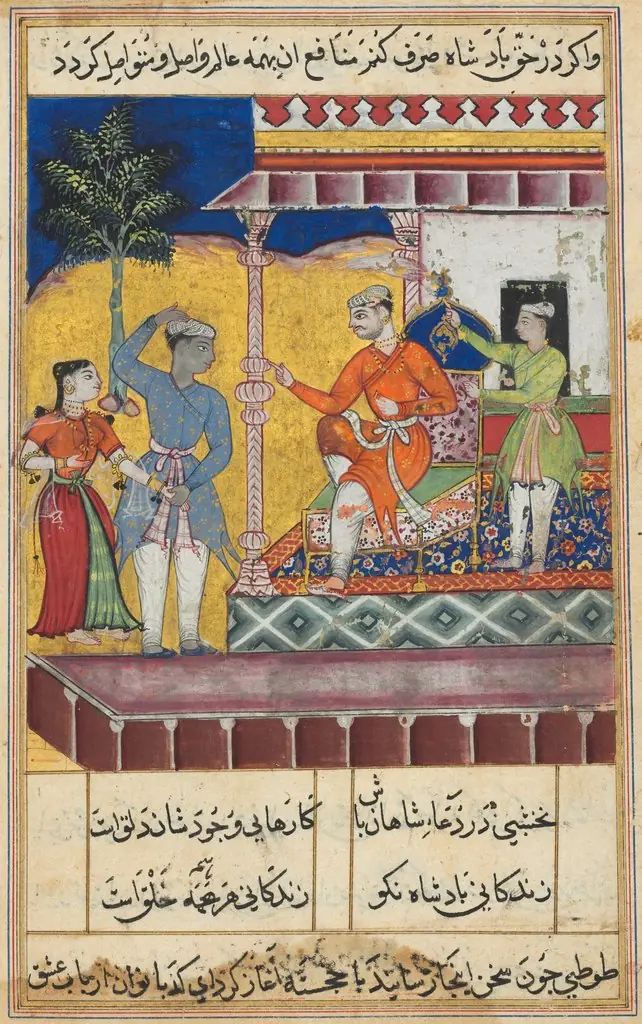 The rejuvenated old man and the daughter of the king of the jinns take leave of the King of Kings, from a Tuti-nama (Tales of a Parrot): Seventh Night
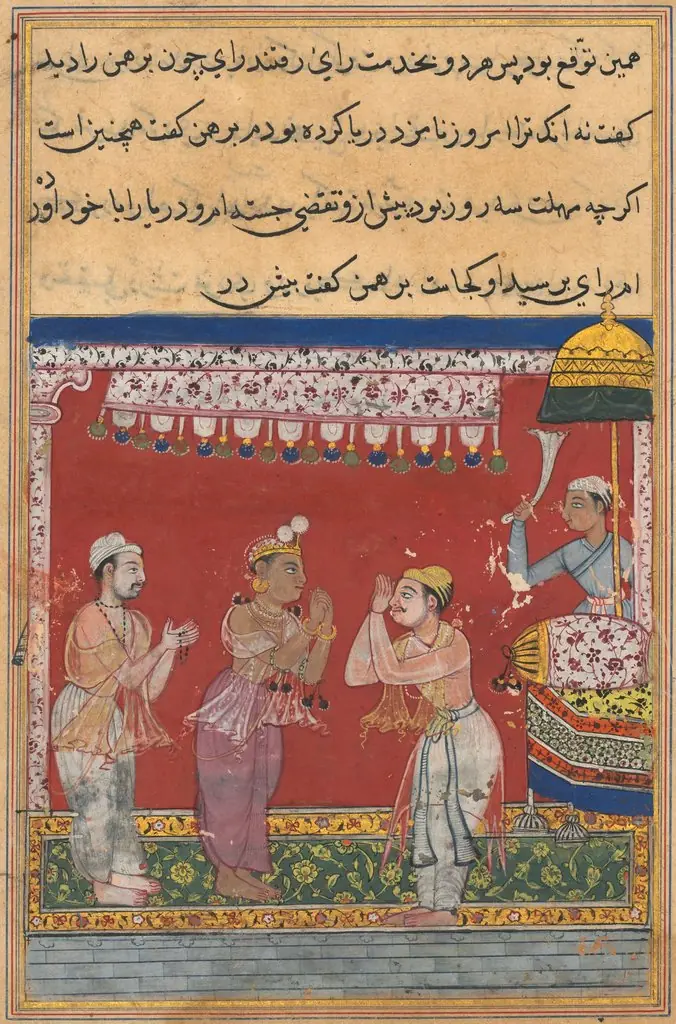 The king of the Ocean, having assumed human form, arrives at the court of the Raja, from a Tuti-nama (Tales of a Parrot): Eleventh Night
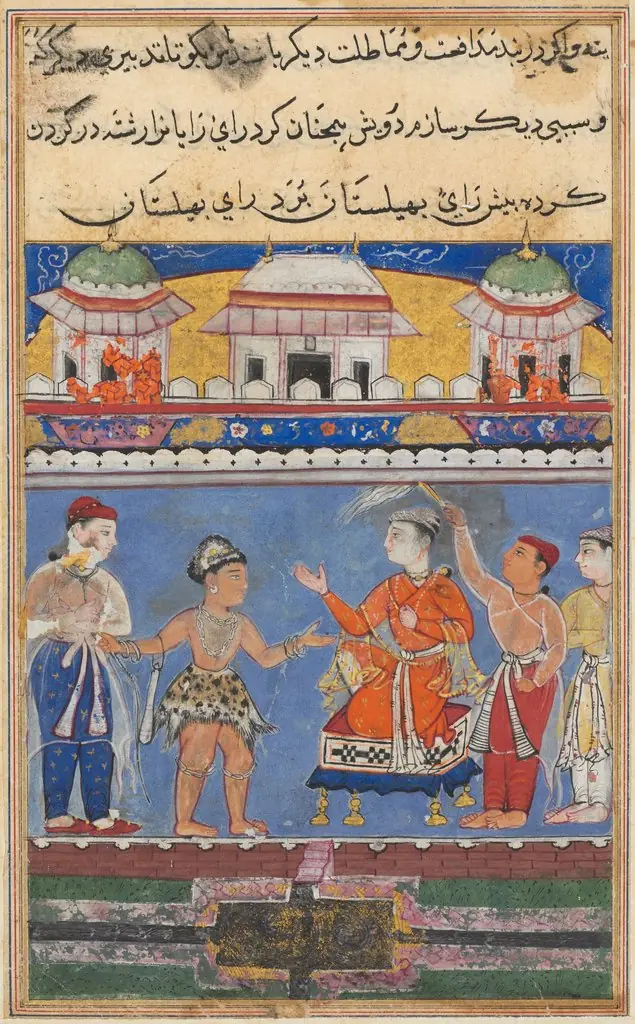 The dervish brings the King of Kings before the king of Bahilistan, from a Tuti-nama (Tales of a Parrot): Seventh Night
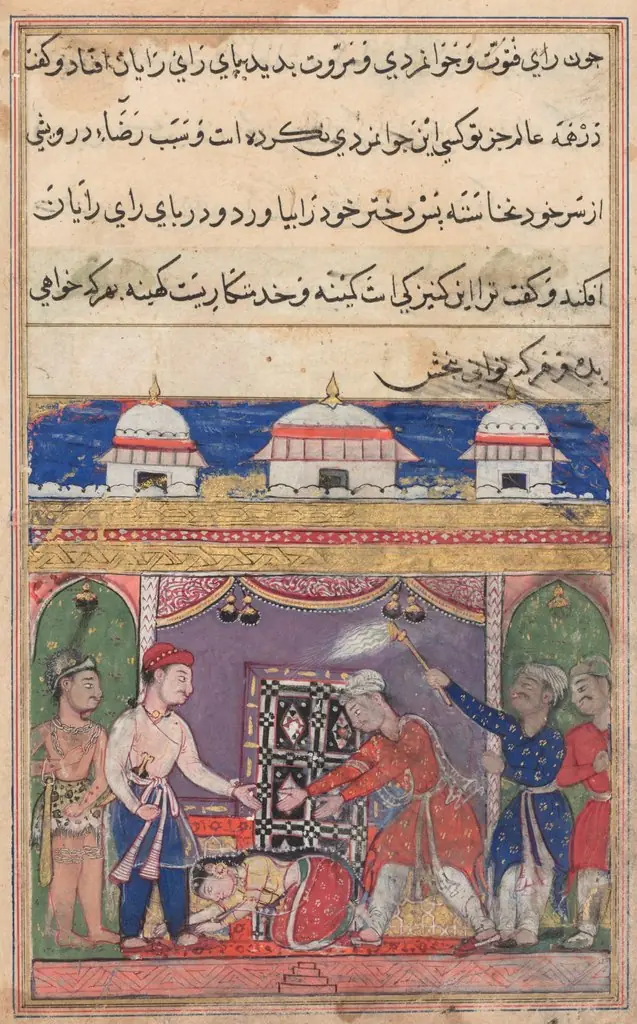 The king of Bahilistan offers his daughter to the King of Kings, from a Tuti-nama (Tales of a Parrot): Seventh Night
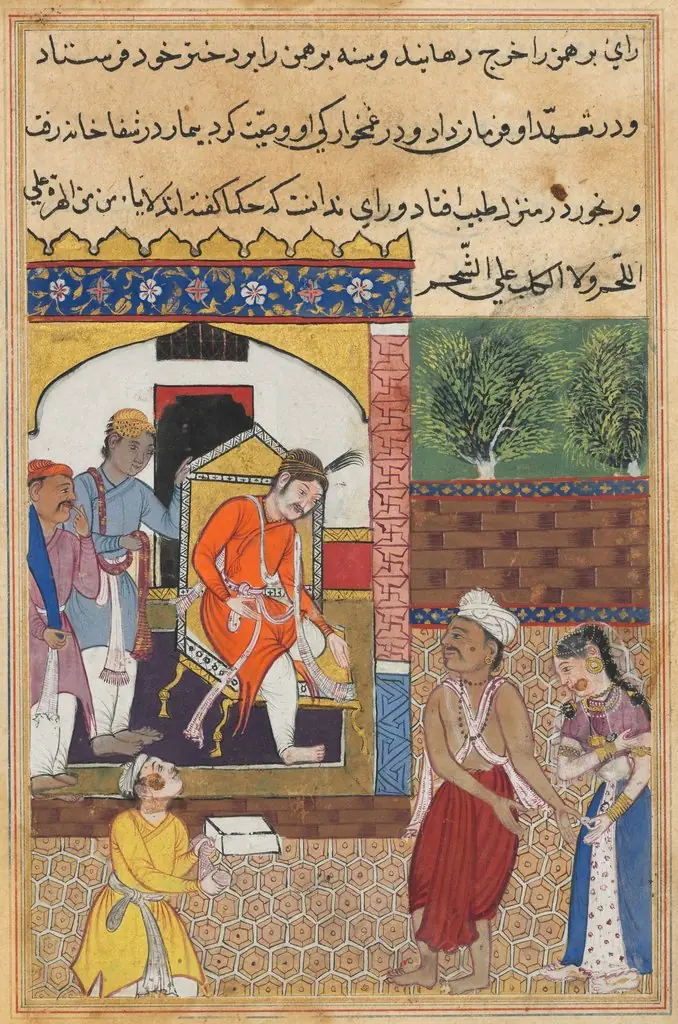 The magician, disguised as a Brahman, visits the king of Babylon, from a Tuti-nama (Tales of a Parrot): Thirty-fifth Night
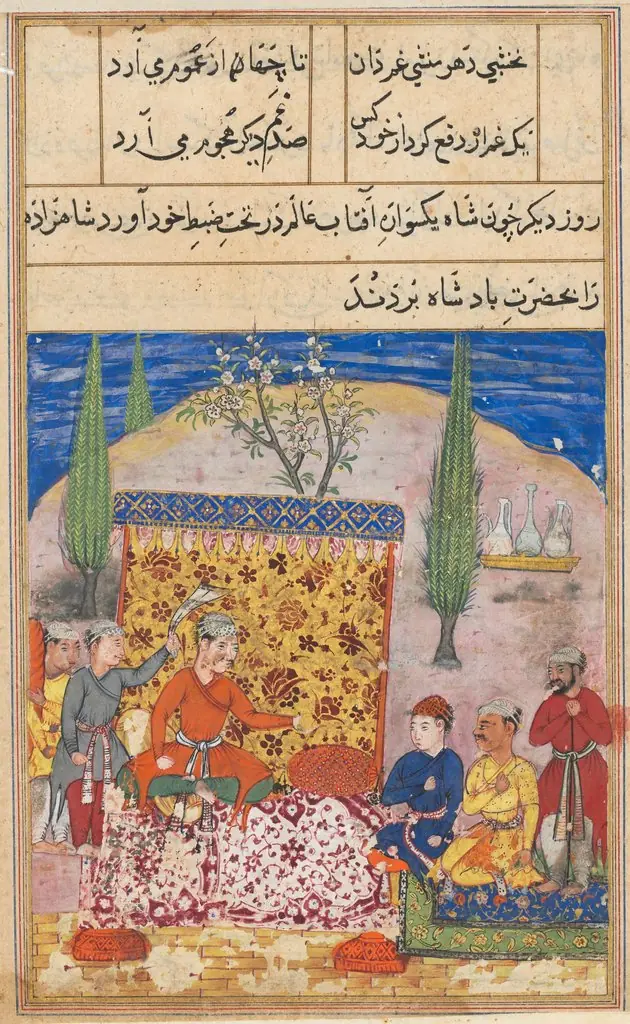 The young prince is presented to the king, his father, by his teacher, but refuses to speak, from a Tuti-nama (Tales of a Parrot): Eighth Night
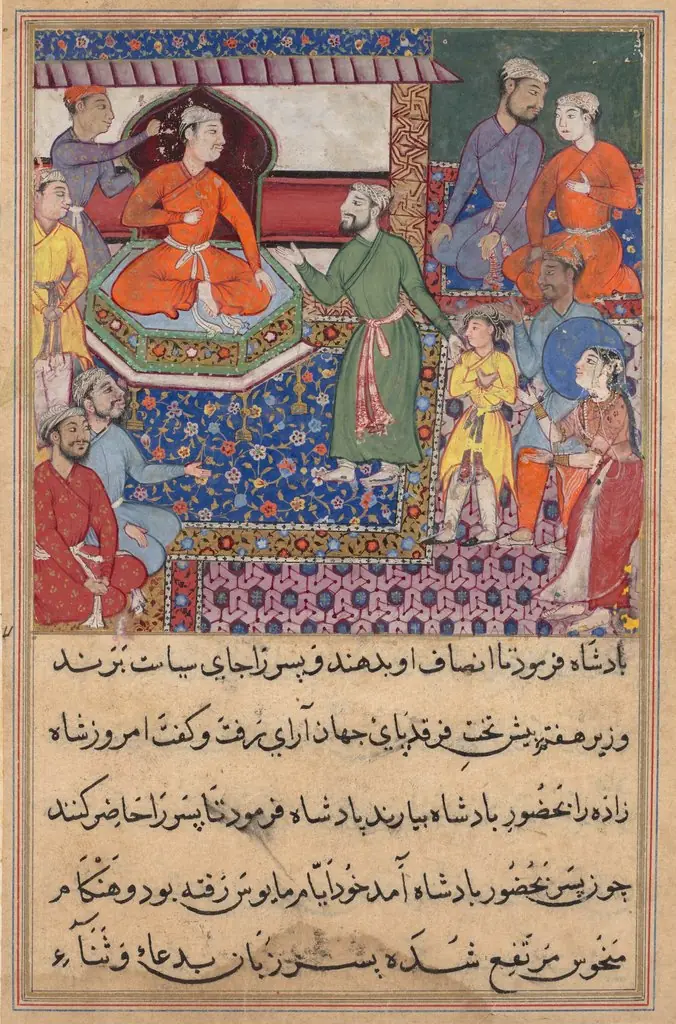 Page from Tales of a Parrot (Tuti-nama): text page
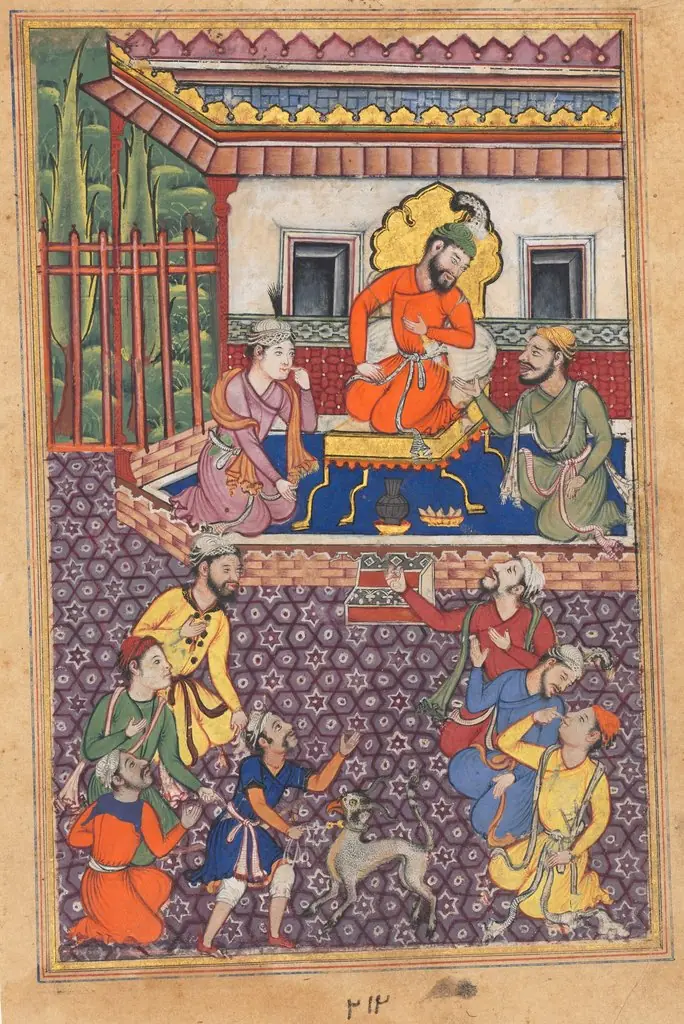 The court of the Raja of Ujjain, from a Tuti-nama (Tales of a Parrot): Forty-sixth Night
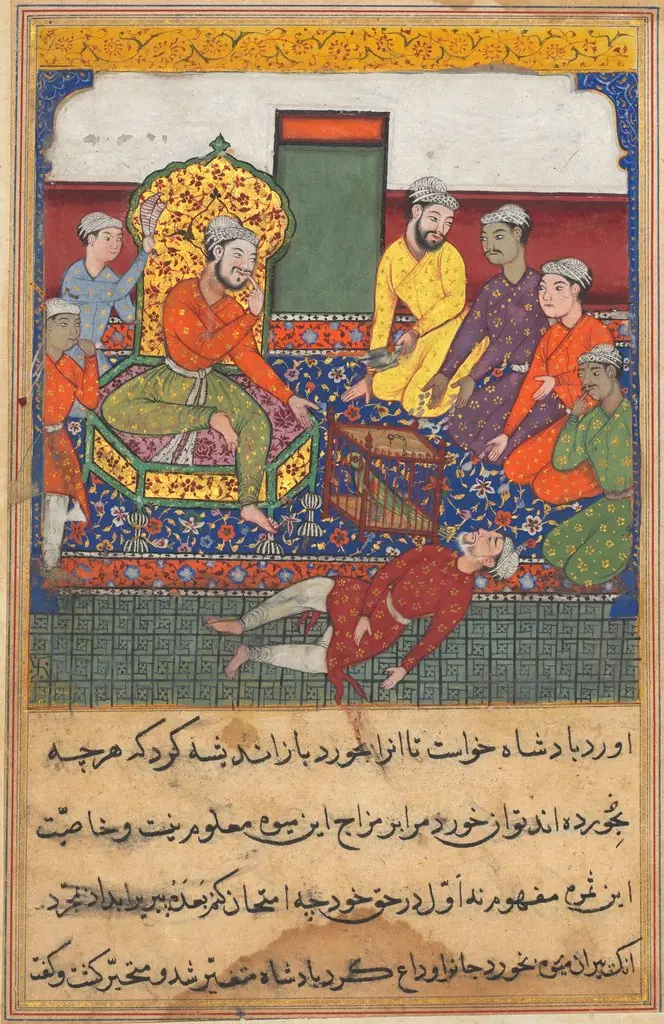 The old man eats of the fruit of the Tree of Life, but drops dead, from a Tuti-nama (Tales of a Parrot): Ninth Night
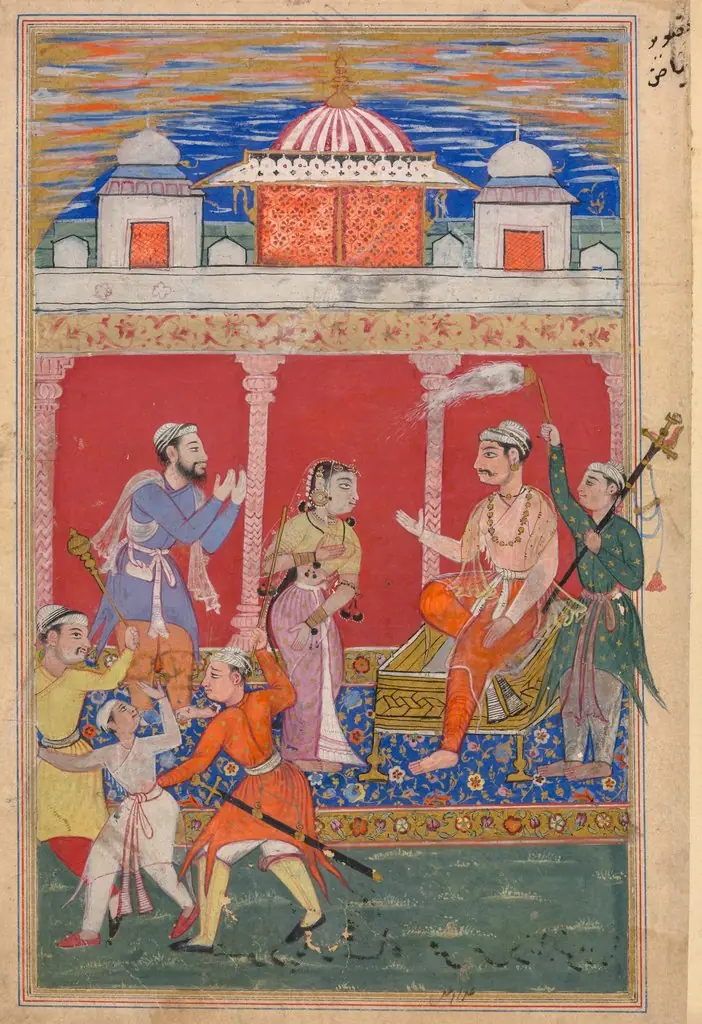 Page from Tales of a Parrot (Tuti-nama): text page
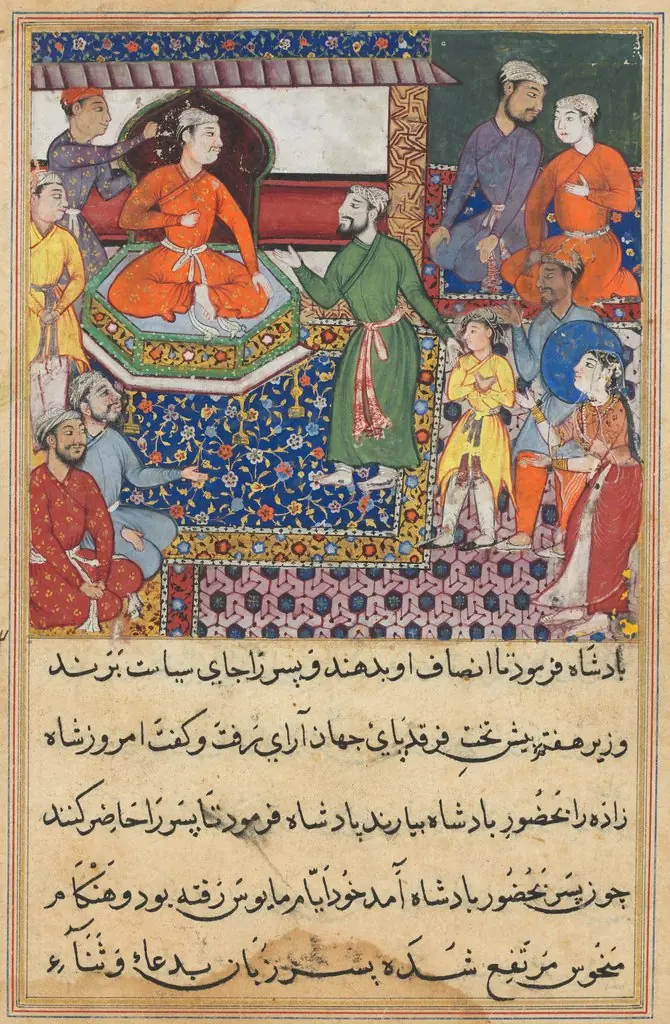 The handmaiden again pleads for the death of the prince, from a Tuti-nama (Tales of a Parrot): Eighth Night
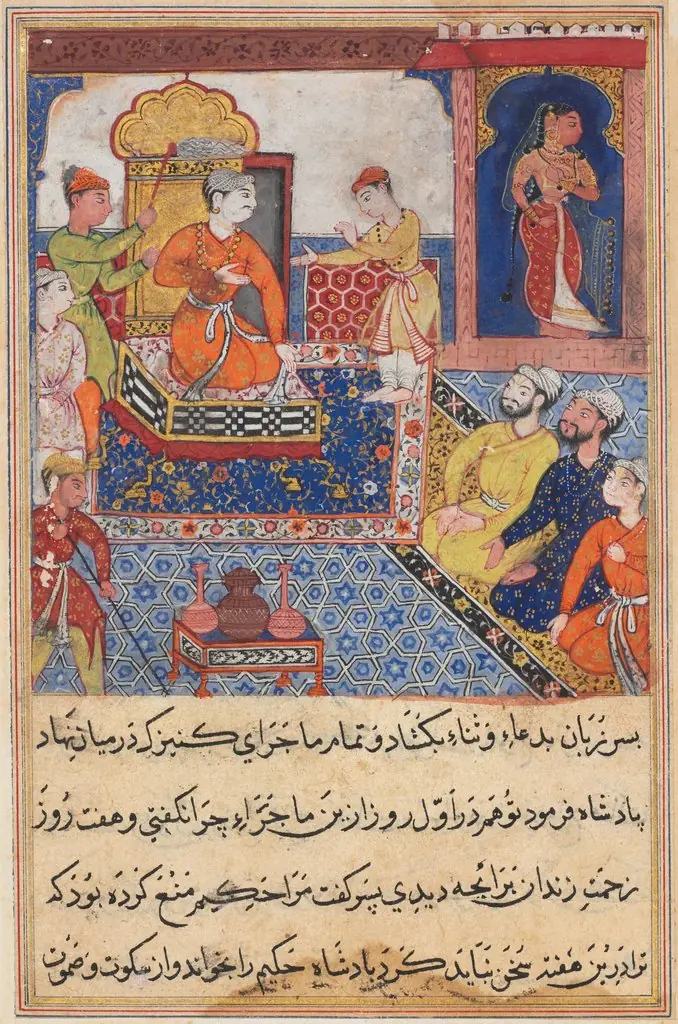 The young prince recounts his experiences to his father, the king, from a Tuti-nama (Tales of a Parrot): Eighth Night
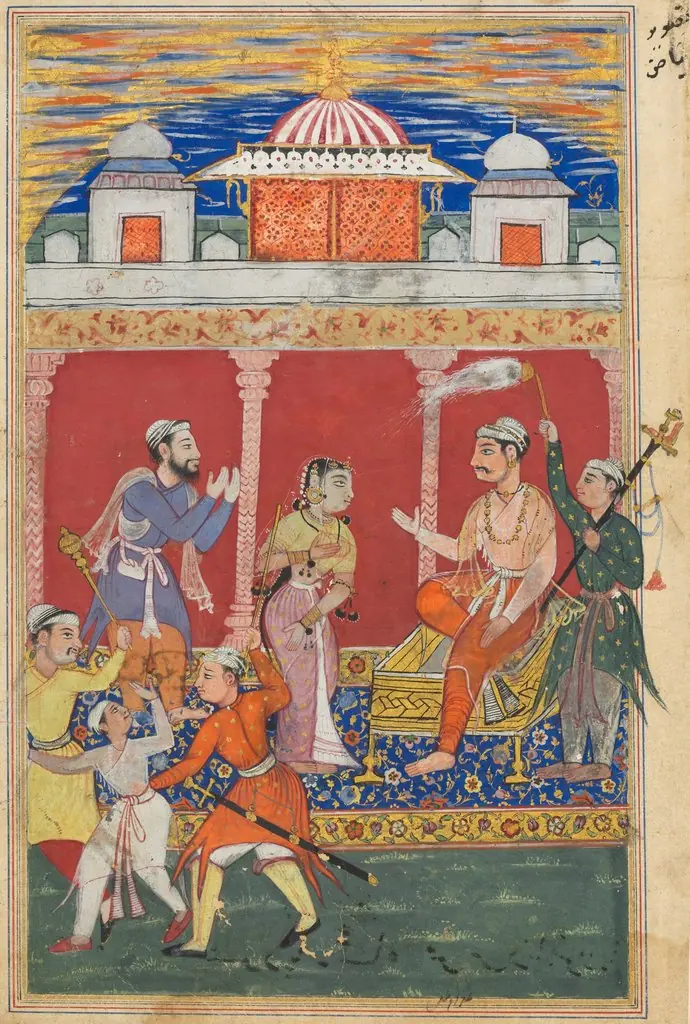 The prince’s ordeal continues, he is ordered away to be executed for the fifth time, from a Tuti-nama (Tales of a Parrot): Eighth Night
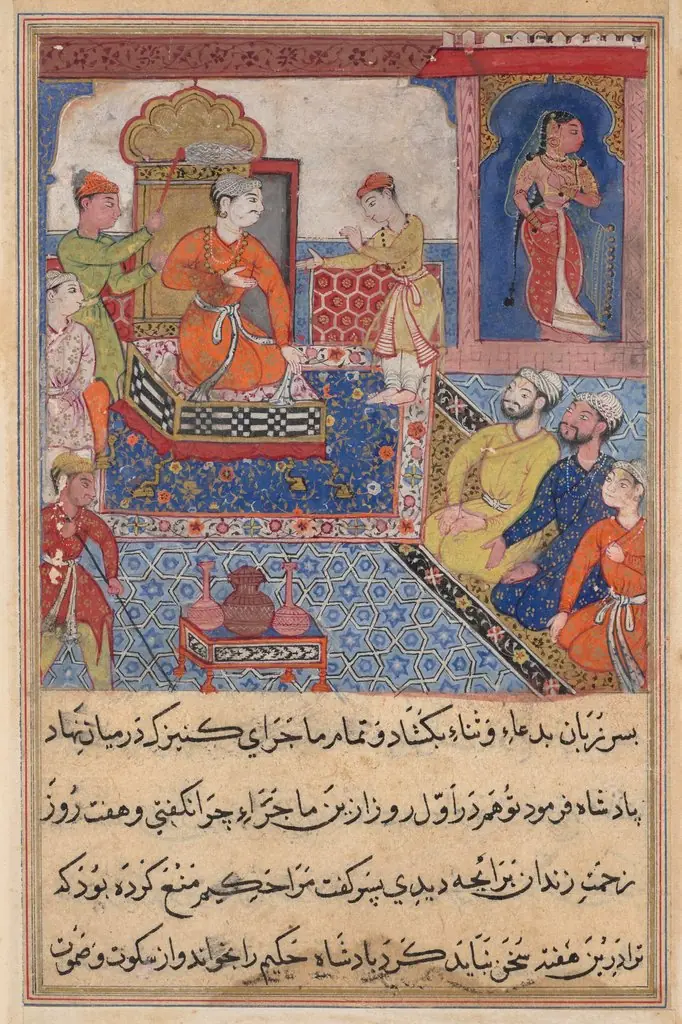 Page from Tales of a Parrot (Tuti-nama): text page