Artwork
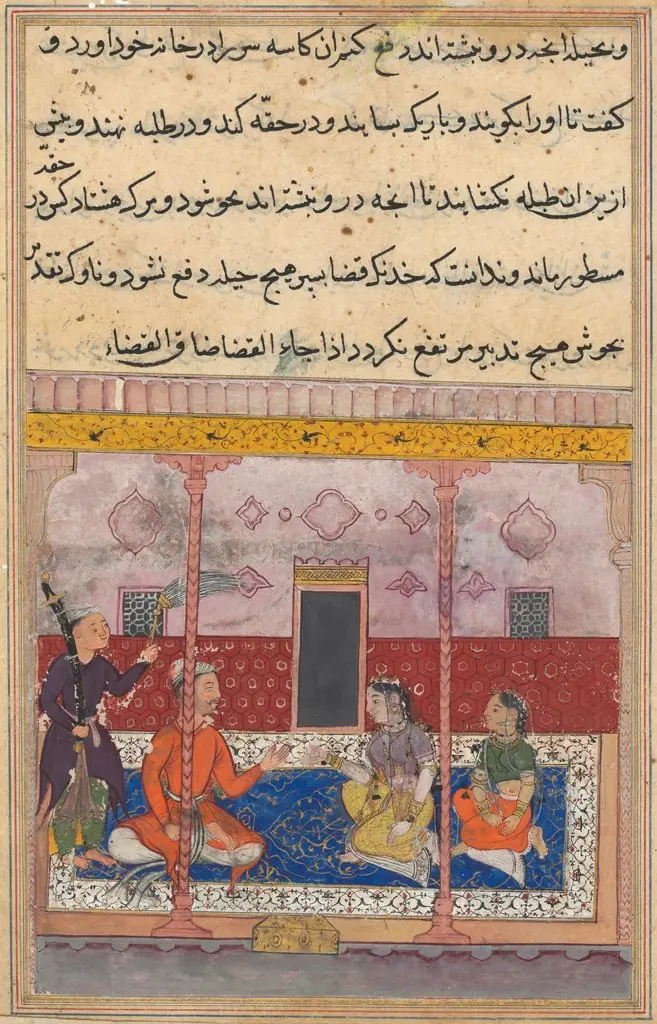
The king of the Ocean, having assumed human form, arrives at the court of the Raja, from a Tuti-nama (Tales of a Parrot): Eleventh Night
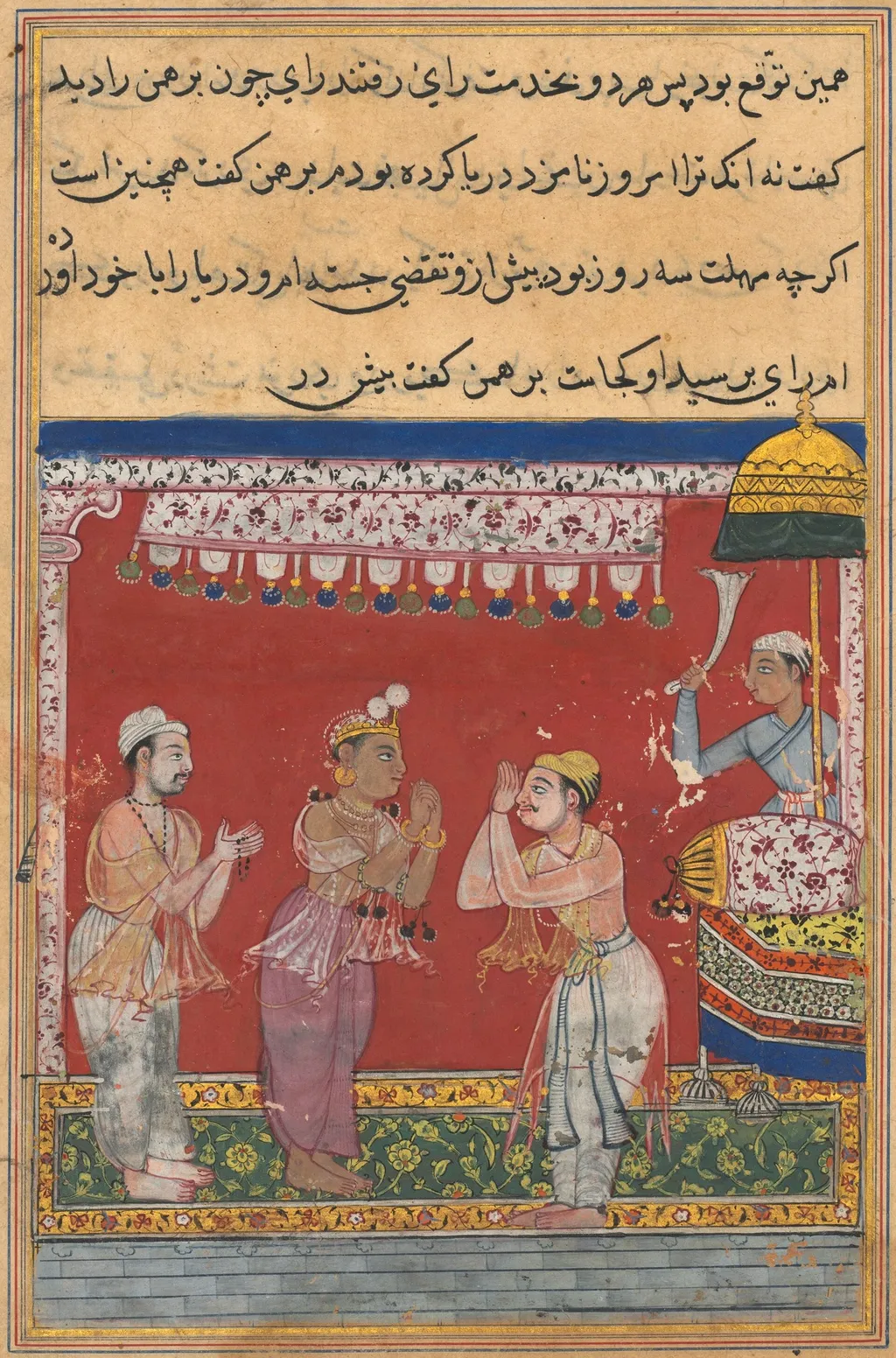
The king of the Ocean, having assumed human form, arrives at the court of the Raja, from a Tuti-nama (Tales of a Parrot): Eleventh Night is an unspecified painting. It dates from 1560 and is held in the collection of the Cleveland Museum of Art. The work depicts a narrative scene set within a vivid red interior framed by an ornate border.
About this work
Overview
Central to the composition is a crowned figure in pink, holding a fan and caught in a dance-like pose.
The work depicts a narrative scene set within a vivid red interior framed by an ornate border. Central to the composition is a crowned figure in pink, holding a fan and caught in a dance-like pose. Flanking him are two attendants: one in a white cap, hands clasped in observation, and another in a blue sash, raising a golden horn while grasping an embellished bag. Arabic script crowns the upper edge, indicating a literary source.
Subject & Meaning
The painting illustrates a moment from the eleventh night of a Tuti‑nama, a collection of parrot tales, in which the oceanic king assumes human form to appear before a raja’s court. The regal attire and ceremonial objects underscore the king’s transformed status, while the surrounding figures convey courtly reception and curiosity toward the supernatural visitor.
Technique & Style
Executed with bold, saturated pigments, the artist emphasizes contrast between the crimson walls and the gold accents of the figures’ garments and accessories. Intricate patterning on the border and the use of Arabic calligraphy reflect a synthesis of Persianate manuscript traditions with painted panel conventions, creating a vivid, decorative surface.
History & Provenance
The piece originates from a manuscript illustrating the Tuti‑nama, a genre popular in the Persianate world that combined prose and illustration. Though the precise date and creator remain unidentified, the work’s stylistic traits align with late medieval Persian miniature production. It entered the Cleveland Museum of Art’s collection through acquisition of a larger manuscript volume.
Context
During the period when illustrated storybooks flourished, depictions of mythic rulers adopting human guise were common, serving both entertainment and moral instruction. The inclusion of Arabic script and courtly attire situates the scene within a cultural milieu that valued literary sophistication and visual opulence.
Legacy
As an example of narrative miniature art, the painting contributes to our understanding of cross‑cultural storytelling practices and the visual vocabulary used to convey regal transformation. Its preservation within a major museum collection ensures continued scholarly access to the artistic conventions of the Tuti‑nama tradition.
Artist & collection

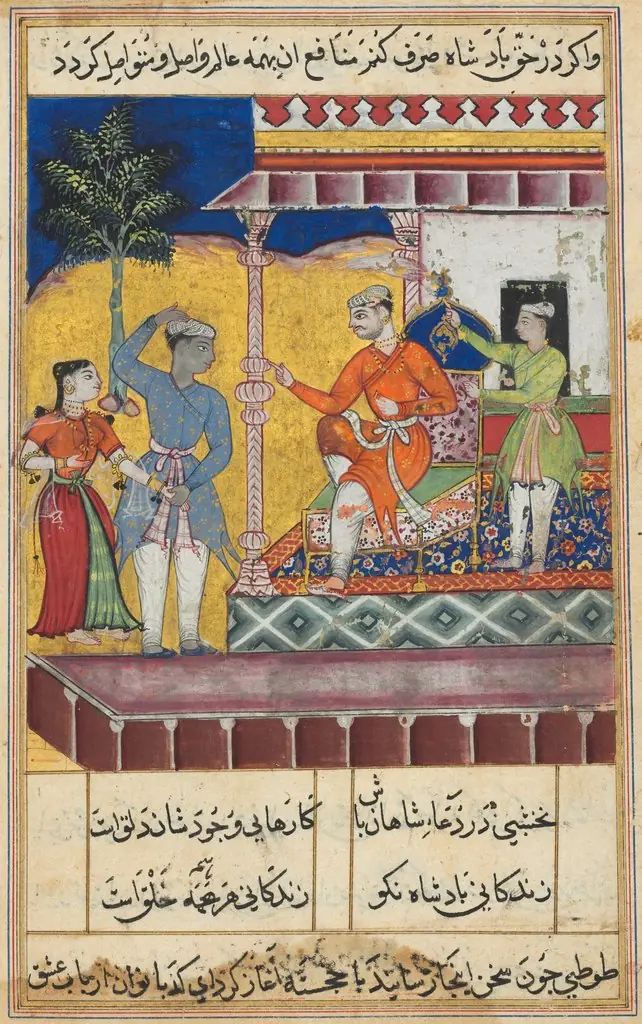 The rejuvenated old man and the daughter of the king of the jinns take leave of the King of Kings, from a Tuti-nama (Tales of a Parrot): Seventh Night
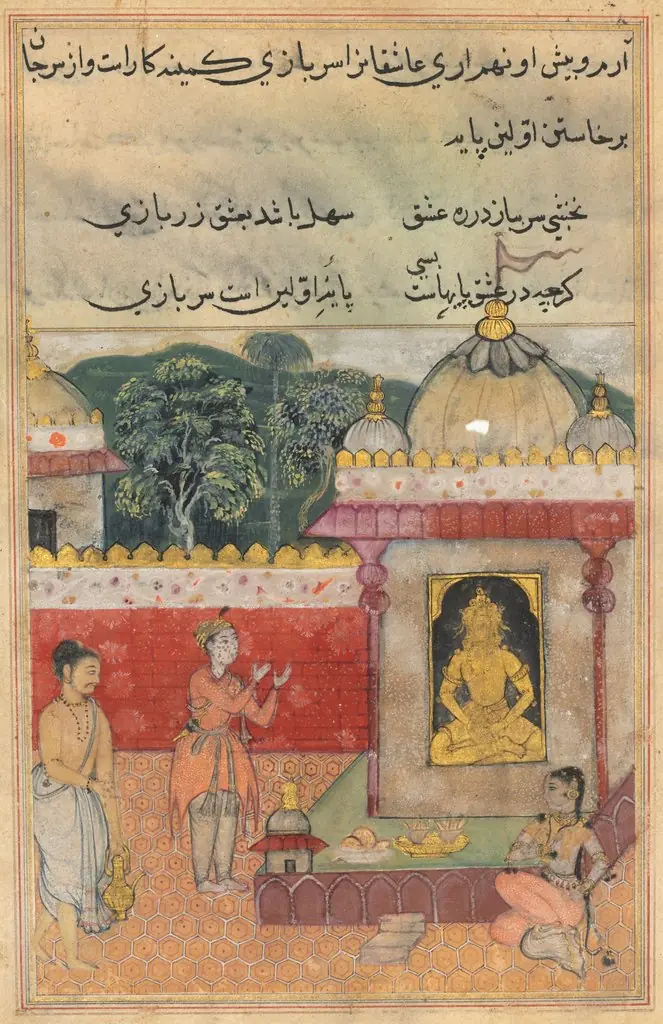 The Raja’s son vows to sever his head and offer it to the image if he is united with the princess he has seen in the temple, from a Tuti-nama (Tales of a Parrot): Thirty-fourth Night
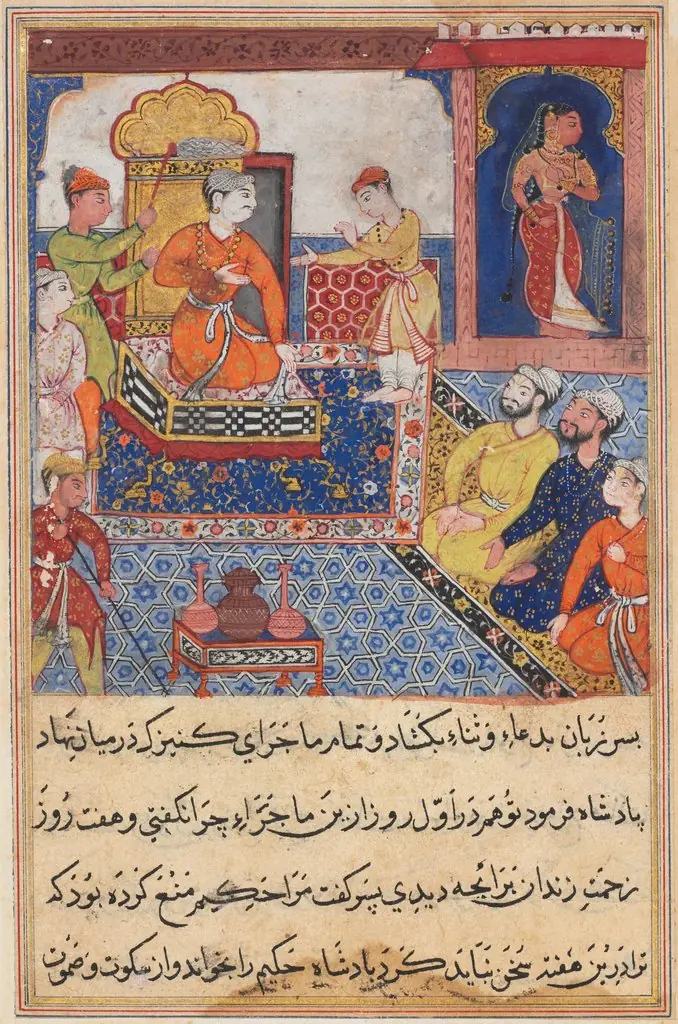 The young prince recounts his experiences to his father, the king, from a Tuti-nama (Tales of a Parrot): Eighth Night
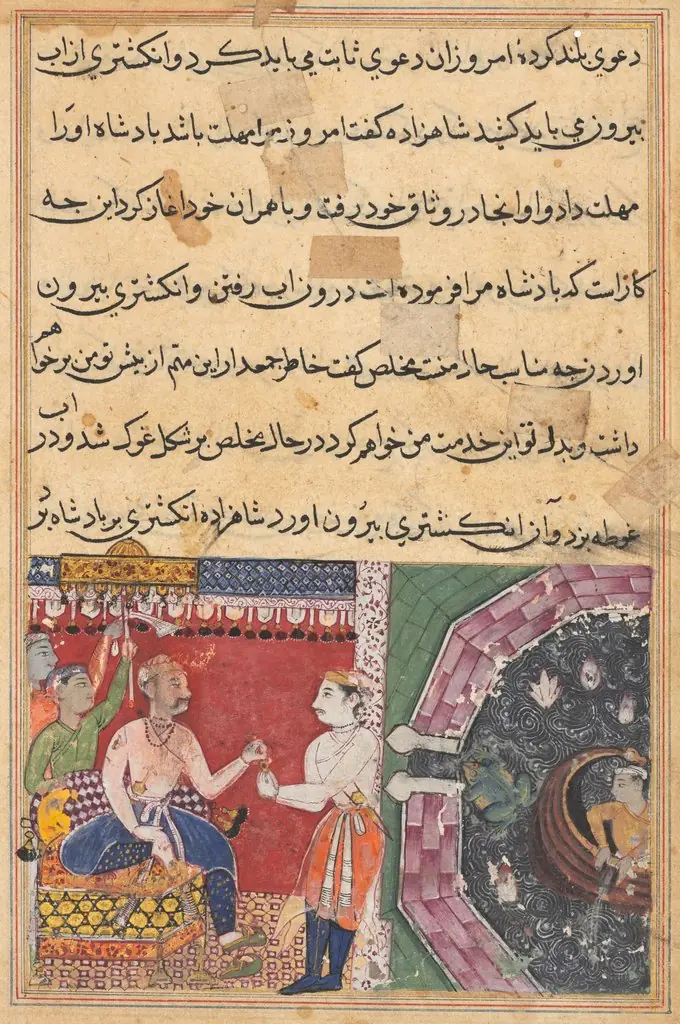 The prince, with the help of Mukhlis who changes into a frog, recovers the ring lost in the sea, and returns it to the king, from a Tuti-nama (Tales of a Parrot): Eighteenth Night
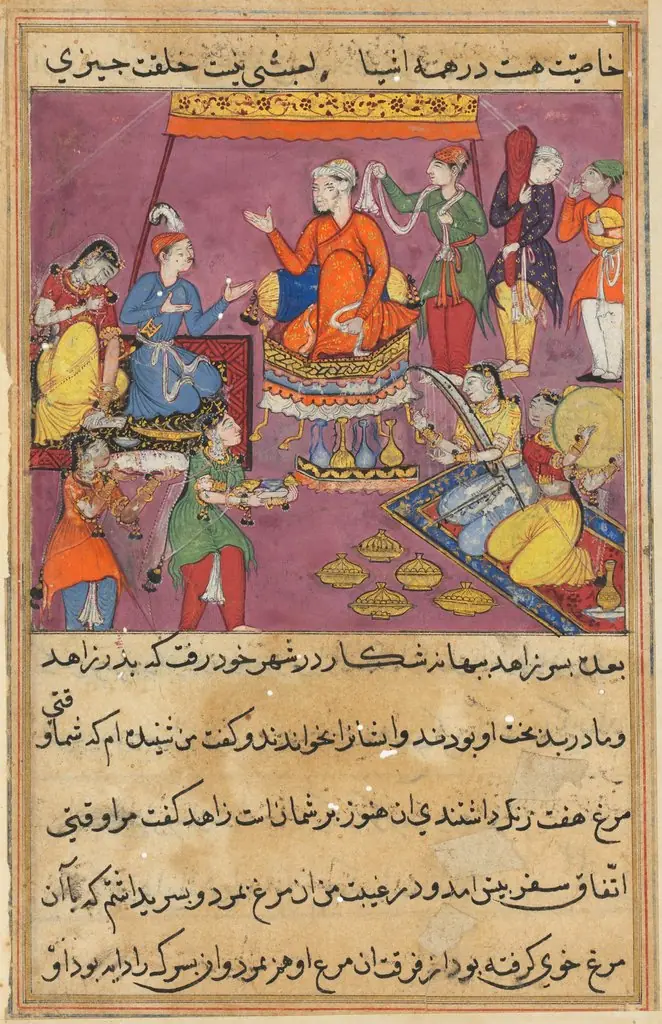 The king gives his daughter in marriage to the pious man’s son, from a Tuti-nama (Tales of a Parrot): Fifty-second Night
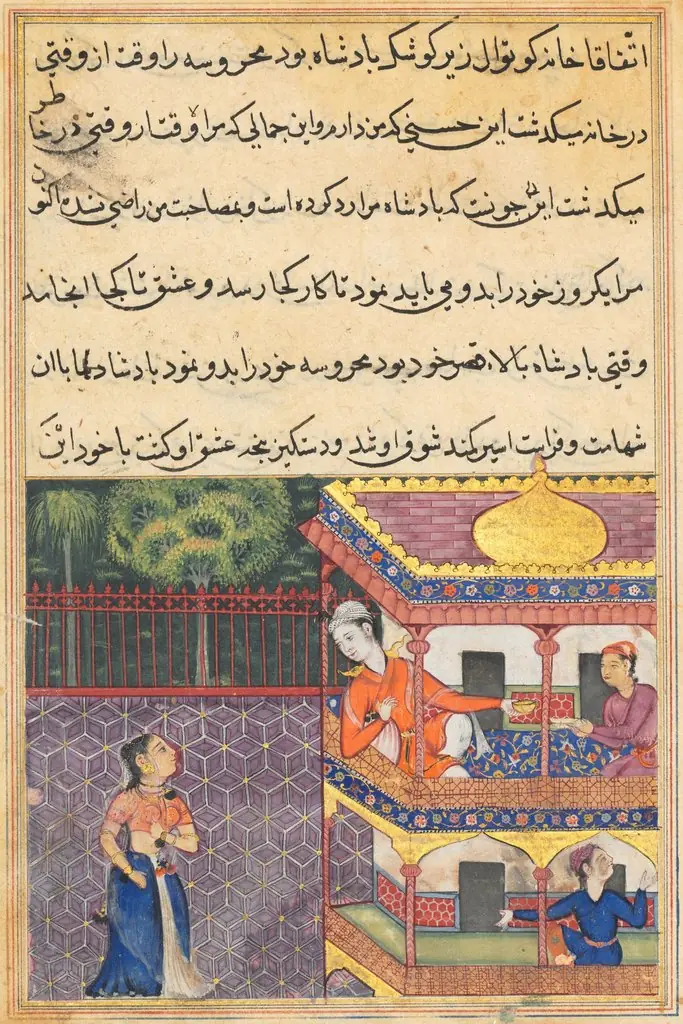 The king of Zabul sees Mahrusa from his palace balcony, from a Tuti-nama (Tales of a Parrot): Thirty-sixth Night
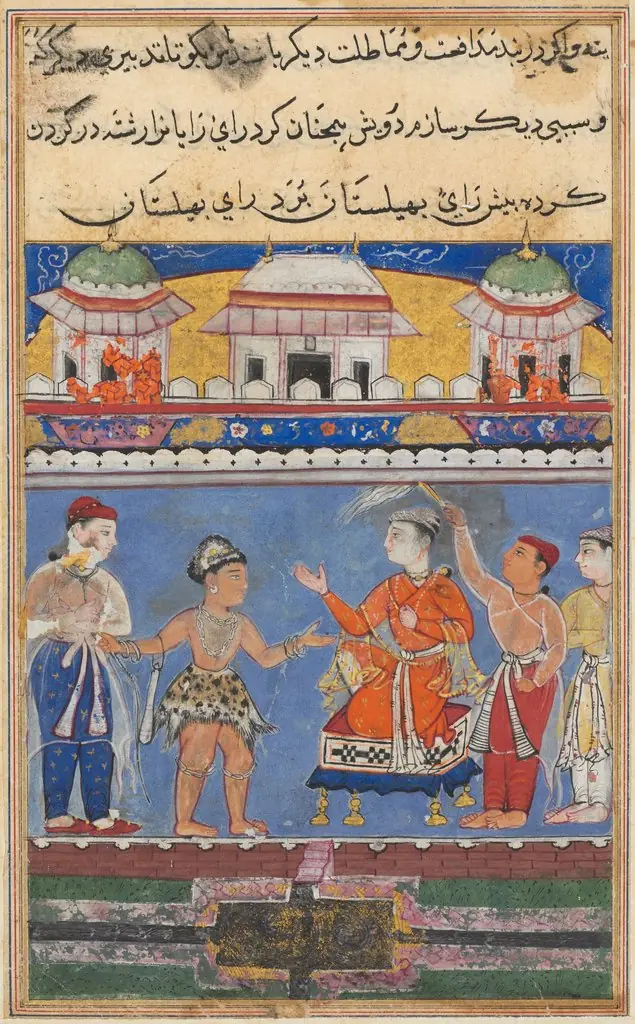 The dervish brings the King of Kings before the king of Bahilistan, from a Tuti-nama (Tales of a Parrot): Seventh Night
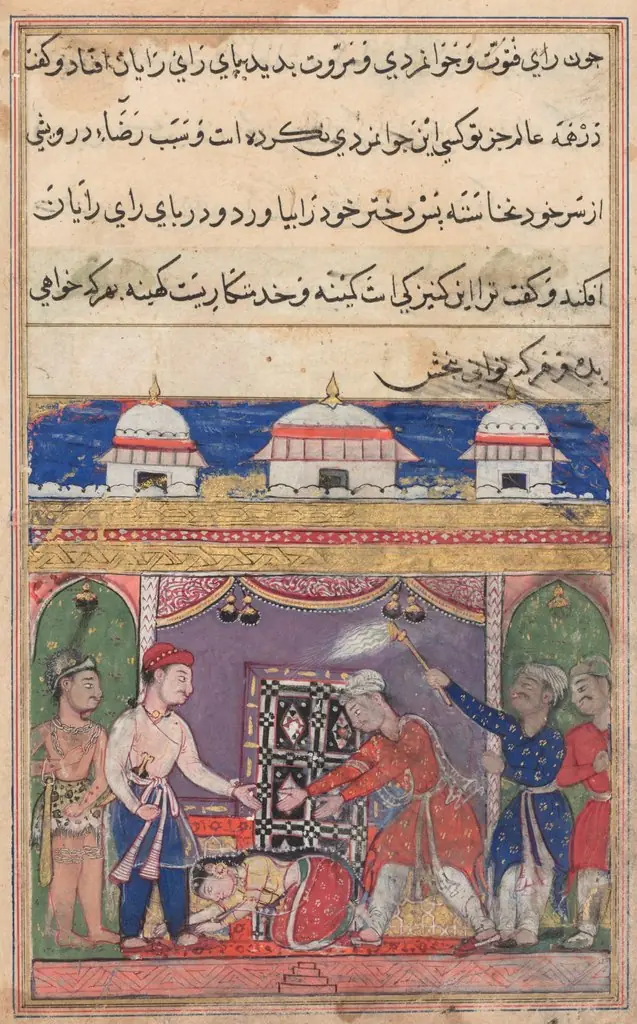 The king of Bahilistan offers his daughter to the King of Kings, from a Tuti-nama (Tales of a Parrot): Seventh Night
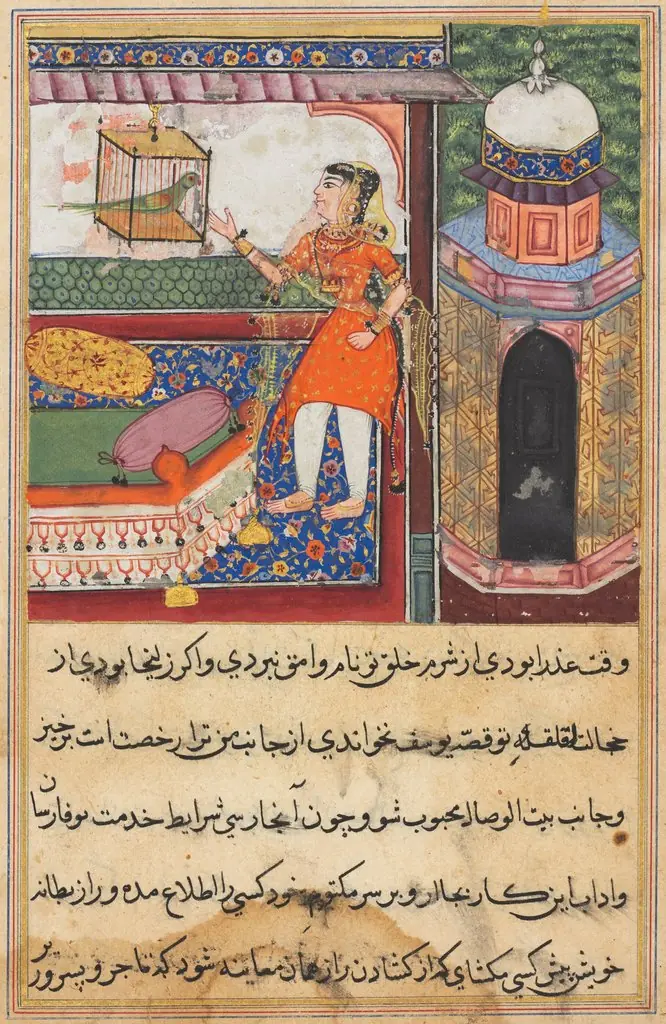 The Parrot Addresses Khujasta at the Beginning of the Tenth Night, from a Tuti-nama (Tales of a Parrot)
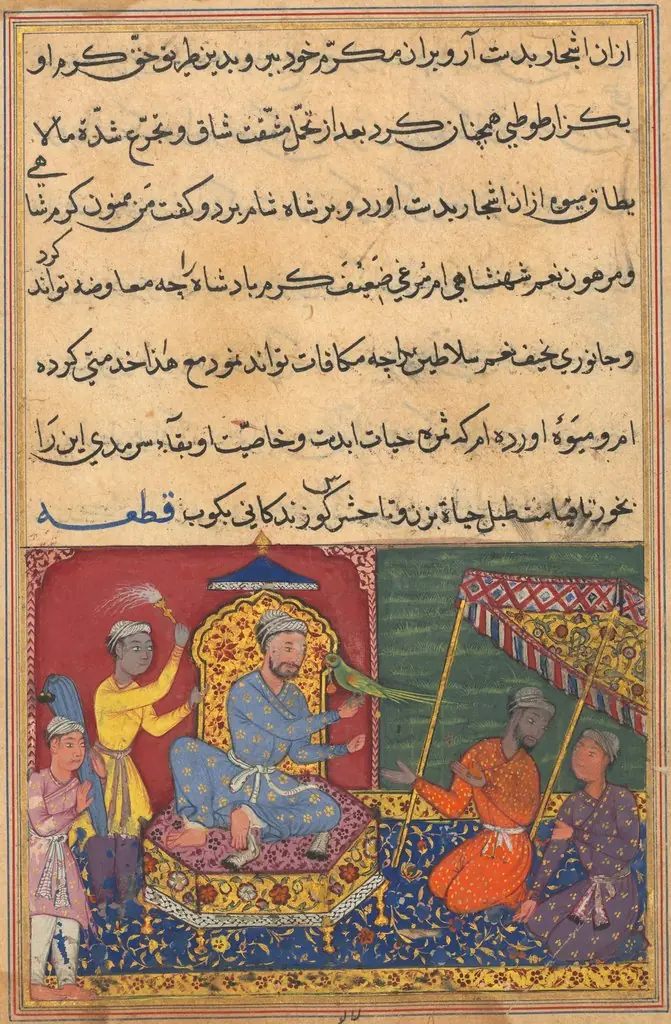 The parrot brings a fruit from the Tree of Life to the king of Syria, from a Tuti-nama (Tales of a Parrot): Ninth Night
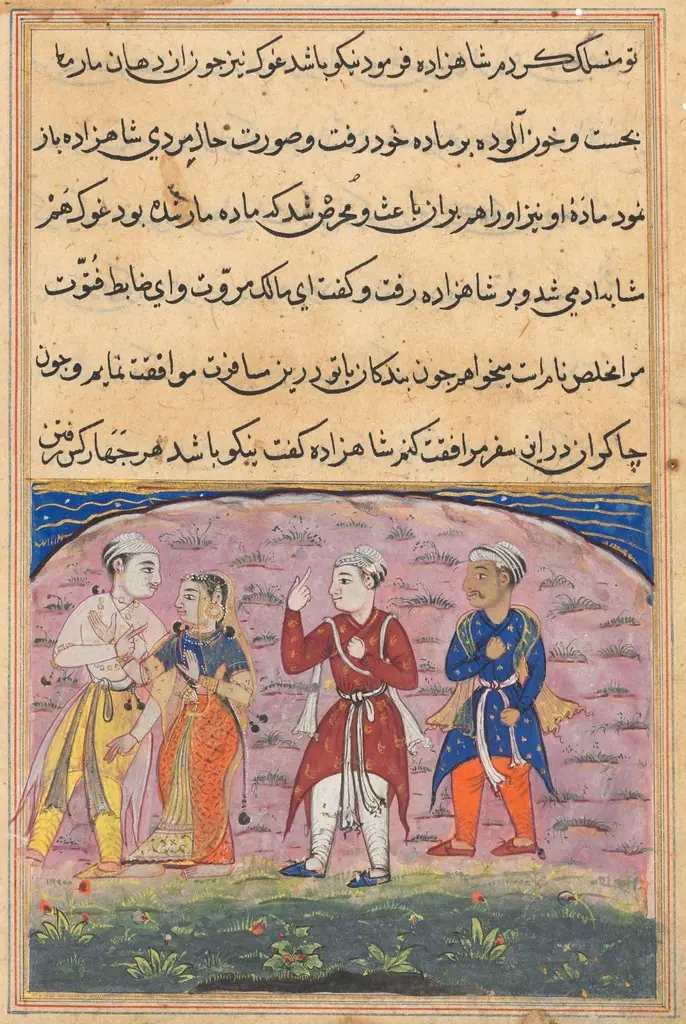 The prince and Nikfal are joined by Khalis and the Mukhlis who are the grateful snake and frog in human form, from a Tuti-nama (Tales of a Parrot): Eighteenth Night
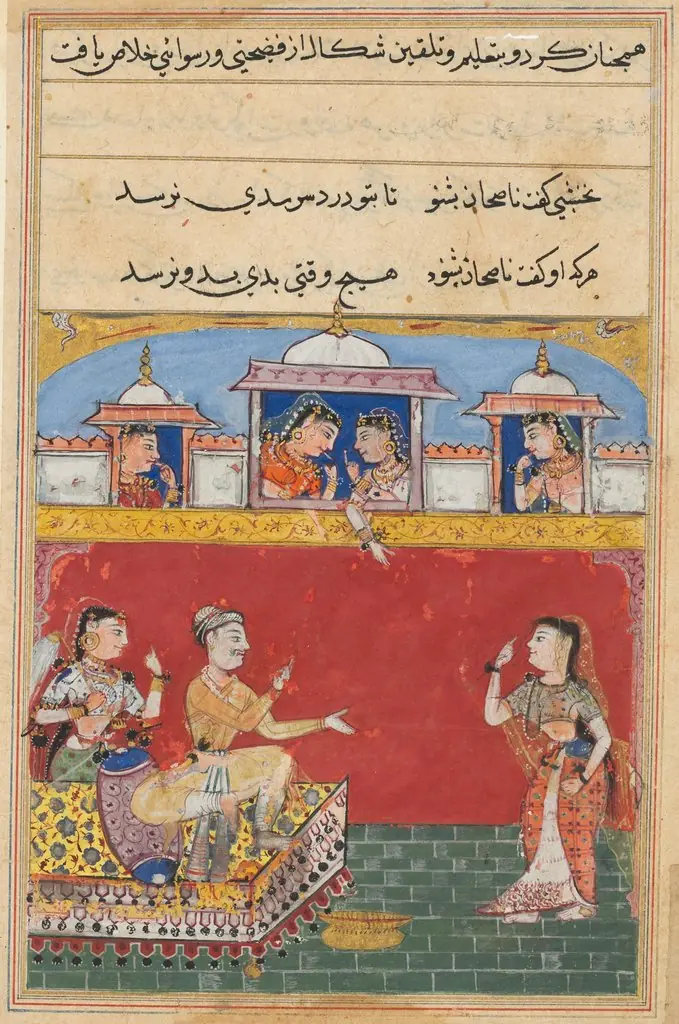 The daughter-in-law returns from her misadventure, feigning insanity, from a Tuti-nama (Tales of a Parrot): Sixteenth Night
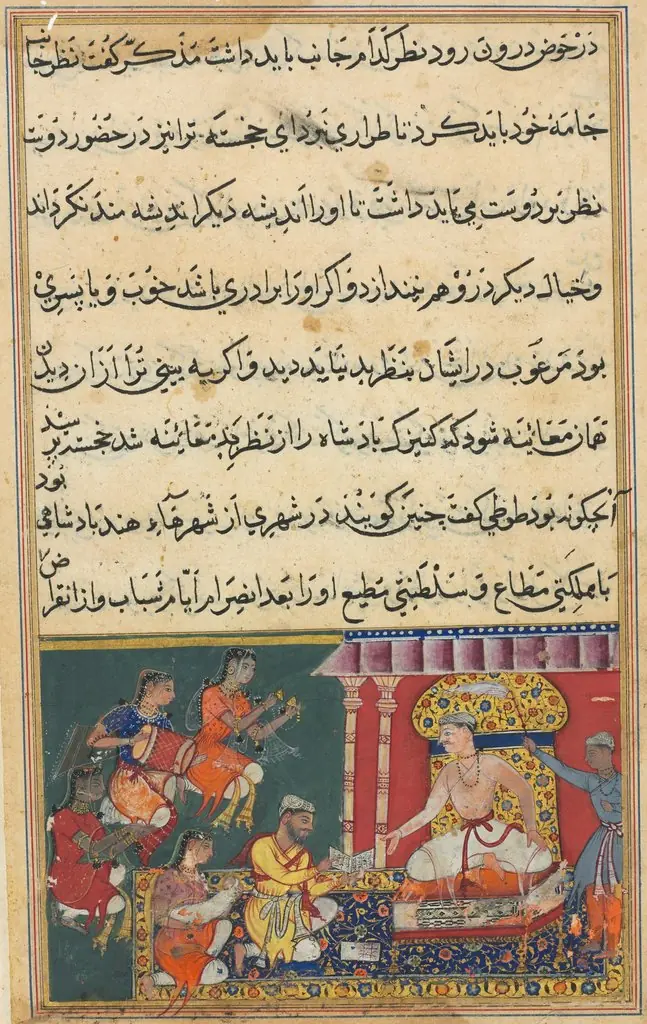 The astrologer predicts a calamity for the newly born prince in his thirteenth year, but one which he would be able to overcome, from a Tuti-nama (Tales of a Parrot): Eighth Night
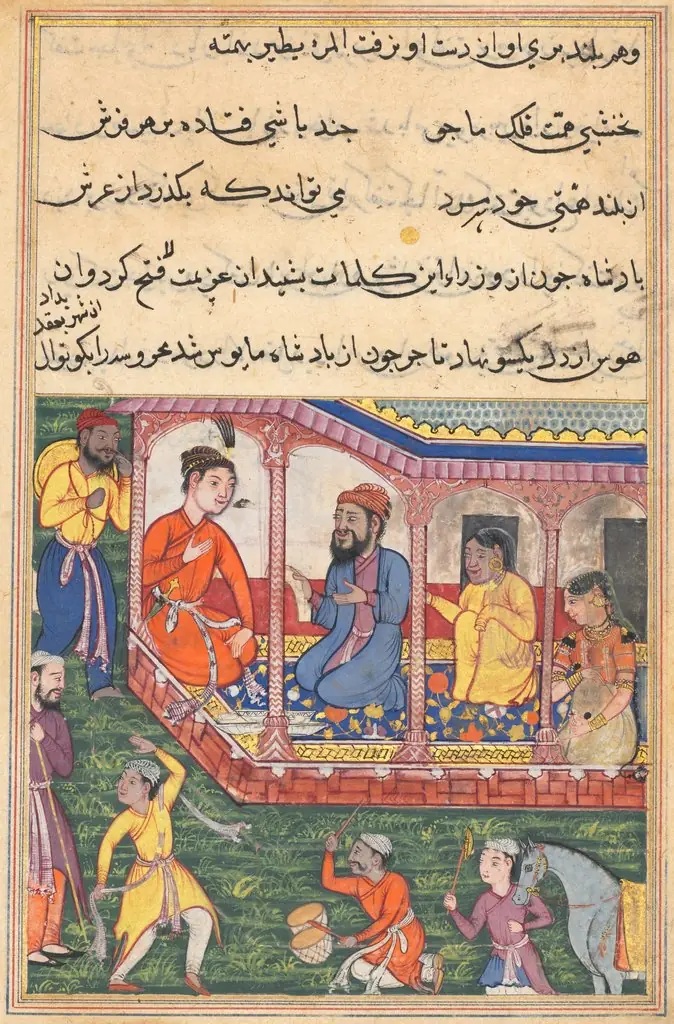 Mahrusa’s marriage to the prefect of the city, from a Tuti-nama (Tales of a Parrot): Thirty-sixth Night
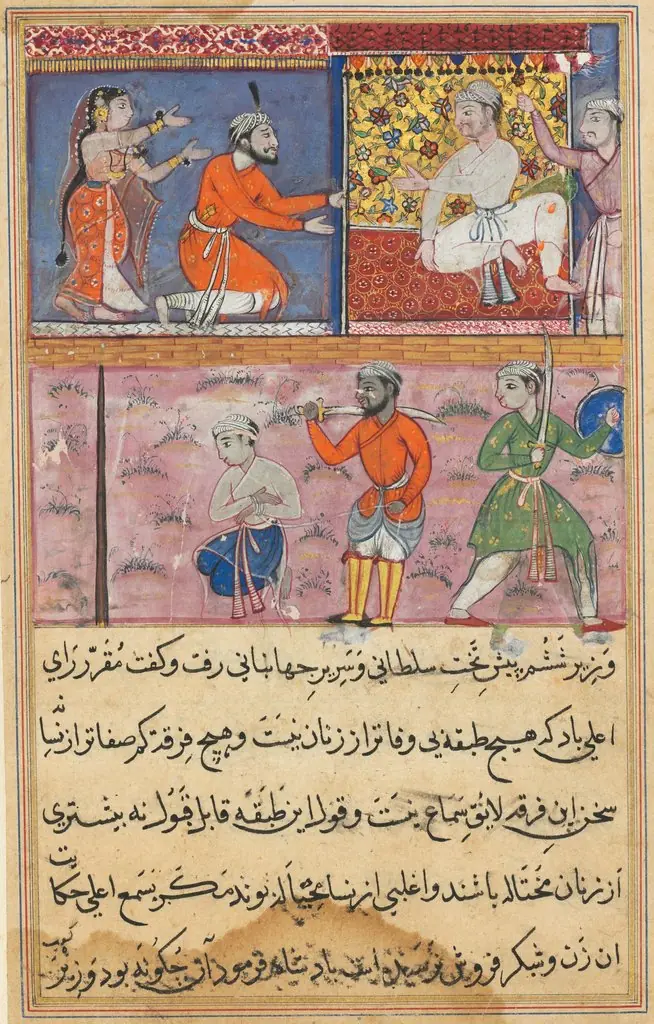 The prince sent back to the place of execution for the sixth time, from a Tuti-nama (Tales of a Parrot): Eighth Night
 The merchant has the hateful skull ground and put into a box, from a Tuti-nama (Tales of a Parrot): Twenty-third Night