Artwork
The fourth man digs at the spot where he dropped the shell, expecting jewels, but discovering mere iron, from a Tuti-nama (Tales of a Parrot): Forty-seventh Night
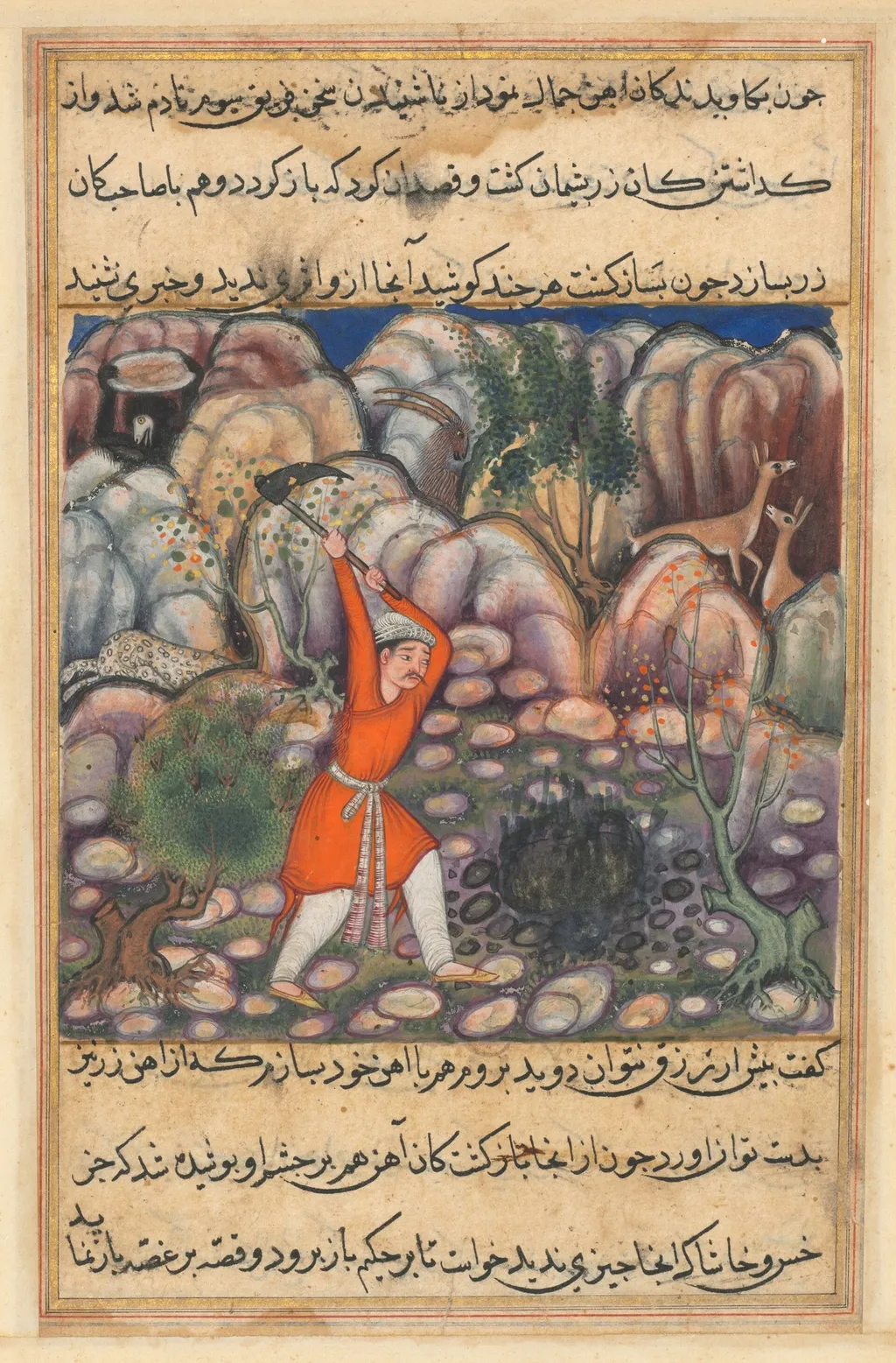
The fourth man digs at the spot where he dropped the shell, expecting jewels, but discovering mere iron, from a Tuti-nama (Tales of a Parrot): Forty-seventh Night is an unspecified painting. It dates from 1560 and is held in the collection of the Cleveland Museum of Art.
About this work
Overview
The work illustrates a scene from the Persian illustrated manuscript known as the Tuti‑nama, or Tales of a Parrot, specifically the forty‑seventh night.
The work illustrates a scene from the Persian illustrated manuscript known as the Tuti‑nama, or Tales of a Parrot, specifically the forty‑seventh night. A man dressed in vivid orange robes is shown digging at the base of a tree, surrounded by oversized, irregular rocks and mushroom‑like forms. Other figures in patterned garments observe him, while a flat blue band crowns the composition and Arabic calligraphy frames the image along its top and bottom edges.
Subject & Meaning
The narrative captures the moment when the fourth character, believing he has uncovered a treasure chest, instead finds only a piece of iron. The exaggerated posture and bright garment emphasize his frustration and the moral lesson of misplaced expectations, a common theme in the didactic stories of the Tuti‑nama, which often warn against greed and folly.
Technique & Style
Executed in the miniature painting tradition of Persian manuscripts, the piece employs a limited palette of muted earth tones punctuated by the striking orange of the central figure. The composition relies on flat, decorative spaces, stylized foliage, and exaggerated rock forms, creating a storybook quality. Arabic script is integrated as a decorative border, reinforcing the manuscript’s textual origins.
History & Provenance
The painting originates from a 16th‑century Persian manuscript of the Tuti‑nama, a collection of moral tales illustrated for elite patrons. The manuscript was later disassembled, and individual folios entered the art market, eventually becoming part of a museum collection that specializes in Islamic art. Precise acquisition details remain limited due to the fragmentary nature of the source.
Context
Illustrated manuscripts like the Tuti‑nama served both literary and visual functions, providing a visual accompaniment to moral stories for educated audiences. The use of vivid colors and exaggerated figures reflects the Persian court’s taste for opulent, didactic art, while the inclusion of Arabic calligraphic borders underscores the integration of text and image typical of the period.
Artist & collection

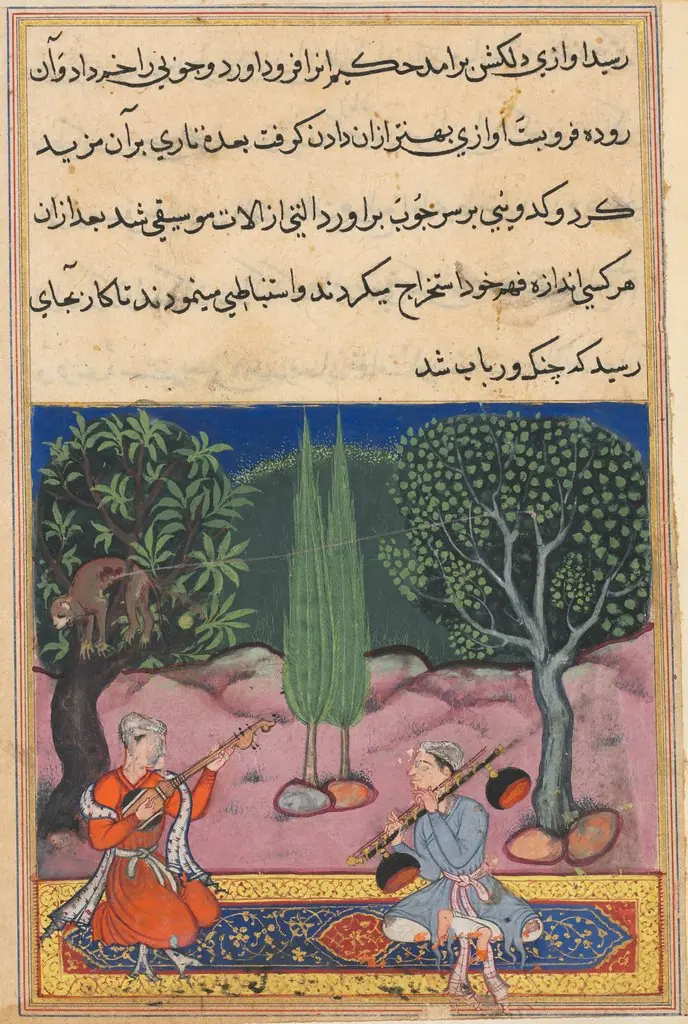 The invention of musical instruments from the intestines of a monkey, from a Tuti-nama (Tales of a Parrot): Fourteenth Night
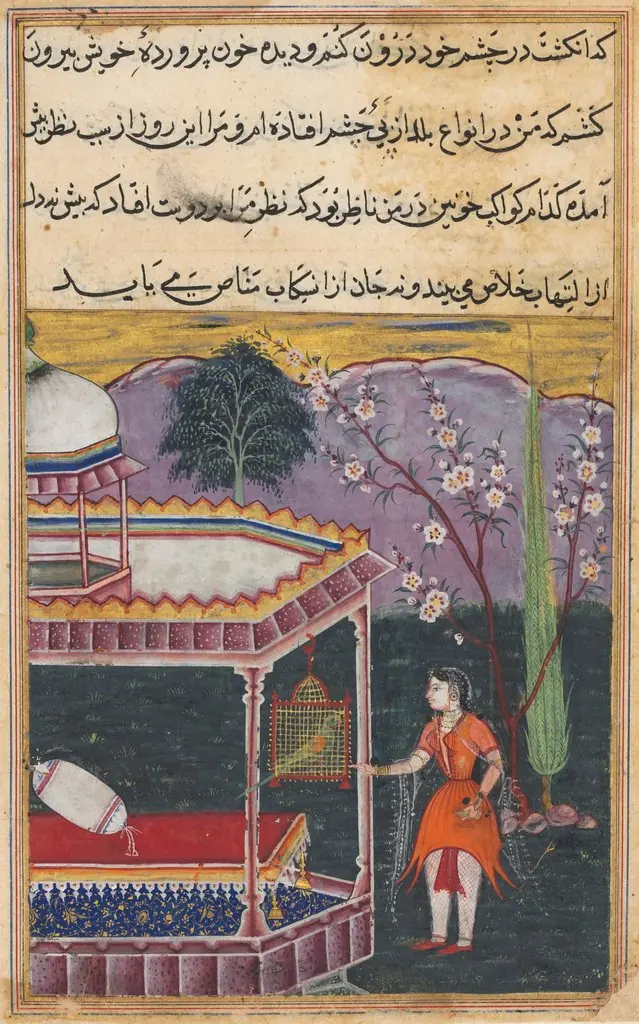 The Parrot Addresses Khujasta at the Beginning of the Eighth Night, from a Tuti-nama (Tales of a Parrot)
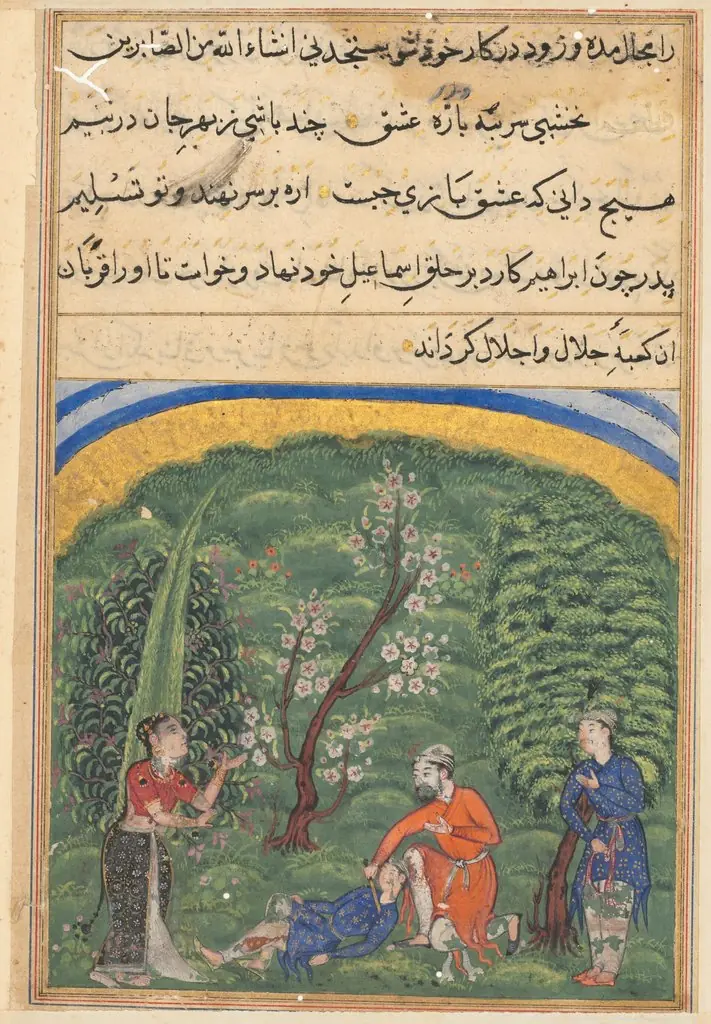 The sentinel in the employ of the Shah of Tabaristan prepares to sacrifice his son to the ghost of the Shah’s soul, from a Tuti-nama (Tales of a Parrot): Second Night
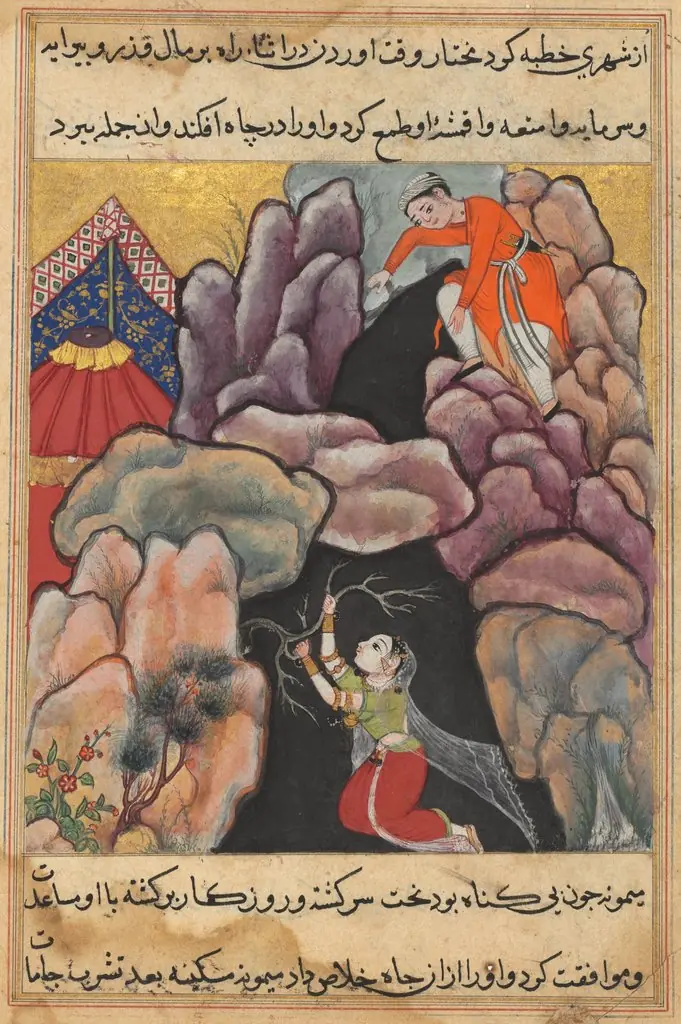 Mukhtar throws his wife Maimuna into the pit, but she saves herself, from a Tuti-nama (Tales of a Parrot): Twenty-fifth Night
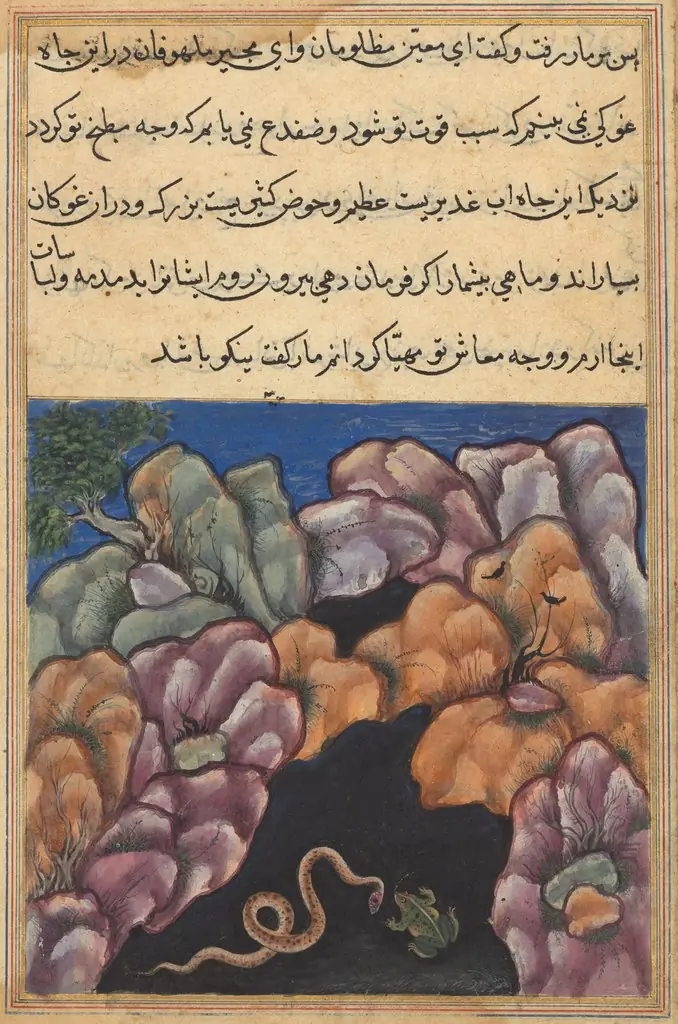 The snake enters into an argument with the frog, from a Tuti-nama (Tales of a Parrot): Twenty-sixth Night
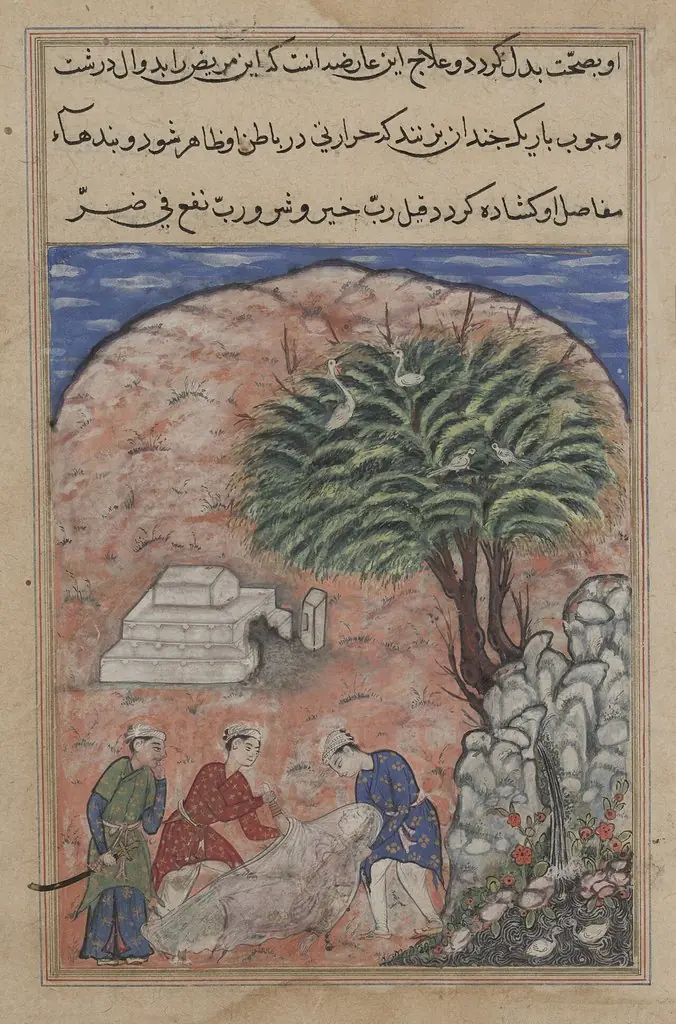 The suitors take the devotee’s daughter out of her tomb after breaking it open, when the physician discovers she is still alive, from a Tuti-nama (Tales of a Parrot): Twentieth Night
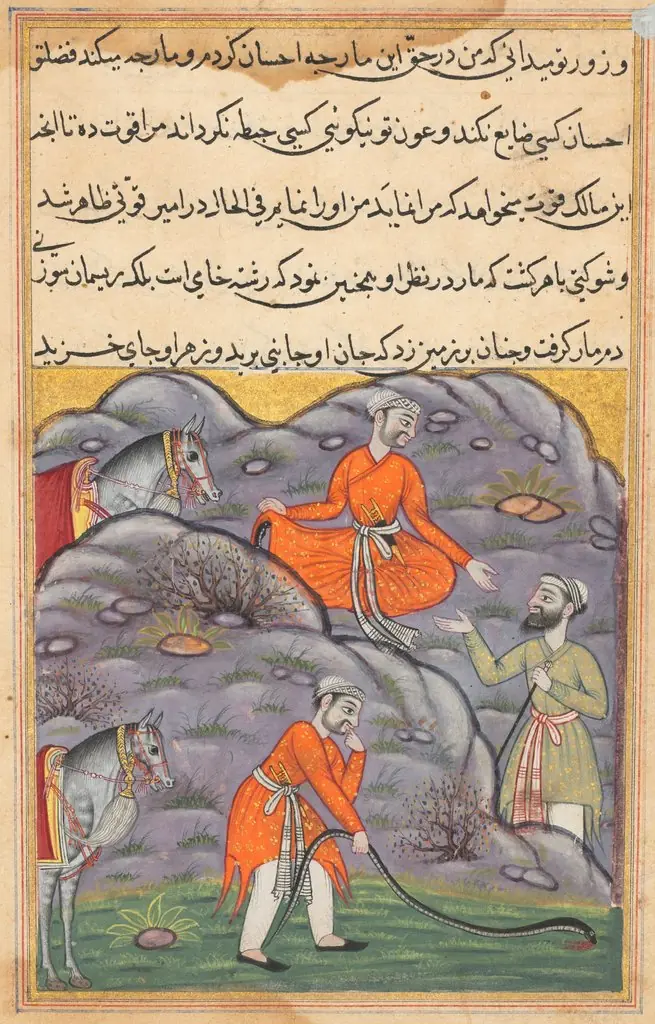 The Emir slays the snake after giving it shelter, from a Tuti-nama (Tales of a Parrot): Forty-fifth Night
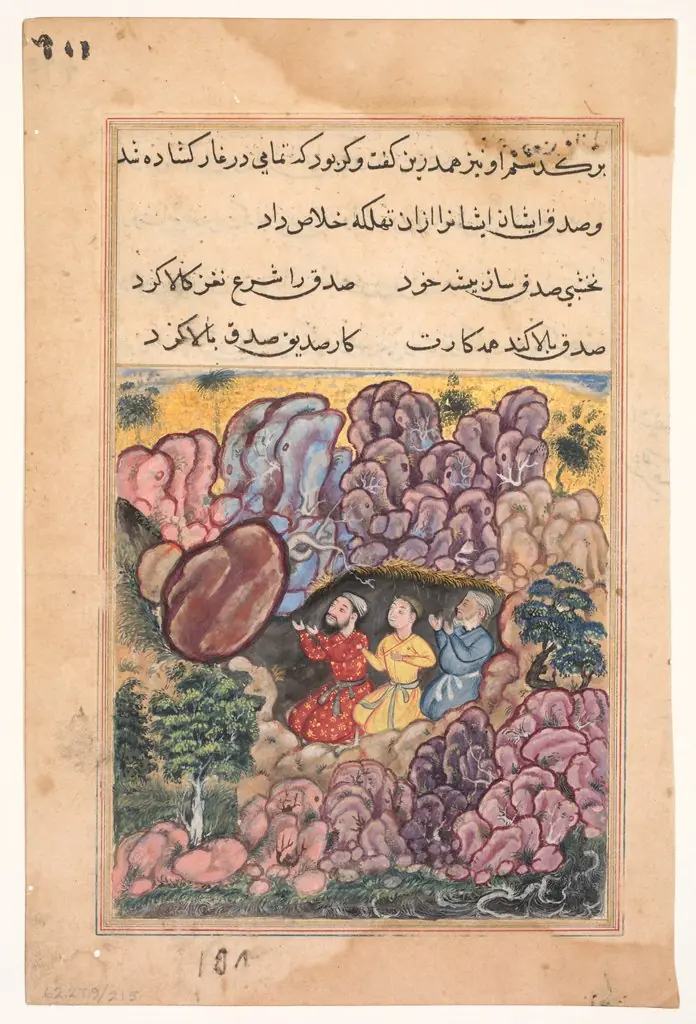 The tale of the three men trapped in a cave by a rolling boulder, from a Tuti-nama (Tales of a Parrot): Thirty-second Night
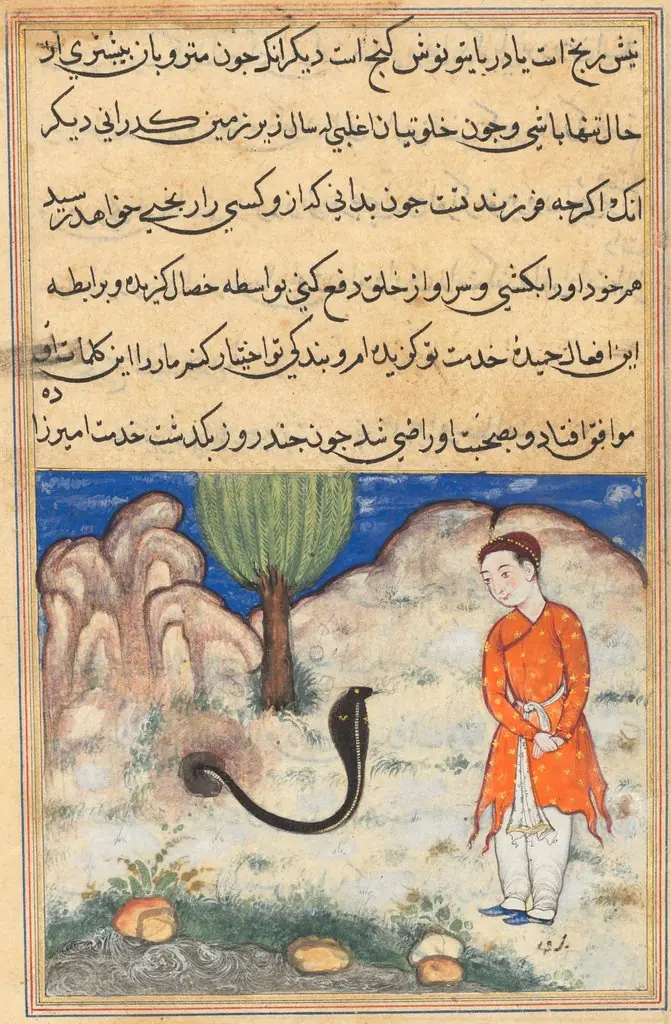 The prince, a son of the ruler of Sistan, enters the service of a snake, from a Tuti-nama (Tales of a Parrot): Thirty-seventh Night