Artwork
Tantric Manuscript, "Sangrahani Sutra"
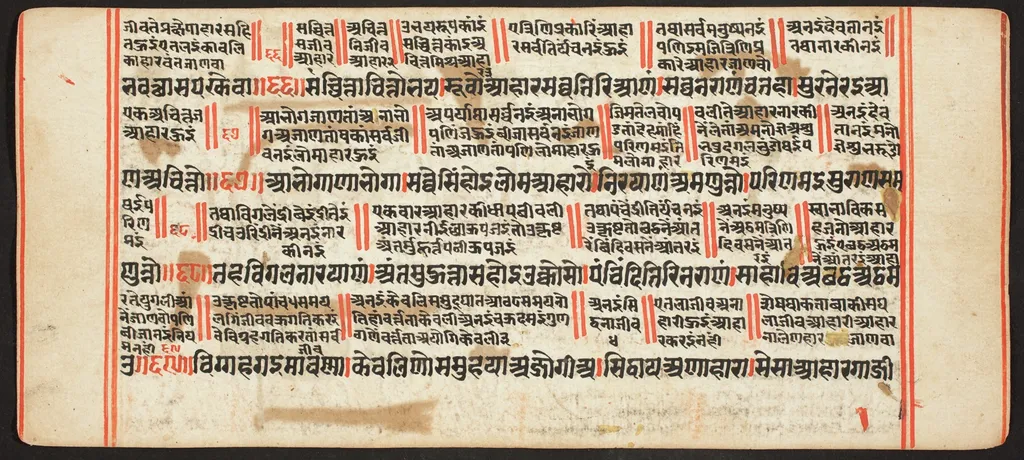
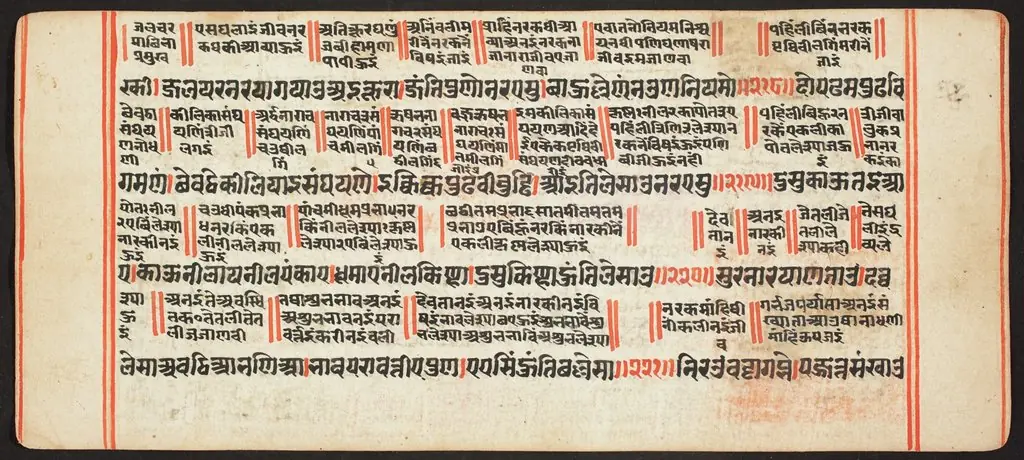
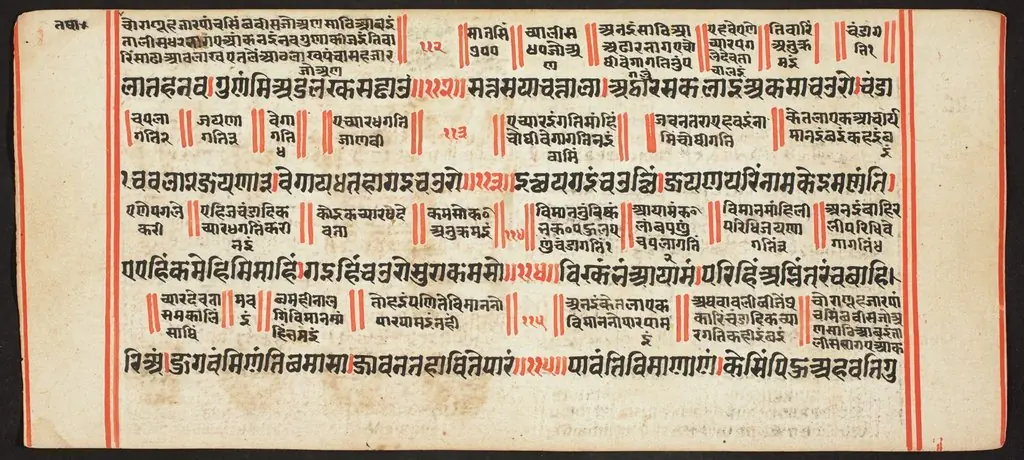
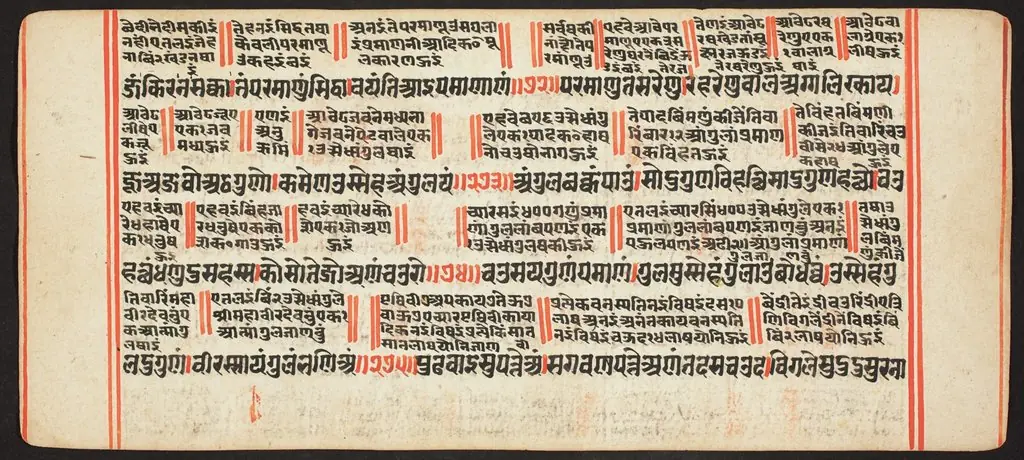
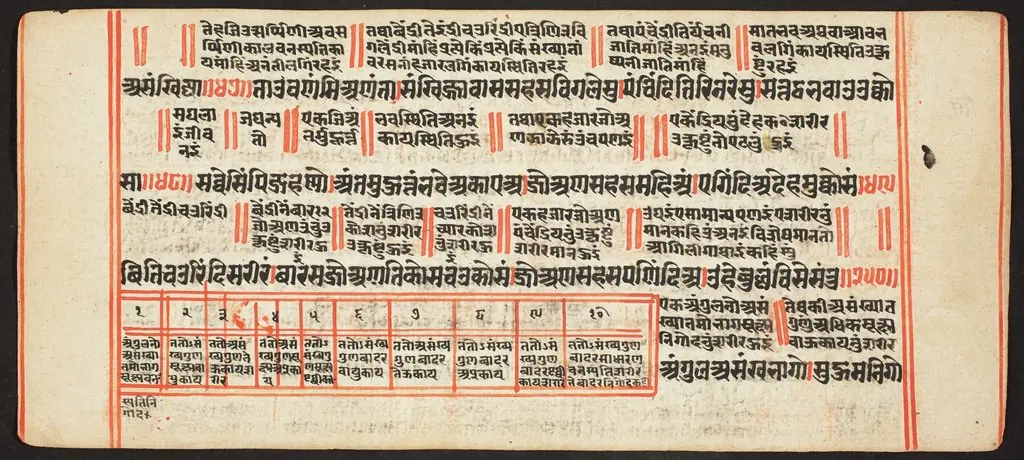
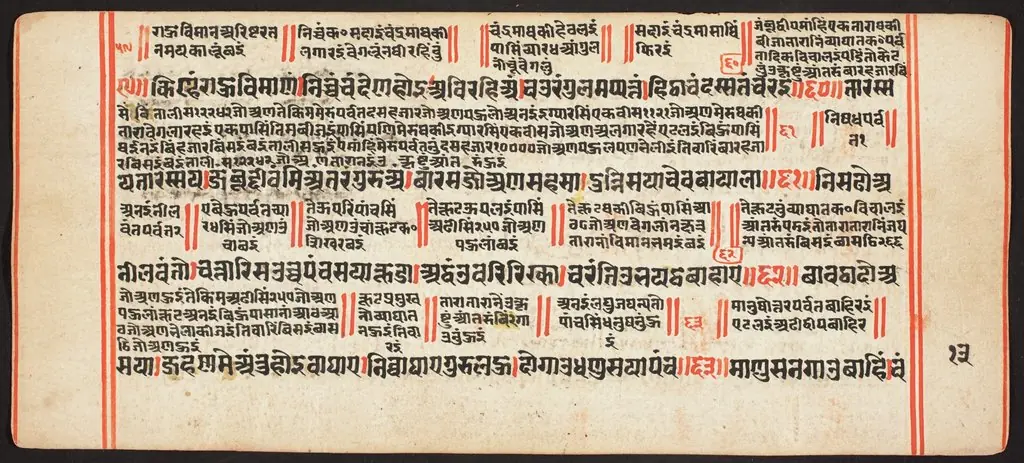
Tantric Manuscript, "Sangrahani Sutra" is an unspecified painting by Unknown. It is held in the collection of the Detroit Institute of Arts. This manuscript page contains the Sangrahani Sutra, a Buddhist text composed in Sanskrit.
About this work
Overview
Its unadorned format distinguishes it from illustrated religious codices, emphasizing textual preservation over visual ornamentation.
This manuscript page contains the Sangrahani Sutra, a Buddhist text composed in Sanskrit. Crafted on palm leaf or paper, it reflects the scribal traditions of medieval South Asia. The surface shows signs of age—yellowing, wear, and subtle creasing—indicating centuries of handling and storage. Its unadorned format distinguishes it from illustrated religious codices, emphasizing textual preservation over visual ornamentation.
Subject & Meaning
The Sangrahani Sutra belongs to the Mahayana Buddhist canon, offering doctrinal summaries and ethical guidelines for monastic practice. Its content, structured in dense script, served as a reference for study and recitation rather than public display. The absence of imagery aligns with ascetic traditions that prioritized the purity of the spoken and written word over iconographic representation.
Technique & Style
The script is written in a cursive North Indian variant of Brahmi, likely Devanagari or its precursor, with consistent stroke weight and rhythmic flow. Scribes used iron-gall ink or carbon-based pigments on a prepared surface, applying careful pressure to ensure legibility. Lines are tightly spaced, maximizing space on fragile materials, a practical response to the cost and scarcity of writing supports.
History & Provenance
Held by the Detroit Institute of Arts, the manuscript likely entered the collection through early 20th-century acquisitions of South Asian religious artifacts. Its origin is probable from a monastic center in eastern India or Nepal, where such sutras were copied by hand for centuries. The wear patterns suggest prolonged use in ritual or scholarly contexts before its removal from active religious life.
Context
During the medieval period, Buddhist communities across the Indian subcontinent maintained textual lineages through meticulous manuscript copying. The Sangrahani Sutra was one of many doctrinal compendia preserved in monastic libraries, often transmitted orally alongside written forms. Its plain appearance reflects the functional role of such texts: tools for transmission, not objects of veneration.
Legacy
As a surviving example of pre-modern Buddhist scribal culture, the manuscript offers insight into the material practices of religious learning. It contributes to linguistic, paleographic, and doctrinal studies, helping scholars trace the evolution of Buddhist thought and the transmission of texts across regions. Its preservation ensures continued access to a tradition that valued textual fidelity above visual splendor.
Artist & collection

 Domestic Scene
 Giacomo and Cardinal Marco, investing Andrea, Abbot of San Zeno, with his Benefice
 The Nymph of Fontainebleau
 Portrait of a Woman
 Madonna and Child with Saints in the Enclosed Garden
 Venus and Minerva
 Family Group of Four on Sofa
 Wall painting from Room H of the Villa of P. Fannius Synistor at Boscoreale
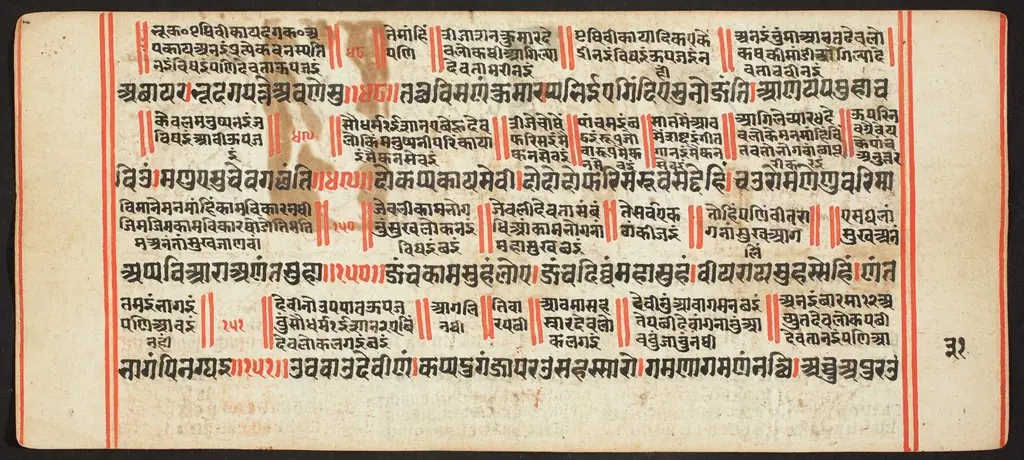 Tantric Manuscript, "Sangrahani Sutra"
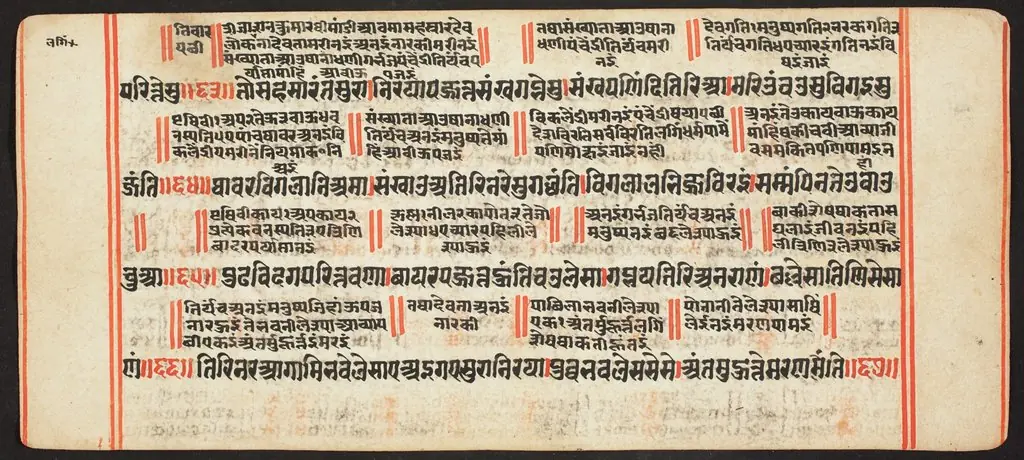 Tantric Manuscript, "Sangrahani Sutra"
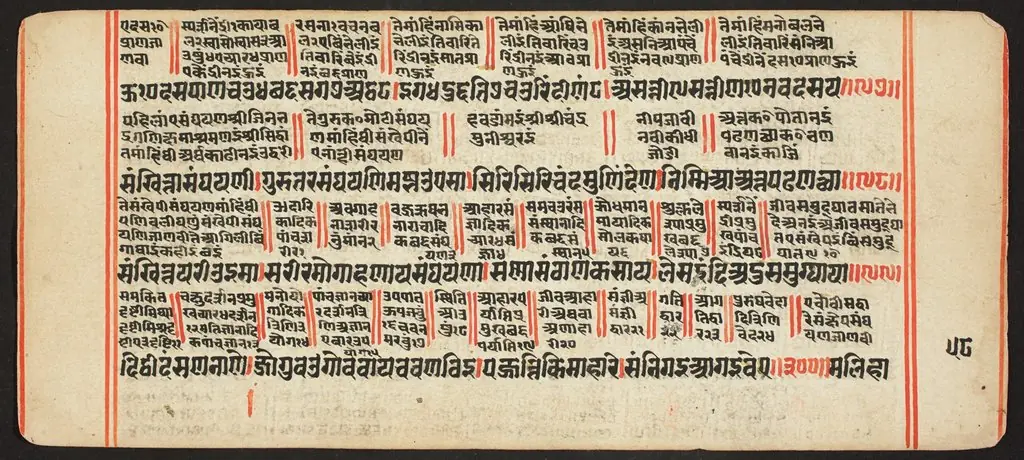 Tantric Manuscript, "Sangrahani Sutra"
 Tantric Manuscript, "Sangrahani Sutra"
 Tantric Manuscript, "Sangrahani Sutra"
 Tantric Manuscript, "Sangrahani Sutra"
 Tantric Manuscript, "Sangrahani Sutra"
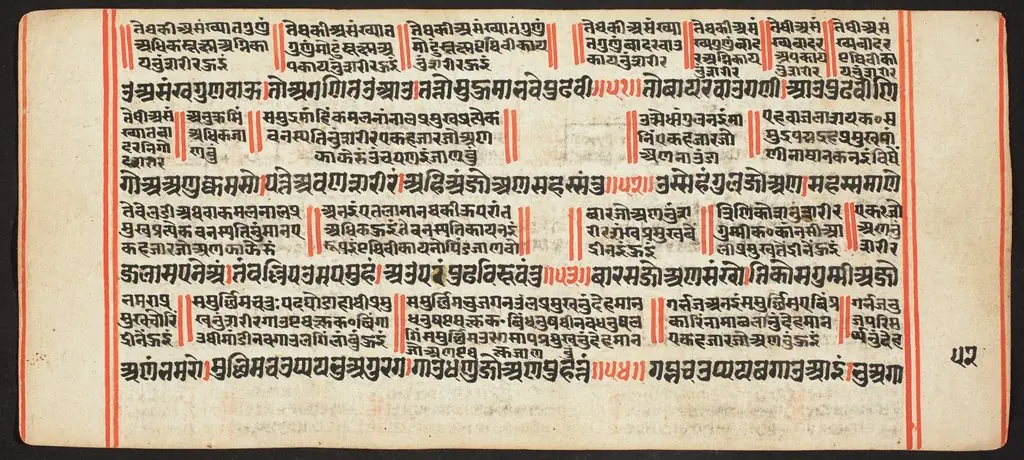 Tantric Manuscript, "Sangrahani Sutra"
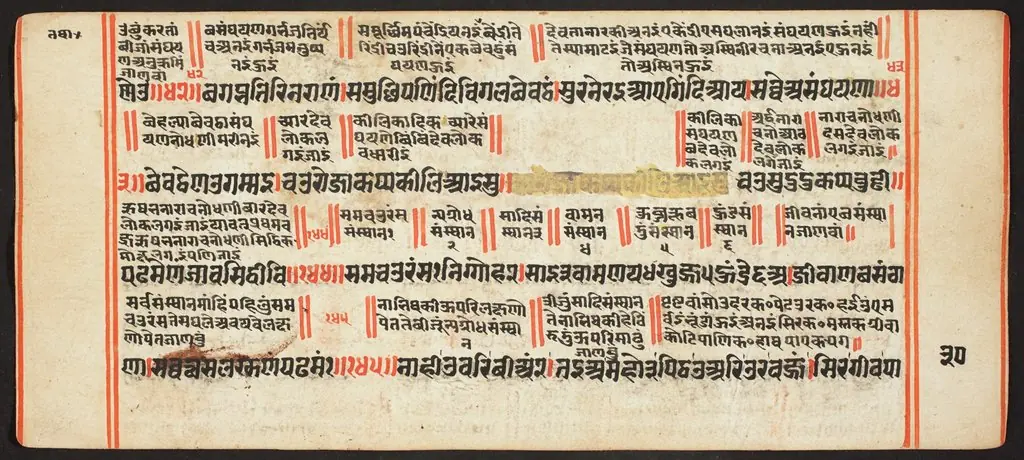 Tantric Manuscript, "Sangrahani Sutra"
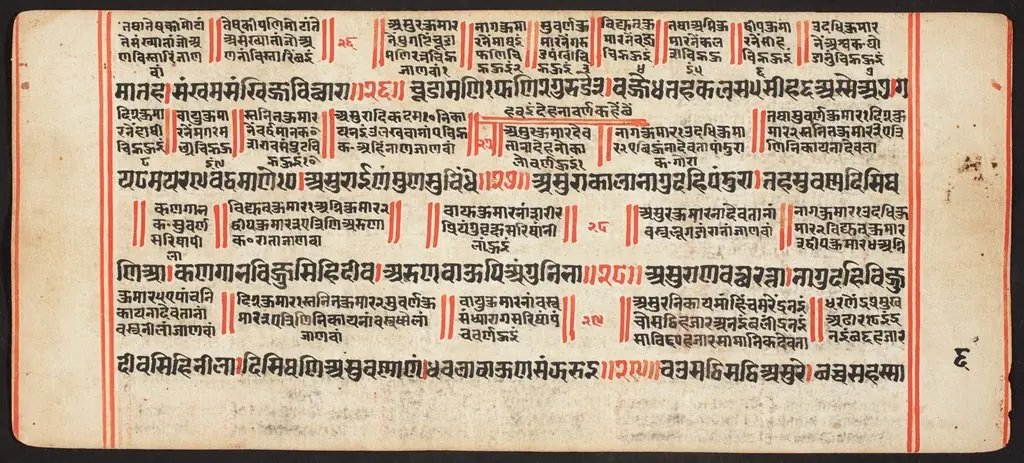 Tantric Manuscript, "Sangrahani Sutra"
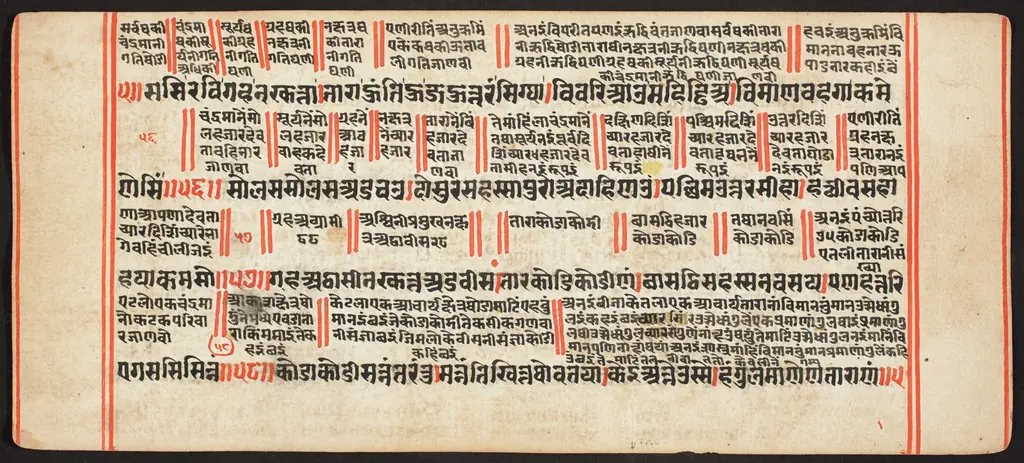 Tantric Manuscript, "Sangrahani Sutra"
 Tantric Manuscript, "Sangrahani Sutra"