Artwork
The vizier’s son receives the magic wooden parrot from the wife of the merchant, who is drunk, and has a replica made by a carpenter, from a Tuti-nama (Tales of a Parrot): Tenth Night
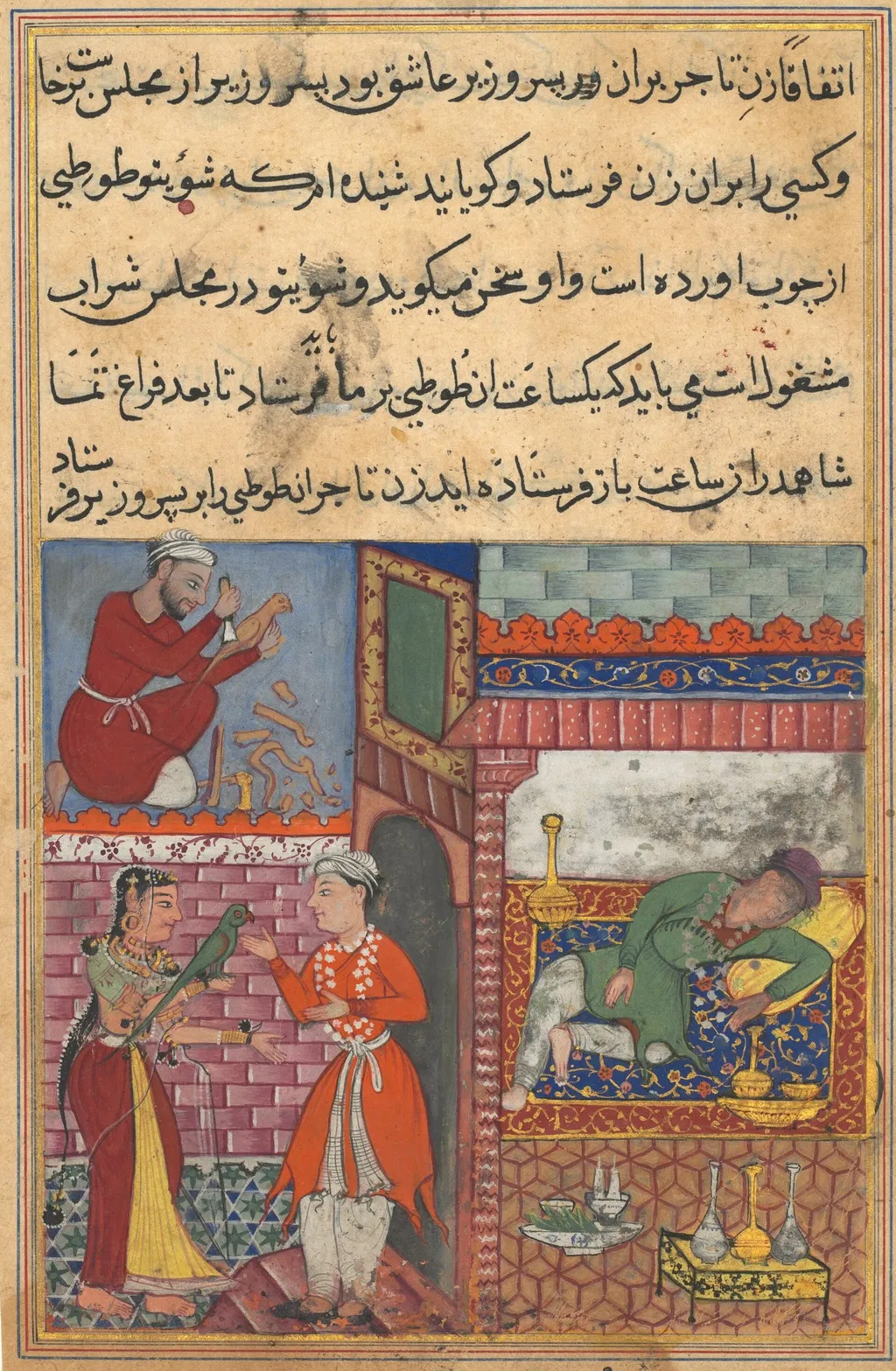
The vizier’s son receives the magic wooden parrot from the wife of the merchant, who is drunk, and has a replica made by a carpenter, from a Tuti-nama (Tales of a Parrot): Tenth Night is an unspecified painting. It dates from 1560 and is held in the collection of the Cleveland Museum of Art. The work illustrates a moment from the tenth night of the medieval Persian narrative collection *Tuti‑nama* (Tales of a Parrot).
About this work
Overview
The work illustrates a moment from the tenth night of the medieval Persian narrative collection *Tuti‑nama* (Tales of a Parrot). In a vividly decorated interior, a woman in red presents a green parrot to a man in orange, while a kneeling figure in red holds a wooden replica of the bird. A carpenter in green leans over a workbench, suggesting the creation of the duplicate.
Subject & Meaning
The scene captures the exchange of a magical wooden parrot, a gift from the merchant’s wife to the vizier’s son, and the subsequent effort to reproduce it. The juxtaposition of the living bird and its crafted copy underscores themes of imitation, craftsmanship, and the transmission of wonder across social ranks.
Technique & Style
Rendered with a bright palette of reds, oranges, and greens, the painting employs flat decorative surfaces and stylized figures typical of Persian miniature tradition. Architectural elements feature red brickwork trimmed in gold, while the floor displays a geometric pattern that reinforces the overall ornamental scheme.
History & Provenance
The piece is part of a series illustrating episodes from the *Tuti‑nama*, a popular literary work in the medieval Islamic world. It entered the collection of the Cleveland Museum of Art through acquisition in the early twentieth century, joining other miniature paintings that document narrative art from the region.
Context
During the period when the *Tuti‑nama* was widely copied, illustrated manuscripts served both educational and entertainment purposes, often displayed in courtly settings. This painting reflects the cultural practice of visualizing literary tales, providing insight into contemporary domestic interiors and the social roles of merchants, viziers, and artisans.
Artist & collection

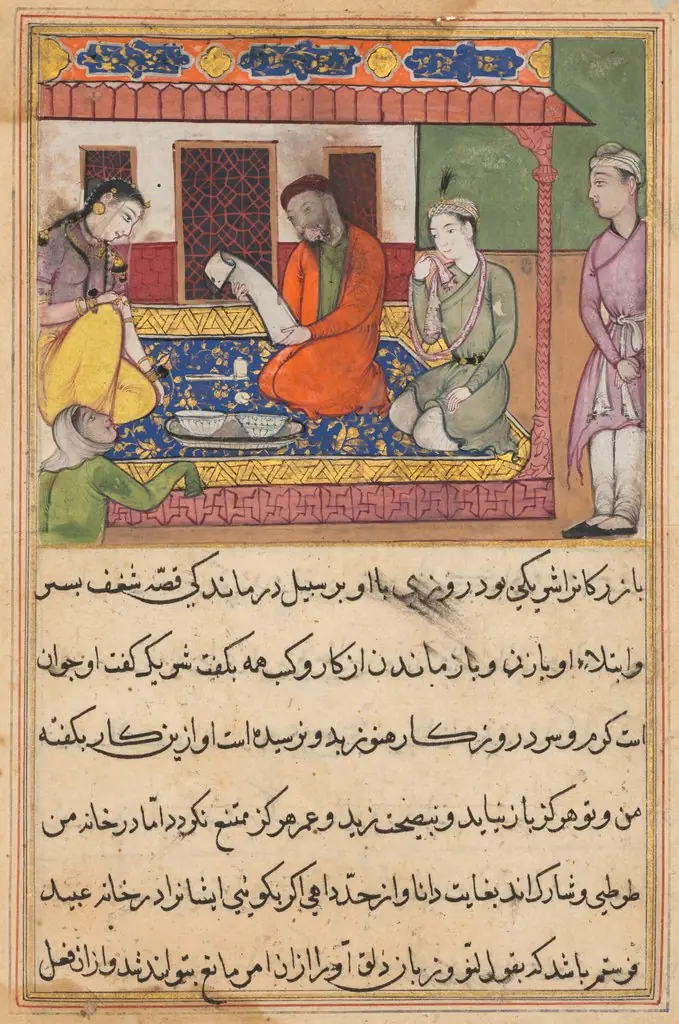 The marriage of ‘Ubaid, son of a merchant of Tirmiz, from a Tuti-nama (Tales of a Parrot): Forty-second Night
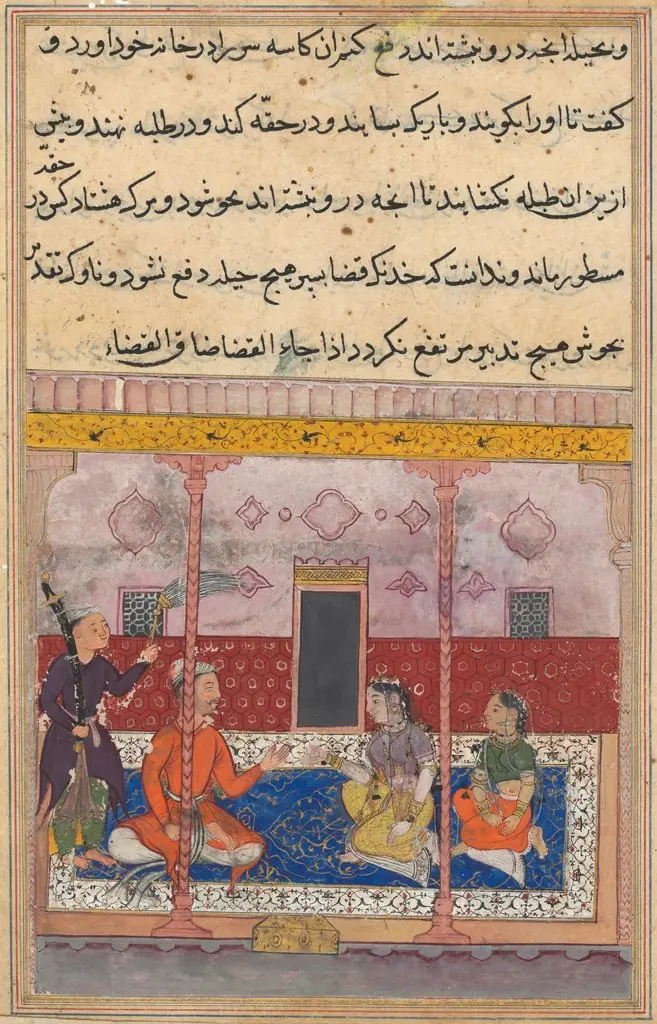 The merchant has the hateful skull ground and put into a box, from a Tuti-nama (Tales of a Parrot): Twenty-third Night
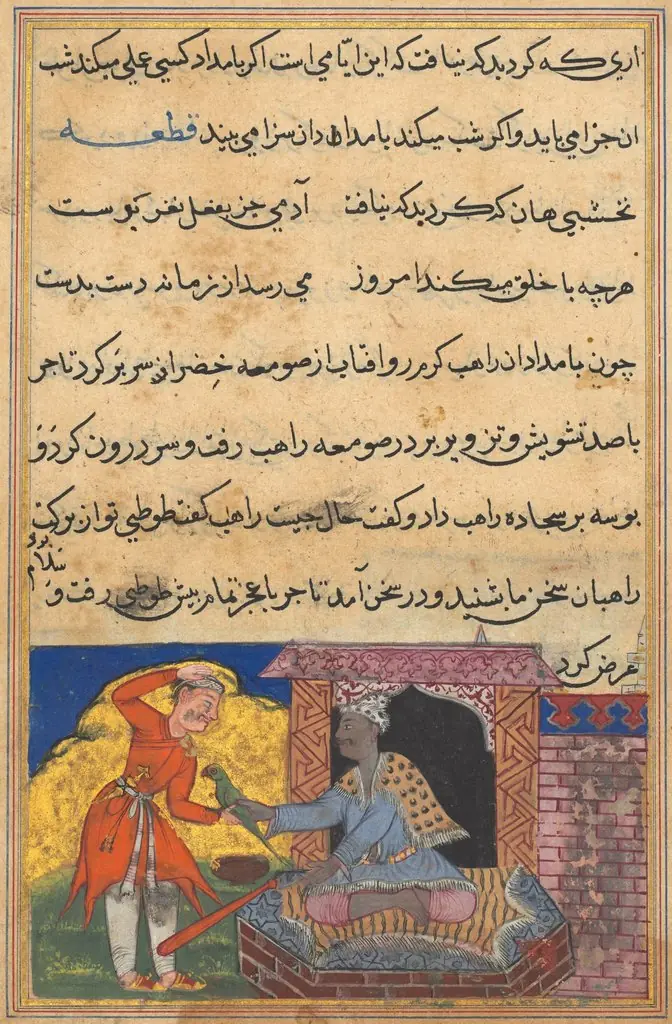 The monk returns the magic parrot to its rightful owner, the merchant, from a Tuti-nama (Tales of a Parrot): Tenth Night
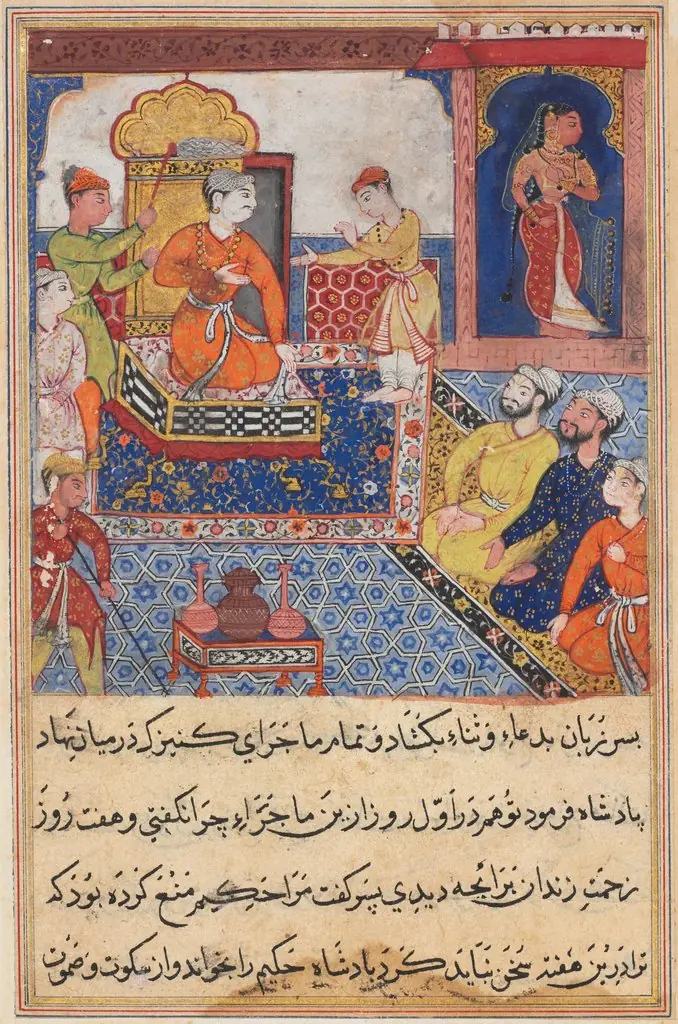 The young prince recounts his experiences to his father, the king, from a Tuti-nama (Tales of a Parrot): Eighth Night
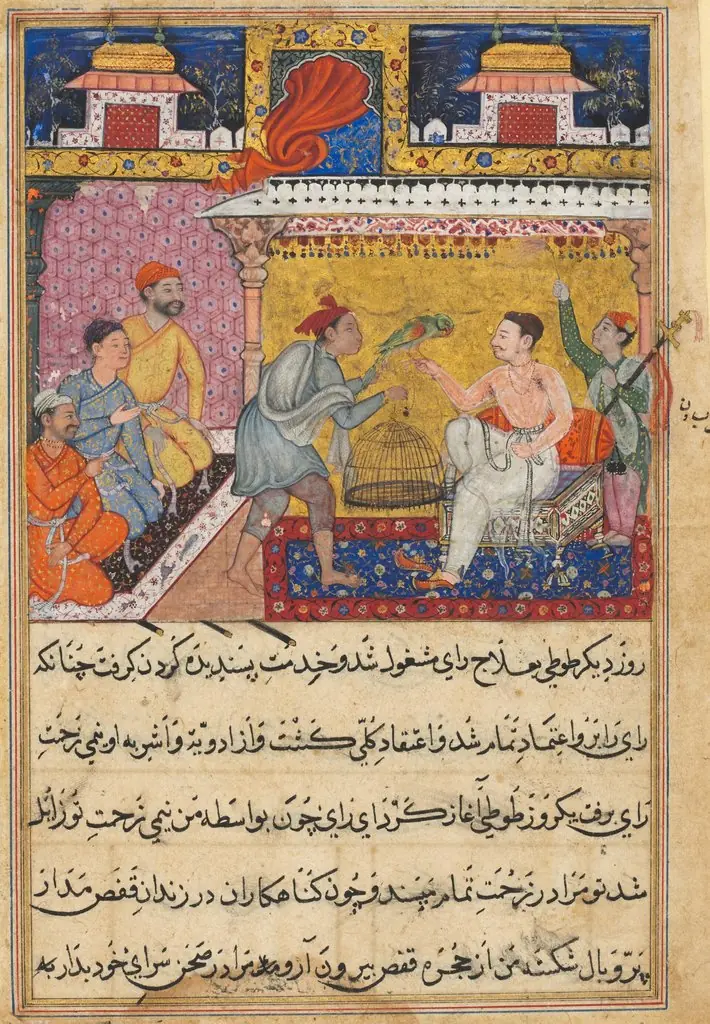 The hunter offers the mother parrot to the king of Kamarupa, from a Tuti-nama (Tales of a Parrot): Fifth Night
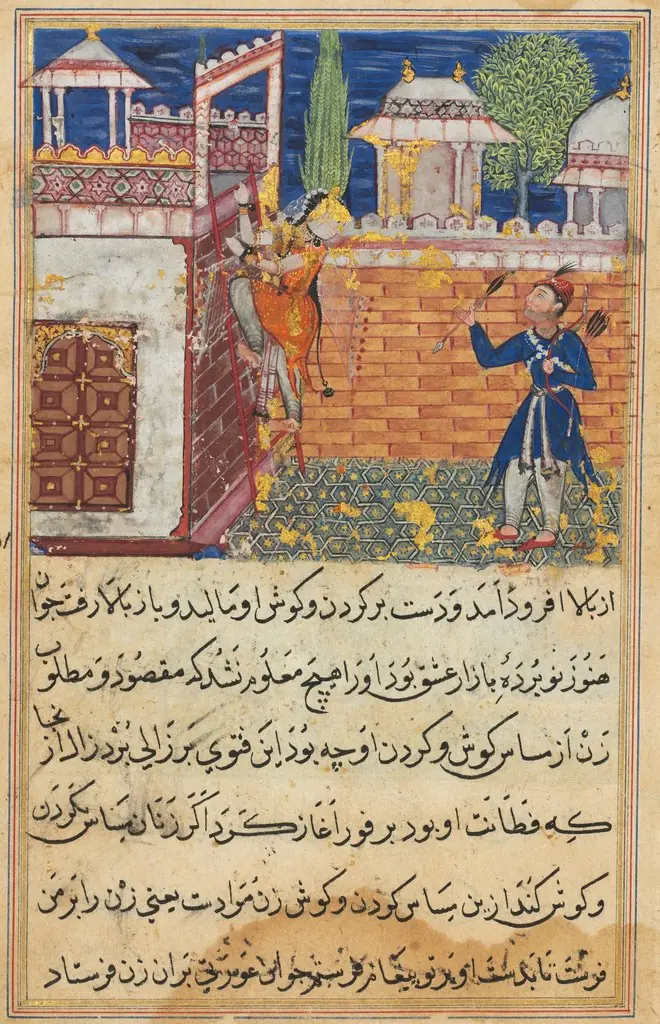 The deceitful wife returns to her terrace after caressing her lover, from a Tuti-nama (Tales of a Parrot): Eighth Night
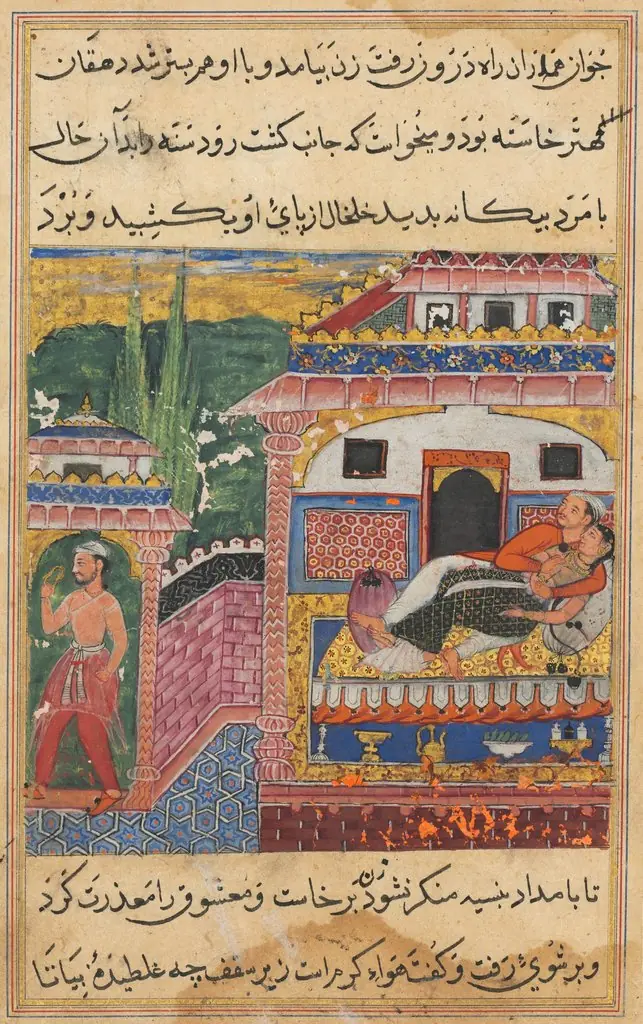 The farmer, father of the son with the deceitful wife, steals away with her anklet while she is in bed with her lover, from a Tuti-nama (Tales of a Parrot): Eighth Night
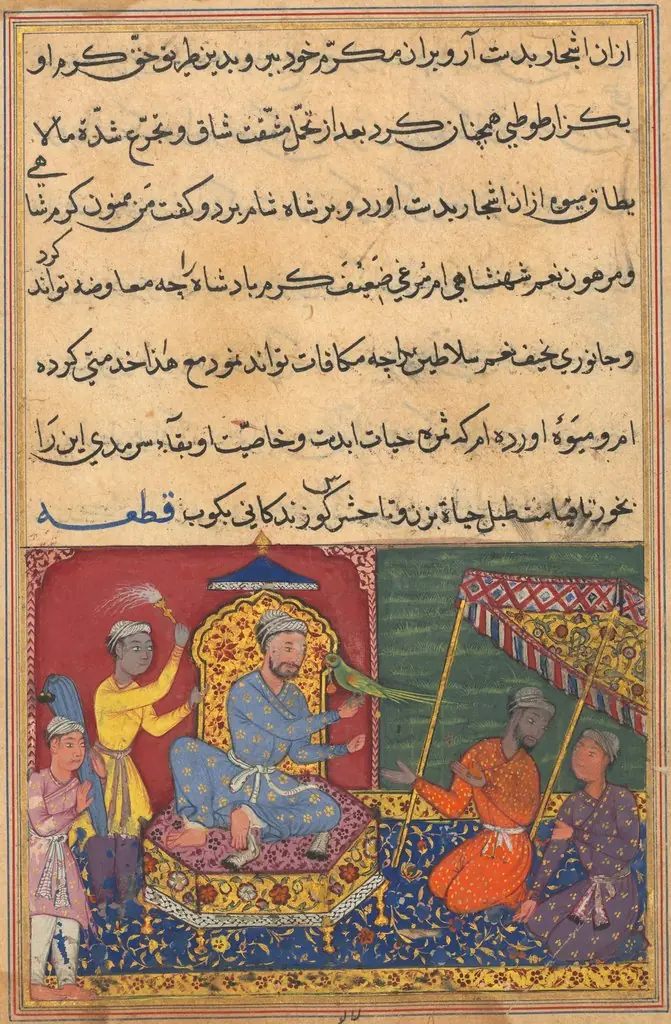 The parrot brings a fruit from the Tree of Life to the king of Syria, from a Tuti-nama (Tales of a Parrot): Ninth Night
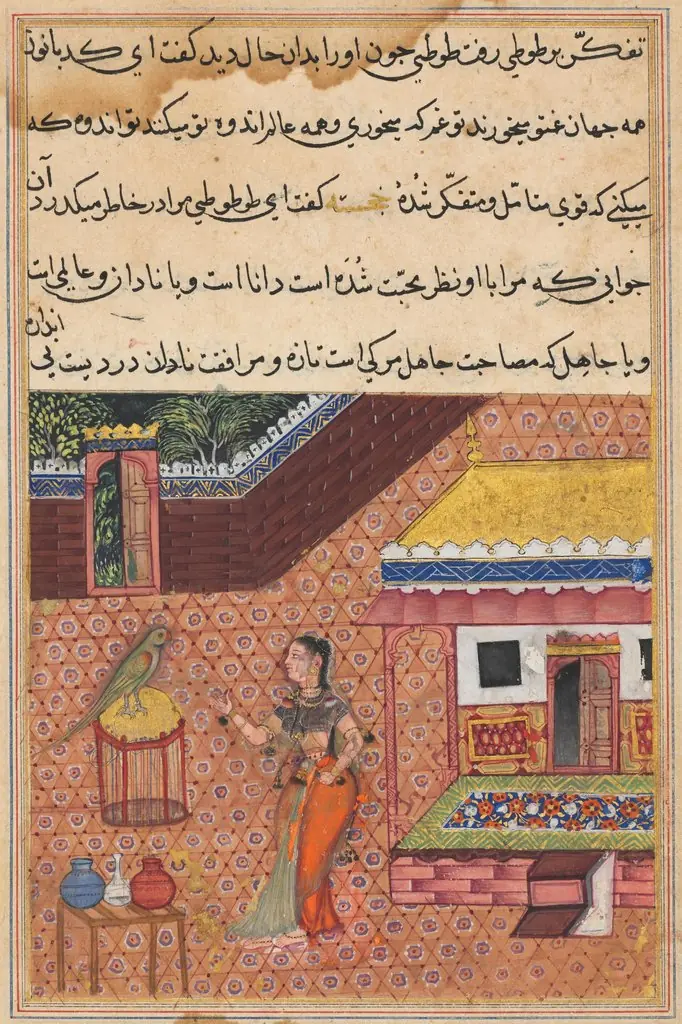 The parrot addresses Khujasta at the beginning of the thirty-fourth night, from a Tuti-nama (Tales of a Parrot)
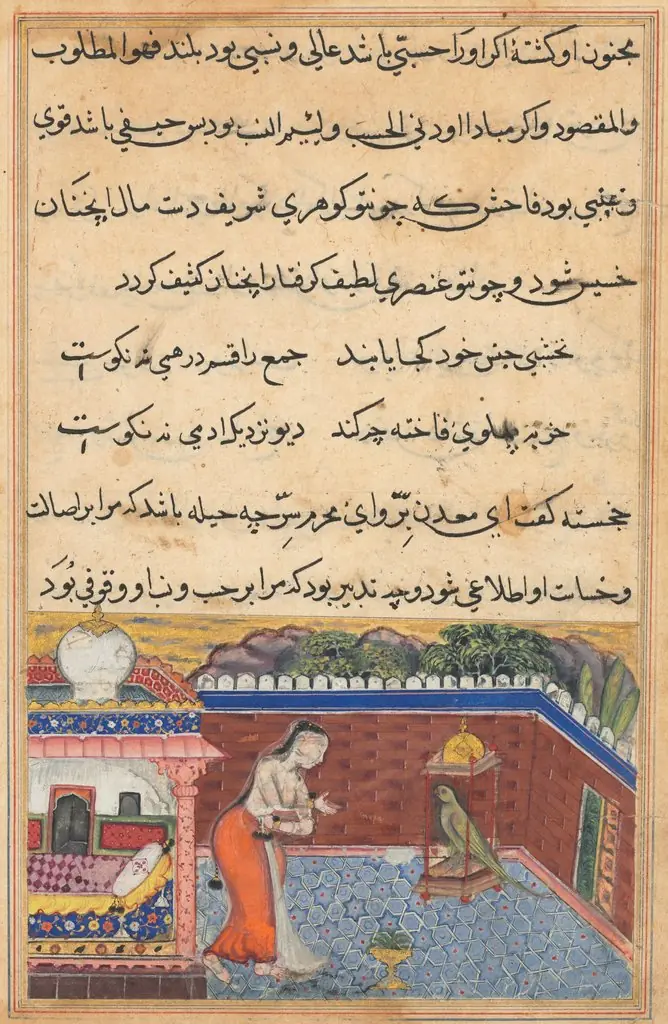 The parrot addresses Khujasta at the beginning of the thirty-first night, from a Tuti-nama (Tales of a Parrot)
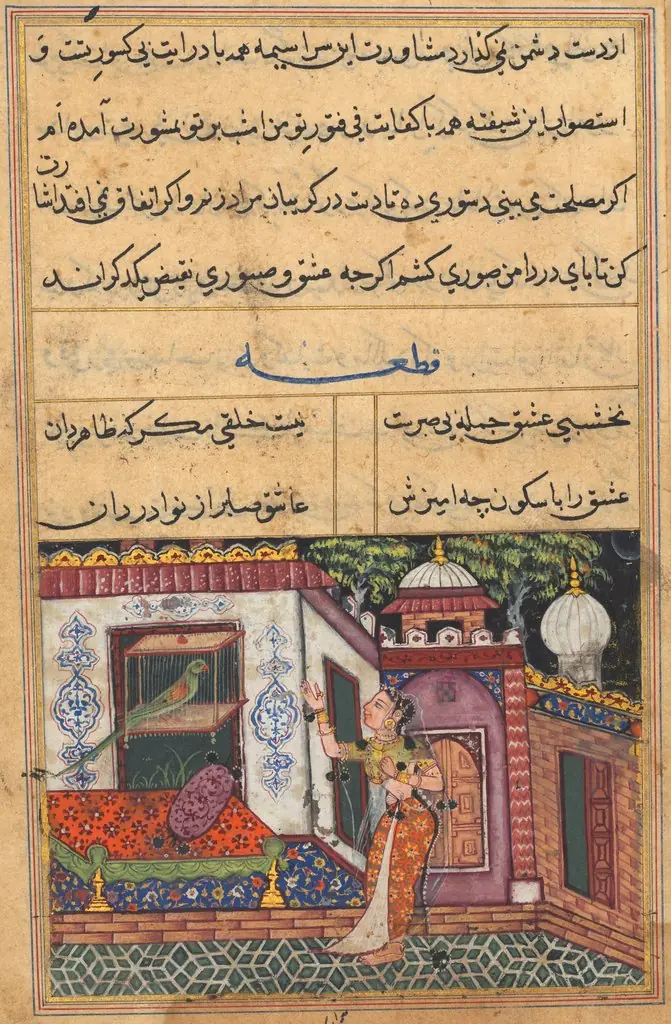 The Parrot Addresses Khujasta at the Beginning of the Eleventh Night, from a Tuti-nama (Tales of a Parrot)
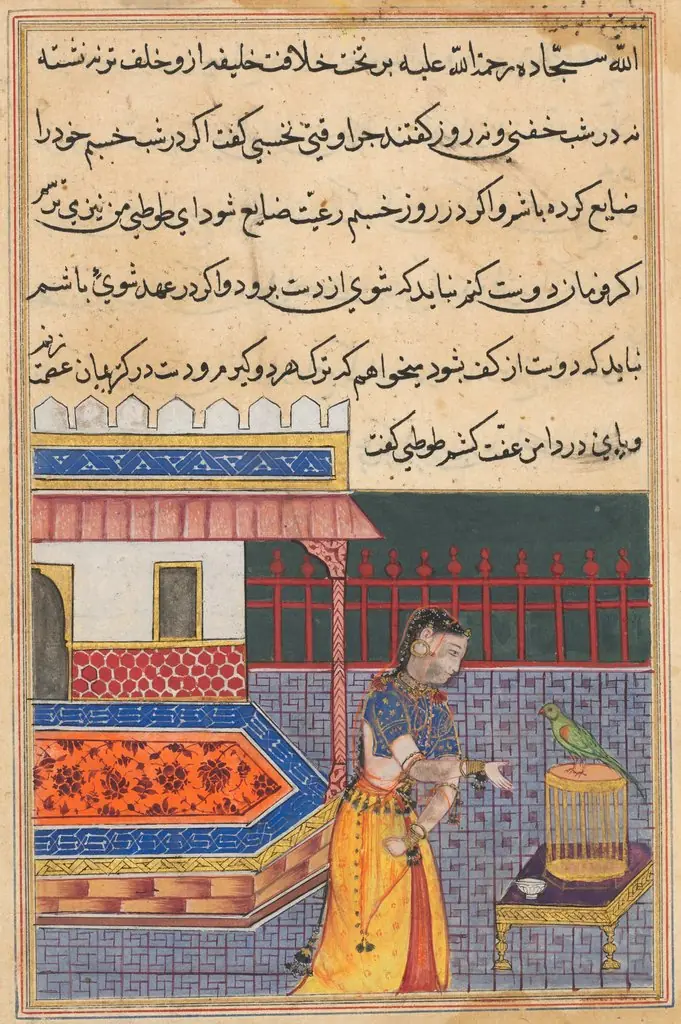 The parrot addresses Khujasta at the beginning of the forty-first night, from a Tuti-nama (Tales of a Parrot): Forty-first Night
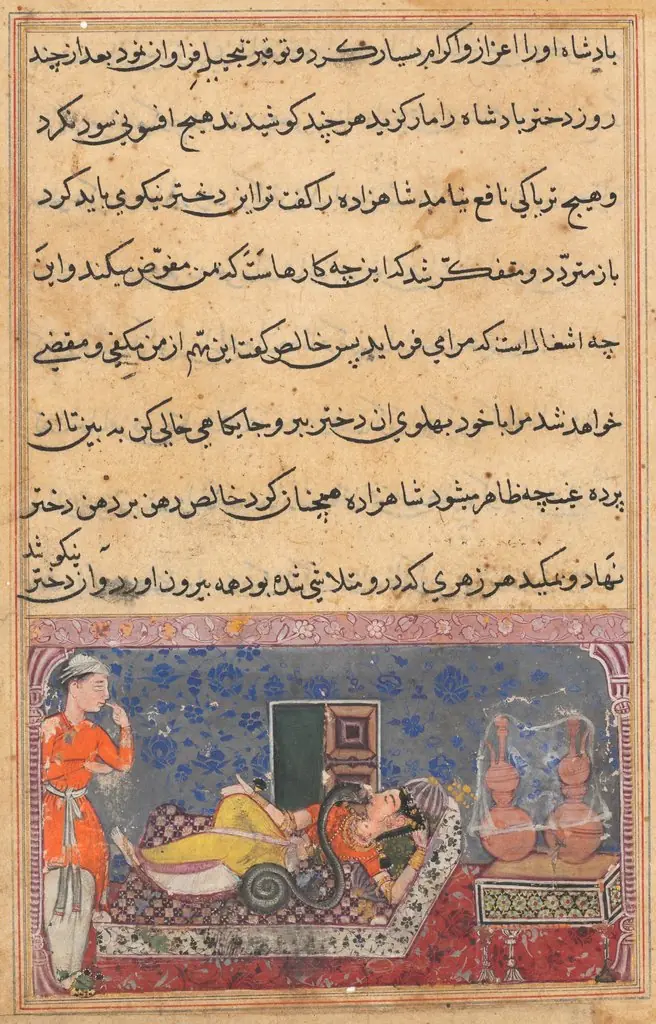 Khalis repays the prince for his kindness by changing into a snake and sucking the poison from the king’s daughter, from a Tuti-nama (Tales of a Parrot): Eighteenth Night
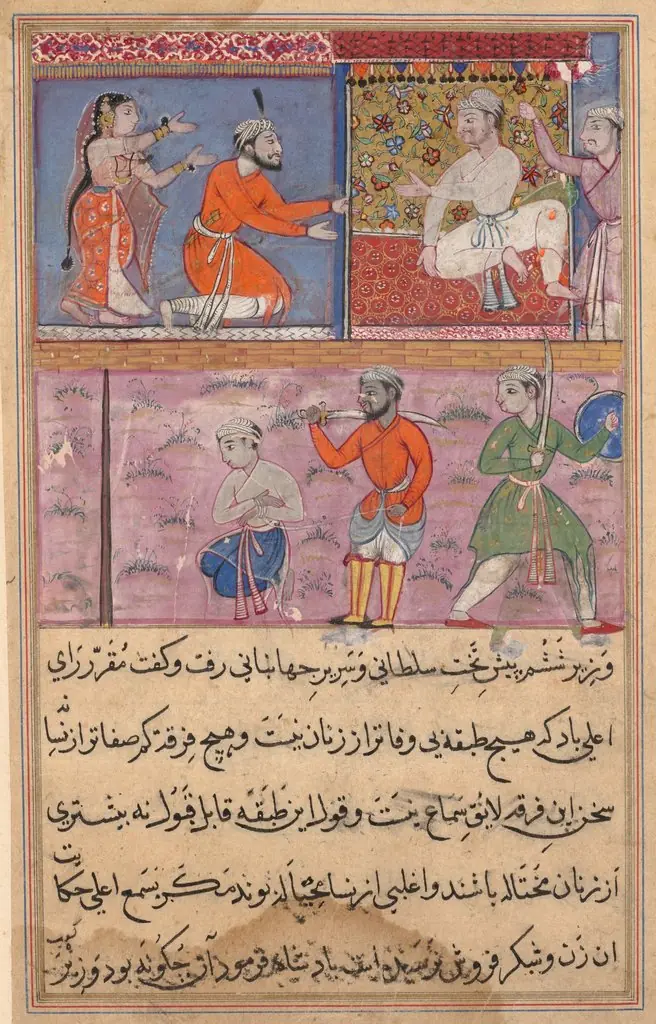 Page from Tales of a Parrot (Tuti-nama): text page
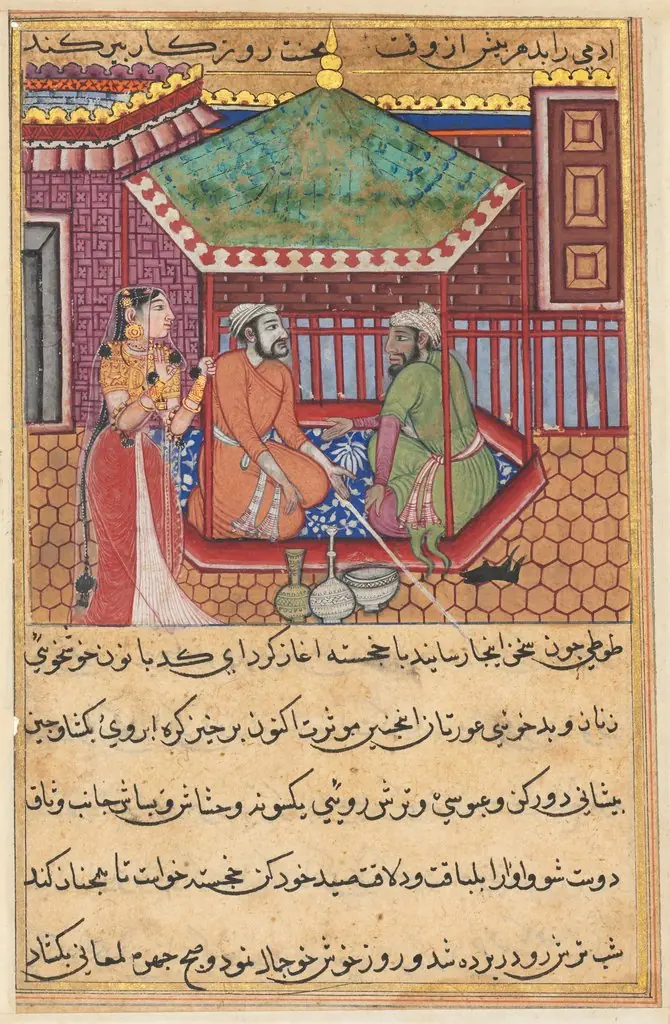 The eldest brother explains the reason for his youthful appearance, from a Tuti-nama (Tales of a Parrot): Forty-ninth Night
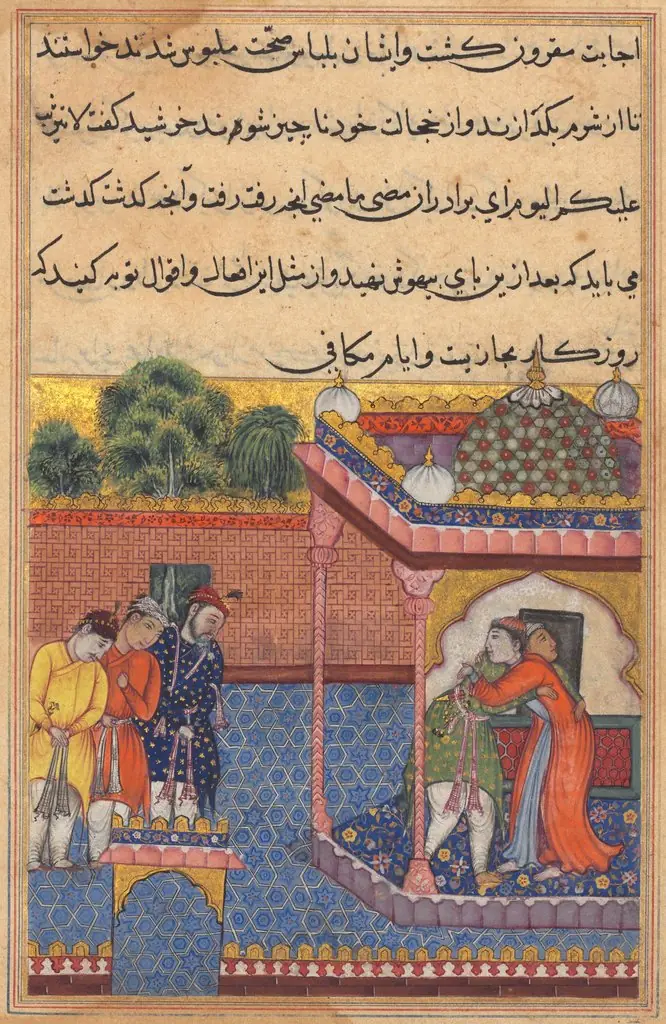 Khurshid reunited with her husband Utarid, from a Tuti-nama (Tales of a Parrot): Thirty-second Night
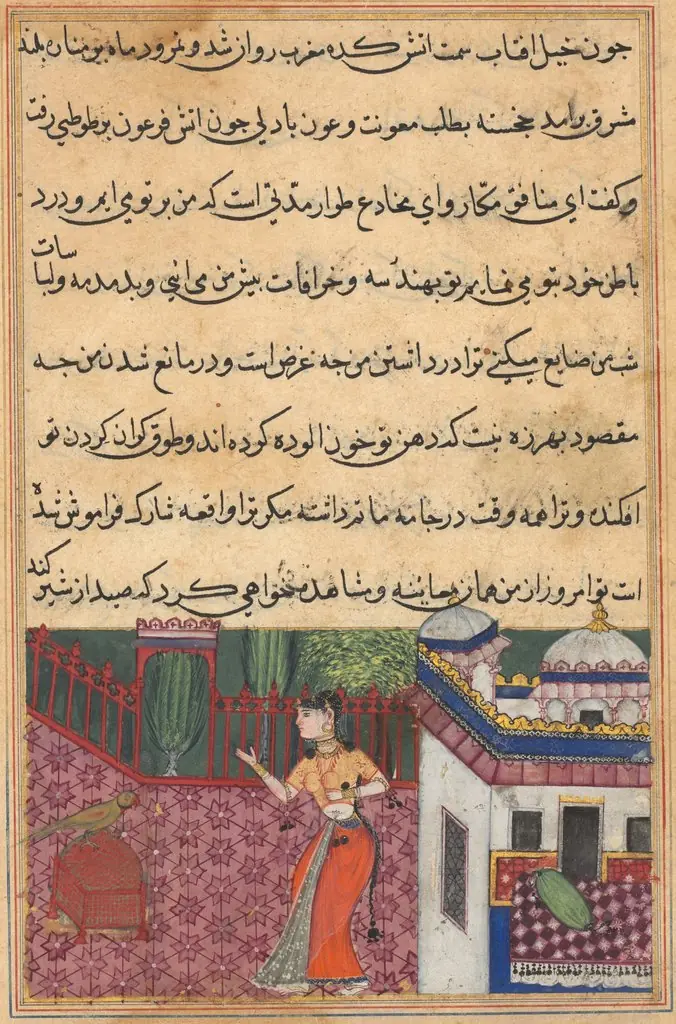 The parrot addresses Khujasta at the beginning of the thirty-third night, from a Tuti-nama (Tales of a Parrot)