Artwork
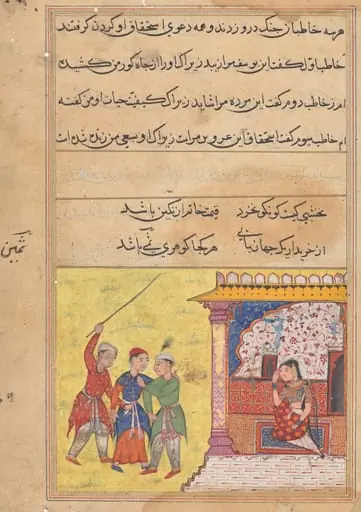
The court jester meets a Zangi dancing with joy, and learns from him that the cause of his happiness is his assignation with a woman who is the jester’s own wife, from a Tuti-nama (Tales of a Parrot): Twenty-second Night
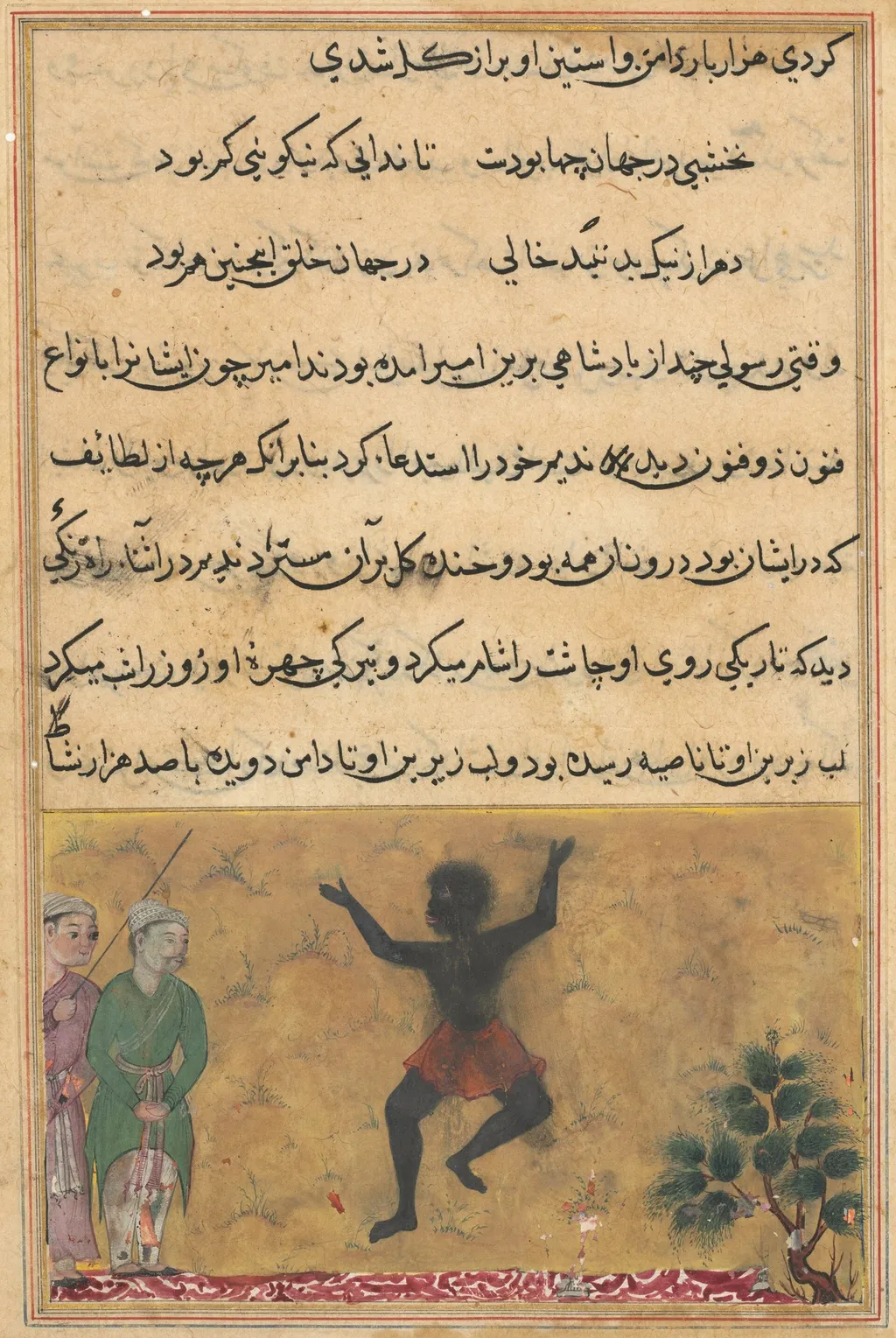
The court jester meets a Zangi dancing with joy, and learns from him that the cause of his happiness is his assignation with a woman who is the jester’s own wife, from a Tuti-nama (Tales of a Parrot): Twenty-second Night is an unspecified painting. It dates from 1560 and is held in the collection of the Cleveland Museum of Art.
About this work
Overview
The work is a miniature painting illustrating a scene from the twenty‑second night of the Persian collection of stories known as the Tuti‑nama, or “Tales of a Parrot.” In the image a court jester encounters a dancing Zangi, whose exuberant leap conveys joy, while the jester stands still, garbed in green and purple, appearing startled by the unexpected revelation.
Subject & Meaning
The narrative depicts the jester learning that the source of the Zangi’s happiness is his relationship with a woman who, in the story, is the jester’s own wife. The contrast between the jester’s static, puzzled posture and the Zangi’s animated, celebratory pose underscores themes of jealousy, revelation, and the complexities of courtly love.
Technique & Style
Black ink calligraphy arches above the scene, integrating text and image as is customary in manuscript illustration.
Executed in the traditional Persian miniature manner, the painting employs delicate brushwork and vibrant pigments. The figures are rendered in flat, decorative planes, with the standing figure in richly patterned green and purple robes and the leaping dancer in a bright red skirt and dark trousers. Black ink calligraphy arches above the scene, integrating text and image as is customary in manuscript illustration.
History & Provenance
The miniature originates from a manuscript of the Tuti‑nama, a collection compiled in the 14th‑15th centuries for elite patrons. The specific copy containing this illustration was produced in a Persian workshop, likely in the Safavid period, before entering a Western collection in the early 20th century, where it was eventually acquired by a major museum.
Context
The Tuti‑nama belongs to a broader tradition of illustrated literary codices that combined poetry, prose, and visual storytelling. Scenes such as this one served both decorative and didactic purposes, providing moral commentary on courtly behavior while showcasing the artistic virtuosity of manuscript painters.
Legacy
Miniature paintings from the Tuti‑nama continue to inform scholars of Persian narrative art, court culture, and the interplay between text and image. The work’s vivid portrayal of emotion and its integration of calligraphic elements exemplify the enduring aesthetic principles that influence contemporary reinterpretations of Persian manuscript art.
Artist & collection

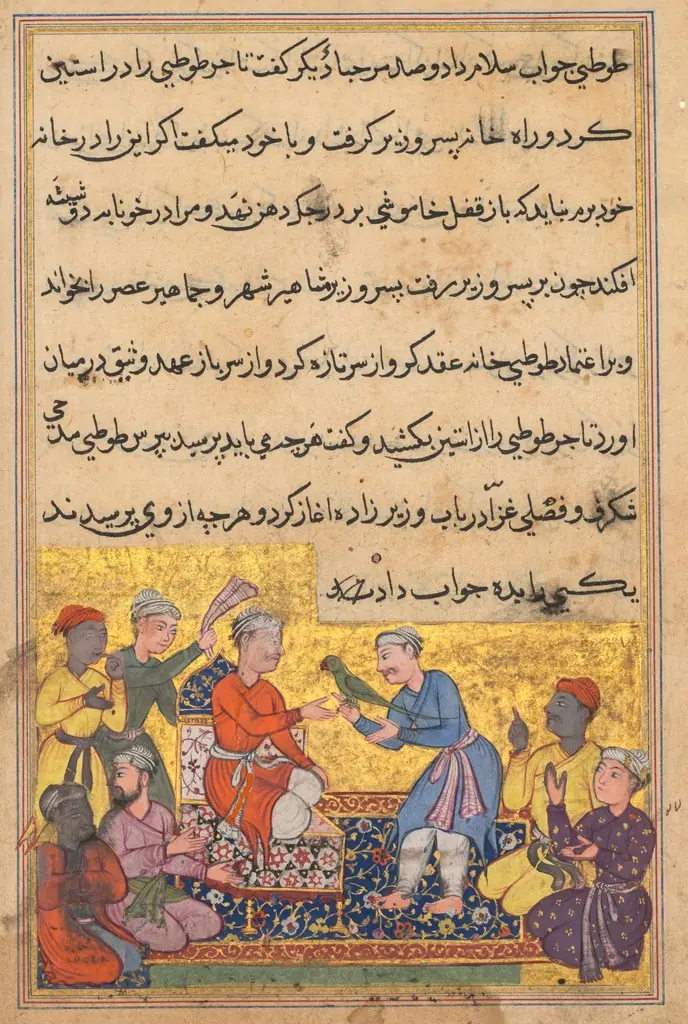 The magic parrot of the merchant talks to the vizier’s son, from a Tuti-nama (Tales of a Parrot): Tenth Night
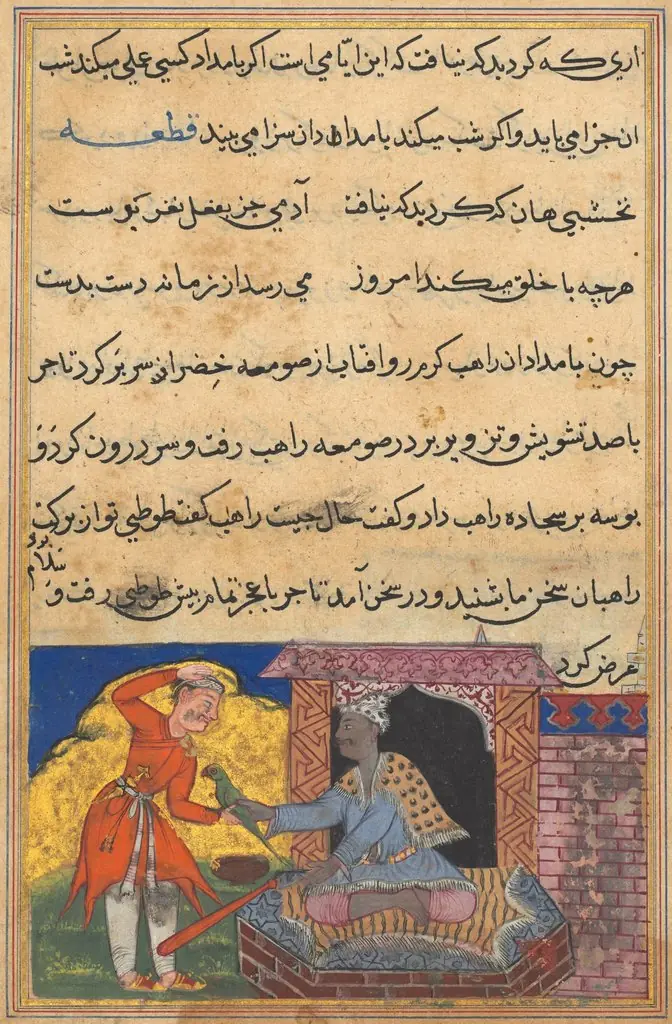 The monk returns the magic parrot to its rightful owner, the merchant, from a Tuti-nama (Tales of a Parrot): Tenth Night
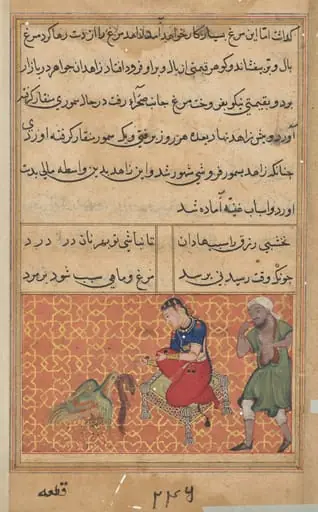 The bird of seven colors brings a sable to the pious man, from a Tuti-nama (Tales of a Parrot): Fifty-second Night
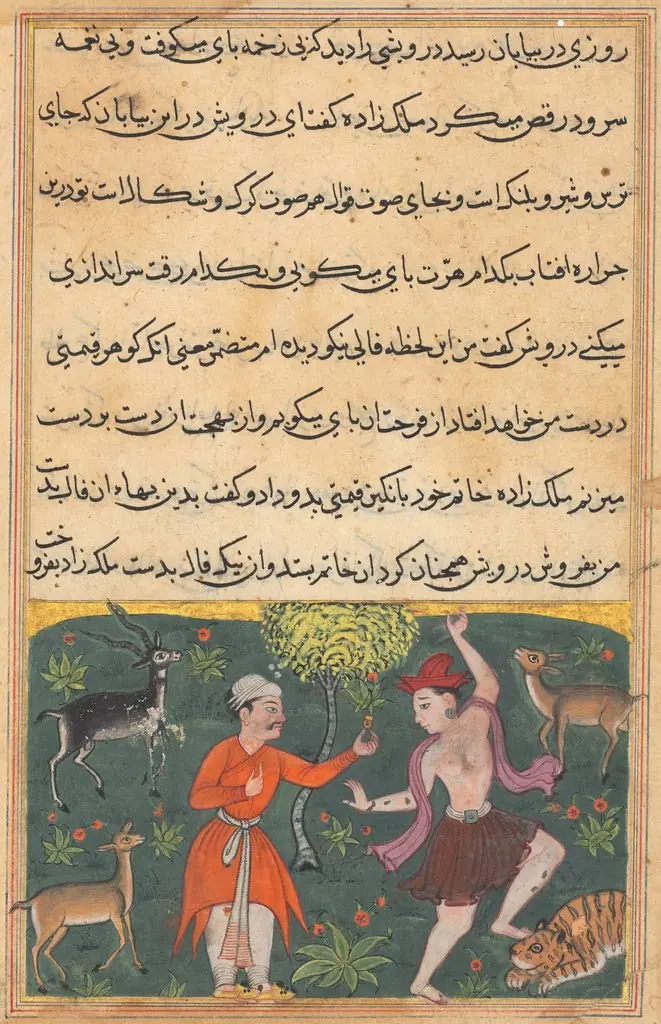 The prince meets a carefree dancing dervish whose good fortune he purchases for his ring, from a Tuti-nama (Tales of a Parrot): Eighteenth Night
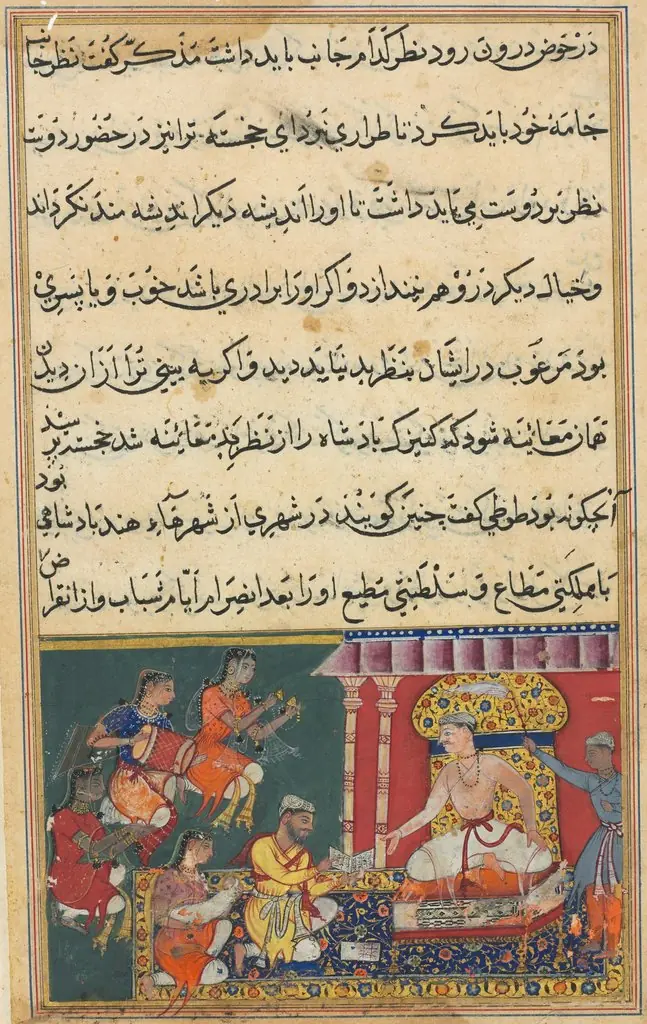 The astrologer predicts a calamity for the newly born prince in his thirteenth year, but one which he would be able to overcome, from a Tuti-nama (Tales of a Parrot): Eighth Night
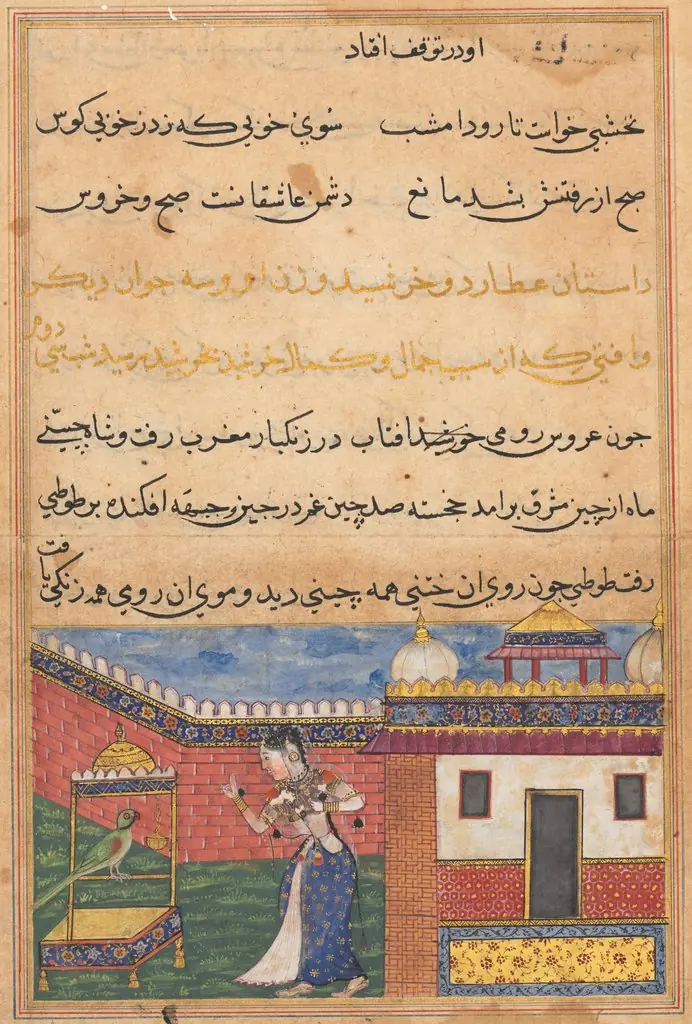 The parrot addresses Khujasta at the beginning of the thirty-second night, from a Tuti-nama (Tales of a Parrot)
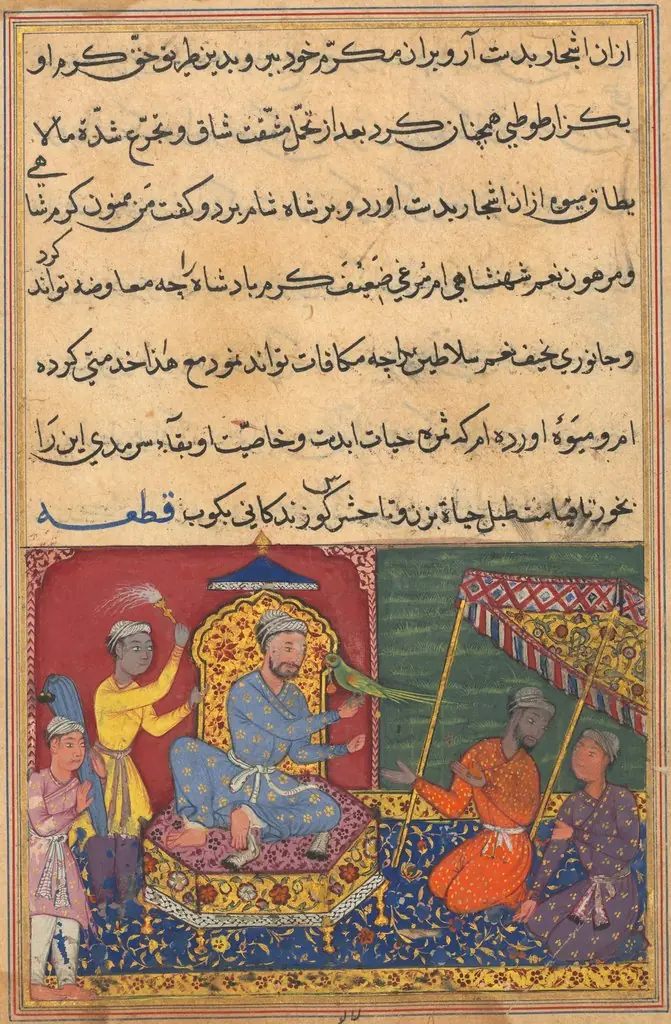 The parrot brings a fruit from the Tree of Life to the king of Syria, from a Tuti-nama (Tales of a Parrot): Ninth Night
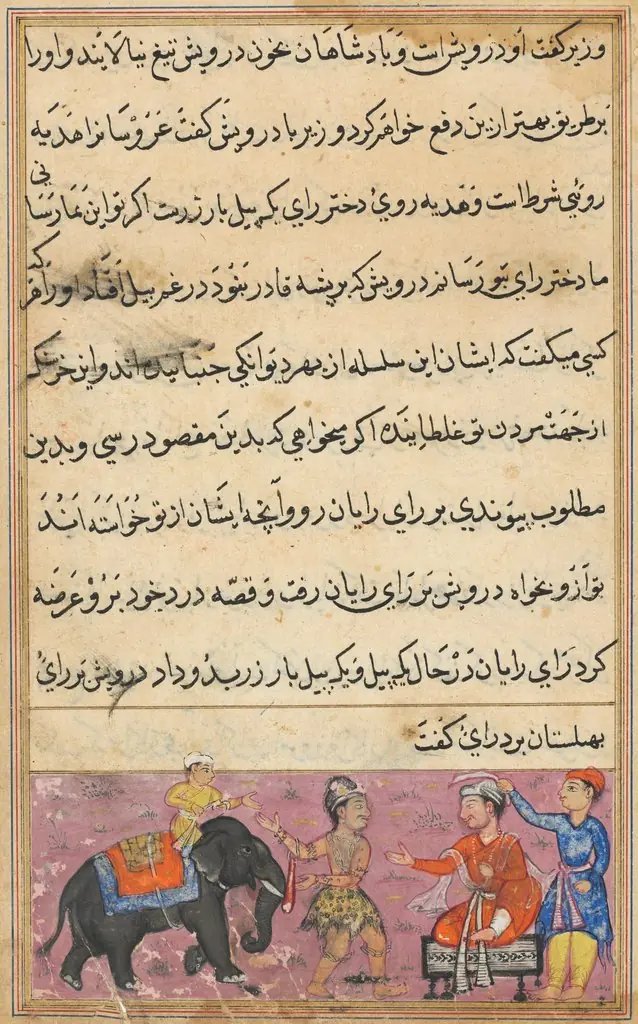 The dervish brings in as dowry an elephant laden with gold, from a Tuti-nama (Tales of a Parrot): Seventh Night
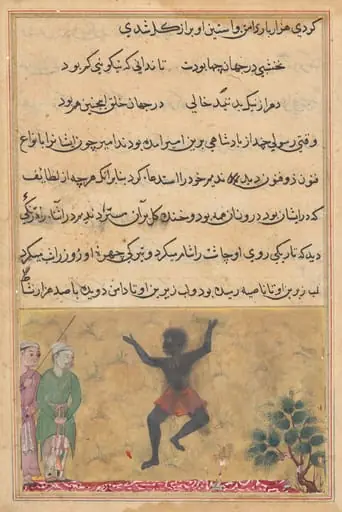 The court jester meets a Zangi dancing with joy, and learns from him that the cause of his happiness is his assignation with a woman who is the jester’s own wife, from a Tuti-nama (Tales of a Parrot): Twenty-second Night
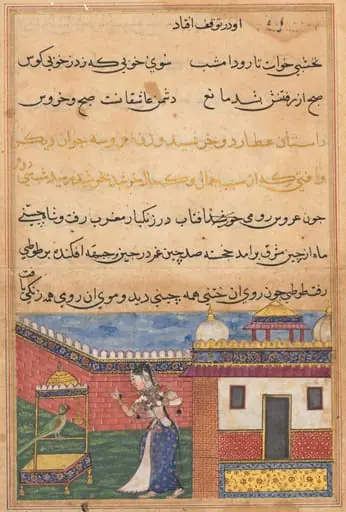 The parrot addresses Khujasta at the beginning of the thirty-second night, from a Tuti-nama (Tales of a Parrot)
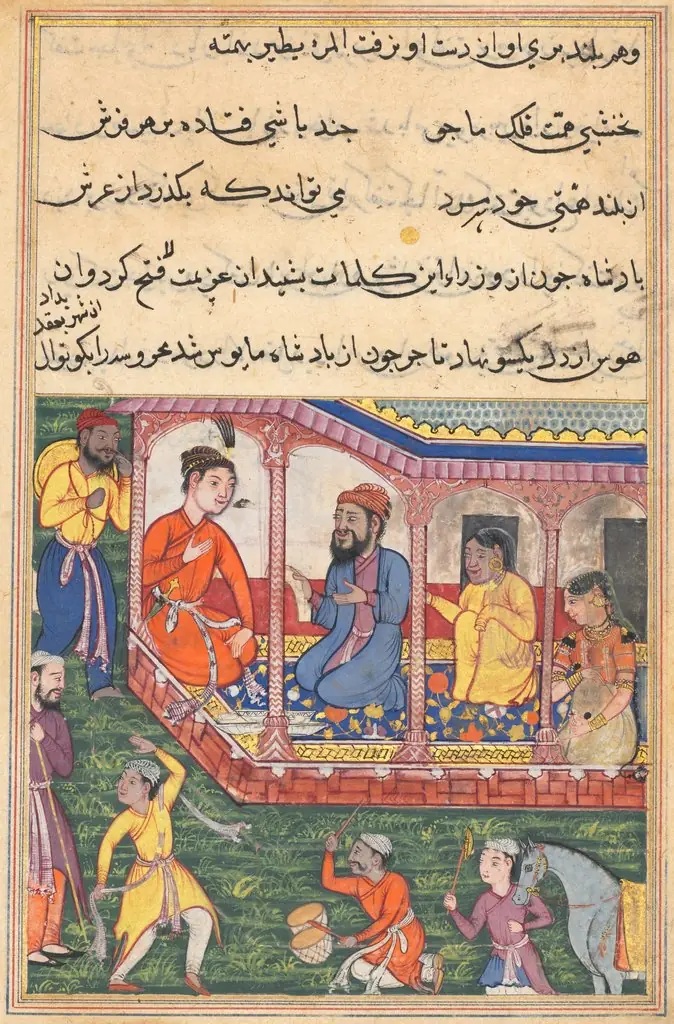 Mahrusa’s marriage to the prefect of the city, from a Tuti-nama (Tales of a Parrot): Thirty-sixth Night
 The three suitors again begin to quarrel among themselves for the hand of the devotee’s daughter, from a Tuti-nama (Tales of a Parrot): Twentieth Night