Artwork
St Anne between St John the Baptist and St Anthony Abbot
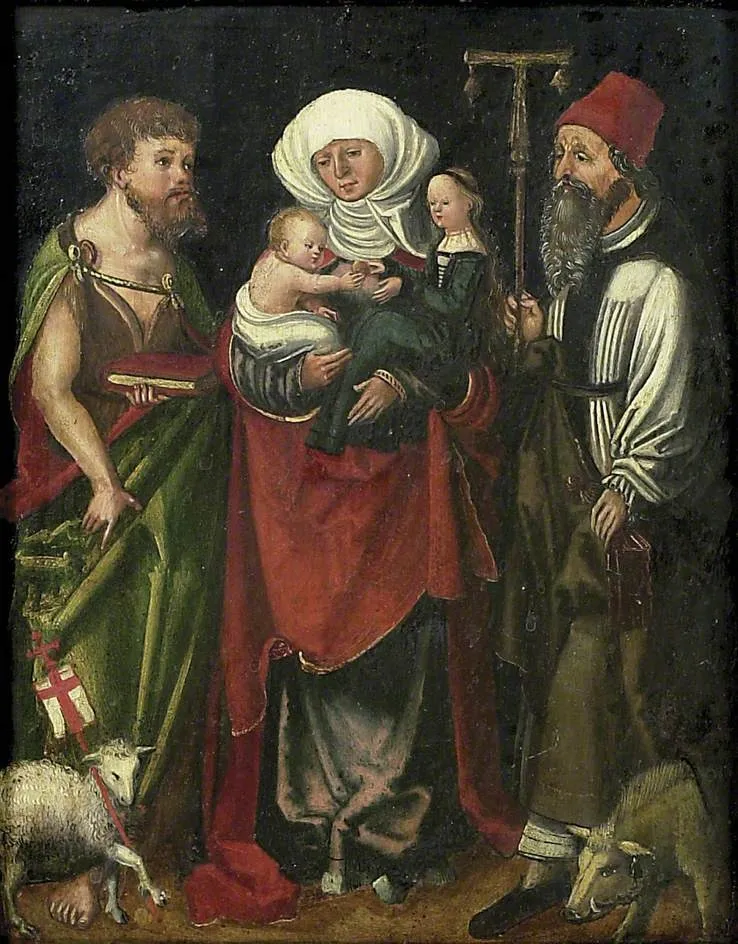
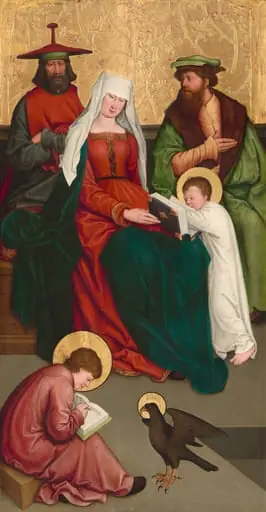
St Anne between St John the Baptist and St Anthony Abbot is an oil painting by the High Renaissance artist Unknown. It dates from 1512 and is held in the collection of the Ashmolean Museum. This oil painting depicts Saint Anne, mother of the Virgin Mary, seated centrally with the infant Jesus in her arms.
About this work
Overview
The composition emphasizes stillness and spiritual focus, with soft lighting and restrained color to enhance its meditative tone.
This oil painting depicts Saint Anne, mother of the Virgin Mary, seated centrally with the infant Jesus in her arms. She is flanked by Saint John the Baptist on her left and Saint Anthony Abbot on her right. Each figure is rendered with quiet dignity, surrounded by symbolic animals: a lamb at John’s feet and a dog near Anthony. The composition emphasizes stillness and spiritual focus, with soft lighting and restrained color to enhance its meditative tone.
Subject & Meaning
Saint Anne, as the matriarch of the Holy Family, represents lineage and divine grace. The infant Jesus signifies the Incarnation, while Saint John the Baptist, holding a book, foreshadows his role as prophet. Saint Anthony Abbot, associated with solitude and asceticism, is identified by his staff and the dog, symbolizing loyalty and healing. Together, the figures form a devotional triad, inviting contemplation of faith, ancestry, and spiritual guardianship.
Technique & Style
The artist employs delicate brushwork to render fabric textures and facial expressions with subtlety. Warm tones in Anne’s red cloak contrast with the muted greens and browns of the surrounding figures, guiding the viewer’s eye to the central group. The background is softly blurred, enhancing the intimacy of the scene. Light falls evenly, avoiding dramatic contrasts, reinforcing the painting’s tranquil, devotional character.
History & Provenance
The painting resides in the Ashmolean Museum, Oxford, where it has been part of the collection since the 19th century. Its origins trace to a late medieval or early Renaissance workshop in Northern Europe, likely produced for private devotion. No definitive artist is recorded, but stylistic elements suggest influence from Flemish or German traditions of the 15th century.
Context
In the late Middle Ages, devotional images of Saint Anne with the Virgin and Child gained popularity, especially in regions with strong Marian cults. The inclusion of Saint Anthony Abbot reflects his widespread veneration as a protector against disease and temptation. Such triptych-like compositions were often commissioned for domestic chapels, serving as focal points for personal prayer and spiritual reflection.
Legacy
Though not attributed to a major master, the painting exemplifies the quiet devotional art produced for lay piety in the late medieval period. Its preservation in a major museum underscores its value as a witness to the visual language of everyday religious life. The work continues to offer insight into how ordinary believers engaged with sacred narratives through intimate, symbolic imagery.
Artist & collection

 Domestic Scene
 Giacomo and Cardinal Marco, investing Andrea, Abbot of San Zeno, with his Benefice
 The Nymph of Fontainebleau
 Portrait of a Woman
 Madonna and Child with Saints in the Enclosed Garden
 Venus and Minerva
 Family Group of Four on Sofa
 Wall painting from Room H of the Villa of P. Fannius Synistor at Boscoreale
 "The Family of Zebedee
 The Holy Family with an Angel
 Virgin and Child between Sts. John the Baptist and John the Evangelist
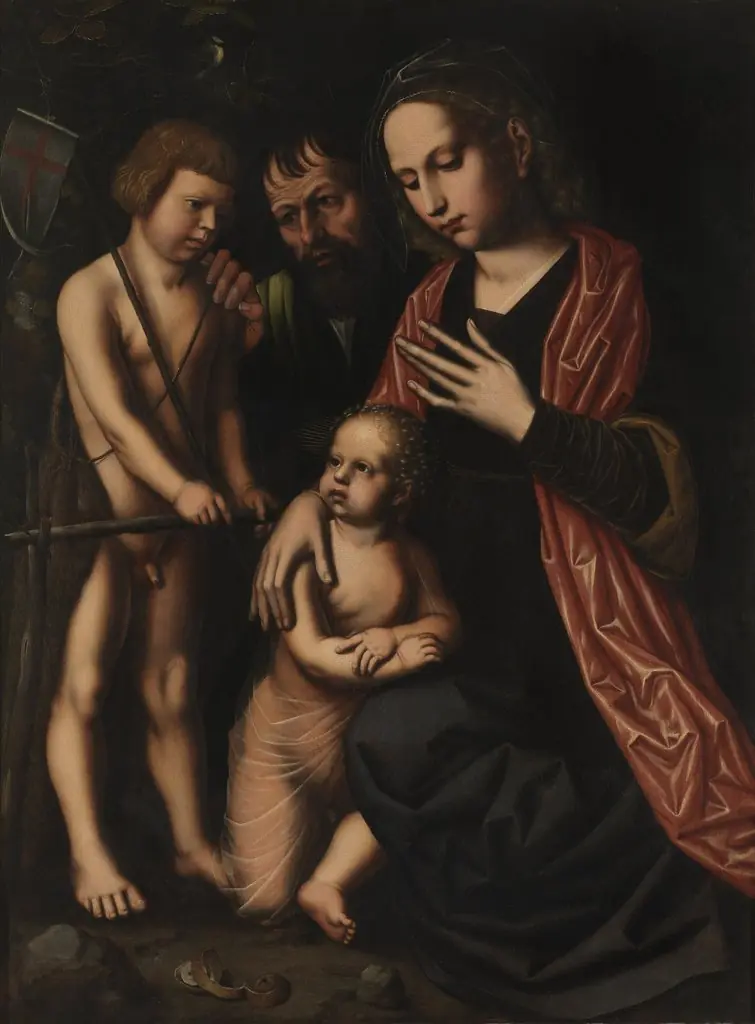 The Holy Family with St. John the Baptist
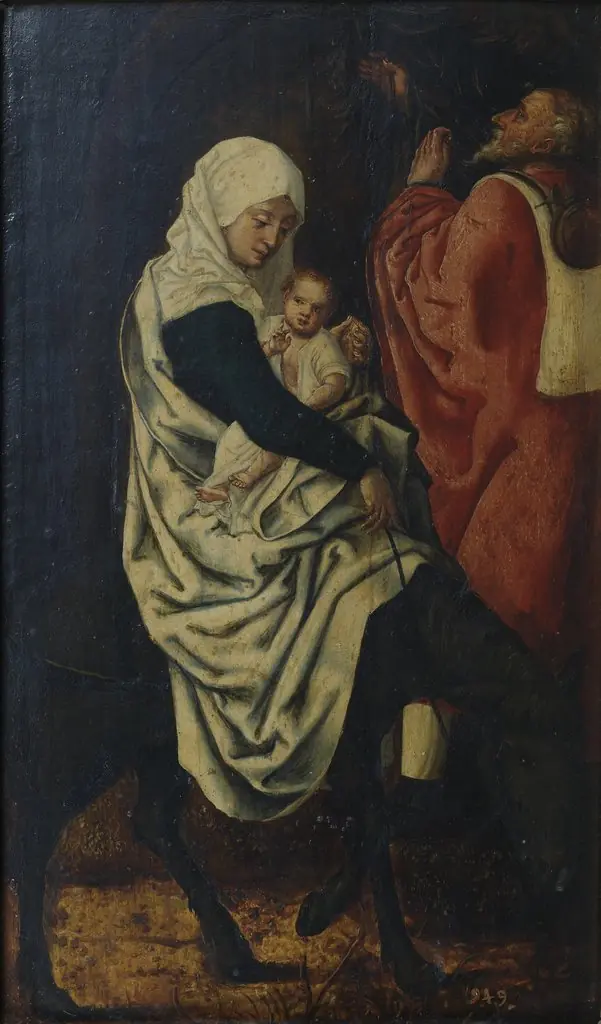 The Flight into Egypt
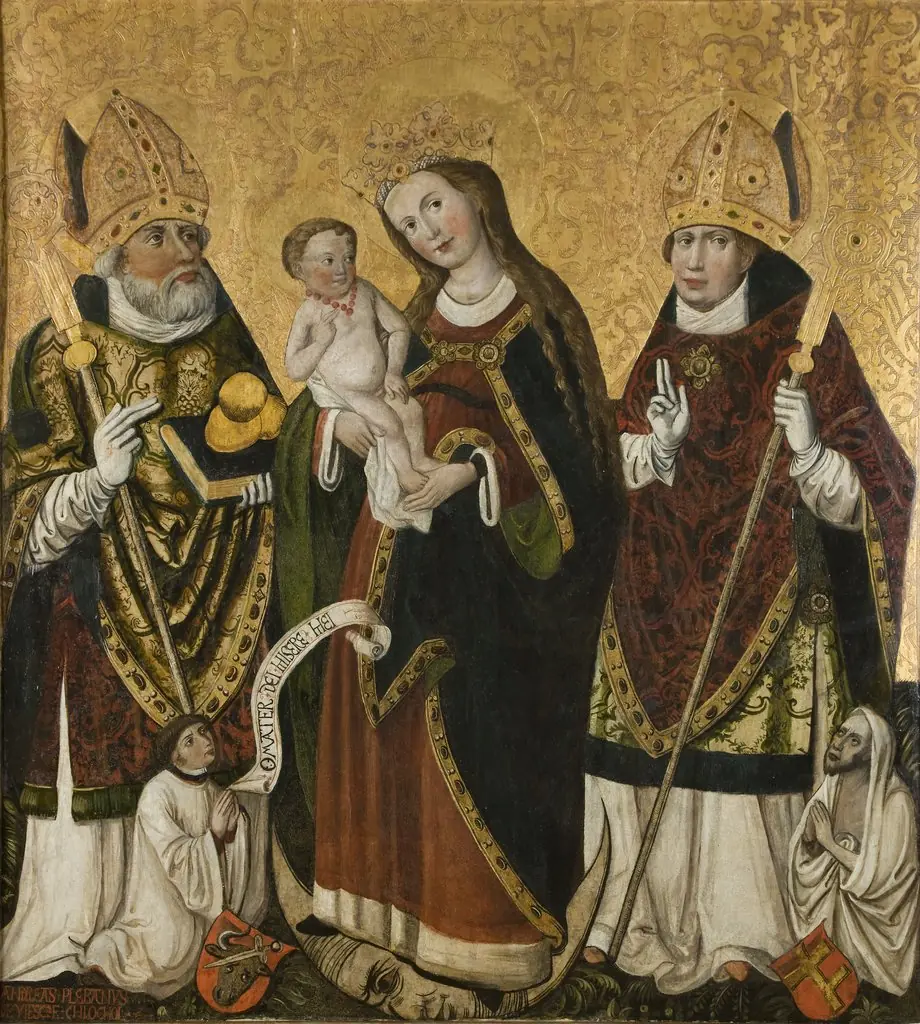 Matka Boska z Dzieciątkiem i świętymi biskupami - Mikołajem i Stanisławem. Korpus retabulum ołtarza głównego w Bejscach
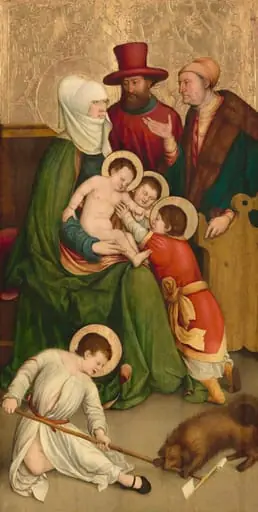 Saint Mary Cleophas and Her Family
 Anbetung der Könige
 Linker Flügel des sog. Pretschlaipfer-Triptychons: Hll. Christophorus und Jakobus Major (Innenseite); Verkündigung an Maria (Außenseite)
 Left wing of an altarpiece with the Circumcision (inner wing) and the Virgin of an Annunciation (outer wing)
 The Holy Family
 Saint Mary Salome and Her Family