Artwork
The king dreams of a lady, the personification of wealth, departing from him on account of his purchasing a bowl and a staff from a yogi, from a Tuti-nama (Tales of a Parrot): Thirty-sixth Night
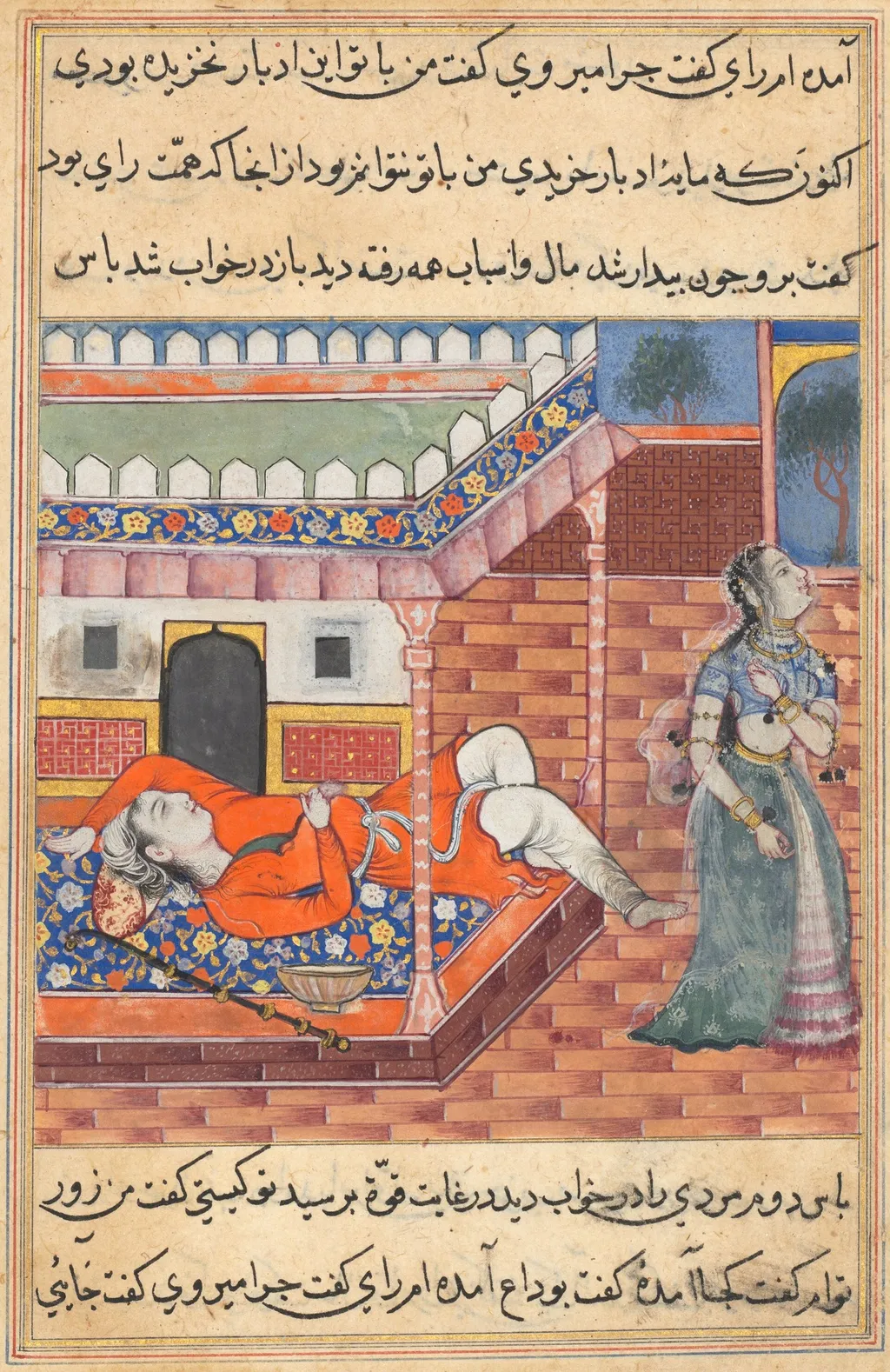
The king dreams of a lady, the personification of wealth, departing from him on account of his purchasing a bowl and a staff from a yogi, from a Tuti-nama (Tales of a Parrot): Thirty-sixth Night is an unspecified painting. It dates from 1560 and is held in the collection of the Cleveland Museum of Art. The work depicts a richly dressed man reclined on a bed, clutching a bowl, while a white elephant stands nearby.
About this work
Overview
The work depicts a richly dressed man reclined on a bed, clutching a bowl, while a white elephant stands nearby. Above him, a woman dressed in blue and green leans on a balcony, fan in hand, her gesture suggesting departure. Red brick walls and a balcony railing painted with blue‑gold patterns frame the scene, and Arabic calligraphy borders the top and bottom edges.
Subject & Meaning
The composition illustrates a narrative moment from the Tuti‑nama, a collection of parrot tales. The title explains that the king’s beloved, personified as wealth, leaves him after he purchases a bowl and a staff from a yogi, symbolizing the loss of prosperity through material desire.
Technique & Style
Executed in vibrant pigments, the painting employs a flat decorative surface typical of Persian miniature traditions, with bold outlines and stylized figures. The use of contrasting reds, blues, and golds emphasizes the opulent setting, while the linear Arabic script integrates text and image in a unified visual narrative.
History & Provenance
The piece originates from the Persian manuscript tradition of the Tuti‑nama, likely produced in the 16th‑17th century for a courtly audience. It entered the Cleveland Museum of Art’s collection through a mid‑20th‑century acquisition of Persian miniatures, though specific donor details are not recorded in the provided information.
Context
Within the larger manuscript, the illustration accompanies the thirty‑sixth night’s story, reflecting moral themes common in Islamic literature that caution against the pursuit of material excess. The presence of the white elephant, a symbol of royal power, underscores the king’s status even as his fortune wanes.
Artist & collection

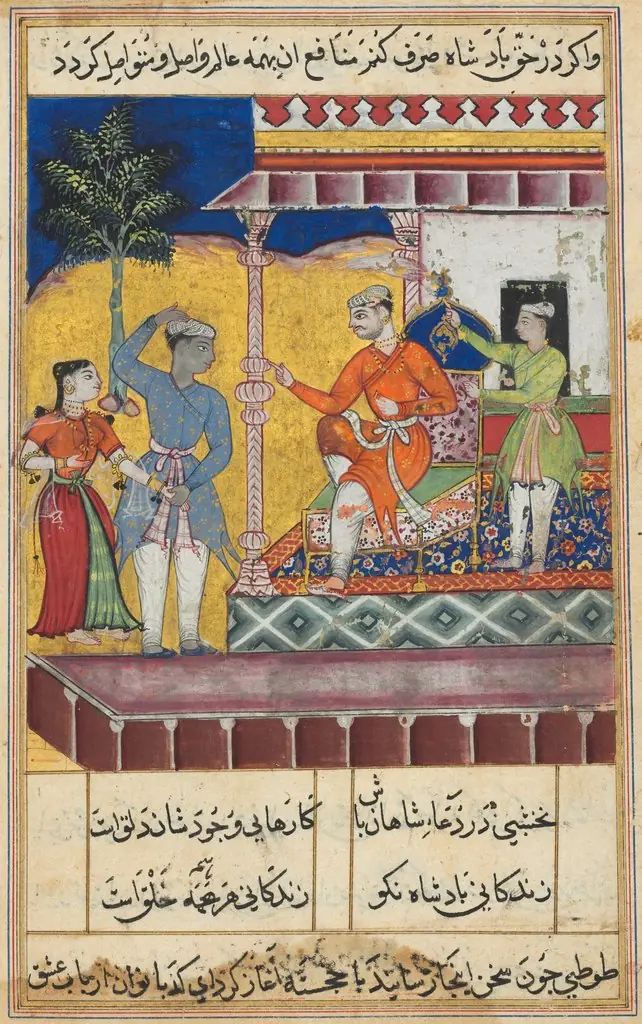 The rejuvenated old man and the daughter of the king of the jinns take leave of the King of Kings, from a Tuti-nama (Tales of a Parrot): Seventh Night
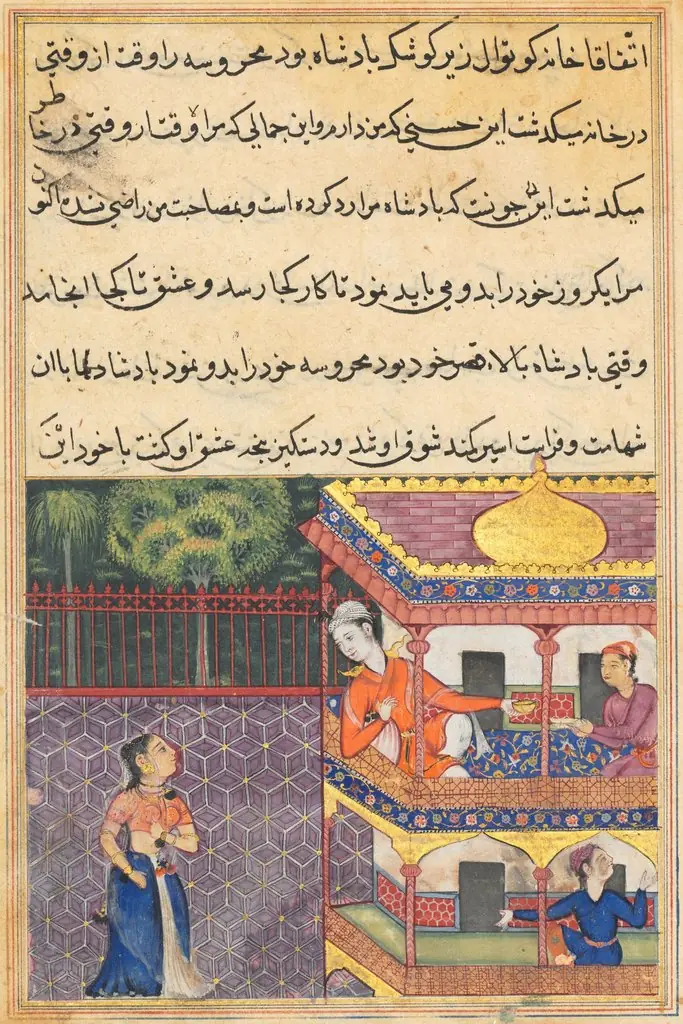 The king of Zabul sees Mahrusa from his palace balcony, from a Tuti-nama (Tales of a Parrot): Thirty-sixth Night
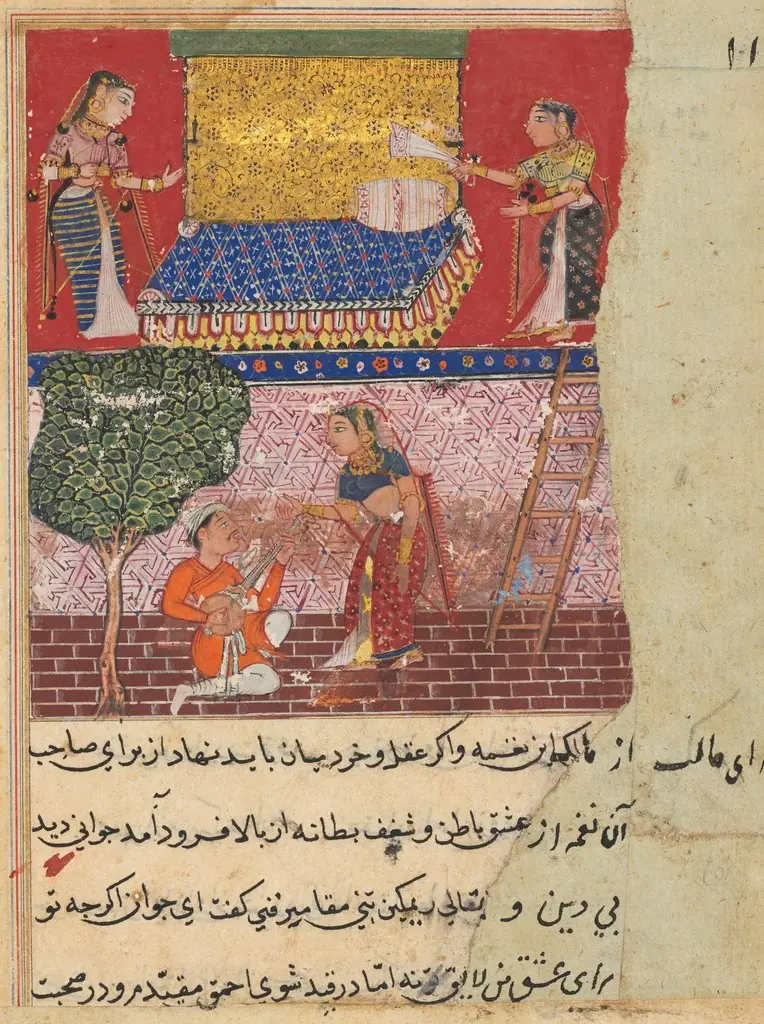 The daughter-in-law of the king of Banaras, charmed by the music of a vagabond, comes down to meet him, from a Tuti-nama (Tales of a Parrot): Sixteenth Night
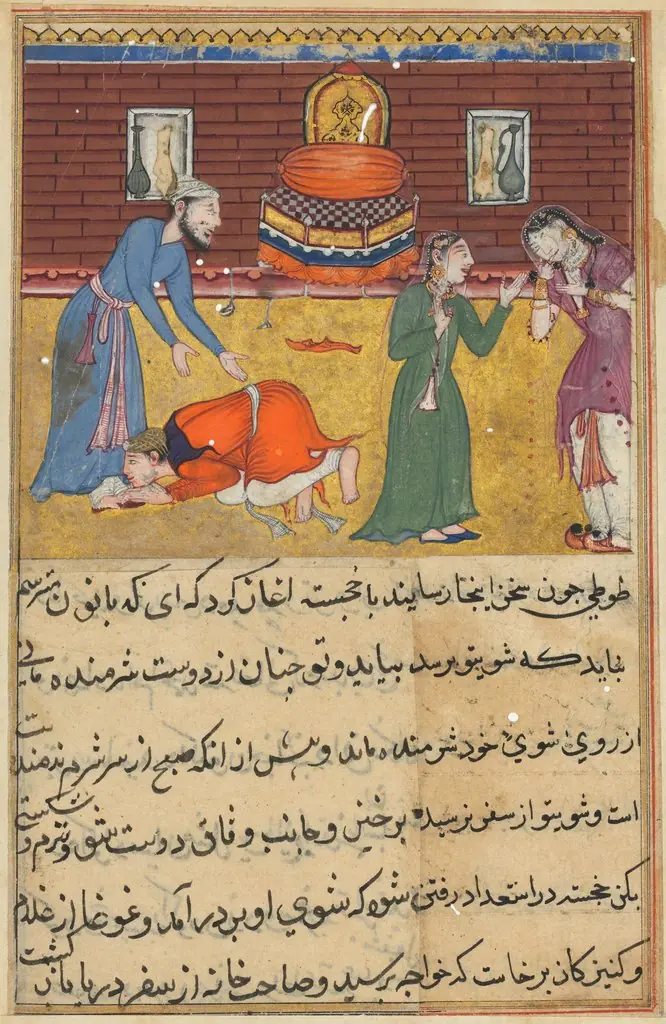 The pious man’s son, now a king, reveals himself to his father; his nurse upbraids his unfaithful mother, from a Tuti-nama (Tales of a Parrot): Fifty-second Night
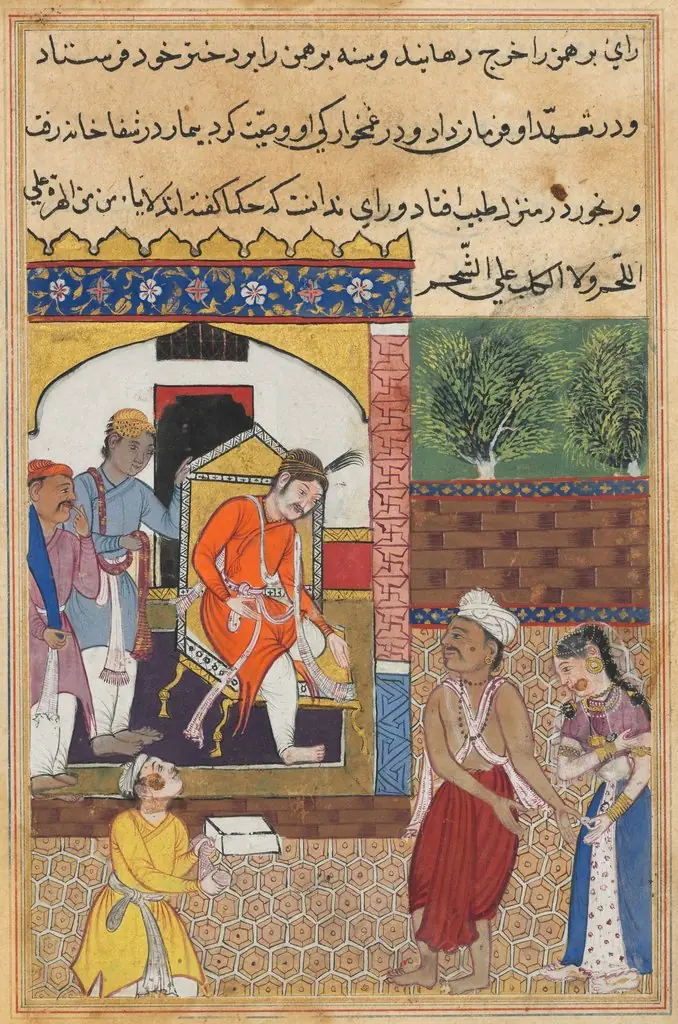 The magician, disguised as a Brahman, visits the king of Babylon, from a Tuti-nama (Tales of a Parrot): Thirty-fifth Night
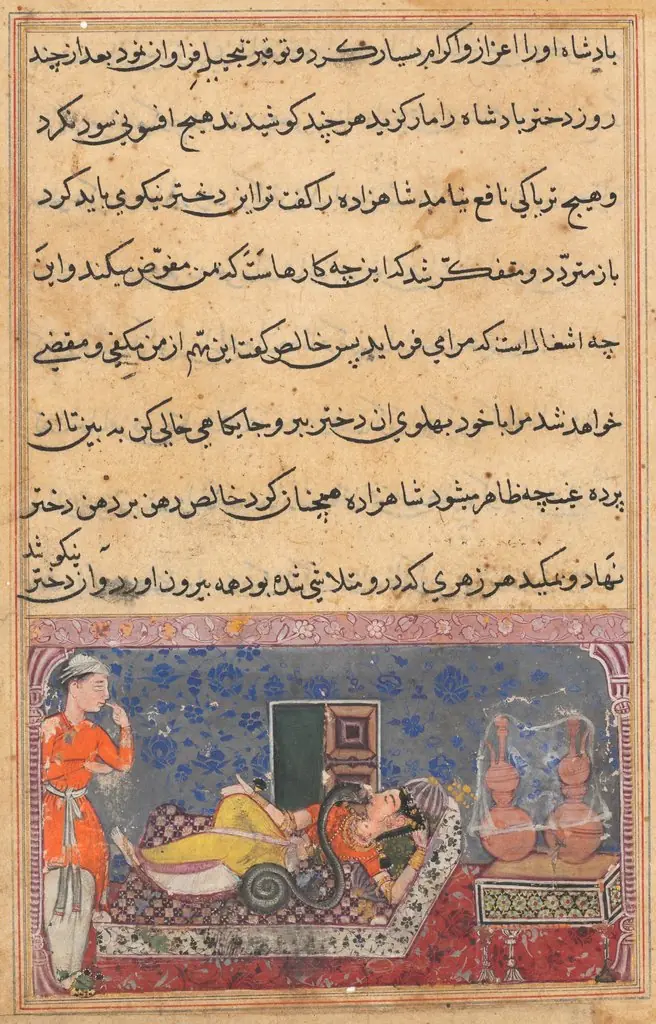 Khalis repays the prince for his kindness by changing into a snake and sucking the poison from the king’s daughter, from a Tuti-nama (Tales of a Parrot): Eighteenth Night
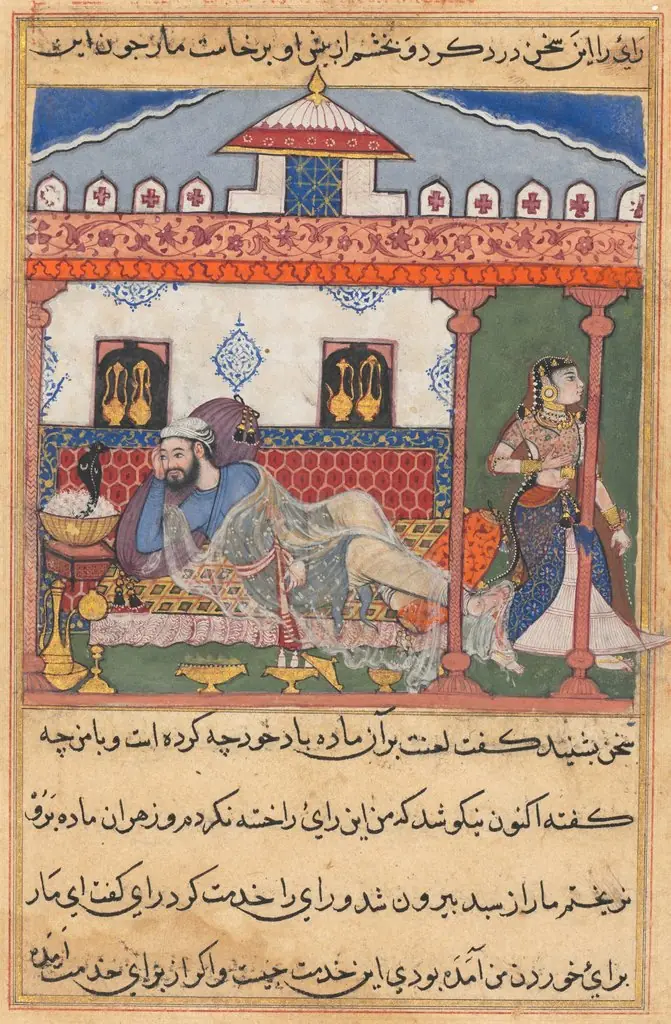 The snake, hidden in a basket of flowers, reveals himself to the Raja who has just sent away his wife, from a Tuti-nama (Tales of a Parrot): Forty-third Night
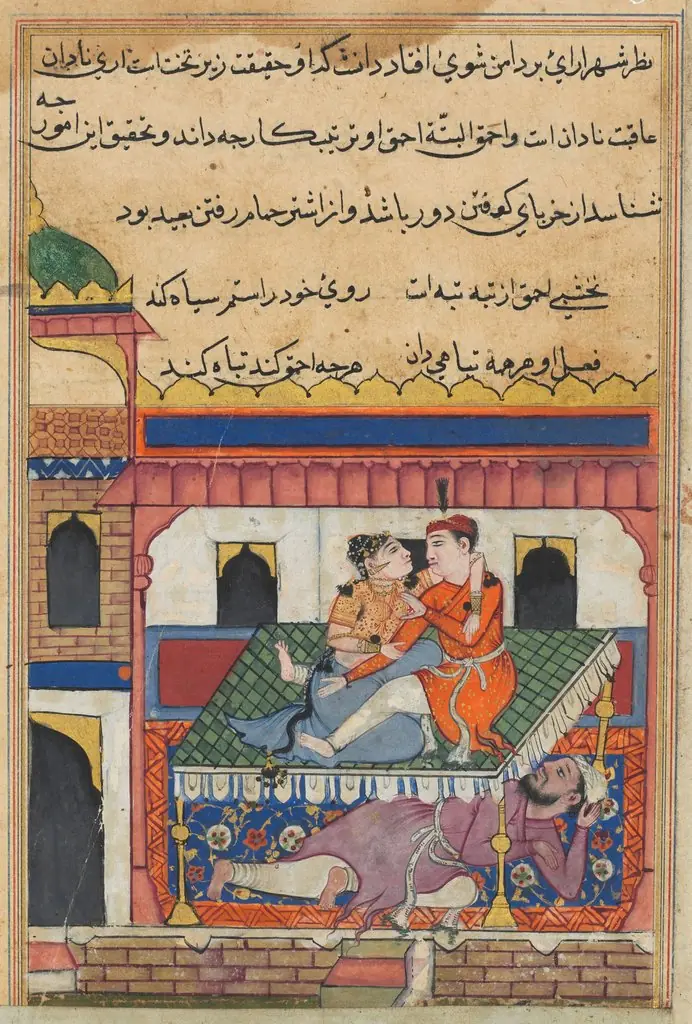 Shahr-Arai and her lover dallying on a bed beneath which is concealed her husband, from a Tuti-nama (Tales of a Parrot): Fortieth Night