Artwork
The lover of Hamnaz, who has been hanged from the gallows, bites off her nose when she kisses him, from a Tuti-nama (Tales of a Parrot): Twenty-fifth Night
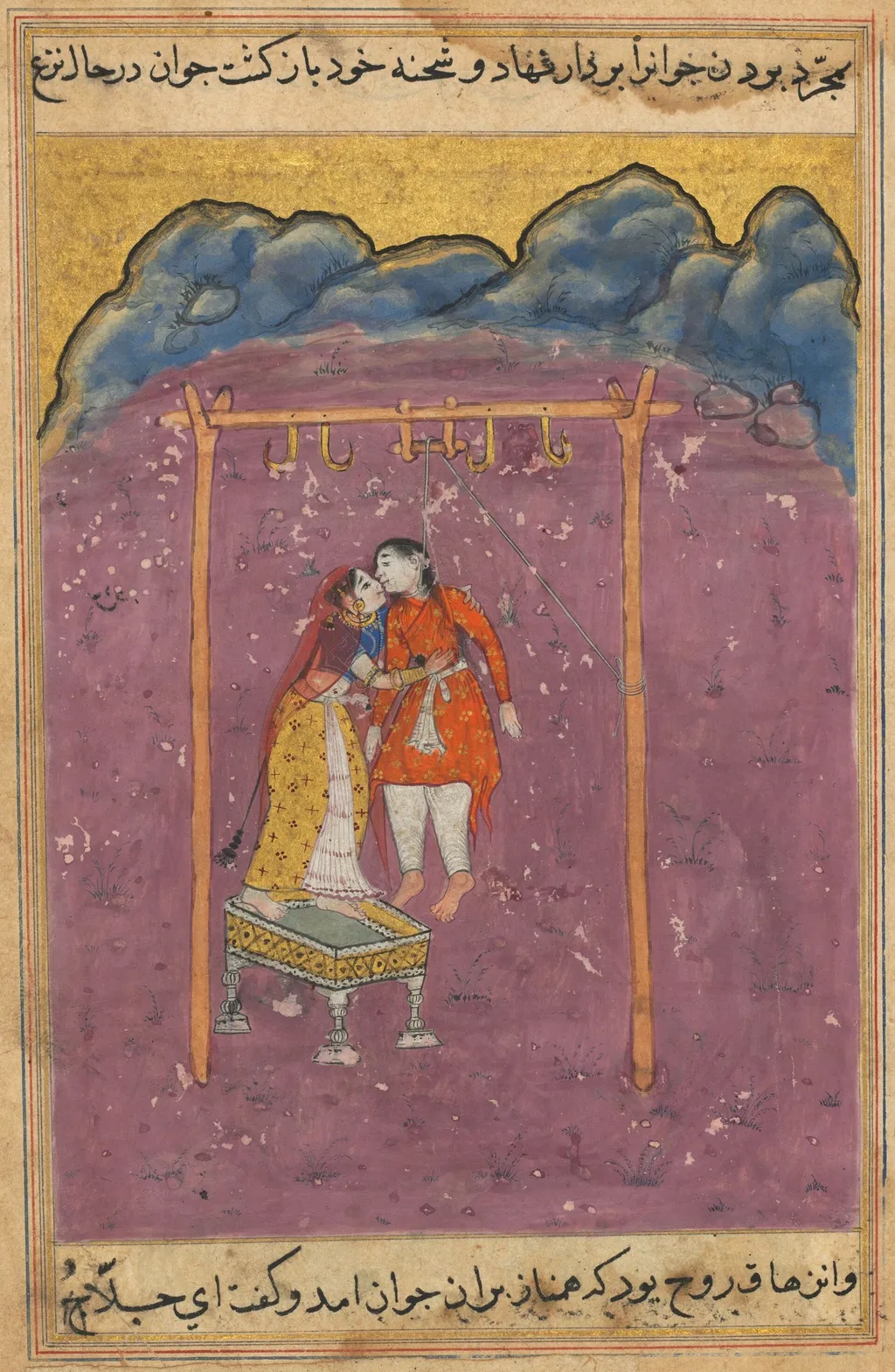
The lover of Hamnaz, who has been hanged from the gallows, bites off her nose when she kisses him, from a Tuti-nama (Tales of a Parrot): Twenty-fifth Night is an unspecified painting. It dates from 1560 and is held in the collection of the Cleveland Museum of Art. The canvas portrays a woman in a bright yellow dress and a red veil, poised on a modest platform.
About this work
Overview
The canvas portrays a woman in a bright yellow dress and a red veil, poised on a modest platform. She leans forward to kiss a suspended figure whose pallid face and limp posture suggest recent execution. The man, clad in an orange robe and white trousers, hangs from a gallows against a pink‑purple backdrop accented with blue and gold tones, while small rocks and foliage occupy the foreground.
Subject & Meaning
The scene illustrates a moment from the Persian narrative collection known as the Tuti‑nama, specifically the twenty‑fifth night in which a lover, condemned to death, receives a final kiss from his beloved. The woman's gesture, simultaneously tender and tragic, conveys an attempt at consolation amid inevitable loss, underscoring themes of devotion, mortality, and the visceral intensity of farewell.
Technique & Style
Rendered with a muted yet vivid palette, the artist employs flat areas of color to delineate clothing and background, while subtle modeling gives the figures a three‑dimensional presence. The composition balances decorative patterning—visible in the veil and ornamental background—with a narrative focus, allowing the emotional exchange to dominate the visual field.
History & Provenance
The work is part of the collection at the Cleveland Museum of Art. Its acquisition details trace back to the museum’s early 20th‑century purchases of Persian illustrated manuscripts, though the exact date of creation and the artist remain unidentified within the available records.
Context
Originating from the illustrated tradition of the Tuti‑nama, a medieval Persian anthology of moral tales narrated by a parrot, the painting reflects the manuscript’s practice of visualizing literary episodes. Such images served both decorative and didactic purposes, translating complex emotional narratives into accessible visual form for courtly audiences.
Artist & collection

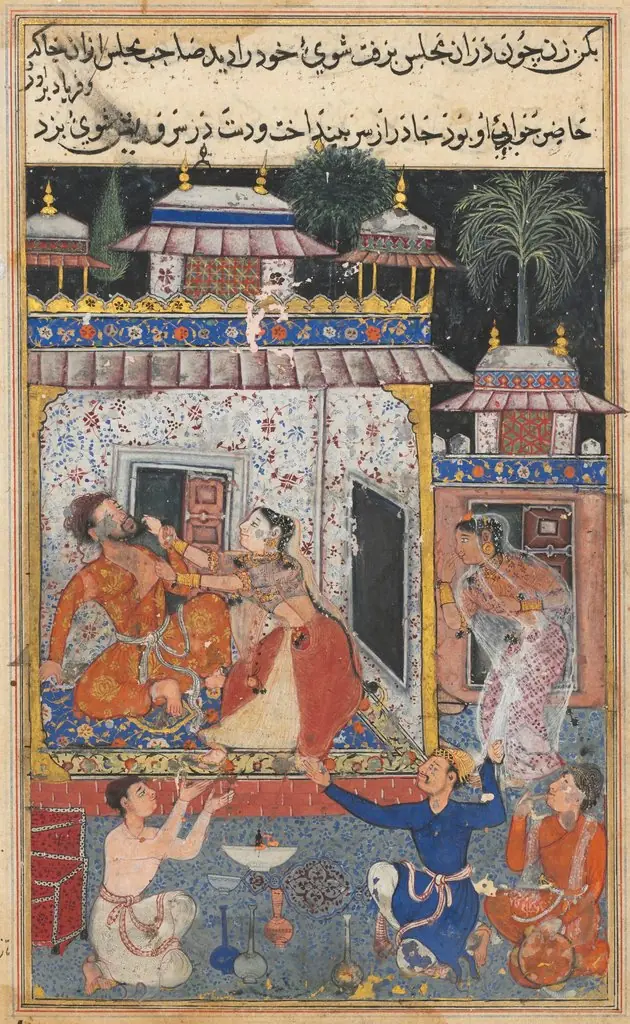 The deceitful wife assaults her erring husband, from a Tuti-nama (Tales of a Parrot): Eighth Night
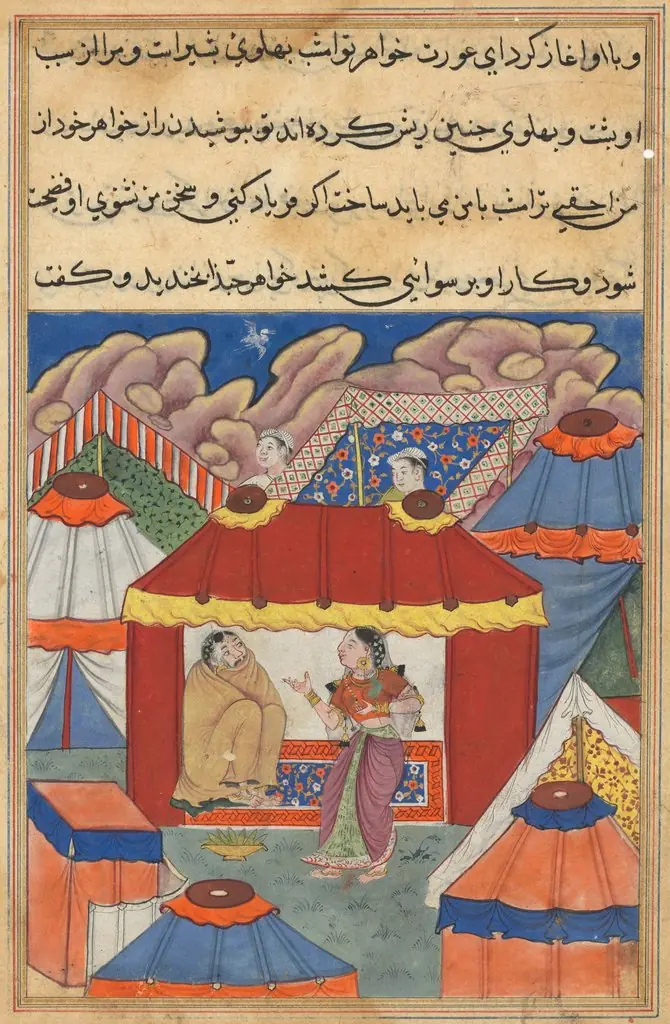 Habbaza’s sister, who is sent to console her, discovers the disguised Arab in her place, from a Tuti-nama (Tales of a Parrot): Twenty-fourth Night
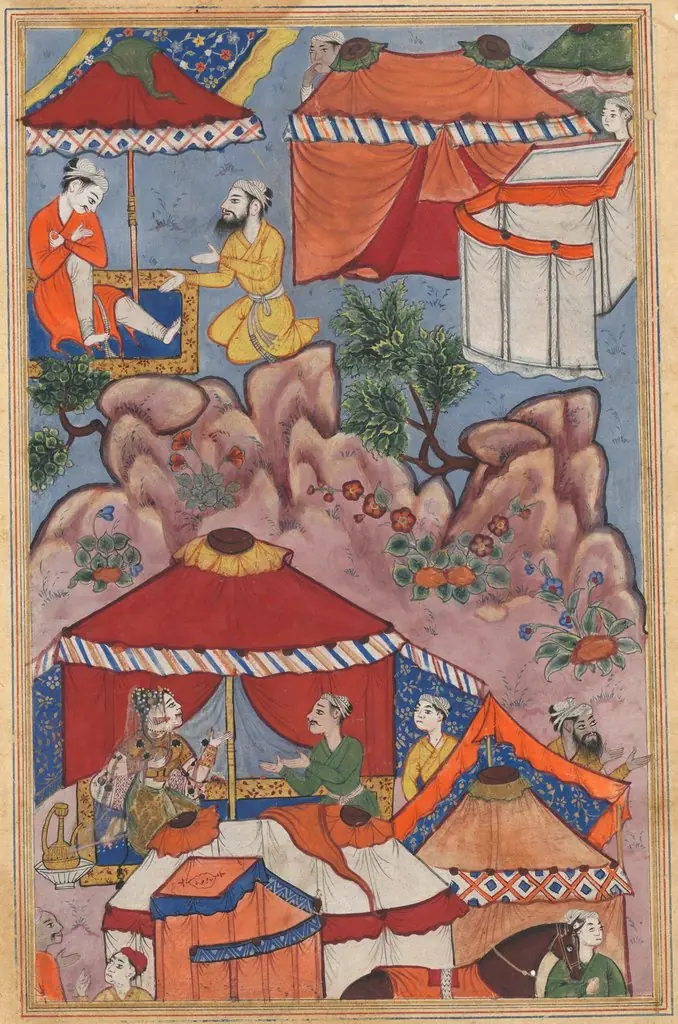 Bashir confides his love for Habbaza to an Arab friend, and sends him to her with a message, from a Tuti-nama (Tales of a Parrot): Twenty-fourth Night
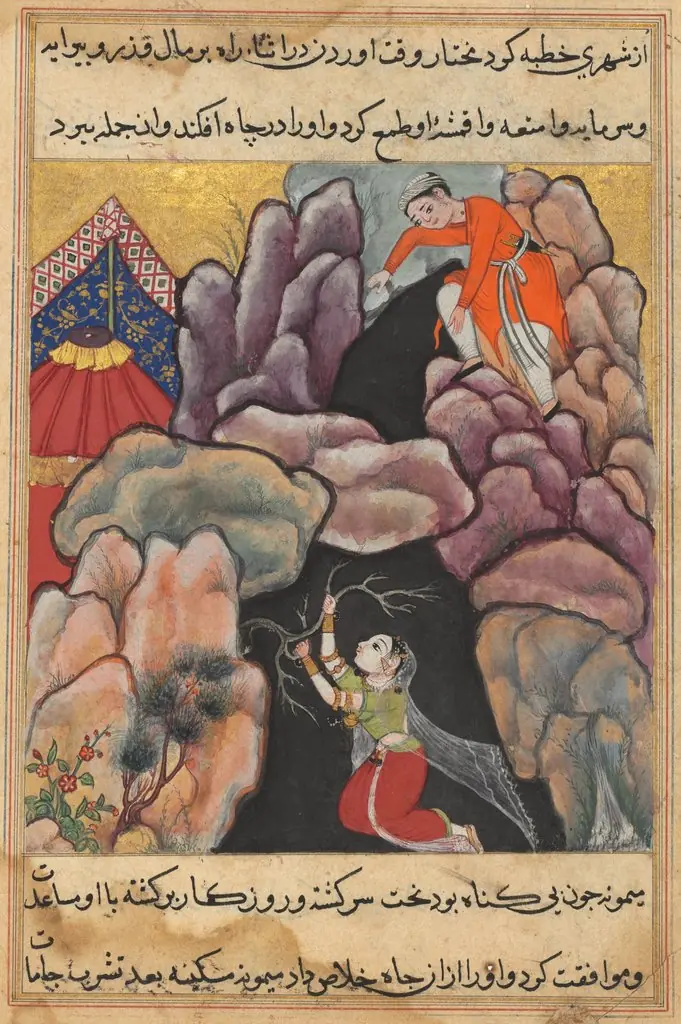 Mukhtar throws his wife Maimuna into the pit, but she saves herself, from a Tuti-nama (Tales of a Parrot): Twenty-fifth Night
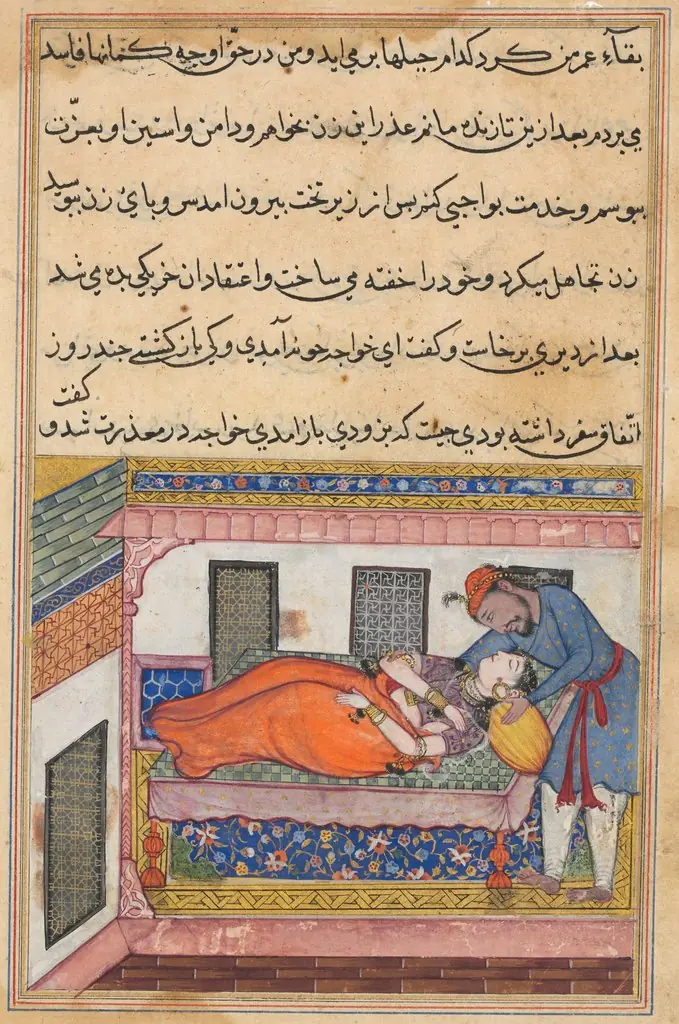 Shahr-Arai’s husband bends to kiss his wife who feigns sleep, from a Tuti-nama (Tales of a Parrot): Fortieth Night
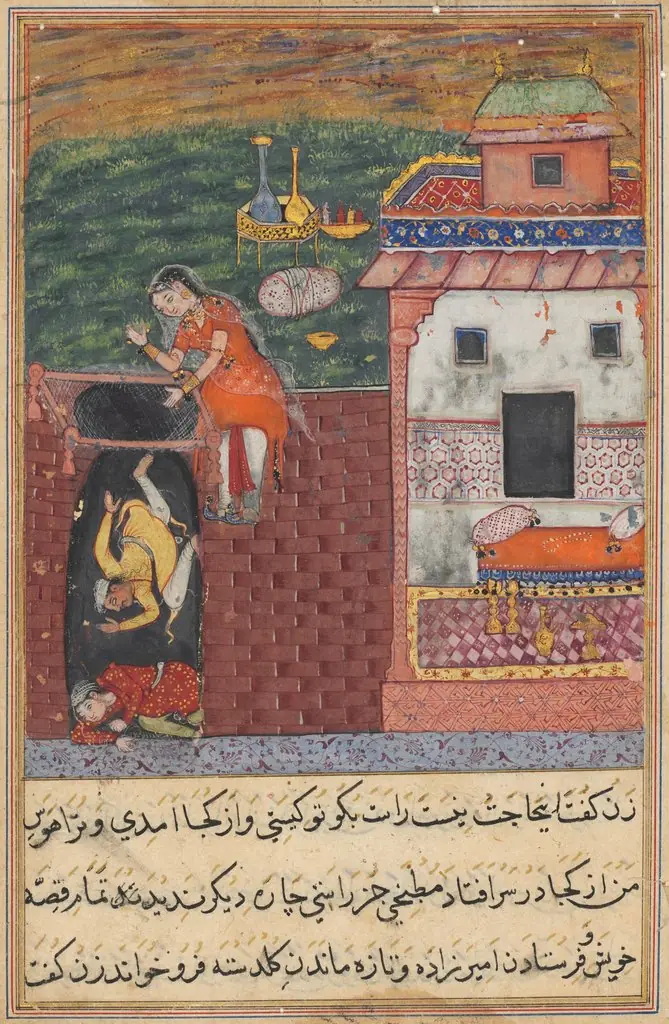 The two cooks, who attempt to seduce the warrior’s loyal wife, are trapped by her in a cellar, from a Tuti-nama (Tales of a Parrot): Fourth Night
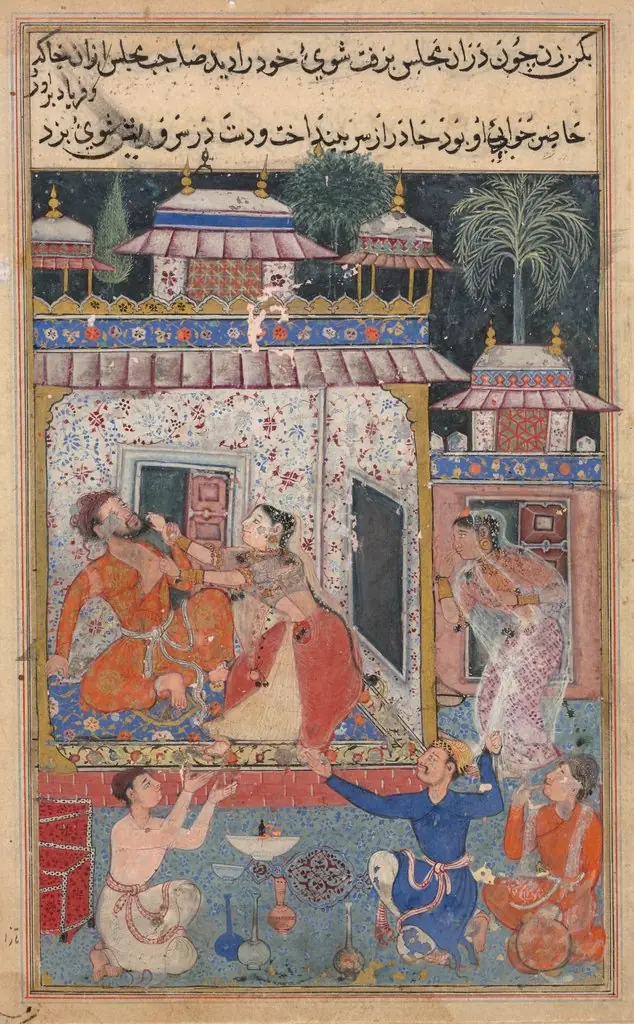 Page from Tales of a Parrot (Tuti-nama): text page
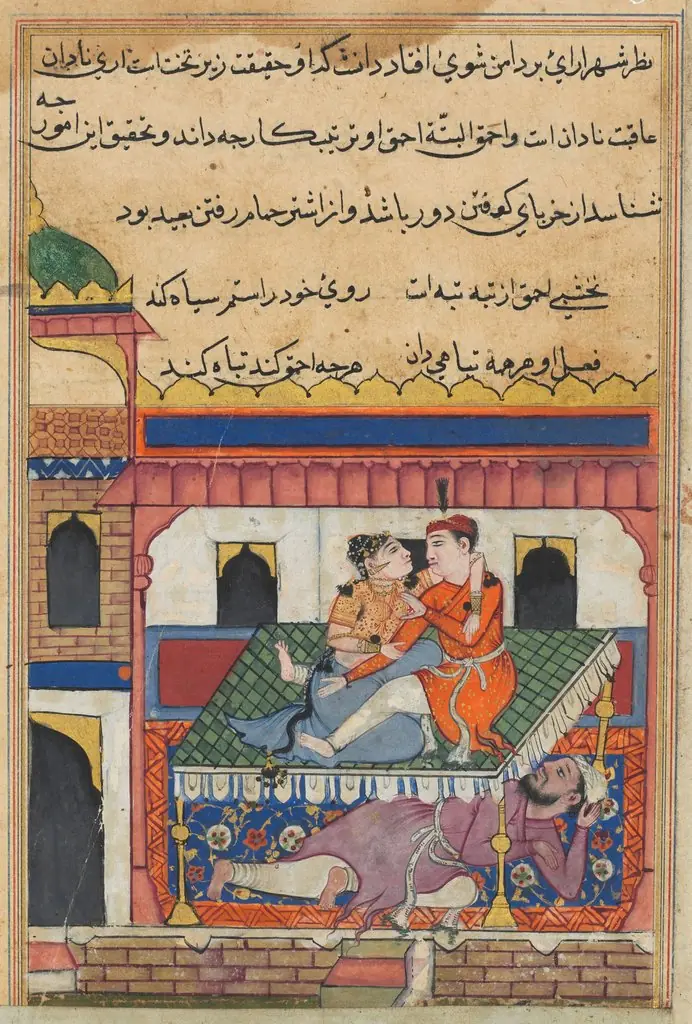 Shahr-Arai and her lover dallying on a bed beneath which is concealed her husband, from a Tuti-nama (Tales of a Parrot): Fortieth Night
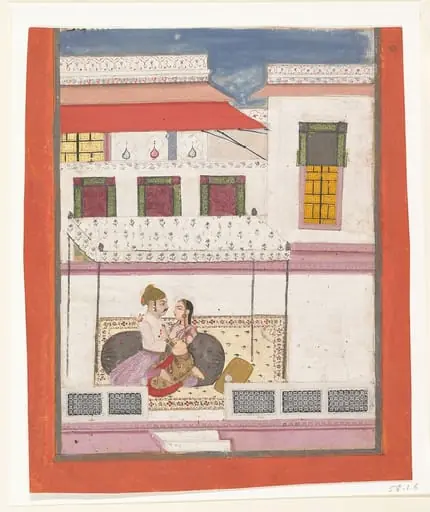 Untitled
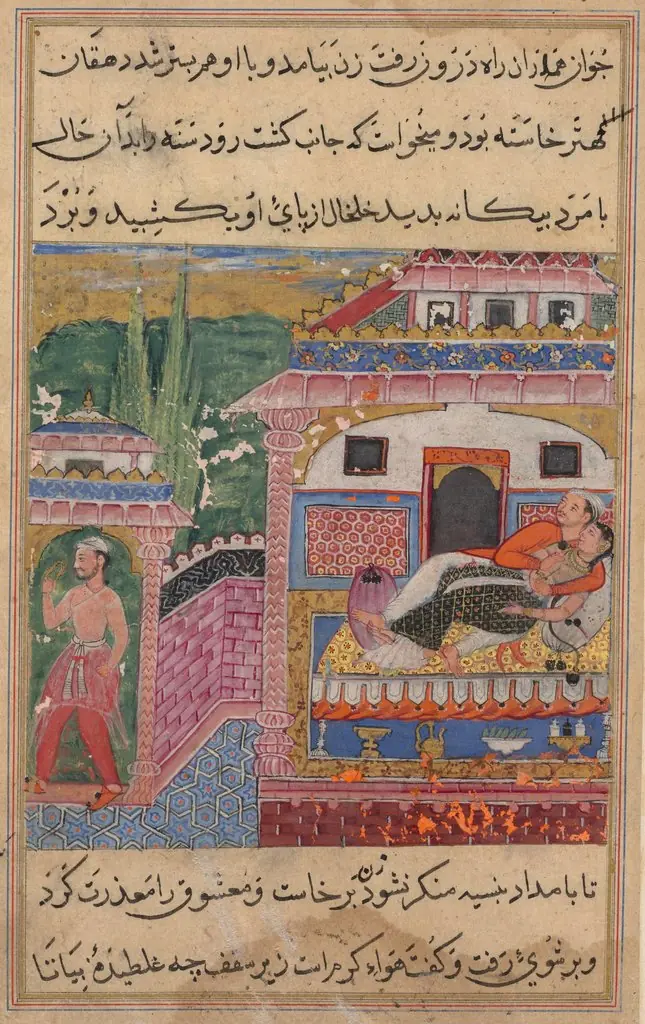 The deceitful wife persuades her husband to sleep in the same place where she had previously slept with her lover, from a Tuti-nama (Tales of a Parrot): Eighth Night