Artwork
Vika Viswahali. Dress of an (E) Mswahali of Zanzibar - About 1866. Arthur Ackland Hunt
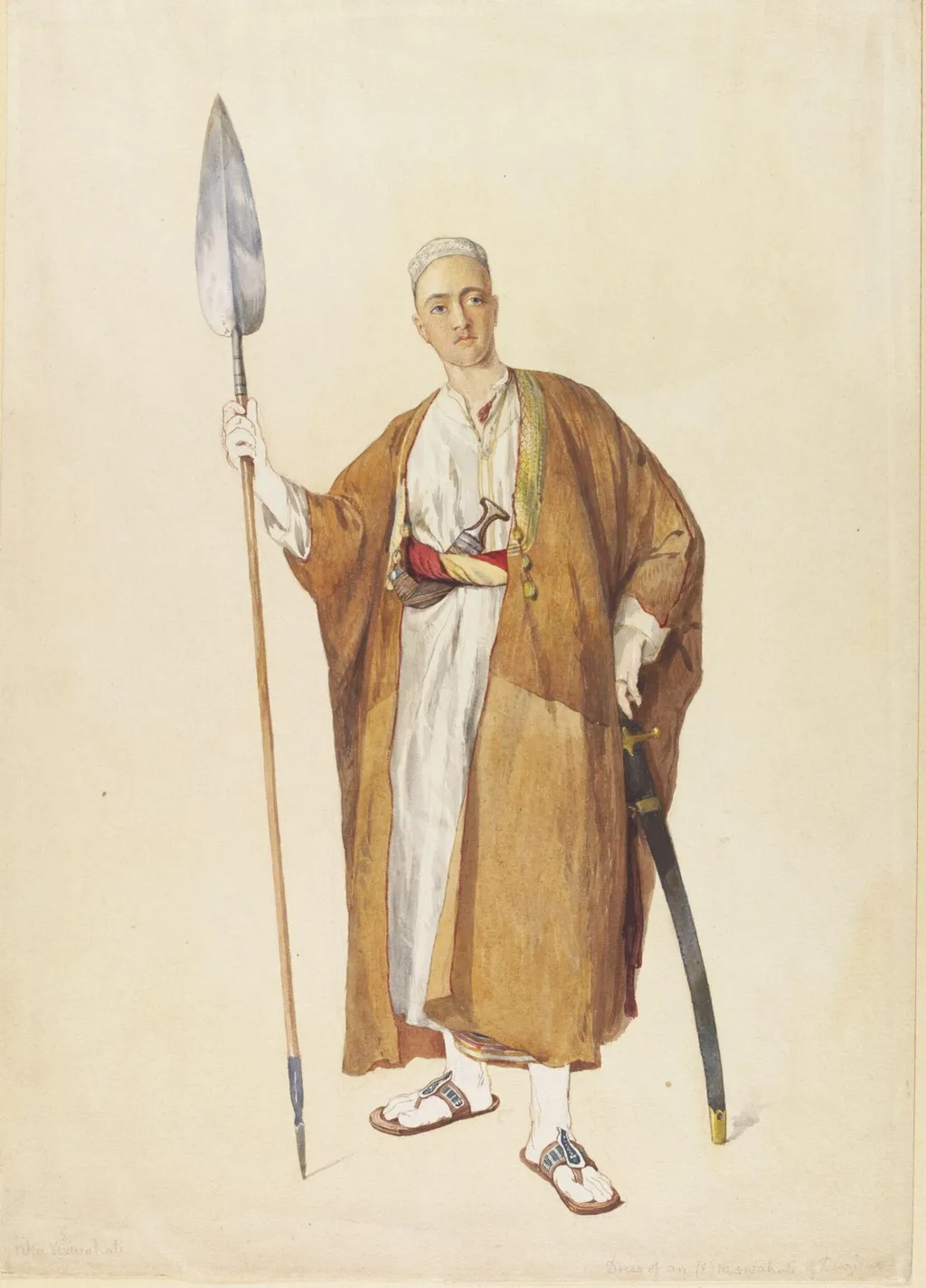
Vika Viswahali. Dress of an (E) Mswahali of Zanzibar - About 1866. Arthur Ackland Hunt is a watercolor work on paper by the Impressionist artist Arthur Ackland Hunt. It dates from 1866 and is held in the collection of the Victoria and Albert Museum.
About this work
The robe’s rich color and the man’s confident stance suggest he might be someone important.
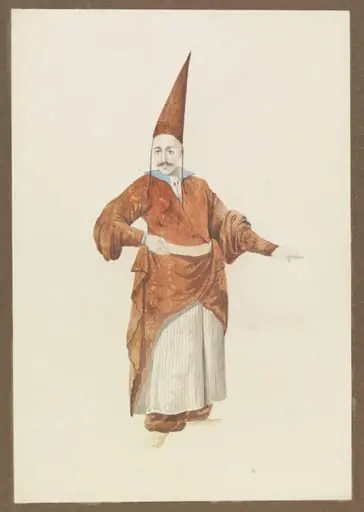
This painting shows a man in a long, brown robe with a white undergarment. He holds a spear in one hand and a curved sword in the other, tucked into a belt. His feet are bare, wearing simple sandals, and he has a white cap on his head. The background is plain, keeping all focus on him.
The robe’s rich color and the man’s confident stance suggest he might be someone important. The painting was made around 1866, showing a person from Zanzibar.
Check out the Victoria and Albert Museum to see more works like this.
Overview
Arthur Ackland Hunt’s watercolour, dated circa 1866, records the attire of an individual identified as an (E) Mswahali from Zanzibar. Executed in a modest format, the work isolates the figure against an unadorned background, directing attention to the costume and accoutrements.
Subject & Meaning
The sitter is portrayed in a long brown robe over a white shirt, barefoot with simple sandals, and wearing a white cap. He holds a spear in one hand and a curved sword sheathed at his belt, suggesting a status linked to martial or ceremonial roles within Swahili society, though the model’s facial features imply European ancestry.
Technique & Style
Hunt employs transparent washes typical of mid‑nineteenth‑century British watercolour, allowing the brown robe’s hue to emerge with subtle gradations. The minimal background and restrained palette focus on the figure’s silhouette and the delicate rendering of fabric folds and weaponry.
Context
The Swahili coast, including Zanzibar, was a cultural crossroads where Arab and African influences merged. By the 1860s, European travelers and artists frequently documented local dress, often using European models to illustrate exotic costumes for audiences back home.
History & Provenance
The drawing entered the collection of the Victoria and Albert Museum, where it is catalogued among other nineteenth‑century ethnographic watercolours produced for British audiences interested in East African cultures.
Artist & collection

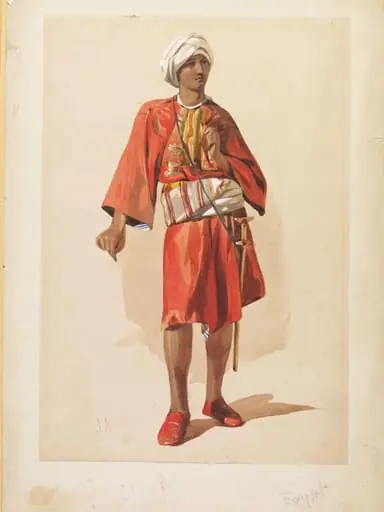 Young Soldier
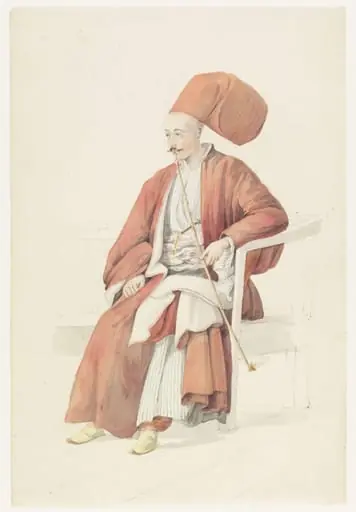 A Bostanci at the Court of the Sultan, seated on a bench, smoking
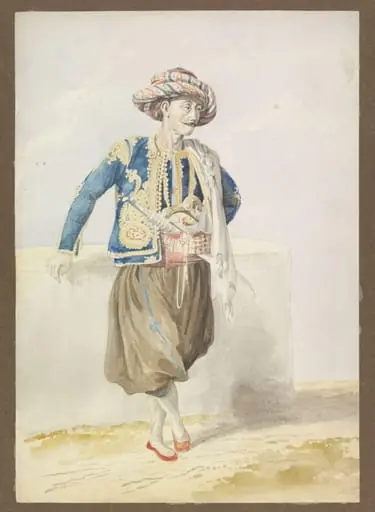 Kalyoncu, or Sea Captain
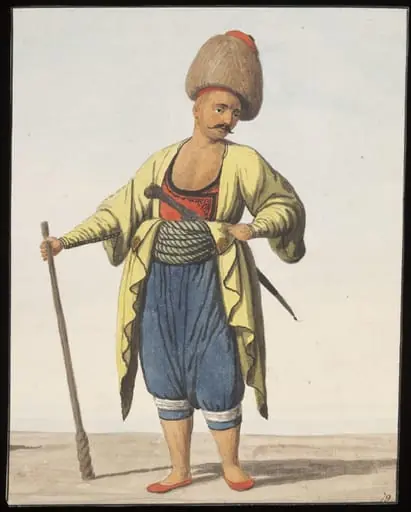 Bekçi, or watchman
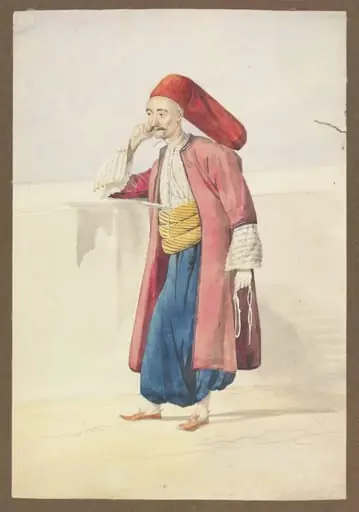 An Official at the Court of the Sultan
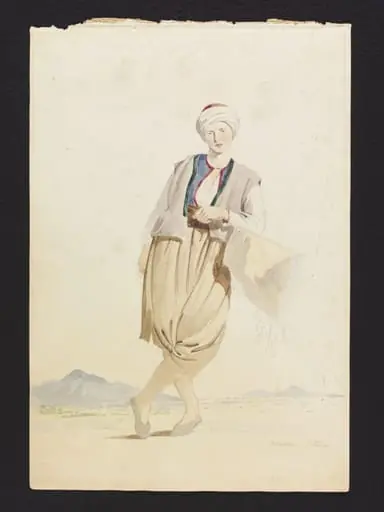 Osman - Athens
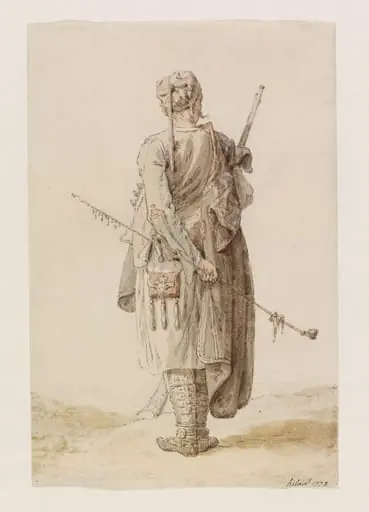 Albanian Soldier
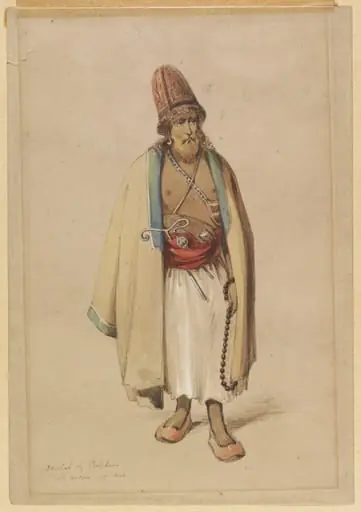 Dervish of Bokhara with Inkhorn and Diak
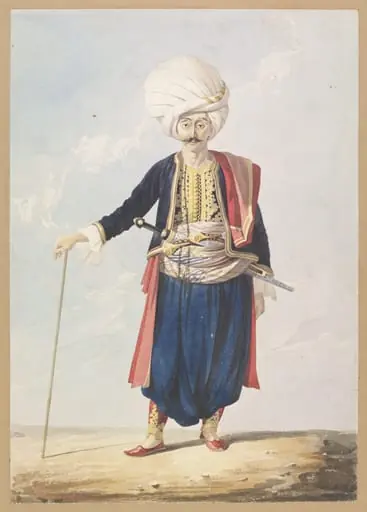 Janissary at the English Palace Constantinople
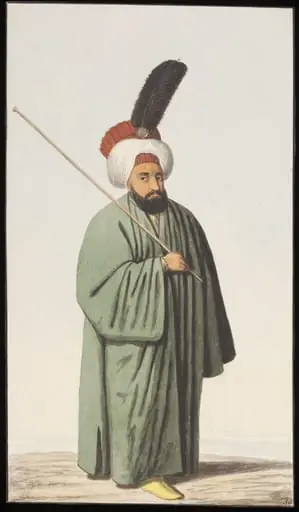 Basçavus, or Palace Usher
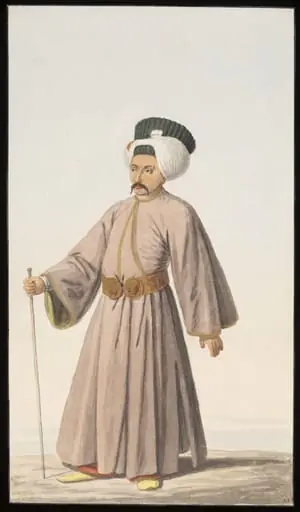 Çavus, or Palace Doorkeeper
 A Zülfü Baltaci