Artwork
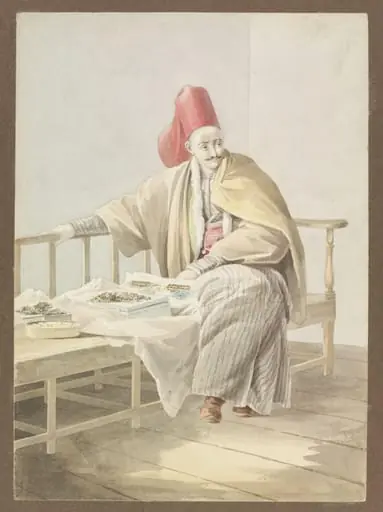
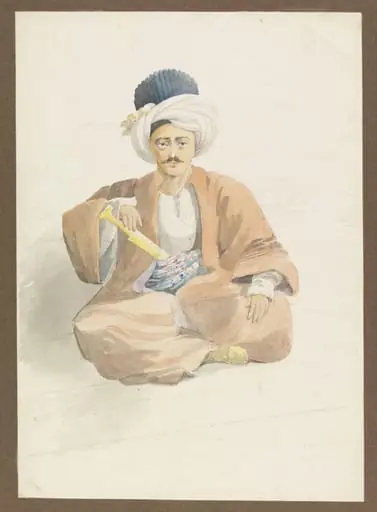
A Bostanci at the Court of the Sultan, seated on a bench, smoking
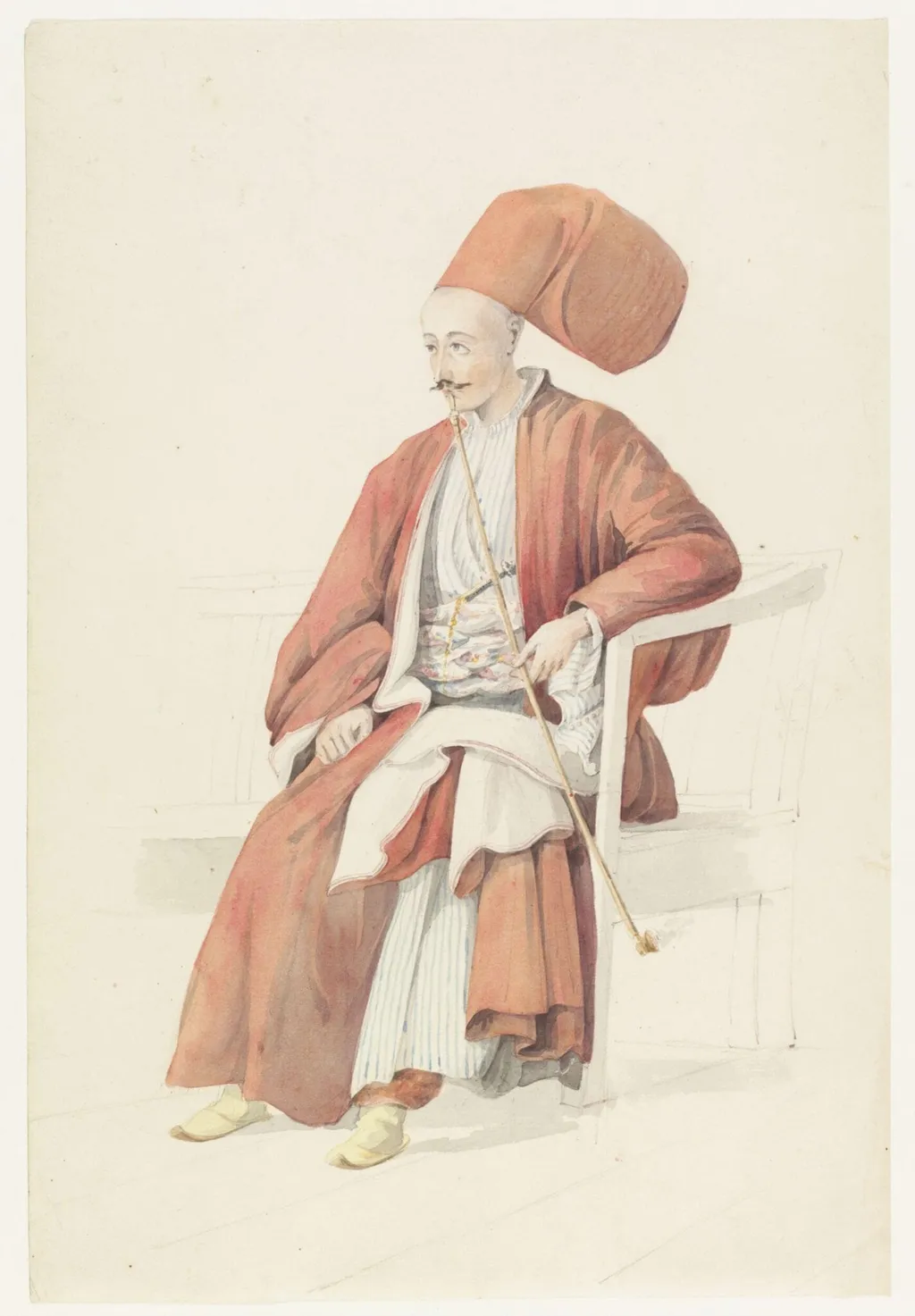
A Bostanci at the Court of the Sultan, seated on a bench, smoking is a watercolor work on paper by the American Folk Art artist William Page. It dates from 1820 and is held in the collection of the Victoria and Albert Museum. This watercolour depicts a Bostanci, an elite palace attendant and guard in the Ottoman court, seated on a simple bench and smoking a pipe.
About this work
Overview
This watercolour depicts a Bostanci, an elite palace attendant and guard in the Ottoman court, seated on a simple bench and smoking a pipe.
This watercolour depicts a Bostanci, an elite palace attendant and guard in the Ottoman court, seated on a simple bench and smoking a pipe. Executed in loose, soft brushwork, the piece belongs to a series of costume studies made during the artist’s time in the Near East. Its informal quality suggests it was intended as a visual record rather than a formal portrait, capturing a moment of everyday presence within the imperial setting.
Subject & Meaning
The Bostanci held a position of trust, serving as both protector and ceremonial attendant to the Sultan. This portrayal emphasizes his role through distinctive attire—the red robe and tall, floppy hat—while the act of smoking conveys a moment of quiet repose. The image does not idealize; instead, it presents the figure as a real individual within his institutional context, reflecting the artist’s interest in documenting lived experience rather than symbolic grandeur.
Technique & Style
Rendered in watercolour with minimal detail, the drawing uses fluid, spontaneous brushstrokes and muted tones to suggest form and texture. The fabric of the robe is indicated with subtle folds, and the background is barely suggested, focusing attention on the figure. The technique reflects an observational approach, prioritizing immediacy over finish, characteristic of travel sketches made on-site rather than studio compositions.
History & Provenance
Attributed to William Page, the work dates from his early period in the 1810s–1820s, when he was engaged in documenting regional dress and customs. It remained in private hands until its acquisition by a public institution in 1967. Its survival as part of a larger collection of costume studies highlights its value as ethnographic documentation from a period of increasing European interest in Ottoman society.
Context
During the early 19th century, European travelers and artists increasingly turned their attention to the Ottoman Empire, producing visual records of its people and customs. This drawing fits within that trend, offering a quiet, unembellished glimpse into palace life. Unlike grand historical scenes, it focuses on the ordinary rituals of service, revealing the cultural specificity of Ottoman court attendants through their dress and demeanor.
Legacy
As part of a broader corpus of 19th-century costume studies, this watercolour contributes to the historical record of Ottoman material culture. Its unpolished style and focus on daily life distinguish it from official portraiture, offering scholars insight into how foreign observers interpreted and recorded non-European social roles. It remains a quiet but valuable artifact of cross-cultural observation during a period of shifting global perceptions.
Artist & collection

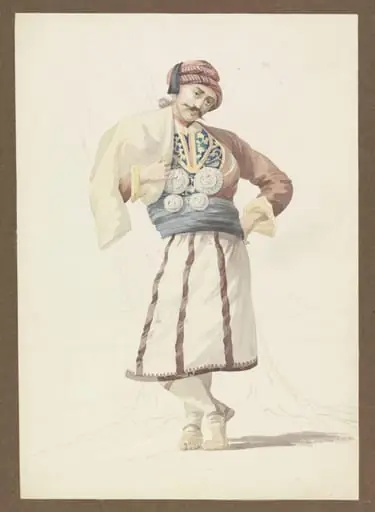
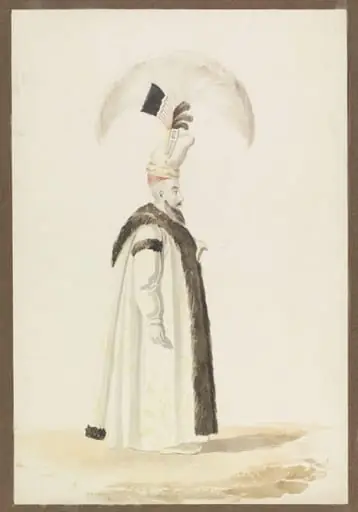
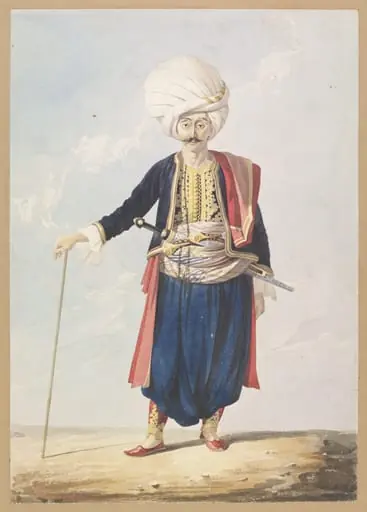
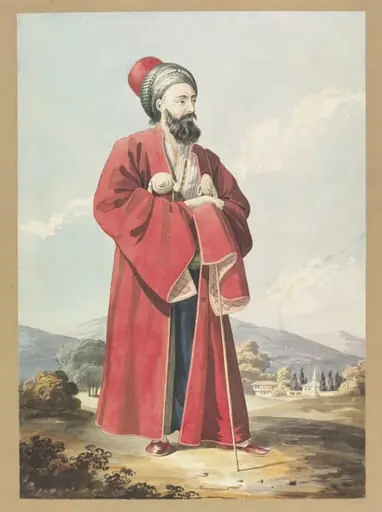
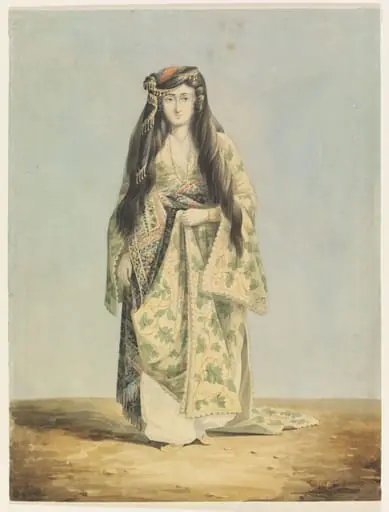
 Baltadgi
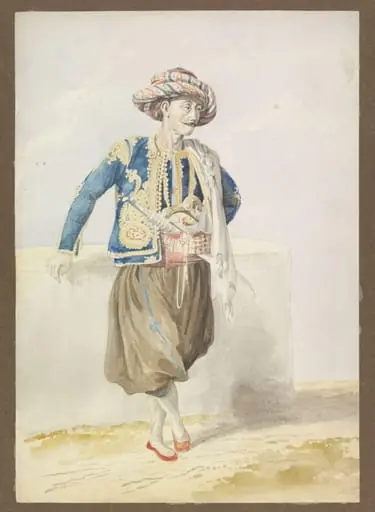 Kalyoncu, or Sea Captain
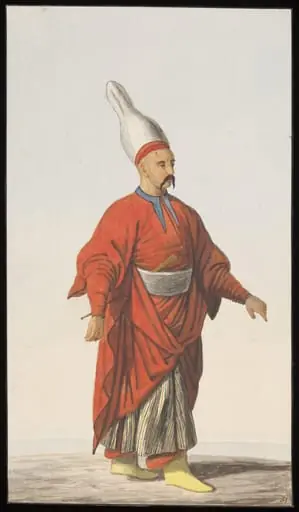 Kozbekçisi, or Steward of the Sultan's Wardrobe
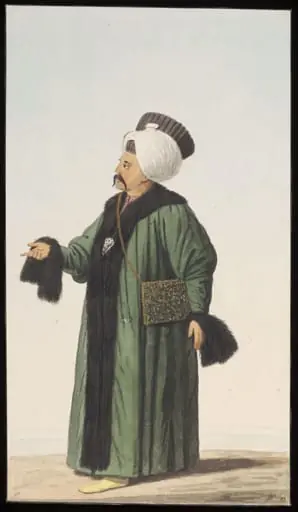 An Ottoman Official, perhaps the Sultan's private secretary,
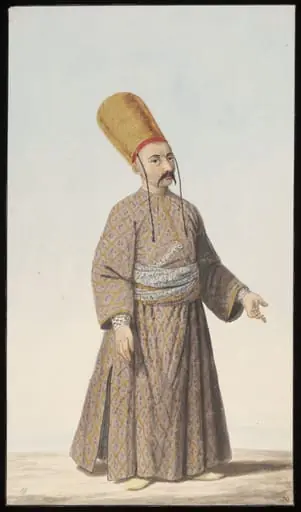 Zülüflü Baltaci, or Page of the first rank to the Sultan
 Jafer Beck Affendi
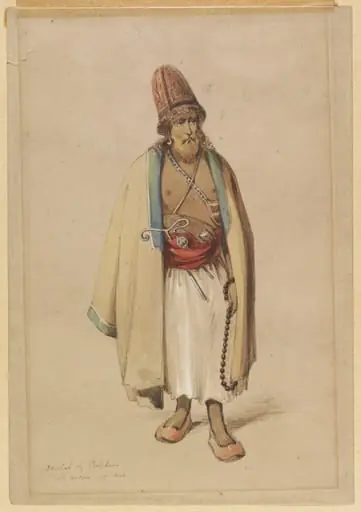 Dervish of Bokhara with Inkhorn and Diak
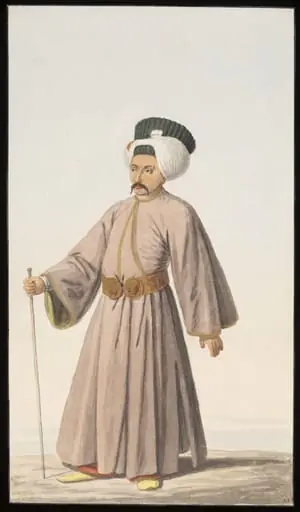 Çavus, or Palace Doorkeeper
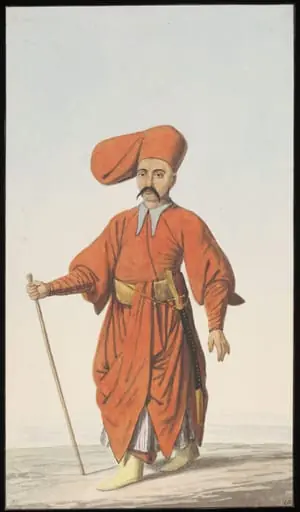 Bostanci, or Imperial Guard