Artwork
Bhisma
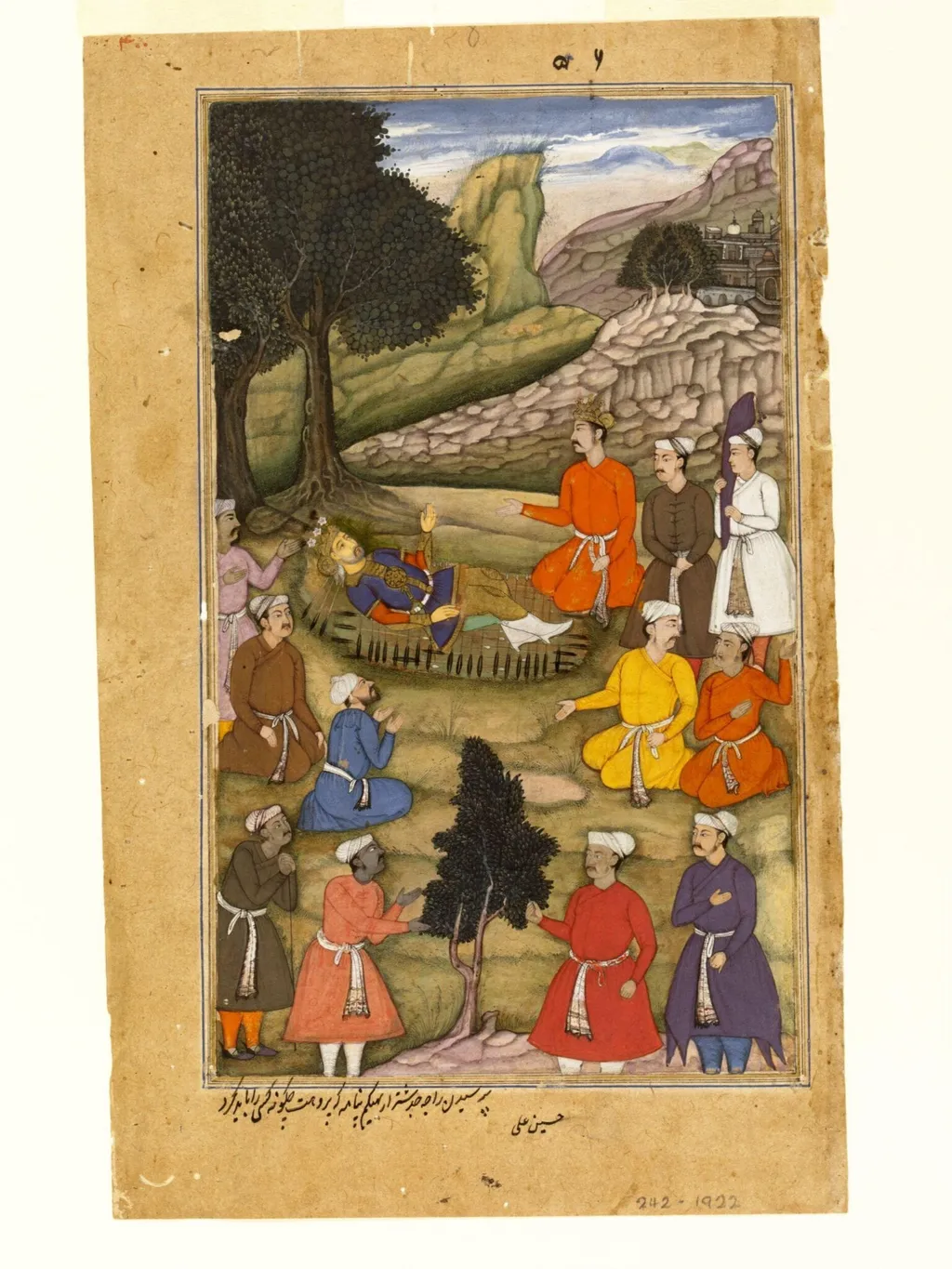
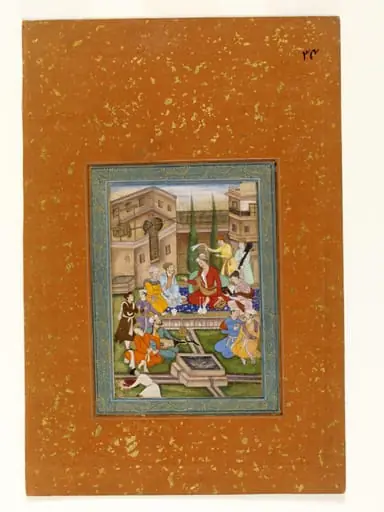
Bhisma is a paint painting by the Mughal Painting artist Husain Ali. It dates from 1598 and is held in the collection of the Victoria and Albert Museum. This opaque watercolor and gold painting on paper illustrates a scene from the Razm-nama, the Persian-language version of the Mahabharata.
About this work
Overview
The composition emphasizes ritualized dialogue over action, with figures arranged in a deliberate, ceremonial manner against a stylized landscape.
This opaque watercolor and gold painting on paper illustrates a scene from the Razm-nama, the Persian-language version of the Mahabharata. Created as part of a commissioned manuscript series, it captures the moment after the warrior Bhisma has been laid upon a bed of arrows. The composition emphasizes ritualized dialogue over action, with figures arranged in a deliberate, ceremonial manner against a stylized landscape.
Subject & Meaning
The scene portrays Bhisma, the fallen patriarch, engaged in final teachings with Yudhisthira, the eldest Pandava. Surrounded by courtiers and sages, the moment reflects themes of duty, wisdom, and mortality. One figure holds a scroll, suggesting the transmission of sacred knowledge. The gathering underscores the epic’s emphasis on dharma, even in death, transforming physical defeat into spiritual authority.
Technique & Style
The artist employs flat, saturated hues—crimson, ochre, and cobalt—outlined with bold, dark lines typical of Mughal-influenced Indian painting. Gold accents highlight textiles and architectural details, adding luminosity without naturalism. The landscape is simplified: distant hills, sparse trees, and faint structures create depth through layering rather than perspective, reinforcing the scene’s symbolic rather than documentary intent.
History & Provenance
The painting originated in a mid-17th-century Mughal atelier commissioned to translate the Mahabharata into Persian. It remained within imperial collections before entering private hands. Later held by L. Chaundy of Oxford, it was acquired by the Victoria and Albert Museum, where it now resides as part of a significant corpus of Indo-Persian manuscript illustrations.
Context
Produced during Shah Jahan’s reign, this work reflects the Mughal court’s interest in synthesizing Hindu epics with Persian literary traditions. The Razm-nama project was both cultural diplomacy and intellectual curiosity, bridging religious and linguistic divides. Such illustrations served as visual aids for elite audiences, reinforcing imperial patronage of syncretic scholarship.
Legacy
As one of many folios from the Razm-nama, this painting contributes to a broader understanding of how South Asian narratives were reinterpreted under Islamic rule. Its stylistic consistency with other Mughal miniatures highlights the adaptability of visual language across religious boundaries. Today, it remains a key reference for scholars studying cross-cultural manuscript production in early modern India.
Artist & collection
Artist
This guy painted like he was in a hurry. One hand sketching gods, the other stirring tea. He hid tiny jokes in big scenes—monkeys wearing crowns, kings wearing monkey faces. Look closer at *Bhisma* from 1598 and you’ll…

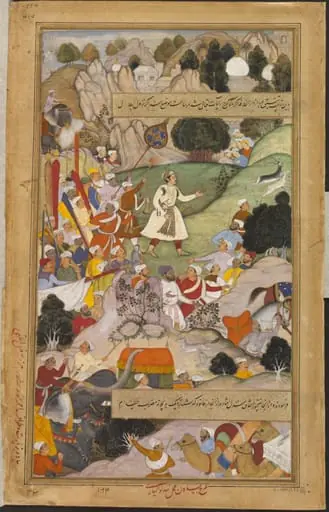 Akbar
Akbar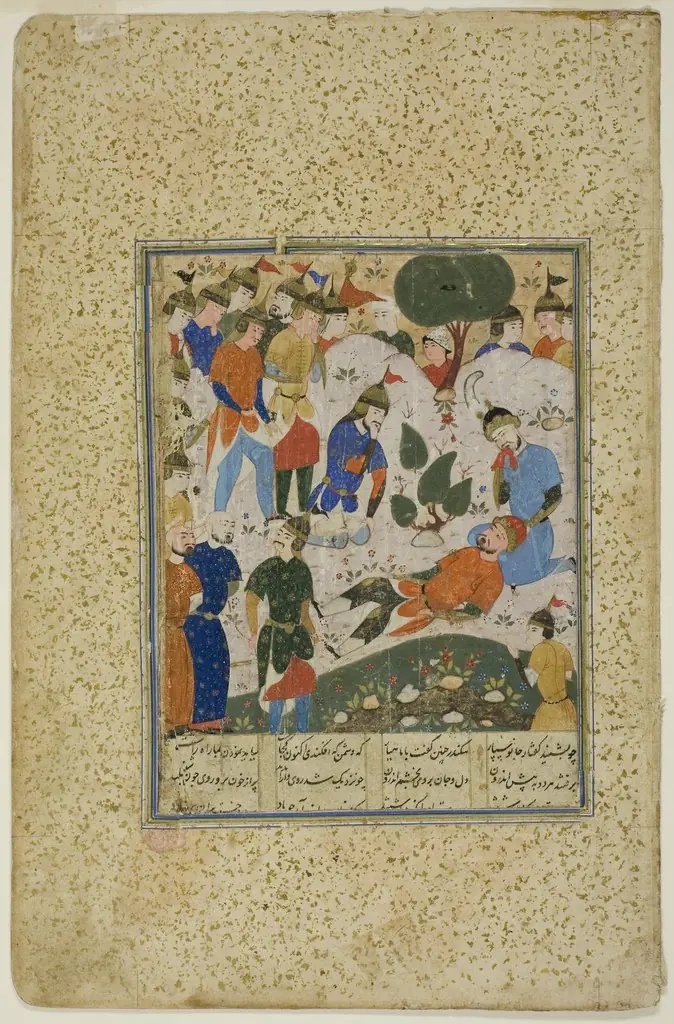 Iskander Comforts the Dying Darius
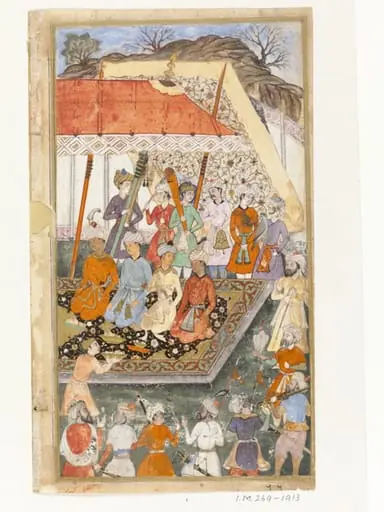 Untitled
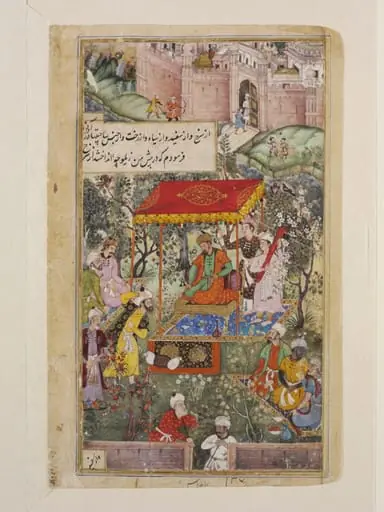 Untitled
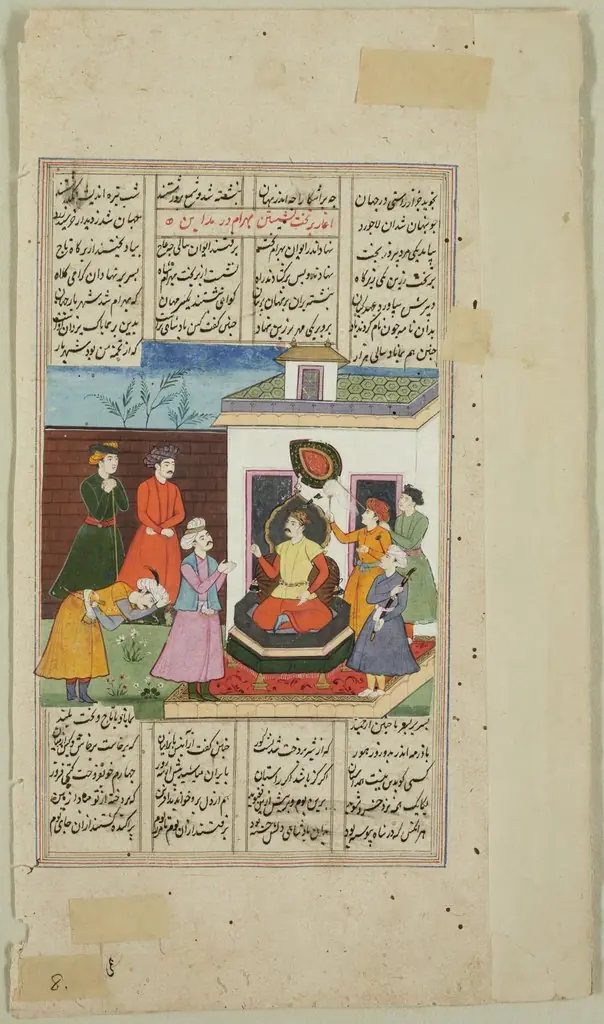 King Enthroned Outside and Standing Retainers
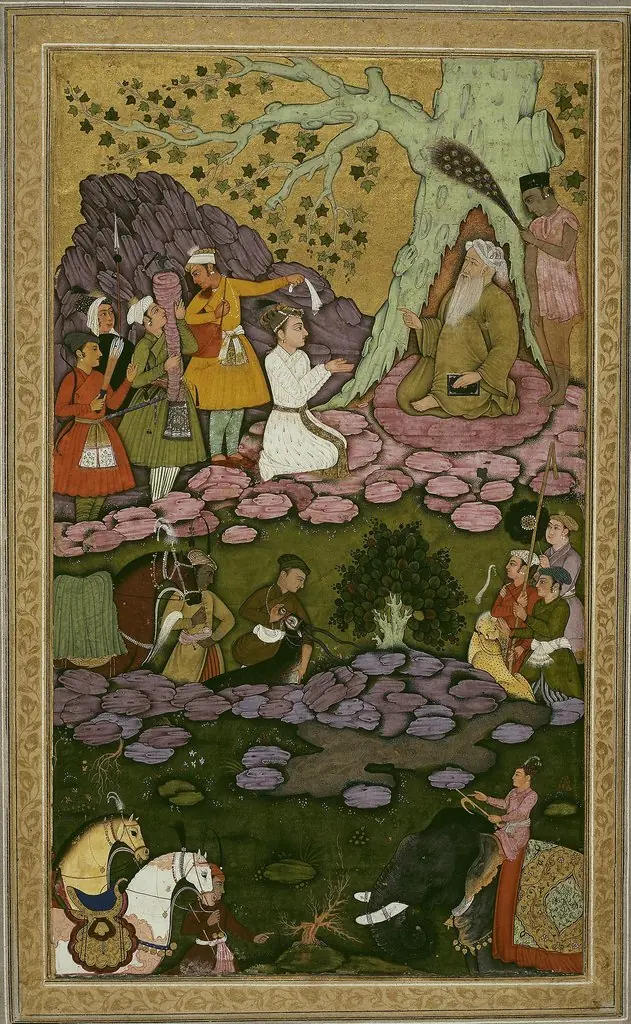 Prince Visiting an Ascetic during a Hunt
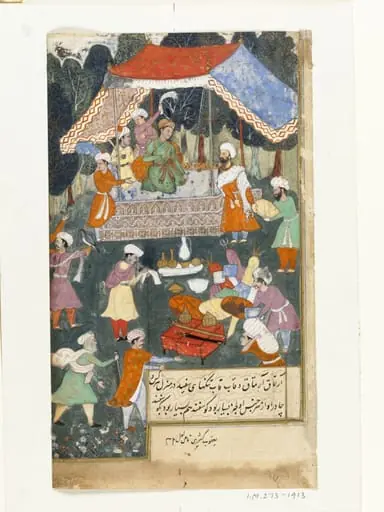 Untitled
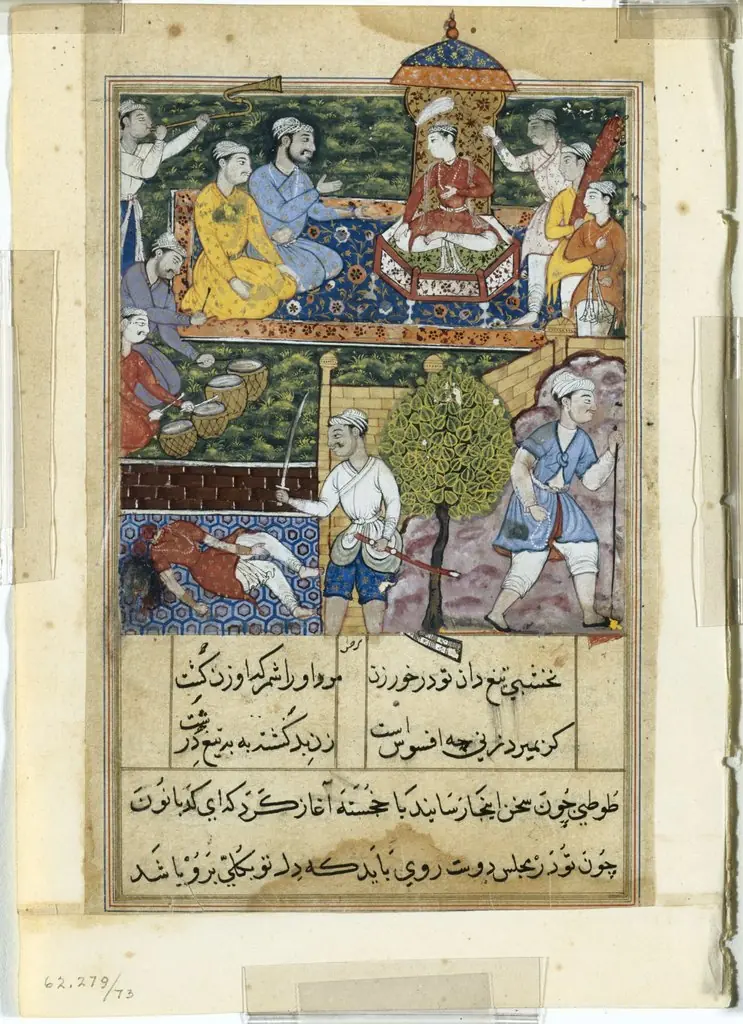 The young prince is crowned and the wicked handmaiden is executed, from a Tuti-nama (Tales of a Parrot): Eighth Night
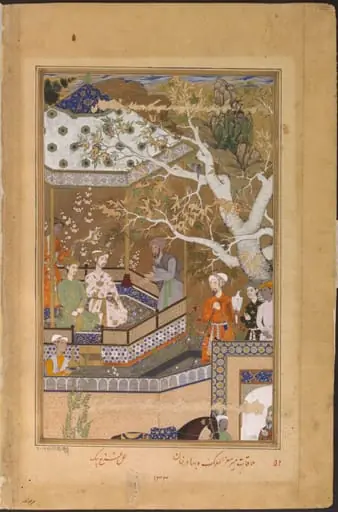 Mir Muizzu'l Mulk and Bahadur Khan
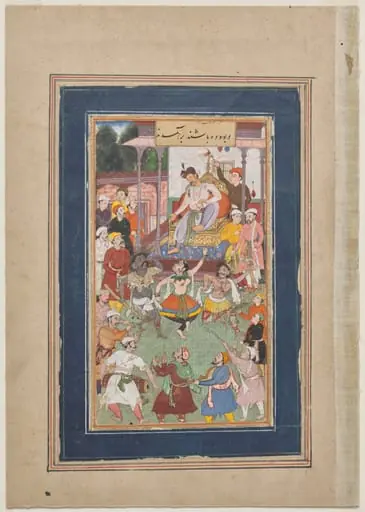 Grotesque Dancers Performing
 The young prince is crowned and the wicked handmaiden is executed, from a Tuti-nama (Tales of a Parrot): Eighth Night
 Akbar
Akbar